
The growing severity of global energy shortages and environmental concerns over the past decade has propelled renewable and clean energy sources, such as solar, geothermal, and wind power, into the spotlight. However, the inherent intermittency, instability, and regional dependency of these resources significantly limit their utilization efficiency and broad application. Developing efficient and convenient energy storage systems is paramount to mitigating these drawbacks and unlocking the full potential of renewable energy. Among various storage solutions, secondary batteries—notably lithium-ion batteries (LIBs)—have become mainstream due to their portability and high efficiency, finding extensive use in everything from consumer electronics to electric vehicles. Nevertheless, the limited and uneven global distribution of lithium ore reserves has led to consistently high costs, constraining the sustainable growth of LIBs and their ability to meet rapidly expanding market demands.
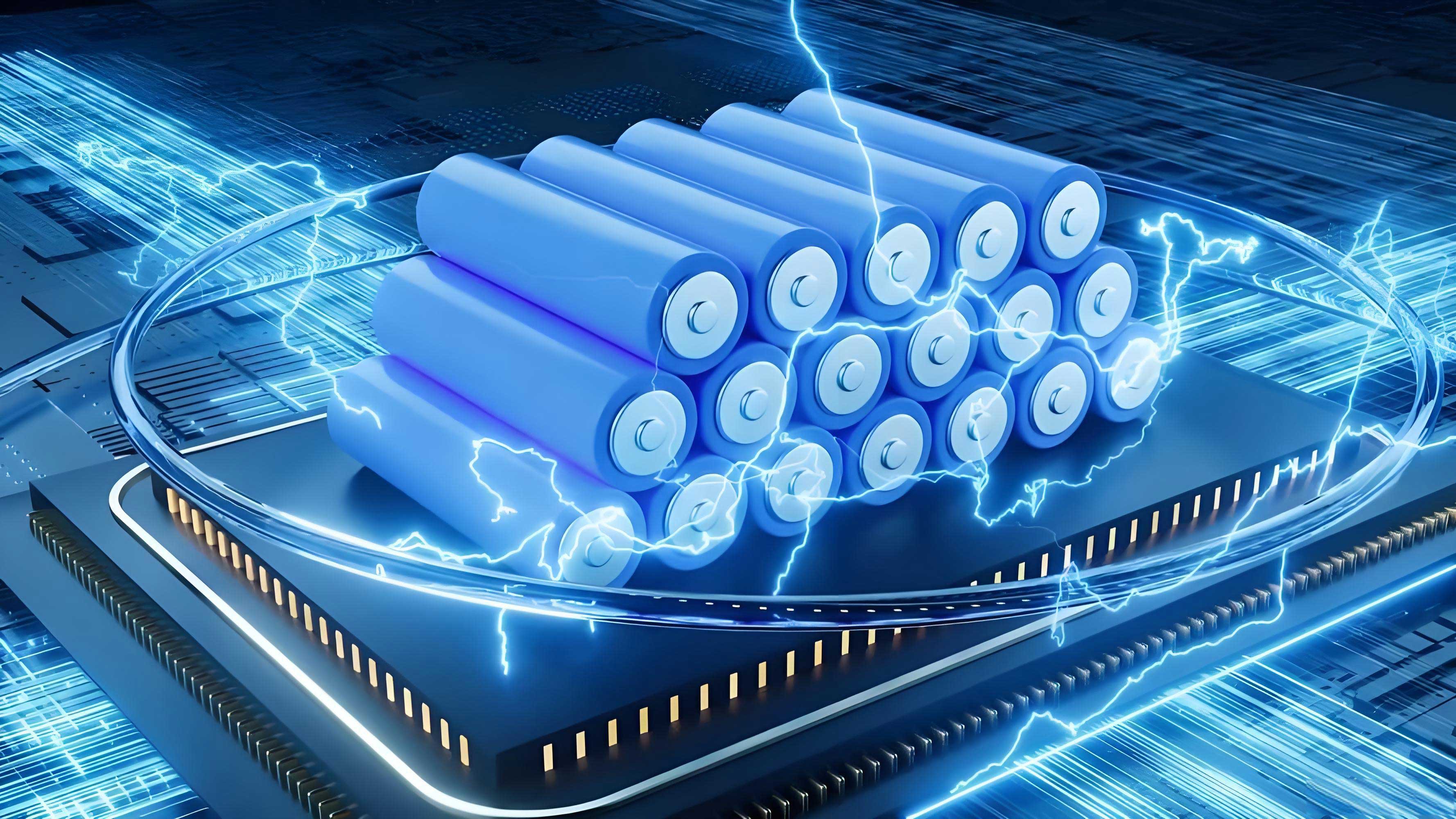
In this context, the sodium-ion battery (SIB) emerges as a highly promising alternative. While offering a slightly lower specific capacity than its lithium counterpart, the sodium-ion battery shares similar manufacturing processes and many material requirements with LIBs. Crucially, sodium is far more abundant and geographically widespread than lithium, which promises lower raw material costs and enhanced supply chain security. Furthermore, sodium-ion batteries are often considered to possess superior safety characteristics. These advantages have accelerated research and development, with several companies successfully prototyping SIBs capable of meeting everyday application needs. Consequently, the sodium-ion battery presents a compelling future with significant commercial potential for large-scale energy storage.
The anode material is a critical component determining the performance of a sodium-ion battery. The larger ionic radius of Na+ (0.102 nm) compared to Li+ (0.076 nm) presents a fundamental challenge, as it hinders intercalation into the narrow interlayer spaces of conventional graphite anodes used in LIBs. Therefore, developing high-capacity, long-life anode materials specifically for the sodium-ion battery is imperative. Current anode candidates for the sodium-ion battery include carbon-based materials, organic compounds, metal oxides, metal sulfides, and alloy-based materials. While carbon materials are cost-effective and offer good cycle life, their theoretical capacity is generally limited to below 350 mAh g-1, constraining the energy density of the resulting sodium-ion battery. Metal oxides often exhibit poor electrochemical activity in sodium-ion battery systems. In contrast, metal sulfides stand out due to their diverse crystal structures, higher electrical conductivity compared to oxides, and better thermal and mechanical stability. The discharge product Na2S is also more conductive than Na2O, and the weaker M-S bond (where M is a metal) facilitates electrochemical reactions more readily than the M-O bond. Thus, metal sulfides are regarded as highly promising anode materials for achieving high-performance sodium-ion batteries.
Among various metal sulfides, iron disulfide (FeS2), particularly in its pyrite form, is exceptionally attractive as an anode material for the sodium-ion battery. It boasts a high theoretical specific capacity of 894 mAh g-1 (based on the conversion reaction: FeS2 + 4Na+ + 4e– ⇌ 2Na2S + Fe), possesses decent intrinsic electronic conductivity, is low-cost, and is environmentally benign. Its feasibility was demonstrated decades ago when used in commercial primary lithium batteries. However, employing FeS2 as an anode in rechargeable sodium-ion batteries introduces significant challenges. The primary issues are the substantial volume expansion/contraction during sodiation/desodiation and the inevitable pulverization of active material particles, which lead to rapid capacity fade and poor cycle stability. Additionally, the sluggish reaction kinetics and ion diffusion rates within the material can severely limit the rate capability of the sodium-ion battery.
To overcome these bottlenecks and realize the full potential of FeS2 in practical sodium-ion battery applications, extensive research has focused on material modification strategies. This article provides a comprehensive overview of these efforts. First, the structural characteristics and sodium storage mechanisms of FeS2 are elucidated. Subsequently, the prevailing modification strategies are systematically reviewed and analyzed, categorized into intrinsic structural engineering and the construction of advanced composites. Finally, based on the current research landscape, future perspectives and potential research directions for FeS2-based anodes in sodium-ion batteries are discussed.
Structural Characteristics and Sodium Storage Mechanism of FeS2
In nature, FeS2 primarily exists in two mineral forms: pyrite (cubic) and marcasite (orthorhombic). Pyrite, the more common and thermodynamically stable phase, possesses a face-centered cubic crystal structure (space group Pa$\bar{3}$). In this structure, Fe2+ ions occupy the cube corners and face centers, while S22- dumbbells occupy specific sites, with each iron atom octahedrally coordinated by six sulfur atoms. This arrangement results in a robust three-dimensional framework.
The electrochemical reaction mechanism of FeS2 in a sodium-ion battery is more complex than a simple intercalation process and is generally accepted to proceed through a multi-step conversion reaction. Upon discharge (sodiation), Na+ ions insert into the FeS2 structure, followed by a phase transformation that ultimately yields metallic Fe nanoparticles embedded in a Na2S matrix. The reverse process occurs during charge (desodiation). The overall reaction can be summarized as:
$$ \text{FeS}_2 + 4\text{Na}^+ + 4e^- \rightleftharpoons \text{Fe} + 2\text{Na}_2\text{S} $$
This conversion reaction is responsible for the high theoretical capacity. However, the transformation between FeS2 and Fe/Na2S involves significant structural rearrangement and a large volume change (exceeding 200%), which is the root cause of mechanical degradation, particle disconnection, and unstable solid-electrolyte interphase (SEI) formation—the core challenges facing FeS2 anodes in sodium-ion batteries.
Strategies for Enhancing the Performance of FeS2 Anodes
The modification strategies for FeS2 anodes aim to address the dual challenges of volume change and poor kinetics. These approaches can be broadly classified into two categories: Intrinsic Structural Engineering and Composite Material Design. The following table provides a comparative summary of these primary strategies.
| Strategy Category | Specific Approach | Primary Mechanism & Benefit | Typical Performance Outcome |
|---|---|---|---|
| Intrinsic Structural Engineering | Nanostructuring (Reducing Particle Size) | Shortens ion/electron diffusion paths, increases electrode/electrolyte contact area, alleviates mechanical stress. | Improved rate capability; initial capacity boost but often suffers from rapid fading due to aggregation and side reactions. |
| Porosity Engineering (Creating Meso/Macropores) | Provides internal buffer space for volume expansion, facilitates electrolyte infiltration, enhances surface-controlled capacitive storage. | Superior cycling stability and rate performance compared to dense bulk materials. | |
| Morphology Control (Hollow/Spherical Structures) | Offers void space to accommodate volume change, maintains structural integrity over cycles. | Excellent long-term cycle life and high capacity retention. | |
| Composite Material Design | Carbon Matrix Composites (Graphene, CNTs, Porous Carbon) | Conductive matrix enhances overall conductivity, confines FeS2 particles, buffers volume change, stabilizes SEI. | Dramatically improved cycling stability (1000+ cycles) and excellent rate performance. Most widely researched and effective approach. |
| Conductive Polymer Coating (PANI, PPy) | Flexible coating accommodates strain, improves surface conductivity, may suppress polysulfide dissolution. | Enhanced cycle stability and rate capability compared to bare FeS2. | |
| Heterostructure with Other Metal Compounds (SnS2, TiO2) | Synergistic effects, built-in electric fields at interfaces enhance charge transfer, composite buffering effect. | Higher specific capacity and improved kinetics over single components. |
1. Intrinsic Structural Engineering of FeS2
Engineering the intrinsic morphology and architecture of FeS2 at the nanoscale is a fundamental strategy to improve its electrochemical performance in sodium-ion batteries. The governing principle is to reduce the absolute dimensional change during cycling and shorten the diffusion length for Na+ ions and electrons.
Nanostructuring: Reducing bulk FeS2 to nanoparticles significantly decreases the diffusion distance for ions and electrons, which is described by the diffusion time constant:
$$ \tau = \frac{L^2}{D} $$
where $\tau$ is the diffusion time, $L$ is the diffusion length (particle size), and $D$ is the diffusion coefficient. Reducing $L$ directly leads to a quadratic decrease in $\tau$, enabling faster reaction kinetics and better rate capability for the sodium-ion battery. Furthermore, smaller particles can better accommodate strain from volume changes, reducing the tendency for crack propagation and pulverization.
Porosity Engineering: Constructing FeS2 with controlled porosity, especially mesopores (2-50 nm), is highly beneficial. The pores serve as internal reservoirs to buffer volume expansion, preventing destructive stress buildup. They also dramatically increase the specific surface area, providing more active sites for sodium storage and enhancing contact with the electrolyte. This often leads to a significant contribution from surface-induced capacitive processes (pseudocapacitance) to the total capacity, which is highly desirable for high-power sodium-ion battery applications. The capacity contribution can be analyzed by measuring the current response at various scan rates, where the current (i) and scan rate (v) follow a power-law relationship:
$$ i = a v^b $$
A b-value of 0.5 indicates a diffusion-controlled process, while a value of 1.0 signifies a capacitive-controlled process. Engineered porous FeS2 structures typically exhibit b-values closer to 1, indicating fast kinetics.
Advanced Morphologies: Designing sophisticated nanostructures such as hollow nanospheres, nano-octahedra, or nanorods takes the concept further. A hollow structure, for instance, possesses an interior void space that can perfectly accommodate the volume expansion of the shell material without causing overall dimensional change of the particle. This morphology is exceptionally effective in maintaining the structural and electrical integrity of the anode over extended cycling, leading to outstanding long-term stability in the sodium-ion battery.
2. Composite Material Design
Combining FeS2 with other functional materials to form composites is the most prevalent and effective strategy to create high-performance anodes for the sodium-ion battery. The secondary phase can provide mechanical support, enhance electrical conductivity, and introduce additional functionalities.
2.1 FeS2/Carbon-Based Composites
Carbon materials are ideal partners for FeS2 due to their excellent conductivity, flexibility, chemical stability, and relatively low cost. The carbon matrix acts as both a conductive highway for electrons and a mechanical buffer to constrain the volume change of FeS2 particles.
FeS2/Graphene Composites: Graphene, with its ultra-high specific surface area and superb electrical conductivity, is widely used. FeS2 nanoparticles anchored on or wrapped by reduced graphene oxide (rGO) sheets benefit from the two-dimensional conductive network. The flexible graphene sheets can encapsulate FeS2 particles, preventing their aggregation and direct exposure to the electrolyte, leading to more stable SEI formation. The composite synergy often results in significantly enhanced cyclic stability and rate performance for the sodium-ion battery. Three-dimensional graphene foams can further provide a macroporous scaffold for high mass loading and efficient ion transport.
FeS2/Carbon Nanotube (CNT) Composites: The one-dimensional structure of CNTs forms an interconnected “neural network” that provides robust electrical pathways and structural integrity. FeS2 nanoparticles dispersed on this network exhibit excellent electronic connectivity. Even at high current densities, this percolating network ensures efficient charge collection, which is critical for the power performance of the sodium-ion battery. Furthermore, the entanglement of CNTs creates a resilient framework that can hold the active material together even after particle fracture.
FeS2/Porous Carbon Composites: Encapsulating FeS2 nanostructures within a porous carbon shell or sphere is a highly effective design. The carbon shell physically confines the FeS2 and its volume expansion, while its porosity allows for electrolyte penetration and rapid Na+ transport. The core-shell structure also minimizes the direct contact between FeS2 and the electrolyte, fostering a stable and thin SEI layer. This architecture is particularly successful in achieving ultra-long cycle life (e.g., thousands of cycles) in sodium-ion battery testing.
2.2 FeS2/Conductive Polymer Composites
Conducting polymers like polyaniline (PANI) and polypyrrole (PPy) offer a different type of flexibility and conductivity. Coating FeS2 micro- or nanoparticles with a thin layer of polymer via in-situ polymerization creates a core-shell structure. The polymer shell enhances the surface conductivity of the composite particle and can elastically accommodate the strain from volume changes. Additionally, the polymer coating may help mitigate the dissolution of intermediate polysulfide species in the sodium-ion battery electrolyte, although this is less pronounced than in lithium-sulfur systems. These composites generally show improved cycle stability compared to bare FeS2.
2.3 FeS2/Metal Compound Composites
Creating heterostructures by combining FeS2 with other metal sulfides (e.g., SnS2, WS2) or metal oxides (e.g., TiO2) can yield synergistic effects. In such composites, the different components can buffer each other’s volume changes. More importantly, the intimate interface between two semiconductors can create built-in electric fields that facilitate charge separation and transfer, significantly boosting the reaction kinetics of the sodium-ion battery anode. For example, a composite with TiO2 can leverage the exceptional structural stability and fast surface pseudocapacitive Na+ storage of TiO2 while benefiting from the high capacity of FeS2.
Future Perspectives and Concluding Remarks
While significant progress has been made in developing FeS2-based anodes for sodium-ion batteries, several challenges and research opportunities remain on the path to commercialization and widespread adoption.
1. Electrolyte Optimization: Most research focuses on the electrode material, but the electrolyte formulation is equally critical for the performance of a sodium-ion battery. The formation and nature of the SEI layer on FeS2 are heavily influenced by the electrolyte. Future work should explore advanced electrolyte systems—such as concentrated electrolytes, ionic liquids, or novel additive packages—that can form a thin, stable, and highly conductive SEI layer. This would minimize irreversible capacity loss in the first cycle and protect the electrode from continuous degradation, thereby enhancing both cycle life and calendar life.
2. Advanced Electrode Architecture Design: Beyond material-level composites, designing the electrode architecture at the macro-scale is crucial. This includes optimizing electrode thickness, porosity, and binder systems to ensure good mechanical cohesion and efficient ion transport throughout the electrode slab. The use of free-standing electrodes (without metal current collectors) or the integration of FeS2 composites into three-dimensional porous current collectors (e.g., carbon felt, nickel foam) could further improve the energy density and rate capability of the sodium-ion battery.
3. Cost-Effective and Scalable Synthesis: For the sodium-ion battery to be truly competitive, the synthesis of high-performance FeS2 composites must be low-cost, environmentally friendly, and scalable. Many reported methods involve complex multi-step procedures or expensive precursors. Developing simpler, one-pot synthesis routes or scalable solid-state reactions using abundant raw materials (like natural pyrite) is an essential direction for future research.
4. Understanding and Mitigating Degradation Mechanisms: In-depth in-situ and operando characterization techniques (like TEM, XRD, and XAS) are needed to precisely elucidate the phase evolution, volume change, and SEI dynamics during the operation of a FeS2-based sodium-ion battery. This fundamental understanding will guide the rational design of more resilient material systems.
5. Performance under Realistic Conditions: Most reported data are collected under ideal laboratory conditions (room temperature, low mass loading). Evaluating FeS2 anodes under conditions relevant to real-world applications—such as wide temperature ranges (-20°C to 60°C), high areal loadings (>3 mAh cm-2), and in full-cell configurations paired with practical cathode materials—is the ultimate test for their viability in commercial sodium-ion batteries.
In conclusion, FeS2 stands as a highly promising anode material for next-generation sodium-ion batteries due to its high capacity, low cost, and environmental friendliness. The key to unlocking its potential lies in sophisticated material design that addresses its inherent volume expansion and kinetic limitations. Among the various strategies, constructing nanocomposites with conductive carbon matrices—particularly those forming interconnected three-dimensional networks like carbon nanotubes or porous carbon shells—has proven to be the most effective in delivering superior cycling stability and rate performance. As research continues to tackle the challenges of electrolyte compatibility, scalable fabrication, and real-world testing, FeS2-based anodes are poised to play a significant role in advancing the performance and commercial viability of sodium-ion battery technology for large-scale energy storage applications.