
As a researcher in the field of energy storage, I have been closely monitoring the advancements in sodium-ion battery technology, which holds immense promise as a sustainable alternative to lithium-ion batteries. The growing environmental concerns due to fossil fuel consumption have accelerated the need for renewable energy sources like wind, solar, and tidal power. However, these sources are intermittent and geographically dependent, making energy storage systems critical for their effective utilization. Sodium-ion batteries emerge as a compelling solution due to their low cost, high safety, abundant raw material sources, and excellent low-temperature performance. In this article, I will delve into the recent progress in layered oxide cathode materials for sodium-ion batteries, highlighting key challenges, modification strategies, and future perspectives, with an emphasis on using tables and formulas for comprehensive summarization.
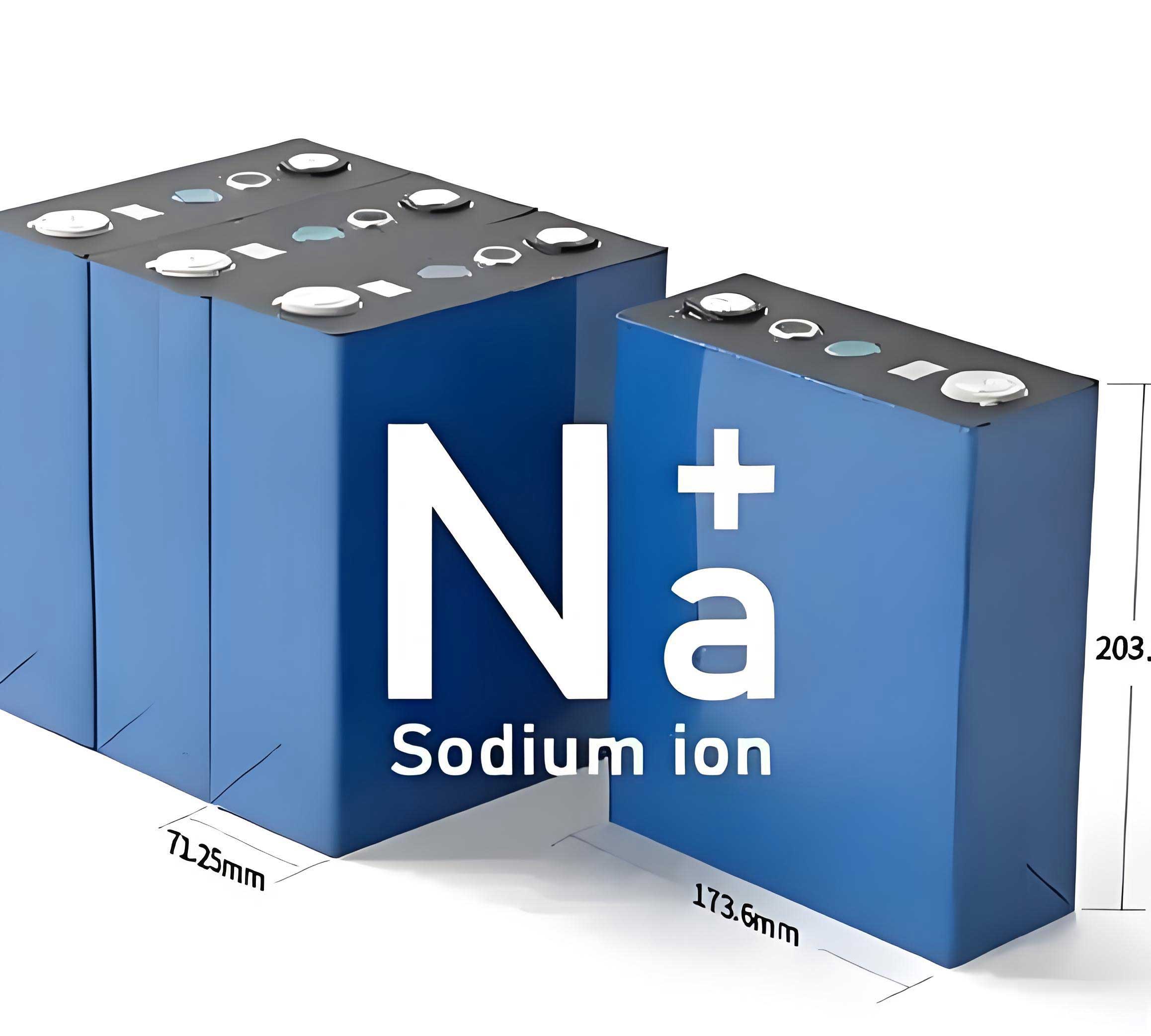
The working principle of a sodium-ion battery is analogous to that of a lithium-ion battery, often described as a “rocking-chair” mechanism. During charging, sodium ions deintercalate from the cathode material, migrate through the electrolyte, and intercalate into the anode, while electrons flow through the external circuit. The reverse occurs during discharging. This process can be represented by the general electrochemical reaction for a layered oxide cathode: $$ \text{Na}_x\text{TMO}_2 \rightleftharpoons \text{Na}_{x-\delta}\text{TMO}_2 + \delta\text{Na}^+ + \delta e^- $$ where TM denotes transition metals, and $\delta$ is the extent of sodium extraction. The sodium-ion battery system offers advantages such as the use of aluminum current collectors instead of copper, reducing costs, and higher thermal stability, enhancing safety. However, the larger ionic radius of Na$^+$ (1.02 Å) compared to Li$^+$ (0.76 Å) poses challenges like significant lattice distortion and reduced structural stability during cycling, which directly impact the electrochemical performance of cathode materials. Among various cathode materials for sodium-ion batteries, layered oxides stand out due to their high energy density, good rate capability, and tunable structures, making them a focal point of research.
Layered oxide materials for sodium-ion batteries, typically represented as $\text{Na}_x\text{TMO}_2$ (0.5 < x ≤ 1), consist of alternating layers of $\text{TMO}_2$ slabs and Na layers. The $\text{TMO}_2$ slabs are composed of edge-sharing $\text{[TMO}_6]$ octahedra, providing two-dimensional pathways for Na$^+$ ion diffusion. Based on the stacking sequence of oxygen layers and the coordination environment of Na$^+$ ions, these materials are classified into P2, P3, and O3 types, as summarized in Table 1. The notation “P” refers to prismatic coordination (trigonal prism sites), “O” to octahedral coordination, and the number indicates the repeat unit of transition metal layers.
| Type | Stacking Sequence | Na$^+$ Coordination | Typical Composition | Key Features |
|---|---|---|---|---|
| P2 | ABBA | Prismatic | $\text{Na}_{0.67}\text{Fe}_{0.5}\text{Mn}_{0.5}\text{O}_2$ | Open diffusion paths, good rate performance |
| P3 | ABBCCA | Prismatic | $\text{Na}_{0.6}\text{Li}_{0.2}\text{Mn}_{0.8}\text{O}_2$ | Intermediate stability, often synthesized at low temperatures |
| O3 | ABCABC | Octahedral | $\text{NaNi}_{0.5}\text{Mn}_{0.5}\text{O}_2$ | High Na content, higher capacity |
The performance of layered oxide cathode materials in sodium-ion batteries is hampered by several intrinsic issues. First, irreversible phase transitions during charge-discharge cycles lead to structural degradation. For instance, O3-type materials often undergo sequential phase changes such as O3 → P3 → O’3, while P2-type materials may transform to OP4 or O2 phases at high voltages. These transitions are accompanied by volume changes, causing stress and capacity fade. The phase transition energy can be described by the Gibbs free energy change: $$ \Delta G = \Delta H – T\Delta S $$ where $\Delta H$ is the enthalpy change and $\Delta S$ is the entropy change. Minimizing $\Delta G$ for undesirable phases is crucial for stability. Second, electrolyte decomposition occurs at the cathode-electrolyte interface, driven by the catalytic activity of the material surface. This results in the formation of resistive layers like NaF and dissolution of transition metals, which migrate to the anode and hinder Na$^+$ transport. The decomposition reaction involving $\text{NaPF}_6$ electrolyte salt can be simplified as: $$ \text{NaPF}_6 + \text{H}_2\text{O} \rightarrow \text{NaF} + \text{POF}_3 + 2\text{HF} $$ HF attacks the oxide cathode, accelerating metal dissolution. Third, migration of transition metal ions from the TM layer to the Na layer during deep charging, particularly in materials like $\text{NaFeO}_2$, reduces reversibility. Fourth, the Jahn-Teller effect associated with $\text{Mn}^{3+}$ ions causes distortion in $\text{[MnO}_6]$ octahedra, leading to structural instability and capacity loss. The effect arises from the asymmetric electron distribution in the $e_g$ orbitals, which can be expressed using crystal field theory: $$ \Delta_{\text{oct}} = \frac{5}{3} \Delta_{\text{tet}} $$ where $\Delta_{\text{oct}}$ and $\Delta_{\text{tet}}$ are the crystal field splitting energies for octahedral and tetrahedral geometries, respectively. This distortion promotes Mn$^{3+}$ disproportionation: $2\text{Mn}^{3+} \rightarrow \text{Mn}^{4+} + \text{Mn}^{2+}$, with Mn$^{2+}$ dissolving in the electrolyte. Fifth, poor air stability due to reactions with $\text{H}_2\text{O}$ and $\text{CO}_2$ forms alkaline species like $\text{Na}_2\text{CO}_3$, degrading electrochemical performance.
To address these challenges, various modification strategies have been developed for layered oxide cathode materials in sodium-ion batteries. I will discuss these in detail, incorporating tables and formulas for clarity.
Bulk Doping Modification: This involves introducing foreign ions into the crystal lattice to enhance structural and electronic stability. Doping can be single-element, multi-element, or site-specific. For example, Al doping in $\text{P2-Na}_{0.6}\text{Ni}_{0.3}\text{Mn}_{0.7}\text{O}_2$ increases interlayer spacing and suppresses P2-O2 phase transitions, improving capacity retention. The effect can be quantified by the change in lattice parameters, where the c-axis expansion is given by: $$ \Delta c = c_{\text{doped}} – c_{\text{pristine}} $$ Positive $\Delta c$ indicates improved Na$^+$ diffusion. Similarly, Fe or Cu doping promotes the formation of strong covalent bonds like Fe-(O-O) or Cu-(O-O), enhancing the reversibility of anionic redox reactions. Multi-element doping, such as Li and Cu co-doping in $\text{Na}_{0.72}\text{Li}_{0.14}\text{Cu}_{0.15}\text{Mn}_{0.71}\text{O}_2$, combines benefits like widened Na layers and suppressed complex phase changes. Site-specific doping, like Li occupying both Na and TM sites in $\text{P2-Na}_{0.7}\text{Li}_{0.03}[\text{Mg}_{0.15}\text{Li}_{0.07}\text{Mn}_{0.75}]\text{O}_2$, stabilizes the structure and boosts anionic redox capacity. The impact of different dopants is summarized in Table 2.
| Dopant | Material Example | Key Effects | Performance Improvement |
|---|---|---|---|
| Al | $\text{P2-Na}_{0.6}\text{Ni}_{0.3}\text{Mn}_{0.7}\text{O}_2$ | Increases layer spacing, suppresses phase transitions | Higher capacity retention, better rate capability |
| Fe | $\text{P2-Na}_{2/3}\text{Fe}_{2/9}\text{Ni}_{2/9}\text{Mn}_{5/9}\text{O}_2$ | Forms Fe-(O-O) bonds, enhances anionic redox | Improved reversibility, reduced oxygen loss |
| Nb | $\text{P2-Na}_{0.78}\text{Ni}_{0.31}\text{Mn}_{0.67}\text{Nb}_{0.02}\text{O}_2$ | Expands lattice, induces surface reconstruction | Excellent rate performance, low-temperature stability |
| Y | $\text{P2-Na}_{0.65}\text{Y}_{0.025}[\text{Ni}_{0.33}\text{Mn}_{0.67}]\text{O}_2$ | Acts as pillar, optimizes Ni 3d-O 2p hybridization | Enhanced fast-charging ability, small volume change |
| Li and Cu | $\text{Na}_{0.72}\text{Li}_{0.14}\text{Cu}_{0.15}\text{Mn}_{0.71}\text{O}_2$ | Co-doping for expanded Na layers, suppressed phase changes | High energy density, improved cycle life |
The doping efficiency can be modeled using the defect chemistry equation: $$ \text{TM}_{\text{TM}} + \text{D} \rightarrow \text{D}_{\text{TM}}’ + \text{TM} $$ where $\text{D}$ is the dopant, and $\text{D}_{\text{TM}}’$ represents a dopant at a TM site with a negative effective charge. This influences the Na$^+$ diffusion coefficient, which follows the Arrhenius equation: $$ D = D_0 \exp\left(-\frac{E_a}{kT}\right) $$ where $E_a$ is the activation energy, $k$ is Boltzmann’s constant, and $T$ is temperature. Doping often reduces $E_a$, facilitating faster ion transport.
Surface Coating Modification: Coating the cathode particles with protective layers mitigates side reactions with electrolytes and improves air stability. Common coatings include metal oxides (e.g., $\text{Al}_2\text{O}_3$, $\text{ZrO}_2$), phosphates (e.g., $\text{Na}_3\text{Zr}_2\text{Si}_2\text{PO}_{12}$), and polymers (e.g., PMAA-AN). For instance, $\text{Al}_2\text{O}_3$ coating on $\text{P2-Na}_{2/3}\text{Fe}_{1/2}\text{Mn}_{1/2}\text{O}_2$ reduces $\text{Na}_2\text{CO}_3$ formation during air exposure, preserving capacity. The coating thickness $\delta_c$ plays a critical role in balancing protection and ion diffusion: $$ R_{\text{total}} = R_{\text{bulk}} + R_{\text{coating}} $$ where $R_{\text{total}}$ is the total resistance, $R_{\text{bulk}}$ is the bulk resistance, and $R_{\text{coating}}$ is the coating resistance. Optimal $\delta_c$ minimizes $R_{\text{total}}$ while preventing electrolyte penetration. NASICON-type coatings like $\text{Na}_3\text{Zr}_2\text{Si}_2\text{PO}_{12}$ offer high ionic conductivity, enhancing rate capability. Polymer coatings provide flexibility and suppress transition metal dissolution. The effectiveness of various coatings is compared in Table 3.
| Coating Material | Coated Cathode Example | Benefits | Impact on Performance |
|---|---|---|---|
| $\text{Al}_2\text{O}_3$ | $\text{P2-Na}_{2/3}\text{Fe}_{1/2}\text{Mn}_{1/2}\text{O}_2@\text{Al}_2\text{O}_3$ | Blocks moisture and CO$_2$, reduces side reactions | Improved air stability, higher cycle life |
| $\text{Na}_3\text{Zr}_2\text{Si}_2\text{PO}_{12}$ | $\text{P2-Na}_{0.612}\text{K}_{0.056}\text{MnO}_2@\text{NZSP}$ | High Na$^+$ conductivity, stable framework | Enhanced rate capability, low-temperature performance |
| PMAA-AN polymer | $\text{O3-Na}_{0.67}\text{Li}_{0.16}\text{Ni}_{0.33}\text{Mn}_{0.67}\text{O}_{2+x}@\text{PMAA-AN}$ | Strong coordination with TM ions, flexible layer | Suppressed Ni$^{4+}$ formation, better interface stability |
| $\text{NaTi}_2(\text{PO}_4)_3$ | $\text{O3-NaNi}_{1/3}\text{Fe}_{1/3}\text{Mn}_{1/3}\text{O}_2@\text{NTP}$ | Introduces Ti$^{4+}$ into bulk, dual functionality | Increased layer spacing, reduced HF attack |
The coating process can be described by a growth model: $$ \frac{d\delta_c}{dt} = k \cdot C_{\text{precursor}} $$ where $k$ is the growth rate constant and $C_{\text{precursor}}$ is the precursor concentration. Uniform coatings are essential for consistent performance.
Multi-Phase Composite Modification: Designing composite structures, such as P2/O3 intergrowths, leverages the advantages of different phases. For example, $\text{P2/O3-Na}_{0.85}\text{Ni}_{0.34}\text{Mn}_{0.66-x}\text{Ti}_x\text{O}_2$ exhibits improved cycle life due to suppressed Na$^+$/vacancy ordering. The composite formation energy $\Delta E_{\text{comp}}$ can be calculated as: $$ \Delta E_{\text{comp}} = E_{\text{composite}} – (x E_{\text{P2}} + (1-x) E_{\text{O3}}) $$ where $E_{\text{composite}}$, $E_{\text{P2}}$, and $E_{\text{O3}}$ are the energies of the composite, P2 phase, and O3 phase, respectively, and $x$ is the phase fraction. Negative $\Delta E_{\text{comp}}$ indicates stability. In $\text{P2/O3-Na}_{0.7}\text{Ni}_{0.2}\text{Fe}_{0.3-y}\text{Mn}_{0.5}\text{Zn}_y\text{O}_2$, Zn$^{2+}$ doping induces phase intergrowth, enhancing structural integrity and Na$^+$ diffusion. The composite effect often follows a rule of mixtures for properties like capacity: $$ C_{\text{comp}} = f_{\text{P2}} C_{\text{P2}} + f_{\text{O3}} C_{\text{O3}} $$ where $f$ denotes phase fractions. However, synergistic effects may deviate from this linear relation.
Morphology Control Modification: Engineering particle morphology, such as spherical aggregates, nanorods, or nanofibers, improves tap density and reduces structural strain during cycling. For example, spherical $\text{NaCrO}_2$ synthesized via hydrothermal method shows higher capacity retention than irregular particles. The relationship between particle size $d$ and capacity fade rate $r$ can be approximated by: $$ r \propto \frac{1}{d^n} $$ where $n$ is an exponent typically between 1 and 2, indicating that smaller particles mitigate stress but may increase side reactions. Nanofibers of $\text{Na}_{2/3}(\text{Fe}_{1/2}\text{Mn}_{1/2})\text{O}_2$ offer shortened ion diffusion paths, enhancing rate performance. The diffusion time $t_{\text{diff}}$ across a particle is given by: $$ t_{\text{diff}} = \frac{d^2}{2D} $$ where $D$ is the diffusion coefficient. Morphology optimization aims to minimize $t_{\text{diff}}$ while maintaining mechanical stability.
Integrated Modification Strategies: Combining multiple approaches, such as doping with coating, yields synergistic effects. For instance, $\text{NaTi}_2(\text{PO}_4)_3$ coating on $\text{O3-NaNi}_{1/3}\text{Fe}_{1/3}\text{Mn}_{1/3}\text{O}_2$ introduces Ti$^{4+}$ doping into the bulk while protecting the surface, leading to improved cycle life. The overall enhancement factor $\eta$ can be expressed as: $$ \eta = \eta_{\text{doping}} \cdot \eta_{\text{coating}} \cdot \eta_{\text{morphology}} $$ where each $\eta$ represents the improvement from individual modifications. In practice, $\eta > 1$ indicates positive synergy. Another example is the one-step construction of multilayer coatings with bulk Al$^{3+}$ doping in $\text{NaNi}_{0.4}\text{Fe}_{0.2}\text{Mn}_{0.4}\text{O}_2$, which reduces residual alkali and enhances interfacial stability.
Looking ahead, the development of layered oxide cathode materials for sodium-ion batteries requires focused efforts on several fronts. For P2-type materials, strategies include disordering Na$^+$/vacancy arrangements through Li$^+$ or Cu$^{2+}$ doping, stabilizing oxygen redox via Mn-rich systems or F$^-$ anion doping, and exploring anionic redox activity through transition metal-oxygen coordination tuning. For O3-type materials, elemental doping (e.g., Al, Ti, Mg) and gradient designs (e.g., core-shell structures) can inhibit phase transitions and improve structural stability. High-entropy oxides represent an emerging frontier; their multi-ion synergy and entropy stabilization mechanisms need clarification through high-throughput computational modeling. Surface modifications should advance towards coatings with superior ionic/electronic conductivity to further suppress side reactions. For P3-type and composite structures, low-temperature synthesis routes and P3/O3 heterostructures can balance ion diffusion and stability. Additionally, multi-ion co-intercalation systems (e.g., Na$^+$/Li$^+$) warrant investigation for enhanced kinetics.
The performance metrics of sodium-ion batteries can be evaluated using key formulas. The specific capacity $C$ (in mAh g$^{-1}$) is given by: $$ C = \frac{nF}{3.6M} $$ where $n$ is the number of electrons transferred per formula unit, $F$ is Faraday’s constant (96485 C mol$^{-1}$), and $M$ is the molar mass (in g mol$^{-1}$). The energy density $E$ (in Wh kg$^{-1}$) is: $$ E = C \times V_{\text{avg}} $$ where $V_{\text{avg}}$ is the average discharge voltage. For long-cycle stability, the capacity retention $R$ after $N$ cycles is: $$ R = \frac{C_N}{C_1} \times 100\% $$ where $C_1$ and $C_N$ are the initial and Nth-cycle capacities, respectively.
In conclusion, layered oxide cathode materials are pivotal for advancing sodium-ion battery technology. Through continuous innovation in doping, coating, composite design, and morphology control, these materials can overcome existing limitations and unlock high performance. As research progresses, the integration of computational tools and experimental insights will accelerate the development of cost-effective, safe, and durable sodium-ion batteries for large-scale energy storage applications. The future of sodium-ion batteries looks promising, with layered oxides at the heart of this evolution.