
The accelerating global transition towards renewable energy sources has created an unprecedented demand for efficient, cost-effective, and safe energy storage technologies. Among the various contenders, sodium-ion battery technology has garnered significant attention as a promising alternative to the ubiquitous lithium-ion systems. The abundance and low cost of sodium resources, coupled with favorable electrochemical properties such as lower desolvation energy and good ionic conductivity in certain host structures, make sodium-ion battery development a strategic pursuit for large-scale stationary storage and specific mobility applications.
The performance, cost, and sustainability of a sodium-ion battery are largely dictated by its cathode material. While layered oxides and Prussian blue analogues offer high capacities, they often grapple with issues of structural instability upon cycling, air sensitivity, or the presence of coordinated water and lattice defects. In this landscape, polyanionic compounds, particularly those with the NASICON (Na Super Ionic CONductor) structure, have emerged as highly attractive cathode candidates. Their robust three-dimensional framework, enabled by corner-sharing PO4 tetrahedra and MO6 octahedra (where M is a transition metal), provides excellent structural stability and fast sodium-ion diffusion pathways. This architecture offers superior cycle life and rate capability—key metrics for practical applications. Furthermore, the strong inductive effect of the (PO4)3- polyanion allows for relatively high operating voltages.
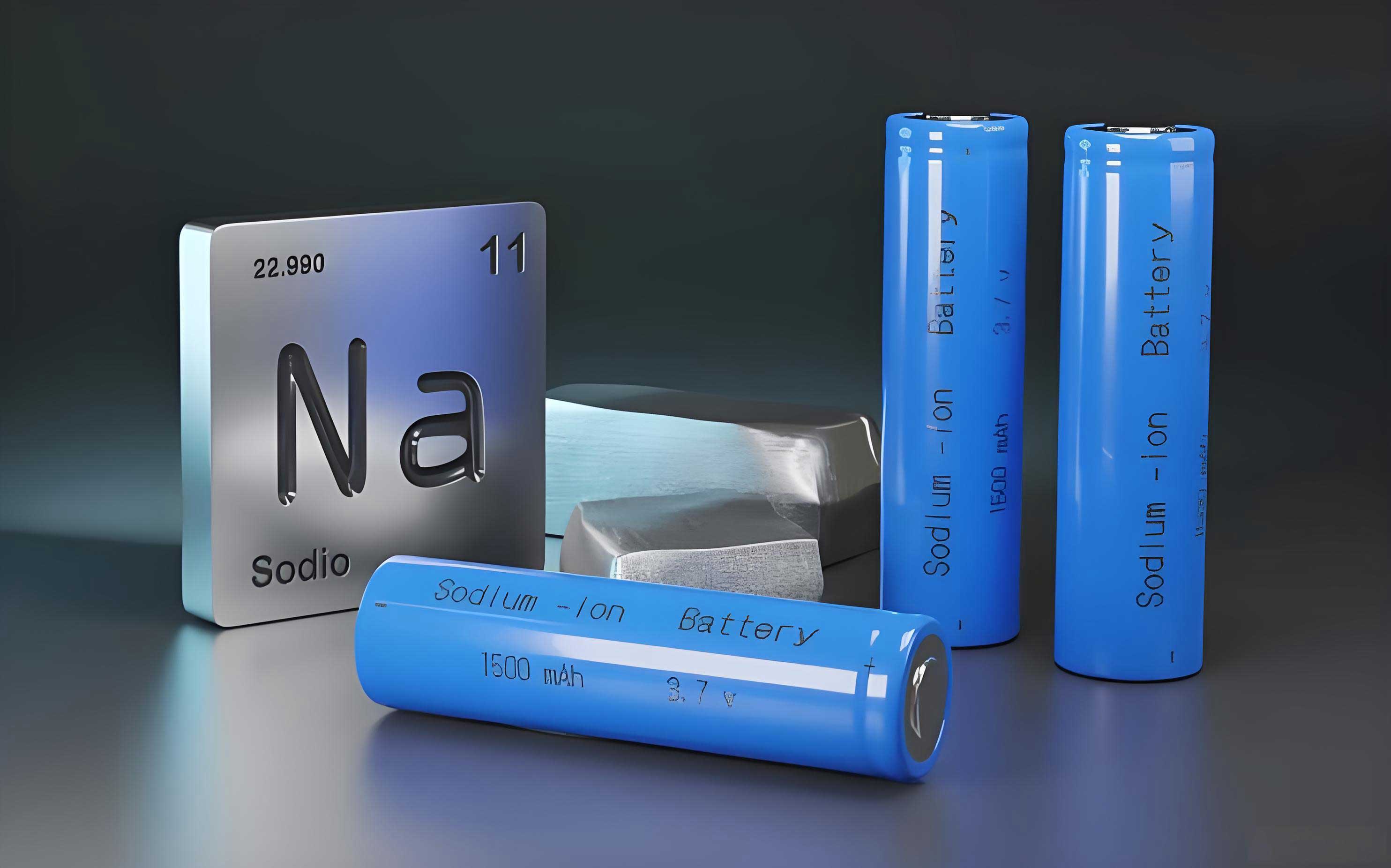
This article delves into the research progress of NASICON-type phosphate cathode materials for sodium-ion battery applications. We will systematically categorize these materials based on their transition metal composition, analyze their structure-property-performance relationships, discuss prevailing challenges, and outline optimization strategies and future directions to expedite their commercialization.
Fundamentals of NASICON Structure and Electrochemical Mechanisms
The archetypal NASICON framework possesses the general formula NaxM2(PO4)3 (where 1 ≤ x ≤ 4 and M is a transition metal or mixture thereof). This structure forms a three-dimensional network with two distinct sodium sites: the Na(1) site (6b Wyckoff position) with a distorted octahedral coordination and the Na(2) site (18e Wyckoff position) with a more irregular coordination. The open framework creates interconnected channels for rapid Na+ migration, a feature responsible for the high ionic conductivity. The electrochemical activity primarily involves the extraction/insertion of Na+ from/into the Na(2) sites, accompanied by the redox activity of the transition metal(s).
The operating voltage is intrinsically linked to the nature of the redox couple and the inductive effect of the polyanion. The strong covalent character of the P–O bond lowers the energy of the O 2p orbitals, which in turn raises the redox potential of the transition metal M relative to its oxide counterpart. This can be conceptually understood by considering the Madelung potential and the metal-oxygen bond covalency. The voltage for a given Mn+/M(n+1)+ redox couple can be influenced by the local coordination and the specific polyanion group. For phosphate-based NASICON materials, common redox couples and their approximate voltage plateaus vs. Na+/Na are:
- Ti3+/Ti4+: ~2.1 V
- Fe2+/Fe3+: ~2.5-3.0 V
- V3+/V4+: ~3.4 V
- Mn2+/Mn3+: ~3.6-3.8 V
- V4+/V5+: ~4.0 V
- Mn3+/Mn4+: ~4.1 V
- Cr3+/Cr4+: ~4.3-4.5 V
The theoretical capacity is determined by the number of Na+ ions that can be reversibly extracted per formula unit and the molecular weight of the compound. For a generic two-electron process in Na3M2(PO4)3, the capacity (C) can be calculated as:
$$ C = \frac{nF}{3.6 \times M_w} $$
where \( n \) is the number of transferred electrons per formula unit (typically 2 for extracting 2 Na+ from Na3M2(PO4)3), \( F \) is Faraday’s constant (96485 C/mol), \( M_w \) is the molar mass (g/mol), and the factor 3.6 converts Coulombs to mAh. A significant challenge for NASICON materials is their relatively low practical specific capacity (often 100-130 mAh/g) compared to layered oxides, stemming from their high molecular weight.
Single Transition Metal Phosphate Cathodes
These materials feature a single type of redox-active transition metal cation in the framework, offering well-defined voltage plateaus and simpler synthesis.
Vanadium-Based: Na3V2(PO4)3 (NVP)
NVP is the most studied NASICON cathode, operating on the V3+/V4+ redox couple at ~3.4 V with a theoretical capacity of 117.6 mAh/g. Its main drawbacks are the high cost and toxicity of vanadium, and its poor intrinsic electronic conductivity. Research has focused on nanostructuring and carbon compositing. A common synthesis route involves a sol-gel process followed by calcination under inert atmosphere with a carbon source. The carbon coating enhances electron transport, while nano-sizing reduces ionic diffusion paths. Advanced designs include NVP nanoparticles embedded in carbon nanotubes or wrapped with graphene, achieving excellent rate performance (e.g., ~80 mAh/g at 100C) and cycle life. The reaction mechanism involves a reversible two-phase transition between Na3V2(PO4)3 and NaV2(PO4)3, with a small volume change (<5%).
Iron-Based: Na3Fe2(PO4)3 (NFP) and Na4Fe3(PO4)2(P2O7) (NFPP)
Iron-based cathodes are attractive due to the low cost, abundance, and non-toxicity of iron. NFP operates at ~2.5 V (Fe2+/Fe3+) but suffers from moderate capacity and voltage. The mixed-polyanion material NFPP has become a more promising candidate. It combines (PO4)3- and (P2O7)4- groups, offering a higher operating voltage (~3.2 V) and a capacity of ~129 mAh/g based on 3 Na+ extraction. Its structure provides spacious diffusion channels. NFPP demonstrates exceptional long-term cycling stability (e.g., >99% capacity retention after 1000 cycles at 5C) and excellent thermal/structural stability, making it a leading commercial candidate for sodium-ion battery energy storage systems.
Other Single-Metal Phosphates
Na3Cr2(PO4)3: Offers high voltage (~4.5 V for Cr3+/Cr4+) but faces challenges with irreversible Cr2+/Cr3+ reactions at lower voltage and toxicity concerns.
NaTi2(PO4)3: Functions as an anode material due to its low redox potential (~2.1 V, Ti3+/Ti4+), highlighting the voltage flexibility of the NASICON framework.
Na3Mn2(PO4)3: Pure Mn-based cathodes are rarely reported due to severe Jahn-Teller distortion associated with Mn3+ (d4 high-spin), leading to rapid structural degradation and capacity fade.
| Material | Redox Couple(s) | Voltage (V vs. Na/Na+) | Theoretical Capacity (mAh/g) | Key Advantages | Major Challenges |
|---|---|---|---|---|---|
| Na3V2(PO4)3 (NVP) | V3+/V4+ | ~3.4 | 117.6 | High voltage, stable structure, good kinetics | High cost/toxicity of V, moderate capacity |
| Na4Fe3(PO4)2(P2O7) (NFPP) | Fe2+/Fe3+ | ~3.2 | ~129 | Low cost, excellent cycling, high safety | Moderate energy density |
| Na3Cr2(PO4)3 | Cr3+/Cr4+ | ~4.3-4.5 | ~118 | Very high voltage | Toxicity, irreversible reactions |
| NaTi2(PO4)3 (NTP) | Ti3+/Ti4+ | ~2.1 | ~133 | Low voltage (for anode use), stable | Low voltage (for cathode use) |
Multi-Transition Metal Phosphate Cathodes
To overcome the limitations of single-metal systems—such as cost, voltage, or stability—researchers have developed materials with two or more transition metals. These materials aim to combine advantageous properties, activate multiple redox couples for higher capacity, and stabilize the crystal structure.
Vanadium-Based Multi-Metal Phosphates
The goal here is to reduce vanadium content or activate higher voltage vanadium redox. Partial substitution of V with other metals (e.g., Al, Fe, Mg, Cr) in Na3V2(PO4)3 can electrochemically activate the V4+/V5+ couple at ~4.0 V. For instance, Na3V1.5Fe0.5(PO4)3 can deliver a capacity of ~133 mAh/g in the 2.5-4.2 V range, utilizing 2.3 electrons per formula unit. High-entropy doping strategies, incorporating five or more metal ions (e.g., V, Mn, Ca, Mg, Al, Zr, Nb), have been employed to create disordered cation lattices that enhance structural stability and cycle life while enabling multi-electron reactions.
Vanadium-Manganese-Based Phosphates
This class, exemplified by Na3.5V1.5Mn0.5(PO4)3 and Na4VMn(PO4)3 (NVMP), synergistically combines the V3+/V4+ (~3.4 V) and Mn2+/Mn3+ (~3.6 V) couples. The operating voltage window dictates the electrochemical behavior:
- 2.5-3.8 V: Only Mn2+/Mn3+ and V3+/V4+ are active, providing good stability and capacities around 110-120 mAh/g.
- 2.5-4.3 V: The Mn3+/Mn4+ (~4.1 V) and sometimes V4+/V5+ couples are activated, enabling capacities approaching 150-160 mAh/g. However, the presence of Mn3+ induces Jahn-Teller distortion and can cause Mn2+ migration into Na+ sites (antisite defects), leading to voltage hysteresis and capacity fading.
Doping with inactive or stabilizing ions like Mg, Zr, or Ti into the Mn/V sites is a critical strategy to suppress antisite defects and lattice strain, thereby improving cyclability.
Manganese-Based Multi-Metal Phosphates
Given manganese’s low cost, high abundance, and high redox potential, Mn-rich NASICON cathodes are a major research focus. The key challenge remains mitigating Jahn-Teller distortion. Promising materials include:
- Na4MnCr(PO4)3 (NMCP): Can theoretically utilize Mn2+/Mn3+, Mn3+/Mn4+, and Cr3+/Cr4+ couples, offering very high energy density. Doping with Mg or Ti is essential to improve structural stability.
- Na3MnTi(PO4)3 (NMTP): Operates on Ti4+/Ti3+ (~2.1 V) and Mn2+/Mn3+/Mn4+ couples. While offering multi-electron transfer, it suffers from significant voltage hysteresis due to Mn-Na antisite defects. V or Zr doping can ameliorate this issue.
- Na3MnZr(PO4)3 (NMZP): Zr4+ is electrochemically inactive but provides exceptional structural stability, effectively “pinning” the framework and suppressing Mn-related distortions. It delivers stable performance over thousands of cycles.
The optimization of Mn-based phosphates often involves a dual strategy: cation doping to stabilize the bulk crystal structure and nano-engineering/conductive coating (e.g., with carbon nanotubes or graphene) to overcome poor electronic conductivity.
| Material Class | Example Formula | Active Redox Couples | Typical Capacity (mAh/g) | Key Research Focus |
|---|---|---|---|---|
| V-Based Doped | Na3V1.5Fe0.5(PO4)3 | V3+/V4+, V4+/V5+ | 120-135 | Activating V5+, reducing V content |
| V-Mn-Based | Na4VMn(PO4)3 | V3+/V4+, Mn2+/Mn3+(, Mn3+/Mn4+) | 110-160 | Managing voltage window, suppressing Mn defects |
| Mn-Based (Stabilized) | Na3.4MnV0.2Cr0.2Ti0.6(PO4)3 | Mn2+/Mn3+/Mn4+, V3+/V4+ | >180 | High-entropy design for stability & multi-electron reaction |
| Mn-Based (Zr-Stabilized) | Na3MnZr(PO4)3 | Mn2+/Mn3+/Mn4+ | 100-120 | Achieving ultra-long cycle life via structural pinning |
Critical Analysis and Pathways to Commercialization
The journey of NASICON phosphate materials from lab to market hinges on addressing several intertwined challenges related to performance, cost, and manufacturing.
Performance Optimization Pathways
1. Enhancing Energy Density: The primary lever is to increase the number of usable redox electrons. This involves designing materials that can reversibly access higher oxidation states (e.g., V5+, Mn4+, Cr4+) without compromising structural integrity. The general formula for energy density (E) is:
$$ E = \frac{1}{3.6} \int_{V_{min}}^{V_{max}} C(V) , dV \approx \frac{nF \cdot V_{avg}}{3.6 \times M_w} $$
where \( V_{avg} \) is the average discharge voltage. Thus, strategies must aim to maximize \( n \) and \( V_{avg} \) while minimizing \( M_w \).
2. Improving Rate Capability: This requires enhancing both ionic and electronic transport. Ionic diffusion is governed by the activation energy (\( E_a \)) in the Arrhenius equation for diffusivity (\( D \)):
$$ D = D_0 \exp\left(-\frac{E_a}{k_B T}\right) $$
Doping strategies that widen Na+ migration pathways can lower \( E_a \). Electronic conductivity is improved through intimate compositing with conductive carbons and by creating nanostructured morphologies that shorten electron transport paths.
3. Ensuring Long-Term Stability: Beyond bulk doping to suppress phase transitions and distortions, interface engineering is crucial. Stable cathode-electrolyte interphase (CEI) formation, possibly via electrolyte additives or artificial coating layers (e.g., Al2O3 by ALD), can prevent transition metal dissolution and parasitic side reactions.
Cost and Manufacturing Considerations
The economic viability of a sodium-ion battery cathode is paramount. A simplified cost index (\( CI \)) for a material AaBb(PO4)3 can be conceptualized based on transition metal oxide prices:
$$ CI \propto a \cdot P_A + b \cdot P_B $$
where \( P_A \) and \( P_B \) are the price factors for oxides of metals A and B. This highlights why Fe/Mn-based materials (NFPP, NMZP) have a significant cost advantage over V-based ones. Scalable synthesis methods like spray-drying or solid-state reaction are essential for commercialization. These methods must reliably produce phase-pure materials with controlled particle size and morphology to ensure good tap density and electrode processing characteristics.
Conclusion and Future Perspectives
NASICON-type phosphate materials represent a cornerstone in the development of practical, high-performance sodium-ion battery technology. Their inherent structural stability and fast ionic conductivity address critical needs for cycle life and power. The research trajectory has evolved from single-metal systems like NVP and NFPP towards sophisticated multi-metal compositions engineered to unlock higher energy densities while mitigating intrinsic weaknesses like Jahn-Teller distortion.
The future of this field lies in several key areas: First, the continued exploration of novel multi-redox compositions through advanced computational screening and high-entropy design principles to discover optimal combinations of stability and capacity. Second, the development of advanced, low-cost carbon composite architectures and interfacial modification techniques that can fully exploit the electrochemical potential of these materials, especially Mn-rich cathodes. Third, a intensified focus on holistic full-cell development and testing under realistic conditions, including the compatibility with electrolytes and anodes, to bridge the gap between material-level metrics and practical sodium-ion battery performance.
With sustained research efforts targeting the synergistic optimization of specific capacity, voltage, cost, and longevity, NASICON phosphate cathodes are poised to play a pivotal role in enabling the widespread adoption of sodium-ion battery technology for a sustainable energy future.