
The escalating global demand for clean, reliable, and efficient energy storage solutions has positioned electrochemical energy storage as a cornerstone technology for the future grid, electric mobility, and portable electronics. At the heart of this transition is the battery energy storage system, whose performance, cost, and safety parameters are directly governed by the materials and manufacturing processes used in its construction. Traditional battery manufacturing, characterized by sequential slurry casting, stacking, and liquid electrolyte filling, often struggles with geometric limitations, material waste, and challenges in achieving high mass loadings without compromising ion transport. These limitations can bottleneck the energy and power density of the final battery energy storage system. Consequently, there is a pressing need for innovative fabrication paradigms that offer greater design freedom, material efficiency, and the ability to create optimized architectures.
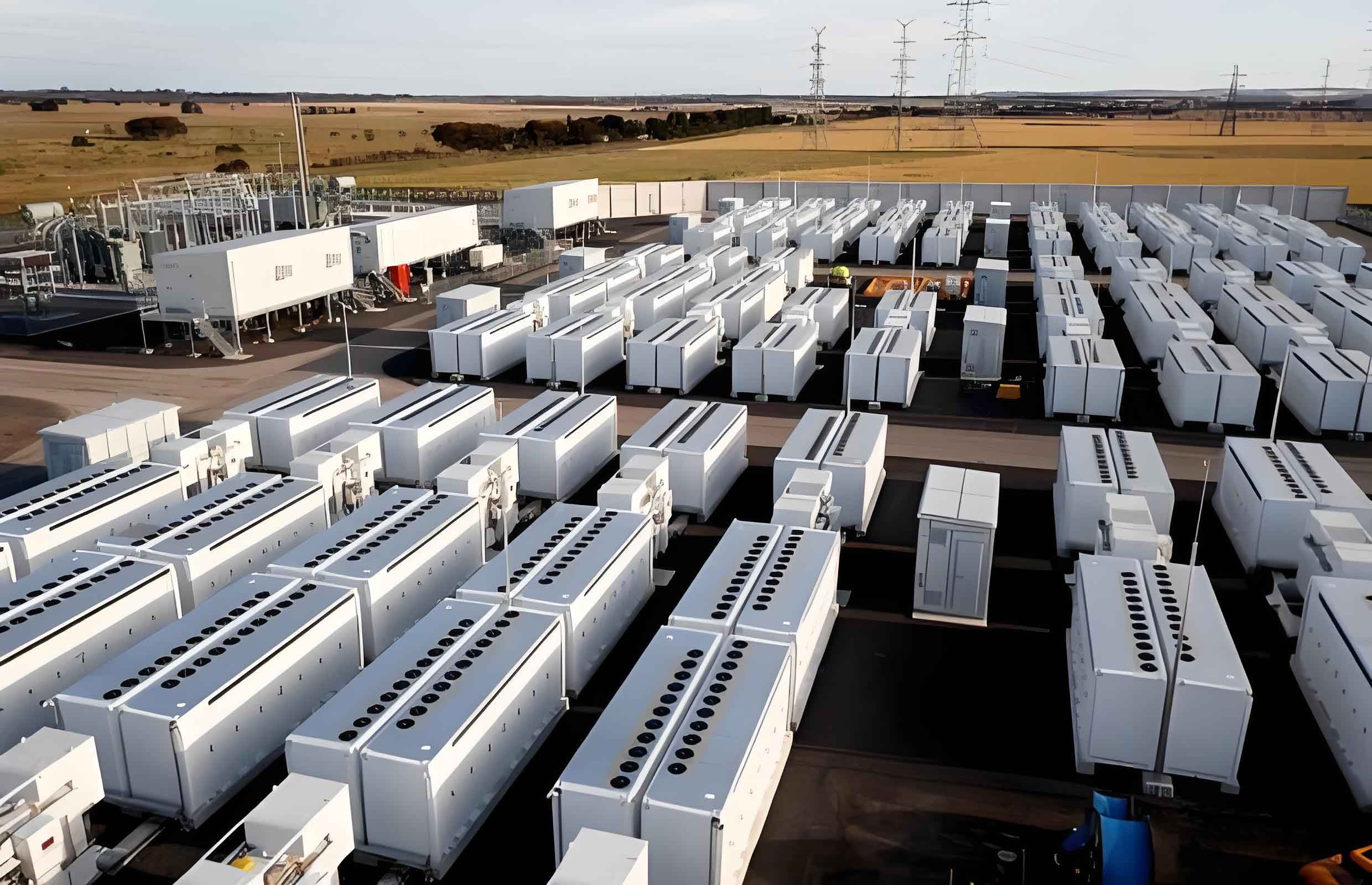
Additive manufacturing, or 3D printing, has emerged as a disruptive force with the potential to redefine how we build battery energy storage system components. By enabling the layer-by-layer construction of complex, pre-designed three-dimensional structures, 3D printing moves beyond the constraints of conventional methods. This technology promises unparalleled advantages for the battery energy storage system sector: the ability to create lightweight, customized geometries for niche applications; the fabrication of intricate electrode architectures that shorten ion diffusion paths and enhance rate capability; and the direct integration of components, which can simplify assembly and improve interfacial contact. Crucially, it opens a viable pathway for manufacturing all-solid-state batteries, a next-generation battery energy storage system with superior safety and energy density, by allowing the precise deposition of solid electrolytes and electrodes in controlled configurations. This article provides a comprehensive overview of the research progress in applying 3D printing technologies to electrochemical energy storage, detailing the printing techniques, material developments for key battery components, and the performance of printed devices, culminating in a discussion of the challenges and future outlook for printed battery energy storage system.
Fundamental 3D Printing Techniques for Battery Fabrication
The selection of an appropriate 3D printing technique is paramount, as it dictates the material requirements, feature resolution, printing speed, and suitability for different battery components. Several additive manufacturing methods have been adapted for energy storage applications, each with distinct operational principles and trade-offs.
| Printing Technique | Basic Principle | Key Advantages | Primary Challenges | Typical Battery Applications |
|---|---|---|---|---|
| Direct Ink Writing (DIW) | Extrusion of shear-thinning inks through a nozzle to build 3D structures layer-by-layer. | High material versatility (ceramics, polymers, composites), ability to create complex porous architectures. | Requires careful ink rheology tuning; may need post-processing (drying, sintering); resolution limited by nozzle size. | Porous electrodes, solid electrolyte scaffolds, interdigitated microbatteries. |
| Fused Deposition Modeling (FDM) | Thermoplastic filaments are heated, extruded, and solidified on a build platform. | Widely available, low cost, uses durable thermoplastic matrices; enables direct printing of flexible components. | Limited to thermoplastic-based composites; requires high-temperature processing; surface roughness can be high. | Flexible polymer-composite electrodes and casings. |
| Stereolithography (SLA) | UV laser selectively cures liquid photopolymer resin in a vat. | Excellent surface finish and high resolution (<50 µm); can produce intricate, smooth parts. | Limited to photo-curable resins; material properties may be brittle; slow printing process. | Encapsulation frames, solid polymer electrolyte structures, precision components. |
| Digital Light Processing (DLP) | Projects a full-layer UV image to cure an entire layer of resin simultaneously. | Significantly faster than SLA for layer curing; maintains high resolution. | Similar material limitations as SLA; potential light scattering from filler particles. | Similar to SLA, but more suited for rapid prototyping of solid electrolyte layers. |
The cornerstone of extrusion-based techniques like DIW and FDM is the formulation of functional “inks” or filaments. For DIW, the ink must exhibit shear-thinning behavior, expressed as a decrease in viscosity ($\eta$) under applied shear stress ($\tau$), often modeled by the power-law or Herschel-Bulkley equations:
$$ \tau = \tau_y + K \cdot \dot{\gamma}^n $$
where $\tau_y$ is the yield stress, $K$ is the consistency index, $\dot{\gamma}$ is the shear rate, and $n$ is the flow index ($n < 1$ for shear-thinning). This property allows the ink to flow easily through the nozzle under pressure but retain its shape immediately after deposition. Furthermore, the ink must possess a high storage modulus ($G’$) to support the weight of subsequent layers, a characteristic often achieved using polymeric binders, nanoscale additives (like carbon nanotubes or cellulose nanofibers), or gel networks.
3D-Printed Battery Components: From Electrodes to Electrolytes
The true potential of 3D printing for battery energy storage system lies in its ability to re-engineer each critical component, moving from flat, dense layers to architectured, three-dimensional forms that optimize electrochemical performance.
1. Electrodes with Engineered Microarchitecture
Conventional electrodes represent a compromise: high mass loading increases energy density but thickens the diffusion path, hurting power density. 3D printing breaks this trade-off by creating electrodes with designed porosity and channel geometry.
Cathodes: Successful printing has been demonstrated with various cathode materials. For instance, lithium iron phosphate (LFP) inks have been printed into interdigitated microelectrodes, achieving high areal capacity. Composites like thermoplastic polyurethane (TPU)-LFP filaments enable FDM printing of highly flexible and cyclically stable cathodes. For higher energy density, inks containing lithium nickel cobalt manganese oxide (NCM) have been printed into fibrous structures for integration into smart textiles, showcasing the customizability for wearable battery energy storage system.
Anodes: Research focuses on composite inks that combine active materials (e.g., lithium titanate – LTO, silicon, or metal sulfides) with conductive scaffolds. A common strategy involves using graphene oxide (GO) or carbon nanotubes to form a percolating network within the ink. Upon printing and reduction, this creates a highly conductive, porous 3D framework that hosts the active material, significantly enhancing electron transport and accommodating volume changes during cycling. The electrochemical performance of such an architectured anode can be conceptually linked to its effective ionic conductivity ($\sigma_{ion, eff}$) and electronic conductivity ($\sigma_{elec, eff}$), which are functions of the tortuosity ($\tau$) and volume fraction ($\phi$) of the conductive phase:
$$ \sigma_{ion, eff} = \sigma_{ion} \cdot \frac{\phi_{electrolyte}}{\tau^2} $$
$$ \sigma_{elec, eff} \propto \phi_{conductor}^{m} $$
where $m$ is a percolation exponent. 3D printing allows for the minimization of $\tau$ and maximization of $\phi$ in a controlled manner, directly boosting rate performance.
2. Multifunctional Current Collectors
Beyond simple foils, 3D printing enables the fabrication of current collectors with tailored geometry. For example, 3D-printed polymer templates can be metallized via electroplating to create lightweight, porous nickel or copper foams with ultra-high specific surface area. These structures provide a scaffold for direct electrode material infiltration, creating an integrated electrode/current collector with low interfacial resistance and enhanced electrolyte accessibility. The effective current distribution in such a 3D collector can be more uniform compared to a 2D foil, reducing localized overpotentials within the battery energy storage system.
3. Solid-State Electrolytes (SSEs) and All-Solid-State Batteries
This is arguably the most transformative application of 3D printing for battery energy storage system safety and energy density. The challenge with conventional SSEs (ceramic or polymer) is achieving thin, robust layers with perfect interfacial contact to electrodes. 3D printing offers solutions:
- Ceramic SSEs: Inks containing garnet-type (e.g., Li7La3Zr2O12) or sulfide-based solid electrolyte particles can be printed into dense or porous layers. Printing allows for non-planar, thick-but-tortuous, or graded electrolyte structures that can improve mechanical stability or reduce overall cell resistance.
- Polymer/Composite SSEs: Photopolymer resins (for SLA/DLP) or gel polymer inks (for DIW) can be printed into intricate 3D shapes. For example, printing a solid polymer electrolyte (SPE) with an Archimedean spiral or lattice structure massively increases the electrode/electrolyte contact area, lowering interfacial impedance. Composite inks can incorporate ceramic fillers or metal-organic frameworks (MOFs) to enhance ionic conductivity and lithium-ion transference number ($t_{+}$):
$$ t_{+} = \frac{\sigma_{+}}{\sigma_{+} + \sigma_{-}} $$
where $\sigma_{+}$ and $\sigma_{-}$ are the cationic and anionic conductivity, respectively. A higher $t_{+}$ suppresses concentration polarization, a key benefit for high-power battery energy storage system.
The ultimate goal is the monolithic 3D printing of a complete all-solid-state battery. This involves the sequential or multi-material printing of cathode, solid electrolyte, and anode layers in a tightly integrated, interdigitated, or sandwich configuration. Aerosol jet printing has demonstrated this capability, fabricating full cells with a seamless cathode/electrolyte interface that exhibits excellent cycling stability. Similarly, 3D-printed interdigitated zinc-air microbatteries with integrated gel polymer electrolytes showcase high areal energy density for micro-devices. This integrated approach minimizes inactive volume and packaging, pushing the gravimetric and volumetric energy density boundaries of the battery energy storage system.
Current Limitations and Future Outlook
Despite remarkable progress, several challenges must be addressed to transition 3D-printed battery energy storage system from lab-scale prototypes to commercial products.
| Challenge Area | Specific Limitations | Potential Research Directions |
|---|---|---|
| Materials & Inks | Limited library of high-performance, printable active materials (e.g., high-Ni NCM, Si anodes). Inks for SSEs often have lower conductivity than bulk counterparts. Binder systems may be electrochemically unstable. | Develop novel synthesis for nano-structured active materials with inherent printability. Design multi-functional binders that also conduct ions. Explore in-situ curing/polymerization during printing. |
| Resolution & Throughput | Trade-off between feature size (resolution) and printing speed. DIW/FDM resolution is often >100 µm, limiting electrode architectural fineness. SLA/DLP are slow for thick components. | Advance micro-extrusion printheads. Develop high-speed volumetric printing techniques. Implement multi-nozzle or continuous printing strategies for scale-up. |
| Interfacial Engineering | Weak mechanical and electrochemical interfaces between sequentially printed layers (e.g., electrode/electrolyte). Residual porosity or binder can increase interfacial resistance. | Design inks with cross-linking chemistry between layers. Use hybrid printing (e.g., print & infiltrate) to improve contact. Develop in-situ sintering (laser, photonic) within the printer. |
| Process Control & Modeling | Lack of standardized protocols. Defects (voids, cracks, delamination) can form during printing or post-processing. Difficult to predict final electrochemical performance from print parameters. | Integrate real-time monitoring (vision, rheology) for closed-loop control. Develop multi-physics models linking ink rheology, printing dynamics, and electrochemical cell performance. |
Looking forward, the convergence of 3D printing with advancements in computational design, artificial intelligence, and new material discovery will propel the field. The future may see:
- Fully Digital and Customized battery energy storage system Manufacturing: From a digital blueprint, a battery energy storage system with bespoke shape, capacity, and power profile could be printed on-demand for specific applications in EVs, drones, or medical implants.
- Multi-Functional Structural Batteries: 3D printing is ideal for creating composites where the material simultaneously carries mechanical load and stores electrical energy, effectively turning a car’s body or a drone’s frame into part of the battery energy storage system.
- Graded and Heterogeneous Architectures: Printing with voxel-level control could enable batteries with spatially varied composition—such as gradient porosity or concentration-graded electrodes—to optimally manage stress, ion flux, and thermal profiles.
- Sustainable Manufacturing: Additive manufacturing is inherently less wasteful. Coupled with printable recycled or bio-derived electrode materials, it could lead to more sustainable life cycles for battery energy storage system.
In conclusion, 3D printing technology is not merely a novel fabrication tool but a foundational enabler for the next generation of high-performance, safe, and customizable battery energy storage system. By providing unprecedented control over the three-dimensional architecture of every battery component, it addresses critical limitations in ionic transport, interfacial stability, and energy density. While challenges in materials, resolution, and integration remain, the rapid pace of innovation in this interdisciplinary field suggests that 3D-printed batteries will play an increasingly vital role in our energy storage future, transforming how we design, manufacture, and deploy battery energy storage system across all scales of application.