
In modern energy systems, addressing energy shortages and environmental pollution has become a critical challenge, driving the rapid adoption of renewable energy sources and advanced energy storage technologies. Among these, the lithium-ion battery stands out as a pivotal component due to its high energy density, long cycle life, low self-discharge rate, and lack of memory effect. As a key energy storage unit in new energy power systems, lithium-ion batteries facilitate the integration of renewable energy by mitigating power fluctuations and enhancing grid stability. However, with the increasing penetration of renewable energy and the scaling up of energy storage capacities, ensuring the reliable operation of lithium-ion battery systems in applications such as microgrid demand response, containerized energy storage, and grid peak shaving has become paramount. A major factor influencing the longevity and safety of lithium-ion batteries is temperature. During operation, lithium-ion batteries inevitably generate heat, and excessive or uneven temperatures can accelerate degradation, reduce efficiency, and pose safety risks like thermal runaway. Therefore, effective thermal management systems (TMS) are essential to control temperature rise and maintain uniformity, thereby improving the reliability of new energy power systems. While previous studies have focused on maximizing cooling performance, often evaluated through maximum temperature and temperature difference, there is a growing need to consider energy consumption of the TMS and temperature uniformity across the battery unit. Lower energy consumption reduces operational costs and failure rates, while better temperature uniformity ensures consistent capacity and extends battery life. This research aims to address these aspects by proposing an optimized liquid cooling plate design, analyzing its performance through computational fluid dynamics (CFD), and comparing it with existing designs to provide insights for enhancing lithium-ion battery energy storage in renewable energy systems.
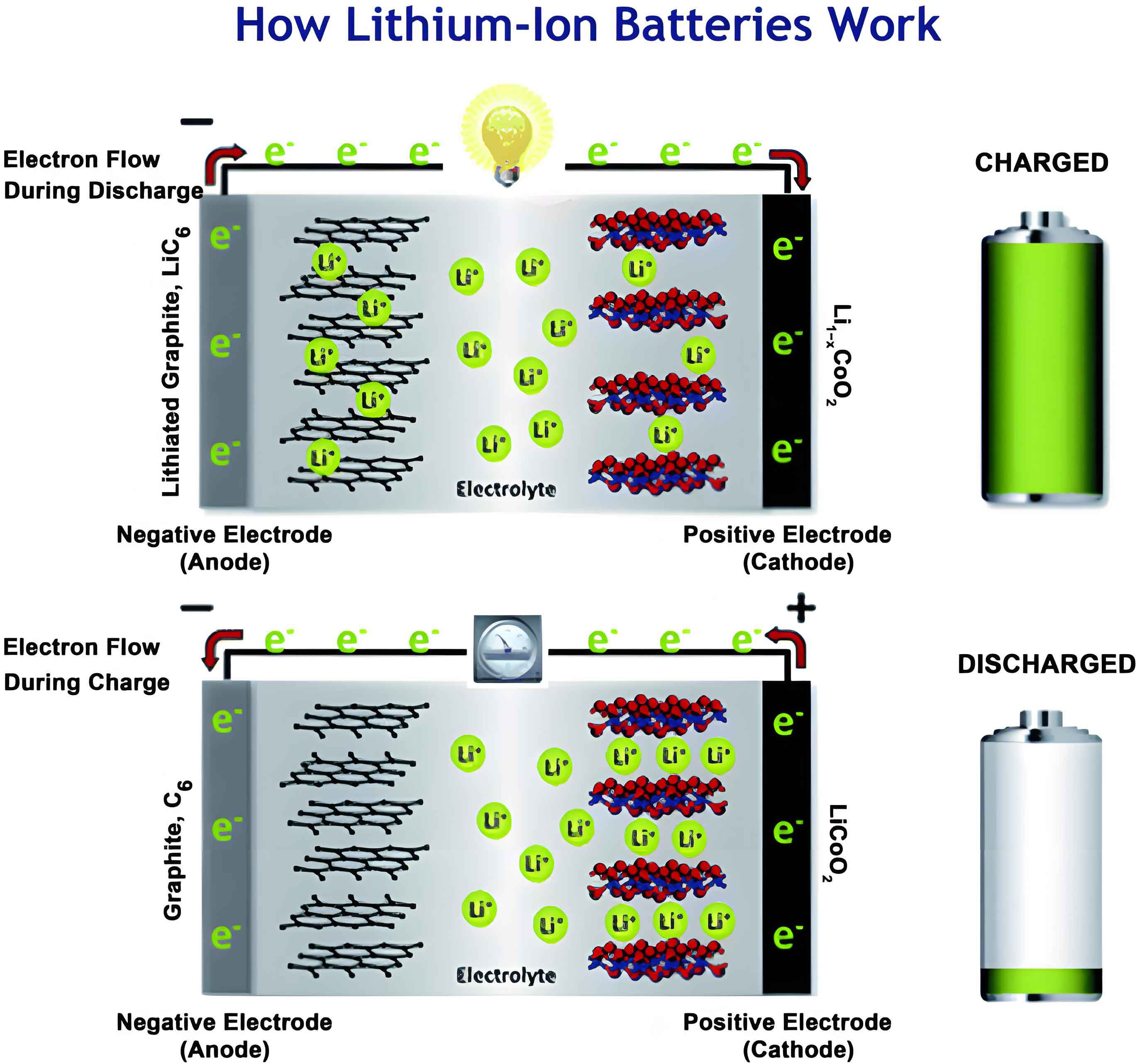
The fundamental operation of a lithium-ion battery involves the reversible intercalation and deintercalation of lithium ions between the anode and cathode. During charging, lithium ions move from the cathode (e.g., LiFePO4) to the anode (e.g., graphite), while electrons flow through an external circuit. Discharge reverses this process. The overall electrochemical reactions can be summarized as:
At the cathode: $$ \text{LiFePO}_4 \rightleftharpoons \text{Li}_{1-x}\text{FePO}_4 + x\text{Li}^+ + x\text{e}^- $$
At the anode: $$ x\text{Li}^+ + x\text{e}^- + 6\text{C} \rightleftharpoons \text{Li}_x\text{C}_6 $$
Overall: $$ \text{LiFePO}_4 + 6\text{C} \rightleftharpoons \text{Li}_{1-x}\text{FePO}_4 + \text{Li}_x\text{C}_6 $$
Heat generation within a lithium-ion battery arises from internal processes, primarily irreversible heat (due to ohmic and polarization losses) and reversible heat (from entropy changes). The total heat generation rate \( Q \) can be modeled using established theories, combining irreversible and reversible components:
$$ Q = I^2 (R_j + R_p) + I T \frac{dE}{dT} $$
where \( I \) is the current density, \( R_j \) and \( R_p \) are the ohmic and polarization resistances, \( T \) is the battery temperature, and \( \frac{dE}{dT} \) is the temperature coefficient of the electromotive force. This equation forms the basis for thermal analysis, as it accounts for both joule heating and entropic effects. Heat transfer within the battery and to the surroundings involves conduction, convection, and sometimes radiation. The conduction process is governed by Fourier’s law:
$$ \rho_1 c_p \frac{\partial T}{\partial t} = \nabla \cdot (k \nabla T) + Q $$
where \( \rho_1 \) is the density, \( c_p \) is the specific heat capacity, and \( k \) is the thermal conductivity of the lithium-ion battery. Convection between the battery surface and the cooling medium is described by Newton’s law:
$$ q_2 = h_f (T_2 – T_1) $$
with \( q_2 \) as the heat flux, \( h_f \) as the convective heat transfer coefficient, and \( T_2 \) and \( T_1 \) as the surface and fluid temperatures, respectively. To validate the thermal model, a single lithium-ion battery cell was simulated under a 5C discharge rate at an ambient temperature of 303.15 K, with natural convection on the sides. The results showed good agreement with experimental data from prior studies, confirming the accuracy of the approach for predicting temperature rise in lithium-ion batteries.
To achieve effective thermal management for lithium-ion battery energy storage units, a liquid cooling system is employed due to its superior heat transfer capabilities compared to air cooling. In this study, a side-concave liquid cooling plate is proposed, building upon previous designs like the three-step farmland type. The geometry features a concave structure on the sides to increase the lateral flow area in the channels, addressing issues such as liquid accumulation at corners and non-uniform temperature distribution. The cooling plate is attached to the main surface of a prismatic lithium-ion battery with dimensions of 17 mm × 79 mm × 124 mm. The plate itself measures 5 mm × 79 mm × 124 mm, with flow channels of 3 mm depth. The design includes three阶梯 (steps) with varying channel widths: 4 mm for the first and third steps, and 1 mm for the second step, spaced at intervals of 8.5 mm, 8.5 mm/8 mm, and 4 mm, respectively. Inlets and outlets are positioned at the ends, each with a width of 6 mm and length of 9 mm. The concave angles are optimized to enhance flow distribution and reduce pressure drop. A three-dimensional CFD model is developed using ANSYS Fluent to simulate the thermal and fluid dynamics performance. The governing equations for the fluid flow and heat transfer include the continuity, momentum, and energy equations. For an incompressible fluid, these are:
Continuity: $$ \frac{\partial \rho_w}{\partial t} + \nabla \cdot (\rho_w \mathbf{v}) = 0 $$
Momentum: $$ \rho_w \left( \frac{\partial \mathbf{v}}{\partial t} + (\nabla \mathbf{v}) \mathbf{v} \right) = -\nabla p + \mu \nabla^2 \mathbf{v} $$
Energy for fluid: $$ \frac{\partial}{\partial t} (\rho_w c_{pw} T_w) + \nabla \cdot (\rho_w c_{pw} \mathbf{v} T_w) = \nabla \cdot (k_w \nabla T_w) $$
Energy for solid (cooling plate): $$ \frac{\partial}{\partial t} (\rho_c c_{pc} T_c) = \nabla \cdot (k_c \nabla T_c) $$
Here, \( \rho_w \) and \( \rho_c \) are densities, \( c_{pw} \) and \( c_{pc} \) are specific heats, \( k_w \) and \( k_c \) are thermal conductivities, \( \mathbf{v} \) is velocity, \( p \) is pressure, and \( \mu \) is dynamic viscosity. The lithium-ion battery is modeled as a heat source with the generation rate from the earlier equation. Boundary conditions include an ambient temperature of 298.15 K, a 5C discharge rate, and natural convection on the battery sides with a heat transfer coefficient of 5 W/(m²·K). The cooling liquid is water with properties: density 1000 kg/m³, specific heat 4200 J/(kg·K), thermal conductivity 0.6 W/(m·K), and viscosity 0.001003 Pa·s. The cooling plate material is aluminum with a thermal conductivity of 202.4 W/(m·K), specific heat 871 J/(kg·K), and density 2719 kg/m³. A laminar flow model is used, and grid independence is verified to ensure computational accuracy.
The performance of the side-concave liquid cooling plate is evaluated by analyzing several key parameters: flow direction, flow velocity, inlet vertical flow area, and channel lateral flow area. Each parameter’s impact on maximum temperature, temperature difference, temperature uniformity, and pressure drop is assessed to optimize the design for energy efficiency and thermal homogeneity. First, the effect of flow direction is considered. Three configurations are tested: double forward flow (both inlets flowing in the same direction toward the outlets), double reverse flow (opposite direction), and one-forward-one-reverse flow. The results indicate that while maximum temperature and temperature difference remain similar across configurations (around 307 K and 2 K, respectively), the temperature distribution varies significantly. In double forward flow, the temperature contours are smooth and uniform, whereas double reverse flow causes liquid回流 (backflow) at corners, leading to deeper concave isotherms and poorer uniformity. One-forward-one-reverse flow results in dispersed temperature gradients and larger high-temperature zones. Thus, double forward flow is selected for its superior temperature uniformity. Second, flow velocity is varied from \( 1 \times 10^{-3} \) m/s to \( 1.2 \times 10^{-1} \) m/s. As velocity increases, the maximum temperature decreases significantly, as shown in Table 1, due to enhanced convective heat transfer. However, the pressure drop and average pressure rise quadratically, leading to higher energy consumption for pumping. A velocity of \( 3 \times 10^{-2} \) m/s offers a balance between cooling performance and energy cost. Third, the inlet vertical flow area is adjusted by changing the inlet length from 5 mm to 13 mm. A length of 9 mm provides optimal cooling coverage; longer inlets reduce the high-temperature area but compromise uniformity by leaving parts of the first step undercooled. Fourth, the channel lateral flow area is modified by altering the side concave angles, which affects the width of the flow channels. Smaller angles (e.g., 63.43°) increase the lateral area, flattening isotherms and improving flow at corners, while also reducing pressure drop. Table 2 summarizes the effects of different angle combinations on thermal and hydraulic performance.
| Flow Velocity (m/s) | Maximum Temperature (K) | Temperature Difference (K) | Pressure Drop (Pa) | Average Pressure (Pa) |
|---|---|---|---|---|
| \( 1 \times 10^{-3} \) | 312.3 | 2.8 | 0.002 | 0.001 |
| \( 5 \times 10^{-3} \) | 309.1 | 2.6 | 0.05 | 0.02 |
| \( 1 \times 10^{-2} \) | 307.7 | 2.8 | 0.2 | 0.08 |
| \( 3 \times 10^{-2} \) | 306.5 | 2.5 | 1.8 | 0.7 |
| \( 6 \times 10^{-2} \) | 305.2 | 2.3 | 7.2 | 2.8 |
| \( 9 \times 10^{-2} \) | 304.7 | 2.2 | 16.2 | 6.3 |
| \( 1.2 \times 10^{-1} \) | 304.3 | 2.1 | 28.8 | 11.2 |
The pressure drop \( \Delta p \) and average pressure \( p_{\text{avg}} \) can be related to flow velocity \( v \) through empirical correlations, often approximated as \( \Delta p \propto v^2 \) for laminar flow in channels, highlighting the energy trade-off. To quantify temperature uniformity, a uniformity index \( U \) is defined based on the standard deviation of temperature across the battery surface:
$$ U = 1 – \frac{\sigma_T}{T_{\text{max}} – T_{\text{min}}} $$
where \( \sigma_T \) is the standard deviation, and \( T_{\text{max}} \) and \( T_{\text{min}} \) are the maximum and minimum temperatures. A higher \( U \) indicates better uniformity. For the side-concave design under optimal conditions, \( U \) reaches above 0.95, demonstrating effective thermal management. The energy consumption of the thermal management system is primarily due to the pump work required to overcome the pressure drop. The pumping power \( P \) can be estimated as:
$$ P = \Delta p \cdot Q_v $$
where \( Q_v \) is the volumetric flow rate. Reducing pressure drop is crucial for minimizing energy consumption, especially in large-scale lithium-ion battery energy storage systems where multiple cooling plates are used.
| W Lengths (mm) for Steps 1-2-3 | Concave Angles (degrees) for Steps 1-2-3 | Maximum Temperature (K) | Temperature Difference (K) | Uniformity Index \( U \) | Pressure Drop (Pa) |
|---|---|---|---|---|---|
| 1, 1, 1 | 63.43, 63.43, 80.53 | 307.0 | 2.0 | 0.96 | 4.13 |
| 3, 3, 2 | 69.86, 69.86, 83.66 | 307.1 | 2.1 | 0.94 | 4.65 |
| 5, 5, 3 | 76.87, 76.87, 86.92 | 307.1 | 2.2 | 0.92 | 5.10 |
| 7, 7, 4 | 84.29, 84.29, 90.00 | 307.2 | 2.3 | 0.90 | 5.50 |
To further validate the superiority of the side-concave liquid cooling plate, a comparative analysis is conducted with two other designs: a three-step farmland type and a side-channel type. The three-step farmland type has a similar structure but without the concave sides, leading to narrower lateral flow areas. The side-channel type features simpler, straight channels along the edges. All designs are simulated under identical conditions: 5C discharge, ambient temperature of 298.15 K, double forward flow at \( 3 \times 10^{-2} \) m/s. The results, summarized in Table 3, show that the side-concave plate achieves the best balance between thermal performance and energy consumption. Specifically, it maintains a low maximum temperature of 307.0 K and a temperature difference of 2.0 K, comparable to the three-step farmland type, but with significantly improved temperature uniformity. The area of high temperature (above 307.1 K) is reduced to 13.95% of the battery surface, versus 18.9% for the farmland type and 50% for the side-channel type. Moreover, the pressure drop for the side-concave plate is 4.13 Pa, which is 24.9% lower than the farmland type (5.50 Pa) and slightly higher than the side-channel type (3.42 Pa). However, the side-channel type suffers from a large temperature difference exceeding 5 K, making it unsuitable for applications requiring uniform temperature distribution. Thus, the side-concave design is optimal for lithium-ion battery energy storage units where both energy efficiency and thermal homogeneity are critical.
| Cooling Plate Design | Maximum Temperature (K) | Temperature Difference (K) | High-Temperature Area (% above 307.1 K) | Pressure Drop (Pa) | Pumping Power (mW) |
|---|---|---|---|---|---|
| Side-Concave Type | 307.0 | 2.0 | 13.95 | 4.13 | 0.124 |
| Three-Step Farmland Type | 307.1 | 2.1 | 18.9 | 5.50 | 0.165 |
| Side-Channel Type | 308.5 | 5.2 | 50.0 | 3.42 | 0.103 |
The pumping power is calculated assuming a volumetric flow rate \( Q_v = v \times A_{\text{cross}} \), where \( A_{\text{cross}} \) is the total cross-sectional area of the inlets. For the side-concave plate, with two inlets of area \( 9 \times 10^{-6} \) m² each and velocity \( 3 \times 10^{-2} \) m/s, \( Q_v = 5.4 \times 10^{-7} \) m³/s, yielding \( P = 4.13 \times 5.4 \times 10^{-7} = 2.23 \times 10^{-6} \) W per plate. In a large battery pack with hundreds of plates, this translates to substantial energy savings. The temperature uniformity is further analyzed using contour plots and statistical measures. For instance, the standard deviation of temperature across the battery surface with the side-concave plate is below 0.5 K, indicating excellent consistency. This is vital for preventing localized hot spots that can degrade the lithium-ion battery faster and cause imbalances in capacity among cells. The design also ensures that the cooling liquid flows smoothly without stagnation, enhancing heat exchange efficiency. The concave angles facilitate better distribution of the liquid, reducing the risk of dry zones where heat accumulation could occur.
In addition to the parametric studies, the research explores the implications of these findings for real-world applications in new energy power systems. Lithium-ion battery energy storage units are often deployed in challenging environments, such as containerized systems where space is limited and cooling resources are constrained. The side-concave liquid cooling plate offers a compact and efficient solution, potentially integrating with other thermal management strategies like phase change materials (PCM) or air cooling for hybrid systems. For example, combining the liquid cooling plate with PCM could provide passive cooling during peak loads, reducing the reliance on active pumping and further cutting energy consumption. Moreover, the design principles can be scaled for larger battery modules or packs. By optimizing the channel geometry and flow parameters, similar improvements in temperature uniformity and energy efficiency can be achieved for arrays of lithium-ion batteries. This is crucial for grid-scale energy storage, where reliability and longevity are paramount. The study also highlights the importance of considering both thermal and hydraulic performance in TMS design, rather than focusing solely on maximum temperature reduction. Future work could involve experimental validation of the CFD results, dynamic simulations under varying load conditions, and life-cycle analysis to assess long-term benefits.
To summarize, this research underscores the critical role of thermal management in enhancing the performance and safety of lithium-ion battery energy storage units within renewable energy systems. Through detailed CFD analysis, a side-concave liquid cooling plate is proposed and optimized, demonstrating significant advantages in temperature uniformity and energy consumption reduction. Key findings include: flow direction affects temperature distribution, with double forward flow minimizing回流 and promoting homogeneity; increasing flow velocity improves cooling but raises energy costs, suggesting an optimal range; enlarging the inlet vertical area can reduce high-temperature zones but must be balanced with uniformity; and expanding the channel lateral flow area via smaller concave angles flattens temperature contours and lowers pressure drop. Comparative evaluations confirm that the side-concave design outperforms alternatives like the three-step farmland and side-channel types, achieving a uniformity index above 0.95 and a pressure drop reduction of over 24%. These insights provide valuable guidance for designing efficient thermal management systems that ensure the reliable operation of lithium-ion batteries in applications such as solar and wind energy integration, electric vehicle charging stations, and smart grids. By prioritizing both thermal homogeneity and energy efficiency, this work contributes to the advancement of sustainable energy infrastructure and the broader adoption of lithium-ion battery technology.
In conclusion, the integration of advanced thermal management solutions is essential for unlocking the full potential of lithium-ion battery energy storage in the transition to clean energy. The side-concave liquid cooling plate represents a step forward in this direction, offering a practical and scalable approach to address temperature-related challenges. As the demand for energy storage grows, continued innovation in cooling technologies will be key to improving system reliability, reducing operational costs, and extending battery life. This research, conducted through rigorous modeling and simulation, lays a foundation for future developments and real-world implementations, ultimately supporting the stability and efficiency of new energy power systems globally.