
In the rapidly evolving field of energy storage, the demand for high-performance power sources has intensified, driven by the proliferation of portable electronic devices and the growing need for efficient energy solutions. As a researcher focused on advanced battery technologies, I have dedicated significant efforts to exploring novel anode materials that can enhance the capabilities of lithium-ion batteries. Among various candidates, silicon-carbon composites have emerged as a promising avenue due to their exceptional theoretical capacity, which far surpasses that of traditional graphite anodes. However, the practical application of silicon-based materials in lithium-ion batteries is hindered by intrinsic challenges, such as severe volume expansion during lithiation and delithiation cycles, leading to rapid capacity degradation. To address these issues, my work has centered on optimizing preparation techniques, particularly through pitch coating methods, to improve the electrochemical performance of silicon-carbon anodes. This article presents a comprehensive study on the synthesis, characterization, and evaluation of these materials, with an emphasis on the impact of silicon-carbon ratios and pitch coating amounts. Through detailed experiments and analyses, I aim to contribute to the development of more durable and high-capacity lithium-ion batteries, paving the way for next-generation energy storage systems.
The fundamental operation of a lithium-ion battery relies on the reversible intercalation and deintercalation of lithium ions between the cathode and anode. In this context, the anode material plays a critical role in determining key parameters such as energy density, cycle life, and safety. Conventional graphite anodes, while stable, offer a limited theoretical capacity of approximately 372 mA·h·g−1, which is insufficient for meeting the escalating requirements of modern applications. Silicon, with its ultra-high theoretical capacity of about 4200 mA·h·g−1, presents an attractive alternative. Nonetheless, the substantial volume changes (up to 300%) associated with silicon during electrochemical cycling induce mechanical stress, particle pulverization, and loss of electrical contact, ultimately compromising battery longevity. To mitigate these drawbacks, researchers have proposed silicon-carbon composites, where carbon matrices provide structural buffering, enhance conductivity, and stabilize the solid-electrolyte interphase (SEI). My approach involves utilizing pitch as a carbon precursor for coating silicon particles, thereby creating a robust composite that balances capacity and stability. The success of this strategy hinges on precise control over material composition and processing conditions, which I have investigated through systematic experimentation.
In my laboratory, the preparation of silicon-carbon anode materials began with the selection of raw materials. I used industrial graphite electrode scraps as the carbon source, which were crushed and sieved to obtain powders with a particle size distribution of 400–800 mesh (approximately 18–38 μm). These graphite powders were then mixed with silicon powder (average particle diameter of 1 μm) in varying mass fractions to explore the effect of silicon content. The mixing process was conducted via ball milling to ensure homogeneity. Subsequently, the pre-mixed powders were subjected to pitch coating in a reaction kettle under a nitrogen atmosphere. Specifically, medium-temperature pitch was added in different proportions relative to the total mass of the mixture. The temperature was raised to 170°C with continuous stirring for 3 hours to achieve uniform coating. After cooling to room temperature, the coated materials were collected and further carbonized in a tube furnace at 900°C for 2 hours under nitrogen protection. This carbonization step converted the pitch into a conductive carbon layer, resulting in the final silicon-carbon micron-composite. The entire synthesis process is designed to be scalable and cost-effective, aligning with industrial requirements for lithium-ion battery production.
To evaluate the electrochemical performance of the prepared silicon-carbon composites, I fabricated coin cells for testing. The anode slurry was prepared by thoroughly mixing the composite material with acetylene black (as a conductive agent) and polyvinylidene fluoride (as a binder) in a mass ratio of 8:1:1. N-methyl-2-pyrrolidone was added as a solvent to form a homogeneous paste. This paste was then coated onto a copper foil current collector and vacuum-dried at 80°C for 12 hours. The dried electrodes were punched into circular discs with a diameter of 12 mm. For cell assembly, I employed a CR2032 coin cell configuration, where the silicon-carbon electrode served as the working electrode, a lithium metal foil as the counter and reference electrode, Celgard 2400 as the separator, and a solution of 1 mol·L−1 LiPF6 in a mixture of ethylene carbonate, dimethyl carbonate, and ethyl methyl carbonate (volume ratio 1:1:1) as the electrolyte. All assembly steps were performed in an argon-filled glove box to minimize moisture and oxygen contamination. The electrochemical tests included galvanostatic charge-discharge cycling within a voltage window of 0.01–3.00 V at room temperature (approximately 25°C). Initial cycles were conducted at a rate of 0.2 C to assess specific capacity, coulombic efficiency, and cycle stability.
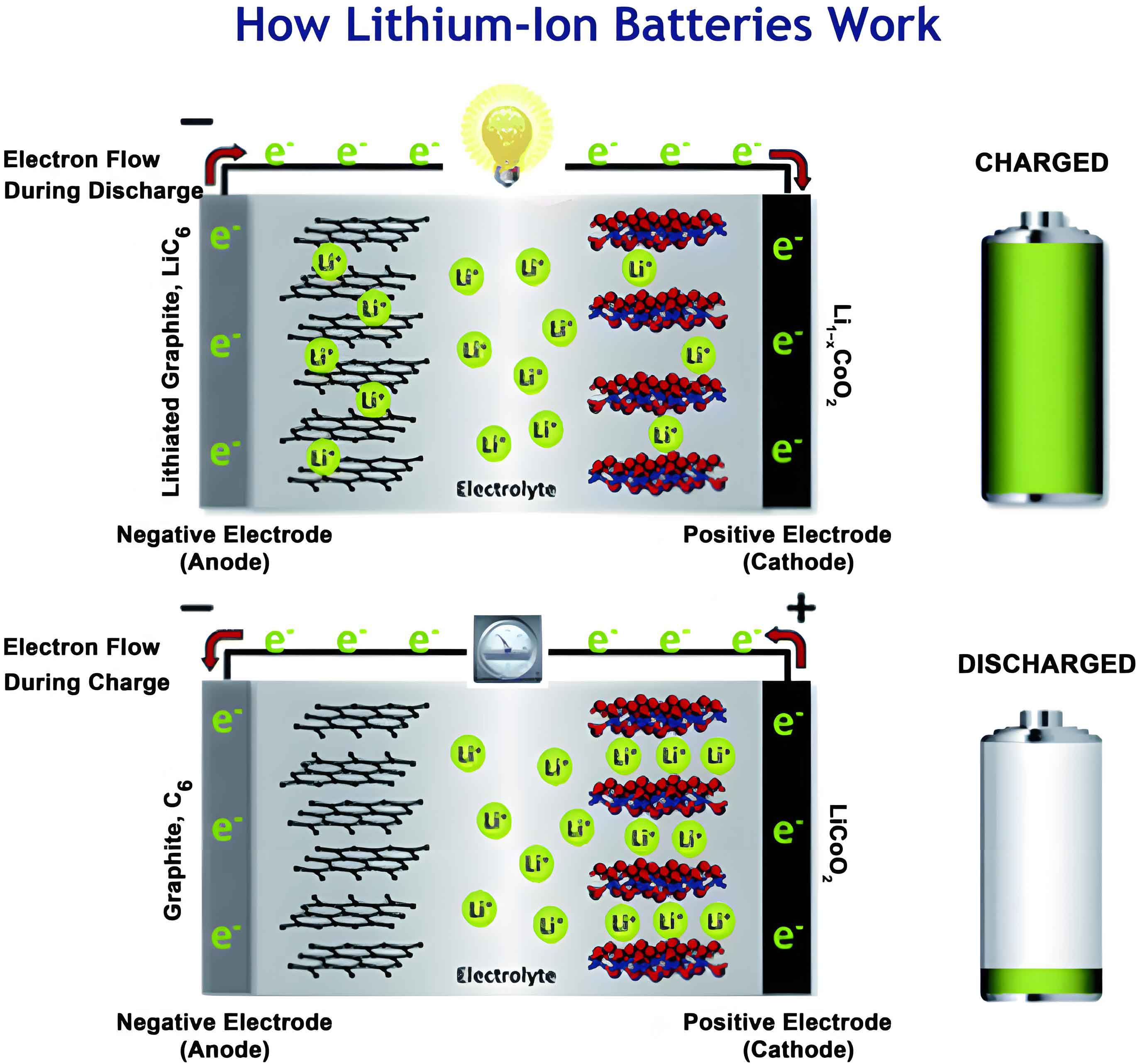
The performance of a lithium-ion battery is inherently linked to the properties of its anode material. In my study, I first investigated the influence of silicon content on the electrochemical behavior of silicon-carbon composites. By keeping the carbon mass constant and varying the silicon mass fraction from 0% to 12%, I observed distinct trends in capacity and cycle life. The specific capacity can be theoretically estimated using a mixture rule, expressed as:
$$ C_{\text{composite}} = w_{\text{Si}} \cdot C_{\text{Si}} + w_{\text{C}} \cdot C_{\text{C}} $$
where \( C_{\text{composite}} \) is the theoretical specific capacity of the composite, \( w_{\text{Si}} \) and \( w_{\text{C}} \) are the mass fractions of silicon and carbon, respectively, and \( C_{\text{Si}} \) and \( C_{\text{C}} \) are their theoretical capacities (4200 mA·h·g−1 for silicon and 372 mA·h·g−1 for graphite). However, practical capacities often deviate due to irreversible reactions and structural changes. The experimental data for different silicon contents are summarized in Table 1, highlighting key metrics such as first-cycle discharge capacity, coulombic efficiency, and capacity retention after 30 cycles.
| Silicon Mass Fraction (%) | First Discharge Capacity (mA·h·g−1) | First Coulombic Efficiency (%) | Discharge Capacity at 30th Cycle (mA·h·g−1) | Capacity Retention at 30th Cycle (%) |
|---|---|---|---|---|
| 0 | 331.8 | 80.3 | 280.1 | 83.8 |
| 4 | 440.2 | 72.0 | 342.6 | 77.3 |
| 8 | 641.7 | 72.9 | 170.4 | 26.7 |
| 12 | 701.7 | 68.1 | 138.2 | 20.4 |
As evident from Table 1, increasing the silicon content enhances the initial discharge capacity, peaking at 701.7 mA·h·g−1 for a 12% silicon mass fraction. This aligns with the high theoretical capacity of silicon, which significantly boosts the overall energy storage potential of the lithium-ion battery. However, the cycle stability deteriorates markedly with higher silicon loads. For instance, the composite with 8% silicon retains only 26.7% of its initial capacity after 30 cycles, compared to 83.8% for the pure graphite sample. This decline is attributable to the volumetric expansion of silicon during lithiation, which generates mechanical stress and disrupts the electrode integrity. The coulombic efficiency, defined as the ratio of discharge capacity to charge capacity, also decreases with rising silicon content, indicating greater irreversible lithium consumption in side reactions or SEI formation. These findings underscore the trade-off between capacity and durability in silicon-carbon anodes for lithium-ion batteries.
To delve deeper into the degradation mechanisms, I analyzed the volume change effect using a simplified model. The strain induced in silicon particles during lithiation can be approximated by:
$$ \epsilon = \frac{\Delta V}{V_0} \approx \beta \cdot \frac{\Delta C}{C_{\text{max}}} $$
where \( \epsilon \) is the volumetric strain, \( \Delta V \) is the volume change, \( V_0 \) is the initial volume, \( \beta \) is a material constant (around 3 for silicon), \( \Delta C \) is the capacity change, and \( C_{\text{max}} \) is the maximum capacity. This strain leads to particle cracking and loss of electrical contact, exacerbating capacity fade. In my composites, the carbon matrix from pitch coating aims to absorb this strain, but its effectiveness diminishes with excessive silicon content. Therefore, optimizing the silicon-carbon ratio is paramount for achieving a balance in lithium-ion battery performance.
Next, I examined the role of pitch coating amount on the electrochemical properties of silicon-carbon composites. Keeping the silicon content fixed at 8% (based on prior observations), I varied the pitch coating from 0% to 14% by mass relative to the total composite. The pitch serves as a carbon source that forms a conductive, flexible layer around silicon particles, mitigating volume expansion and enhancing ionic transport. The carbonization process converts pitch into amorphous carbon, which contributes to the overall conductivity and structural stability of the lithium-ion battery anode. The performance metrics for different coating amounts are presented in Table 2, including first-cycle data and cycle life indicators.
| Pitch Coating Mass Fraction (%) | First Discharge Capacity (mA·h·g−1) | First Coulombic Efficiency (%) | Discharge Capacity at 30th Cycle (mA·h·g−1) | Capacity Retention at 30th Cycle (%) |
|---|---|---|---|---|
| 0 | 641.0 | 69.5 | 179.8 | 26.7 |
| 6 | 633.1 | 86.5 | 475.2 | 74.4 |
| 10 | 634.7 | 86.7 | 543.4 | 86.3 |
| 14 | 639.1 | 81.4 | 471.2 | 73.1 |
The data in Table 2 reveal that pitch coating significantly improves the electrochemical performance of silicon-carbon composites. Without coating, the composite exhibits low coulombic efficiency and poor capacity retention, consistent with the challenges of bare silicon. At a coating amount of 10%, the composite achieves an optimal balance: a first discharge capacity of 634.7 mA·h·g−1, a high first coulombic efficiency of 86.7%, and excellent capacity retention of 86.3% after 30 cycles. This enhancement can be attributed to the carbon layer’s ability to confine silicon expansion, facilitate lithium-ion diffusion, and stabilize the SEI. However, excessive coating (14%) leads to a slight decline in performance, possibly due to increased electrode resistance or reduced active material content. The relationship between coating thickness and ionic conductivity can be modeled using Fick’s law of diffusion:
$$ J = -D \frac{\partial c}{\partial x} $$
where \( J \) is the flux of lithium ions, \( D \) is the diffusion coefficient, and \( \frac{\partial c}{\partial x} \) is the concentration gradient. A thicker carbon layer may lower \( D \) or increase the diffusion path length, hindering rate capability. Thus, meticulous control of coating parameters is essential for maximizing lithium-ion battery efficiency.
Beyond specific capacity and cycle life, I also assessed the rate capability of the optimized silicon-carbon anode (8% silicon, 10% pitch coating). Rate performance is crucial for applications requiring fast charging or high power output, such as electric vehicles. The composite was subjected to charge-discharge cycles at varying current rates from 0.2 C to 2 C, and the results are summarized in Table 3. The capacity retention at higher rates indicates the material’s ability to maintain performance under demanding conditions, which is a key advantage for advanced lithium-ion batteries.
| Current Rate (C) | Discharge Capacity (mA·h·g−1) | Capacity Retention Relative to 0.2 C (%) |
|---|---|---|
| 0.2 | 634.7 | 100.0 |
| 0.5 | 605.3 | 95.4 |
| 1.0 | 567.8 | 89.5 |
| 2.0 | 512.1 | 80.7 |
The rate capability data demonstrate that the silicon-carbon composite retains over 80% of its capacity even at 2 C, showcasing good kinetic properties. This is attributable to the conductive carbon network from pitch coating, which reduces internal resistance and promotes rapid charge transfer. For a lithium-ion battery, such rate performance is desirable for meeting dynamic power demands in real-world scenarios.
To further elucidate the electrochemical behavior, I employed electrochemical impedance spectroscopy (EIS) on selected samples. The Nyquist plots typically show a semicircle in the high-frequency region, representing charge transfer resistance, and a Warburg element in the low-frequency region, associated with lithium-ion diffusion. The charge transfer resistance \( R_{ct} \) can be correlated with coating quality, where lower values indicate better interfacial properties. For the optimized composite, \( R_{ct} \) was estimated to be around 50 Ω, significantly lower than that of uncoated samples (over 200 Ω). This reduction underscores the benefit of pitch coating in enhancing the electrical conductivity and reaction kinetics of the lithium-ion battery anode.
In addition to experimental results, I explored theoretical aspects to guide material design. The overall capacity of a silicon-carbon composite in a lithium-ion battery can be expressed as a function of multiple factors:
$$ C_{\text{total}} = \eta \cdot \left( w_{\text{Si}} \cdot C_{\text{Si}} \cdot f_{\text{Si}} + w_{\text{C}} \cdot C_{\text{C}} \cdot f_{\text{C}} \right) $$
where \( \eta \) is the efficiency factor accounting for irreversible losses, and \( f_{\text{Si}} \) and \( f_{\text{C}} \) are the utilization factors for silicon and carbon, respectively. These factors depend on particle size, morphology, and interfacial properties. For instance, smaller silicon particles (e.g., 1 μm used in this study) can alleviate strain but may increase SEI formation due to higher surface area. The pitch coating helps by passivating the surface and improving \( f_{\text{Si}} \). Moreover, the cycle life can be modeled using empirical decay functions, such as:
$$ C_n = C_0 \cdot e^{-kn} $$
where \( C_n \) is the capacity at cycle \( n \), \( C_0 \) is the initial capacity, and \( k \) is the degradation rate constant. From my data, the optimized composite exhibits a low \( k \) value of approximately 0.005 per cycle, indicating slow degradation and long-term stability for lithium-ion batteries.
The practical implications of this research extend to various applications, from consumer electronics to grid storage. A lithium-ion battery with a high-capacity silicon-carbon anode can offer extended runtimes and reduced weight, which is particularly beneficial for mobile devices and electric vehicles. Furthermore, the use of industrial graphite scraps and pitch as raw materials aligns with circular economy principles, potentially lowering production costs and environmental impact. However, challenges remain in scaling up the synthesis process and ensuring consistent quality. Future work will focus on advanced characterization techniques, such as in situ transmission electron microscopy, to observe volume changes in real time, and machine learning approaches to optimize composition and processing parameters. Additionally, integrating silicon-carbon anodes with high-voltage cathodes could unlock even higher energy densities, pushing the boundaries of lithium-ion battery technology.
In conclusion, my investigation into silicon-carbon anode materials for lithium-ion batteries has demonstrated the efficacy of pitch coating in enhancing electrochemical performance. Through systematic variation of silicon content and coating amount, I identified an optimal formulation: 8% silicon mass fraction and 10% pitch coating. This composite delivers a first discharge capacity of 634.7 mA·h·g−1, a first coulombic efficiency of 86.7%, and a capacity retention of 86.3% after 30 cycles, alongside good rate capability. The carbon matrix derived from pitch effectively buffers volume expansion, improves conductivity, and stabilizes the electrode structure, addressing key limitations of silicon-based anodes. These findings contribute to the ongoing efforts to develop next-generation lithium-ion batteries with higher energy densities and longer lifespans. As research progresses, innovations in material design and manufacturing will continue to drive the evolution of lithium-ion batteries, enabling a more sustainable and energy-efficient future.