
In recent years, the global shift toward renewable energy has necessitated the development of advanced energy storage systems. As a key component, LiFePO4 battery packs have gained widespread adoption due to their high energy density, environmental friendliness, and stability. However, overcharge thermal runaway remains a significant barrier to their large-scale deployment, often leading to safety incidents such as fires. This issue underscores the critical need for effective monitoring and warning systems. In this study, I explore a multi-source information fusion approach to enhance the early warning capabilities for overcharge thermal runaway in LiFePO4 battery packs. Through experimental design and data analysis, I propose a novel warning method that integrates gas emissions, solid particulate matter, and battery deformation, offering higher stability and timely intervention compared to traditional methods.
The transition to a new power system, aimed at achieving carbon neutrality, has emphasized the importance of energy storage in balancing supply and demand. LiFePO4 battery packs are integral to this system, but their susceptibility to overcharge thermal runaway poses serious risks. Traditional monitoring methods often rely on single parameters like temperature or voltage, which may not provide sufficient warning time. By fusing multiple data sources, this research aims to improve accuracy and reliability, ultimately reducing the probability of fires in energy storage applications.
Existing studies have focused on various aspects of LiFePO4 battery safety, including post-thermal runaway mitigation and gas analysis. For instance, some researchers have investigated cooling techniques and fire suppression media, while others have examined gas generation during overcharge events. However, these approaches often lack integration of complementary data streams. My work builds on these foundations by combining gas, particulate, and deformation metrics into a cohesive warning framework, leveraging the synergistic effects of multi-source information.
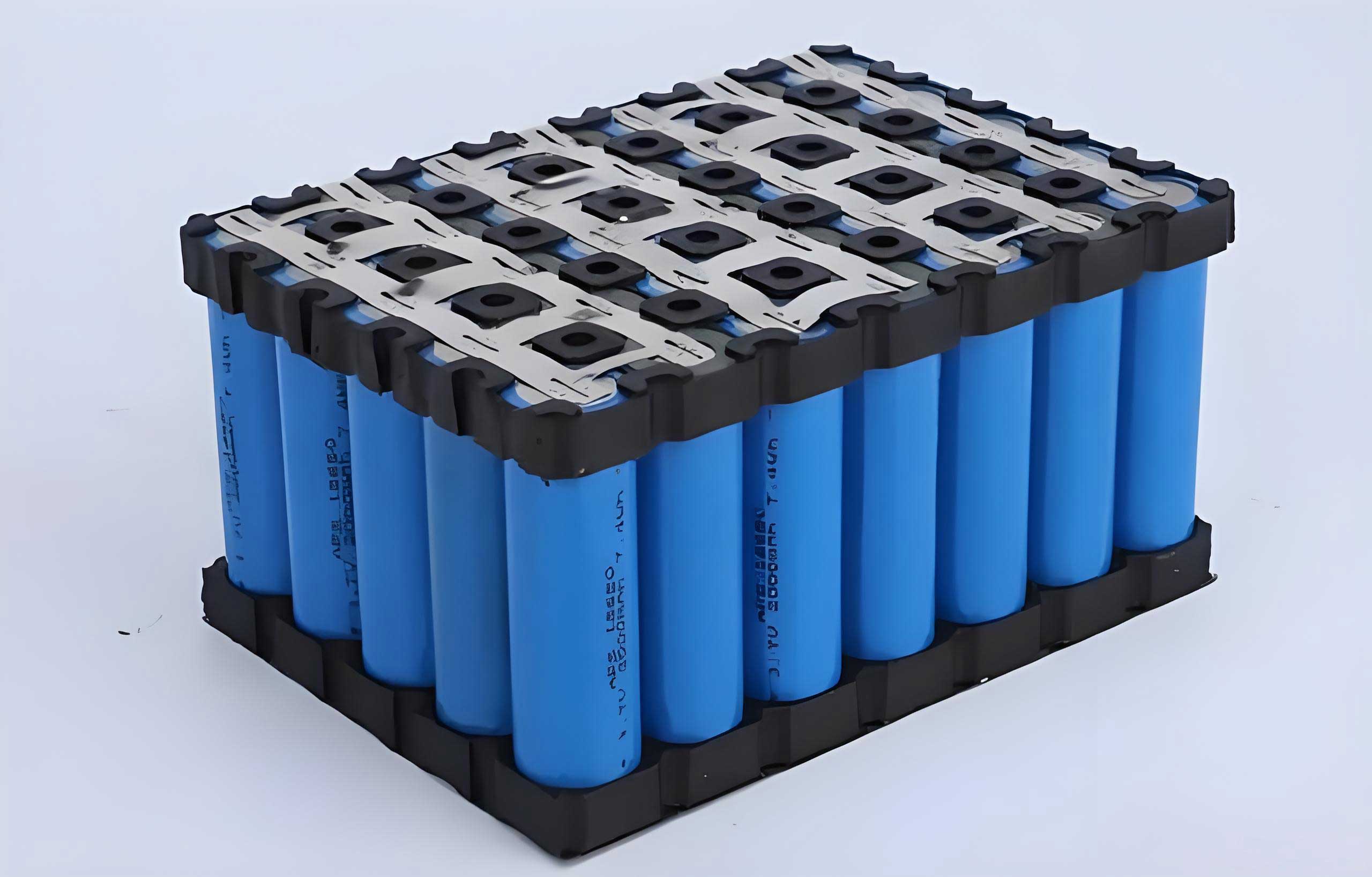
To investigate the overcharge thermal runaway of LiFePO4 battery packs, I designed an experimental setup in a controlled environment. The test platform included a LiFePO4 battery pack composed of multiple cells in series and parallel configurations. Each cell had a nominal voltage of 3.2 V and a rated capacity of 32 Ah, using a prismatic hard-case design. The battery pack was placed in a blast-proof chamber equipped with various sensors to monitor real-time changes. Key monitoring devices included gas sensors for detecting hydrogen (H₂), carbon monoxide (CO), carbon dioxide (CO₂), and volatile organic compounds (VOCs); particulate sensors for measuring solid dust particles of different sizes (e.g., 1 µm, 5 µm, and 10 µm); deformation sensors attached to multiple surfaces of the battery to capture swelling; infrared thermometers for temperature tracking; and video recording systems for visual documentation. The experimental scheme involved charging the battery pack at a constant current of 1C from time t = 0 s until thermal runaway occurred, with data logged at regular intervals.
The equipment parameters are summarized in Table 1 below:
| Device | Parameter | Specification |
|---|---|---|
| LiFePO4 Battery Pack | Nominal Voltage | 3.2 V per cell |
| LiFePO4 Battery Pack | Rated Capacity | 32 Ah |
| Charging System | Current Rate | 1C (32 A) |
| Gas Sensors | Detection Range | H₂: 0-2000 mg/L, CO: 0-1000 mg/L |
| Particulate Sensors | Particle Sizes | 1 µm, 5 µm, 10 µm |
| Deformation Sensors | Measurement Range | 0-100 mm |
| Infrared Thermometer | Temperature Range | -20°C to 300°C |
During the overcharge process, the electrochemical reactions within the LiFePO4 battery pack lead to gas generation, primarily due to lithium dendrite formation and electrolyte decomposition. The gas evolution can be modeled using reaction kinetics. For example, the production of hydrogen can be described by the following equation, where lithium reacts with polyvinylidene fluoride (PVDF):
$$ \text{Li} + \text{PVDF} \rightarrow \text{LiF} + \text{C}_2\text{H}_2 + \text{H}_2 $$
This reaction is accelerated under overcharge conditions, leading to a rapid increase in H₂ concentration. Similarly, the decomposition of electrolytes like ethylene carbonate (EC) and propylene carbonate (PC) generates CO and CO₂:
$$ \text{EC} + \text{O}_2 \rightarrow \text{CO} + \text{CO}_2 + \text{other compounds} $$
In my experiments, I observed distinct gas emission patterns over time. The data for key gases are summarized in Table 2, showing their concentrations at critical time points during overcharge.
| Time (s) | H₂ Concentration (mg/L) | CO Concentration (mg/L) | CO₂ Concentration (mg/L) | VOC Concentration (mg/L) |
|---|---|---|---|---|
| 0 | 0 | 0 | 0 | 0 |
| 500 | 150 | 5 | 10 | 2 |
| 1000 | 300 | 50 | 100 | 20 |
| 1500 | 800 | 200 | 500 | 100 |
| 2000 | 1500 | 500 | 1000 | 300 |
As shown, H₂ levels rose sharply around t = 500 s when the safety valve opened, indicating the onset of internal reactions. CO and CO₂ increases became significant after t = 1000 s, coinciding with visible smoke emission. By t = 2000 s, all gas concentrations spiked, marking the transition to open flame. This highlights the importance of H₂ as an early indicator for LiFePO4 battery pack overcharge thermal runaway.
Beyond gases, solid particulate matter is another critical byproduct of overcharge in LiFePO4 battery packs. These particles, often resulting from lithium dendrite growth and electrolyte decomposition, can exacerbate internal short circuits and contribute to thermal runaway. The particulate generation follows a size-dependent distribution, which I monitored using sensors for diameters of 1 µm, 5 µm, and 10 µm. The cumulative particle counts over time are presented in Table 3, illustrating the dynamic evolution during overcharge.
| Time (s) | 1 µm Particles (millions) | 5 µm Particles (millions) | 10 µm Particles (millions) |
|---|---|---|---|
| 0 | 0 | 0 | 0 |
| 500 | 1.5 | 0.2 | 0 |
| 1000 | 3.0 | 1.0 | 0.1 |
| 1500 | 5.0 | 2.5 | 0.5 |
| 2000 | 5.5 | 3.8 | 2.0 |
The data reveal that smaller particles (1 µm) appear earlier, around t = 500 s, and stabilize near 5.5 million by t = 2000 s. Larger particles (5 µm and 10 µm) emerge later, with counts increasing steadily until plateauing. This temporal sequence suggests that particulate monitoring, especially for sub-5 µm sizes, can complement gas data in early warning systems for LiFePO4 battery pack overcharge thermal runaway.
Battery deformation is a physical manifestation of internal pressure buildup during overcharge, often preceding catastrophic failure. In my experiments, I attached deformation sensors to multiple surfaces of the LiFePO4 battery pack to measure swelling. The deformation Δd (in mm) as a function of time t (in s) can be approximated by a piecewise function based on observed data:
$$ \Delta d(t) = \begin{cases}
0.1t & \text{for } 0 \leq t < 500 \\
83 – 0.02(t – 500) & \text{for } 500 \leq t < 1000 \\
70 & \text{for } t \geq 1000
\end{cases} $$
This model indicates rapid swelling until t = 500 s, when the safety valve opens, followed by a gradual decrease and stabilization. The maximum deformation of 83 mm serves as a key threshold for warning. Table 4 summarizes deformation values at key time points, emphasizing its correlation with other parameters.
| Time (s) | Deformation (mm) | Event |
|---|---|---|
| 0 | 0 | Start of overcharge |
| 500 | 83 | Safety valve opens |
| 1000 | 70 | Smoke emission peaks |
| 2000 | 70 | Open flame occurs |
Integrating these multi-source data, I developed a warning method based on a three-dimensional coordinate system. The axes represent critical parameters: X for solid particulate count (particles below 5 µm in diameter, in millions), Y for gas concentration (sum of H₂ and CO in mg/L), and Z for battery deformation (in mm). The warning region is defined as a rectangular prism with boundaries derived from experimental thresholds. For the LiFePO4 battery pack tested, the region is bounded by:
$$ X: 3 \times 10^6 \text{ to } 7 \times 10^6 \text{ particles} $$
$$ Y: 800 \text{ to } 1500 \text{ mg/L} $$
$$ Z: 50 \text{ to } 80 \text{ mm} $$
When the data point (X, Y, Z) enters this region, an early warning is triggered. This approach leverages the synergy between parameters to reduce false alarms and improve response time. For instance, based on my experiments, warning can be issued around t = 500 s, providing a window for intervention before open flame occurs at t ≈ 2000 s. The effectiveness of this method relies on real-time data fusion, which can be implemented using algorithms like weighted averages or machine learning models. A simplified fusion formula for a warning score S is:
$$ S = w_1 \cdot \frac{X – X_{\text{min}}}{X_{\text{max}} – X_{\text{min}}} + w_2 \cdot \frac{Y – Y_{\text{min}}}{Y_{\text{max}} – Y_{\text{min}}} + w_3 \cdot \frac{Z – Z_{\text{min}}}{Z_{\text{max}} – Z_{\text{min}}} $$
where w₁, w₂, and w₃ are weighting factors (e.g., 0.4, 0.4, 0.2 based on parameter importance), and min/max values define normalized ranges. If S exceeds a threshold (e.g., 0.7), the warning is activated. This multi-source fusion enhances stability compared to single-parameter methods, as it accounts for variations in individual sensors and environmental conditions.
The application of this warning method to large-scale energy storage systems involving LiFePO4 battery packs can significantly mitigate fire risks. By integrating gas, particulate, and deformation sensors into battery management systems (BMS), real-time monitoring can be achieved. However, it is important to note that the thresholds mentioned here are specific to the tested LiFePO4 battery pack and charging conditions. Different capacities, geometries, or overcharge currents may alter these values, necessitating calibration for each application. Future work could explore adaptive thresholding using artificial intelligence to dynamically adjust to varying operational scenarios.
In conclusion, my research demonstrates that a multi-source information fusion approach offers a robust solution for early warning of overcharge thermal runaway in LiFePO4 battery packs. Through experimental analysis, I identified key indicators—gas emissions, solid particulates, and battery deformation—that, when combined, provide timely and accurate alerts. This method not only improves warning stability but also extends the intervention window, potentially preventing fires in energy storage installations. As LiFePO4 battery packs continue to play a vital role in the transition to renewable energy, such advanced monitoring techniques will be crucial for ensuring safety and reliability. Further studies should investigate scalability, cost-effectiveness, and integration with existing BMS to maximize the benefits of this multi-source fusion strategy for LiFePO4 battery pack safety.