
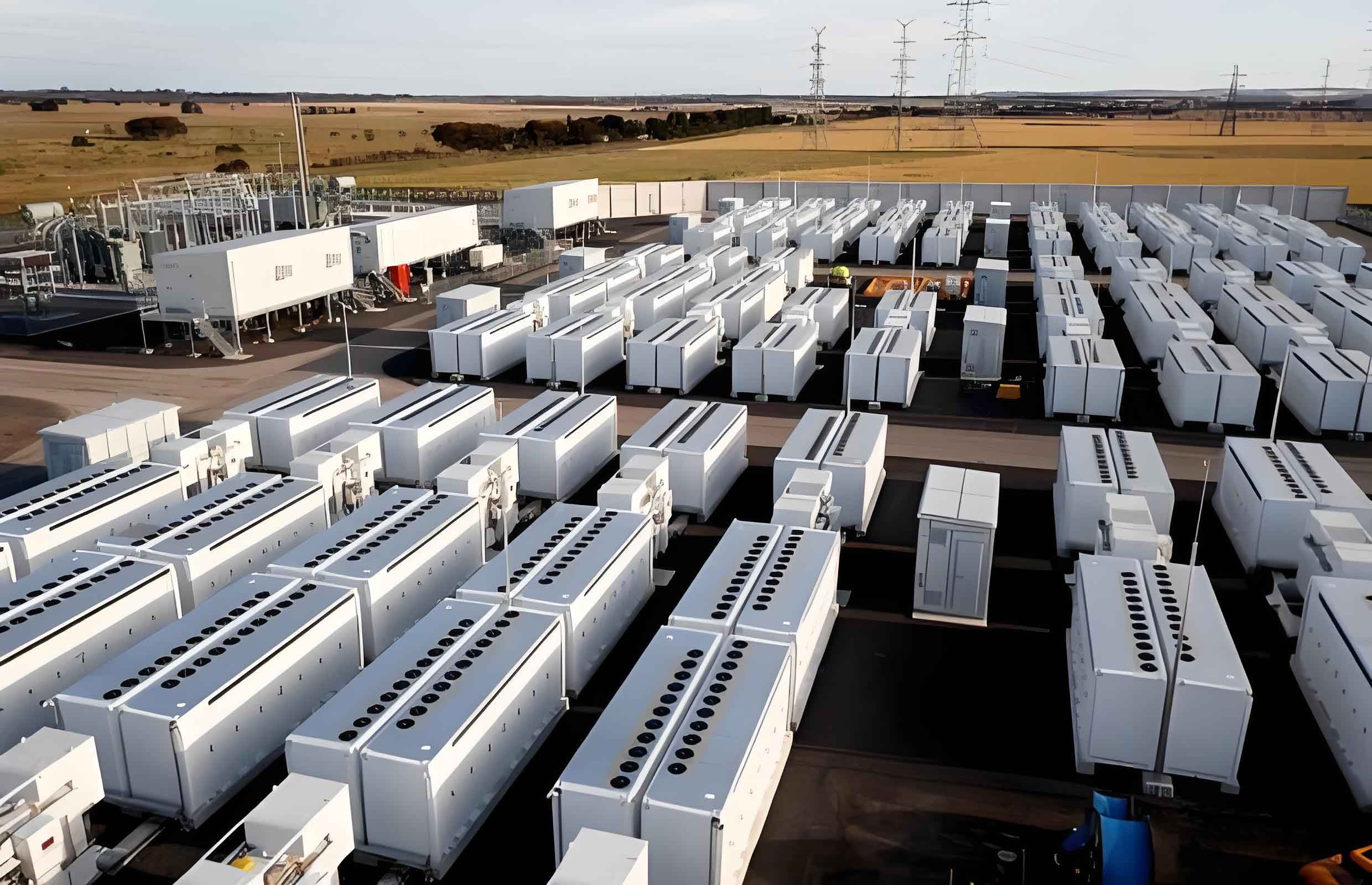
In the context of global efforts toward carbon peak and carbon neutrality, the rapid expansion of renewable energy sources like solar and wind power has heightened the demand for efficient energy storage solutions. The battery energy storage system serves as a critical component for stabilizing power grids, ensuring energy reliability, and supporting the integration of intermittent renewable sources. Within these systems, the battery module—comprising interconnected cells—relies heavily on robust electrical connections, typically achieved through welding of aluminum alloy components such as busbars and terminals. The quality of these welds directly influences the electrical conductivity, mechanical integrity, and safety of the entire battery energy storage system. Traditional welding methods, such as gas metal arc welding, often introduce defects like porosity, cracks, and distortion in aluminum alloys due to their high thermal conductivity and low melting point. Consequently, laser welding has emerged as a preferred technique, offering high precision, minimal heat-affected zones, and reduced deformation. However, conventional single-beam laser welding still faces challenges like spatter, inconsistent penetration, and sensitivity to joint gaps. To address these issues, this study investigates a novel approach: circular dual-beam laser welding, which combines a central high-power beam for deep penetration with an outer ring beam for thermal conduction, creating a more stable keyhole and improved weld quality. This research aims to optimize process parameters for welding aluminum alloy components in battery energy storage systems, enhancing first-pass yield and mechanical performance.
The experimental setup involved a continuous-wave laser system capable of delivering a central beam with a maximum power of 4000 W (50 μm fiber core diameter) and an outer ring beam with up to 2000 W (150 μm fiber core diameter). The beams were focused using a collimating lens of 180 mm focal length and a focusing lens of 400 mm focal length, resulting in spot diameters of approximately 0.11 mm for the center and 0.33 mm for the ring. Welding samples consisted of 2 mm thick 1060 aluminum alloy busbars and battery caps from a commercial 280 Ah cell, simulating actual battery module assembly. Prior to welding, surfaces were cleaned with a laser cleaning system and alcohol to remove oxides and contaminants, ensuring tight contact under a copper fixture. A spiral welding path was employed with an inner diameter of 9.4 mm and outer diameter of 12.6 mm, under a nitrogen shielding gas flow of (10 ± 2) L/min. Post-weld, specimens were sectioned, mounted, polished, and etched with NaOH solution for metallographic analysis using optical microscopy. Tensile tests were conducted with a universal testing machine to evaluate weld strength. Key variables studied included laser energy ratio (center-to-ring power distribution), total laser power, welding speed, and defocus distance, all critical for optimizing the battery energy storage system’s welding process.
The laser energy ratio, defined as the power distribution between the central and outer beams, significantly influences keyhole stability and weld morphology. In a battery energy storage system, consistent penetration is vital for reliable electrical connections. Experiments were conducted with a constant total power of 4000 W, welding speed of 80 mm/s, and zero defocus, while varying the energy ratio from 50/50 to 90/10. Results indicated that as the energy ratio increased, penetration depth rose, but excessive ratios led to thermal cracks at the fusion interface, reducing tensile strength. An optimal ratio of 80/20 yielded the highest tensile strength, with uniform weld texture and minimal defects. This can be modeled by considering the energy density distribution. The combined energy density \( E_d \) for dual-beam welding can be expressed as:
$$ E_d = \frac{P_c}{\pi r_c^2} + \frac{P_r}{\pi (r_o^2 – r_i^2)} $$
where \( P_c \) and \( P_r \) are the central and ring beam powers, \( r_c \) is the central beam radius, and \( r_o \) and \( r_i \) are the outer and inner radii of the ring beam. The optimal ratio balances deep penetration from the center with sufficient outer heating to stabilize the keyhole, reducing porosity—a common issue in aluminum welding for battery energy storage systems. Table 1 summarizes the effects of energy ratio on weld dimensions and strength.
| Energy Ratio (Center/Ring) | Penetration Depth (mm) | Weld Width (mm) | Tensile Strength (MPa) | Observed Defects |
|---|---|---|---|---|
| 50/50 | 0.45 | 1.20 | 85 | Shallow penetration, minimal porosity |
| 60/40 | 0.62 | 1.25 | 92 | Moderate penetration, few pores |
| 70/30 | 0.78 | 1.28 | 105 | Good fusion, no cracks |
| 80/20 | 0.95 | 1.30 | 118 | Optimal, uniform texture |
| 90/10 | 1.10 | 1.29 | 98 | Thermal cracks, some porosity |
Total laser power is another critical parameter affecting heat input and weld integrity in battery energy storage system components. Maintaining an energy ratio of 80/20, welding speed of 80 mm/s, and zero defocus, power was varied from 3500 W to 5000 W. Below 4000 W, insufficient penetration led to weak joints, while above 4000 W, excessive heat caused porosity and cracks, diminishing strength. The optimal power of 4000 W produced a penetration depth of 0.95 mm and maximum tensile strength. The relationship between power and penetration can be described by a simplified thermal model where penetration depth \( d \) correlates with linear energy input \( Q \):
$$ Q = \frac{P}{v} $$
where \( P \) is total power and \( v \) is welding speed. For aluminum alloys in battery energy storage systems, excessive \( Q \) raises temperatures in the fusion zone, promoting hot cracking. The crack susceptibility \( S \) can be approximated as:
$$ S = k \cdot \Delta T \cdot \frac{dQ}{dt} $$
with \( k \) as a material constant and \( \Delta T \) the temperature gradient. Table 2 outlines power effects, highlighting the trade-off between penetration and defects.
| Total Power (W) | Penetration Depth (mm) | Weld Width (mm) | Tensile Strength (MPa) | Key Observations |
|---|---|---|---|---|
| 3500 | 0.70 | 1.25 | 88 | Incomplete penetration, low strength |
| 4000 | 0.95 | 1.30 | 118 | Optimal, defect-free |
| 4500 | 1.15 | 1.32 | 102 | Porosity and micro-cracks |
| 5000 | 1.35 | 1.33 | 90 | Severe cracking, weakened joint |
Welding speed directly controls the exposure time and linear energy density, impacting both morphology and mechanical properties. With fixed parameters of 4000 W total power, 80/20 energy ratio, and zero defocus, speeds ranged from 40 mm/s to 120 mm/s. At lower speeds, excessive heat accumulation caused burn-through and cracks, while higher speeds reduced penetration and strength. The optimal speed of 80 mm/s yielded a balance, with adequate penetration and high tensile strength. The aspect ratio \( AR \) of the weld, defined as penetration depth to width, is influenced by speed \( v \):
$$ AR = \frac{d}{w} \propto \frac{1}{v^n} $$
where \( n \) is an empirical exponent. For battery energy storage system welds, maintaining \( AR \) between 0.7 and 1.0 ensures good mechanical performance. Table 3 details speed effects, emphasizing the need for precise control in high-volume production of battery energy storage systems.
| Welding Speed (mm/s) | Penetration Depth (mm) | Weld Width (mm) | Aspect Ratio | Tensile Strength (MPa) |
|---|---|---|---|---|
| 40 | 1.25 | 1.50 | 0.83 | 95 |
| 60 | 1.05 | 1.35 | 0.78 | 108 |
| 80 | 0.95 | 1.30 | 0.73 | 118 |
| 100 | 0.80 | 1.25 | 0.64 | 101 |
| 120 | 0.65 | 1.20 | 0.54 | 87 |
Defocus distance, representing the displacement of the focal plane relative to the workpiece surface, alters the power density distribution. Negative defocus (focus below surface) typically increases penetration due to higher internal energy density, while positive defocus (focus above surface) widens the weld bead. Experiments with 4000 W total power, 80/20 energy ratio, and 80 mm/s speed showed that defocus values from -6 mm to +4 mm affected weld geometry. At -2 mm defocus, maximum penetration and tensile strength were achieved, whereas extreme defocus caused undercut or lack of fusion. The effective spot diameter \( D_{eff} \) changes with defocus \( \Delta f \):
$$ D_{eff} = D_0 \sqrt{1 + \left( \frac{\lambda \Delta f}{\pi D_0^2} \right)^2 } $$
where \( D_0 \) is the focused spot diameter and \( \lambda \) the laser wavelength. For aluminum alloys in battery energy storage systems, slight negative defocus is beneficial for deep penetration without defects. Table 4 summarizes defocus effects, underscoring its role in process optimization.
| Defocus Distance (mm) | Penetration Depth (mm) | Weld Width (mm) | Tensile Strength (MPa) | Notable Features |
|---|---|---|---|---|
| -6 | 0.85 | 1.25 | 105 | Moderate penetration, slight undercut |
| -4 | 0.92 | 1.28 | 112 | Improved fusion, minimal defects |
| -2 | 1.00 | 1.30 | 120 | Optimal, deep and stable |
| 0 | 0.95 | 1.30 | 118 | Good performance, balanced |
| +2 | 0.88 | 1.35 | 110 | Wider bead, reduced penetration |
| +4 | 0.75 | 1.40 | 98 | Shallow, risk of incomplete fusion |
The correlation between penetration depth and tensile strength reveals a critical insight for battery energy storage system welding. At shallow penetrations (below ~0.8 mm), strength increases linearly with depth due to greater joint area. However, beyond a threshold (around 1.0 mm), thermal cracks induced by high temperatures in the fusion zone cause strength degradation. This relationship can be expressed as:
$$ \sigma_t = \begin{cases}
a \cdot d + b & \text{for } d \leq d_c \\
c \cdot e^{- \alpha (d – d_c)} + \beta & \text{for } d > d_c
\end{cases} $$
where \( \sigma_t \) is tensile strength, \( d \) is penetration depth, \( d_c \) is the critical depth (approximately 1.0 mm for 1060 aluminum alloy), and \( a, b, c, \alpha, \beta \) are constants derived from experimental data. This non-linear behavior underscores the importance of parameter control to avoid overcooling, a common issue in aluminum welding for battery energy storage systems. Additionally, the dual-beam approach mitigates defects by stabilizing the keyhole. The keyhole stability parameter \( K_s \) can be modeled as:
$$ K_s = \frac{P_r}{P_c} \cdot \frac{v_c}{v_r} $$
where \( v_c \) and \( v_r \) are the characteristic velocities of metal vapor ejection for center and ring beams. Higher \( K_s \) values reduce spatter and porosity, enhancing weld quality in battery energy storage system modules.
In practical applications, the optimized parameters—energy ratio of 80/20, total power of 4000 W, welding speed of 80 mm/s, and zero defocus—have been validated in mass production, achieving a first-pass yield exceeding 99.95% for over 10,000 battery modules. This demonstrates the robustness of circular dual-beam laser welding for battery energy storage systems. Further analysis of metallographic samples showed that proper parameter settings minimize defects like undercut, porosity, and cracks, which are detrimental to the long-term reliability of battery energy storage systems. The heat-affected zone (HAZ) width \( W_{HAZ} \) can be estimated using the thermal diffusivity \( \alpha \) of aluminum:
$$ W_{HAZ} = \sqrt{4 \alpha t_{eff}} $$
with \( t_{eff} \) as the effective heating time. For the optimal parameters, \( W_{HAZ} \) was measured at approximately 0.5 mm, indicating minimal thermal distortion—a key advantage for densely packed battery energy storage systems.
In conclusion, this study comprehensively investigates the laser welding characteristics of aluminum alloy for battery energy storage systems using circular dual-beam technology. Through systematic experimentation, optimal process parameters were identified, revealing that energy ratio, total power, welding speed, and defocus distance significantly influence weld morphology and mechanical strength. The results highlight a non-linear relationship between penetration depth and tensile strength, where excessive depth promotes thermal cracking. By rationally configuring parameters, defects such as undercut, porosity, and cracks can be effectively reduced, enhancing the mechanical performance and product quality of battery energy storage systems. The integration of dual-beam laser welding offers a reliable solution for high-yield manufacturing, supporting the growing demand for efficient and safe energy storage solutions in renewable energy applications. Future work could explore real-time monitoring systems or machine learning algorithms to further adapt parameters for varying joint geometries in battery energy storage systems.