
In modern power systems, direct current (DC) distribution and utilization have gained significant traction due to their higher efficiency, simplified architecture, and enhanced flexibility in energy management compared to traditional alternating current (AC) systems. DC systems are pivotal in applications such as distributed energy resources, electric vehicle charging stations, data centers, and industrial drives. Central to these systems are power conversion modules, with the H-bridge topology being a cornerstone for high-power applications. This article delves into the twin trawling test of H-bridge power modules based on battery energy storage systems, exploring the design, protection coordination, control strategies, and experimental procedures. We aim to provide a comprehensive analysis that ensures reliable full-power testing of active and reactive power capabilities, leveraging battery energy storage systems for enhanced performance and safety.
The H-bridge chain converter is renowned for its modularity, efficiency, and reliability, making it ideal for high-voltage motor drives and reactive power compensation. In DC distribution, H-bridge power modules serve as critical interfaces for voltage and current conversion, enabling precise control over power flow. Our research focuses on a test setup where each H-bridge module is paralleled with a battery energy storage system on the DC side, facilitating robust testing under varied load conditions. This configuration mimics real-world scenarios, allowing us to validate module performance while integrating energy storage for stability and backup. Throughout this work, we emphasize the role of battery energy storage systems in ensuring test integrity and operational safety.
The core of our study involves a detailed examination of the main and control circuit topologies. We design a system where two H-bridge power modules—designated as open-loop and closed-loop modules—are interconnected via an inductive link, with each DC bus supported by a dedicated battery energy storage system. This setup enables bidirectional power flow and facilitates comprehensive testing of module characteristics. The control architecture is centralized around a main controller that communicates via optical fibers for isolation and safety, coordinating with local module controllers, battery management systems (BMS), and cooling systems. Below, we outline the key components in a tabular form to summarize the topology.
| Component | Description | Role in System |
|---|---|---|
| Open-Loop Power Module | H-bridge converter operated in voltage source mode | Generates AC voltage based on modulation signals from main controller |
| Closed-Loop Power Module | H-bridge converter operated in current control mode | Functions as grid-tied inverter, regulating active and reactive power |
| Battery Energy Storage System 1 | Energy storage unit paralleled with open-loop module DC bus | Provides DC power, stabilizes voltage, and enables charge/discharge cycles |
| Battery Energy Storage System 2 | Energy storage unit paralleled with closed-loop module DC bus | Supports power flow, enhances test flexibility, and ensures backup |
| Inductive Link (L) | Connection inductor between modules | Limits current ripple and facilitates power transfer |
| Main Controller | Central processing unit with fiber-optic interfaces | Coordinates protection, generates control signals, and monitors system state |
| Local Module Controllers | Embedded controllers in each power module | Handles real-time protection and switch driving |
| BMS | Battery management system for each battery energy storage system | Monitors battery parameters, controls relays, and ensures safety |
| Water Cooling System | Liquid cooling for power modules | Maintains thermal stability and prevents overheating |
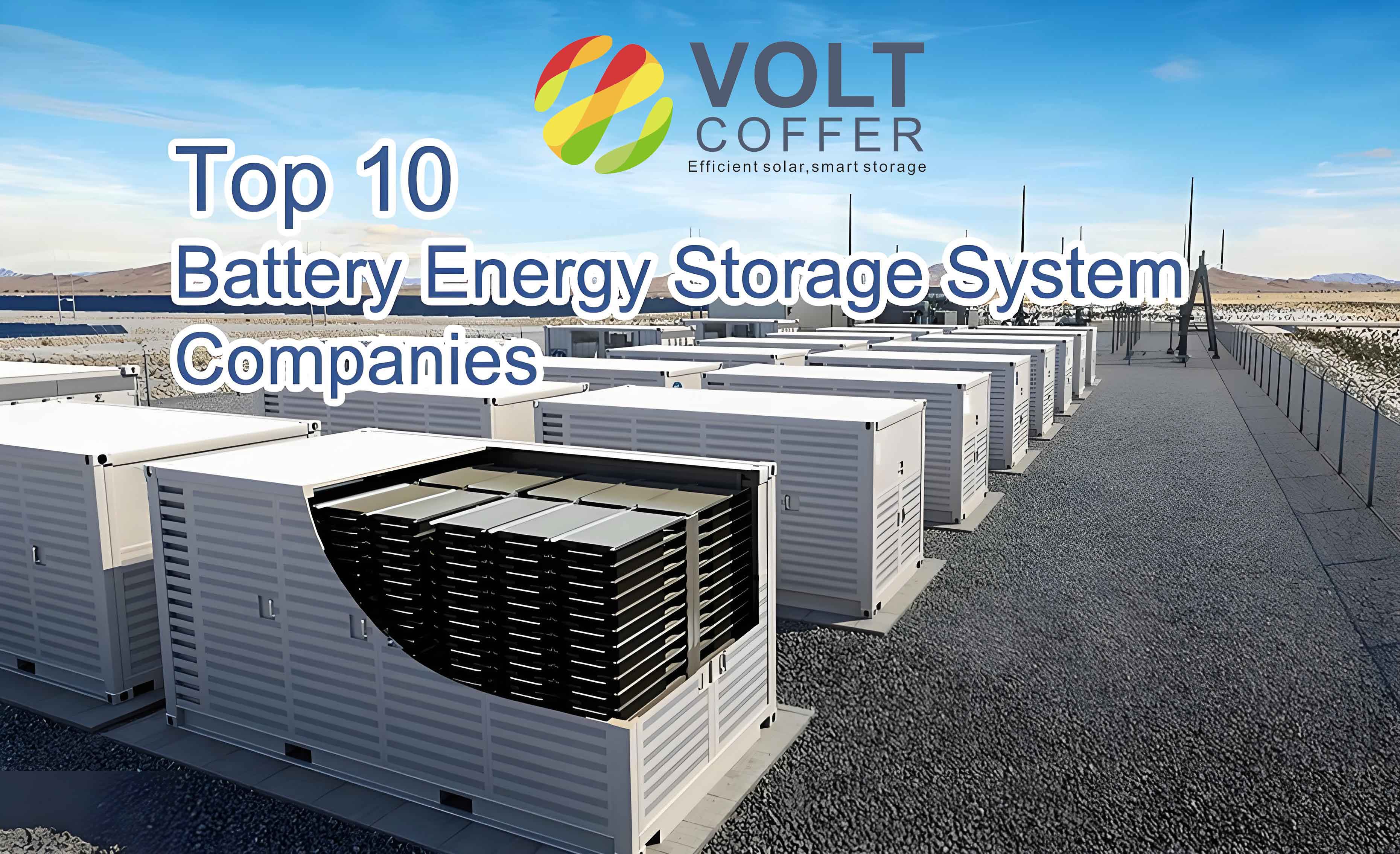
The control circuit topology emphasizes isolation and reliability. All communications between the main controller and peripherals use optical fibers or CAN bus protocols, minimizing electrical interference and enhancing personnel safety. The main controller sends drive signals and parameters to the power modules while receiving feedback on capacitor voltages, temperatures, and fault statuses. Similarly, it exchanges data with the BMS to monitor battery health and with the water cooling system for thermal management. This integrated approach ensures seamless operation during twin trawling tests. To illustrate the importance of energy storage in such setups, consider the following image depicting a typical battery energy storage system configuration.
Protection coordination is paramount in high-power testing environments. Our system implements a hierarchical protection scheme where the main controller oversees overall safety, while local controllers, BMS, and cooling systems handle dedicated protections. This multi-layered approach ensures rapid response to faults, minimizing damage and ensuring operator safety. We categorize protections into alarm and lockout levels, with alarms triggering warnings and lockouts immediately disabling power switches. The coordination principles are designed to prioritize critical faults, such as overcurrent or insulation failures, while allowing non-critical issues to be logged for analysis. Below, we summarize the protection events in a comprehensive table.
| Subsystem | Alarm Events | Lockout Events | Action Taken |
|---|---|---|---|
| Power Module Local Controller | DC bus slight overvoltage, undervoltage, sync signal loss, mild overtemperature | DC bus severe overvoltage, communication loss, power supply fault, critical overtemperature | Alarms reported to main controller; lockouts disable IGBTs and require reset |
| Water Cooling System | Pump or fan faults, minor leaks, temperature/pressure deviations | Flow/pressure critically low, temperature extremes, sensor failures | Alarms displayed; lockouts trigger module shutdown via main controller |
| Battery Energy Storage System (BMS) | Voltage/temperature deviations, SOC limits, current surges | Internal communication faults, insulation failures, extreme parameters | Alarms via CAN bus; lockouts open all relays and notify main controller |
| Main Controller | AC side mild overvoltage, inductor current mild overcurrent | AC side severe overvoltage, inductor current severe overcurrent, communication failures | Alarms logged; lockouts disable all modules and disconnect batteries |
The protection logic ensures that any fault in the battery energy storage system or associated components is promptly addressed. For instance, if the BMS detects an insulation fault, it opens relays and signals the main controller to lockout the power modules, preventing hazardous conditions. Similarly, the water cooling system’s lockouts are hardwired to the main controller for immediate action. This coordination is vital for maintaining the integrity of the battery energy storage system during high-power operations.
Control strategy for twin trawling involves active and reactive power exchange between the open-loop and closed-loop modules. The closed-loop module operates as a current-controlled inverter, regulating active and reactive currents based on setpoints, while the open-loop module acts as a voltage source with adjustable modulation index. We employ a unipolar double-frequency modulation technique to enhance waveform quality and reduce switching losses. The modulation scheme generates drive signals with a pulse frequency twice the switching frequency, improving efficiency. The control block diagram is implemented in the main controller, with key equations governing the behavior.
The active and reactive current control for the closed-loop module follows a decoupled strategy. We define the target active current \(I_{d\_ref}\) and reactive current \(I_{q\_ref}\), which are set via the main controller’s interface. The actual inductor current \(I_{L}\) is measured and transformed into synchronous reference frame components \(I_d\) and \(I_q\). The control law uses PI regulators to generate modulation signals:
$$V_d = K_{p1}(I_{d\_ref} – I_d) + K_{i1} \int (I_{d\_ref} – I_d) dt$$
$$V_q = K_{p2}(I_{q\_ref} – I_q) + K_{i2} \int (I_{q\_ref} – I_q) dt$$
These voltages are then converted to modulation waves for the H-bridge. For the open-loop module, the modulation index \(m\) is directly set, producing an output voltage:
$$V_{out\_open} = m \cdot V_{dc}$$
where \(V_{dc}\) is the DC bus voltage supported by the battery energy storage system. The interaction between modules results in power flow described by:
$$P = V_{open} I_{L} \cos(\phi)$$
$$Q = V_{open} I_{L} \sin(\phi)$$
with \(\phi\) being the phase angle between voltage and current. This approach allows full-power testing of both active and reactive capabilities. To optimize performance, we incorporate feedback from the battery energy storage system, adjusting setpoints based on available power and state of charge. The integration of battery energy storage system dynamics ensures stable operation even under transient conditions.
The experimental procedure is methodical to ensure safety and accuracy. We outline the steps in a sequential manner, emphasizing the role of the battery energy storage system at each stage. The process begins with system initialization and progresses through power-up, testing, and shutdown phases. Below is a table summarizing the key steps.
| Step | Action | Purpose |
|---|---|---|
| 1 | Energize main controller and verify touchscreen operation | Ensure control system functionality |
| 2 | Power up battery energy storage systems and perform insulation tests | Validate battery and cable integrity |
| 3 | Close battery relays sequentially via main controller | Connect batteries to modules safely with precharge resistors |
| 4 | Start water cooling system and verify parameters | Prevent overheating during operation |
| 5 | Unlock open-loop module and gradually increase modulation index | Generate AC voltage and observe waveform |
| 6 | Unlock closed-loop module and ramp active/reactive currents to rated values | Achieve full-power twin trawling for thermal and performance tests |
| 7 | Monitor system parameters and record data | Assess module behavior under load |
| 8 | Gradually reduce currents, trigger emergency stop, and lockout modules | Safe shutdown to avoid voltage spikes |
| 9 | Disconnect batteries and de-energize cooling system | Complete isolation and prepare for next test |
Throughout the test, the battery energy storage system plays a crucial role in providing stable DC power and absorbing feedback energy. For instance, during reactive power testing, the battery energy storage system mitigates voltage fluctuations on the DC bus, ensuring consistent module performance. The BMS continuously communicates with the main controller, updating parameters such as maximum allowable charge/discharge currents and power limits. This interaction prevents overloading of the battery energy storage system and extends its lifespan. We emphasize that the integration of a battery energy storage system not only facilitates testing but also mimics real-world hybrid energy systems, where storage buffers intermittent generation and load variations.
To further analyze the system, we derive mathematical models for key components. The H-bridge power module can be represented as a switched converter with state-space equations. For a single module, the output voltage \(V_{ac}\) relates to the DC voltage \(V_{dc}\) and switching function \(S(t)\):
$$V_{ac}(t) = S(t) \cdot V_{dc}$$
where \(S(t)\) takes values of +1, 0, or -1 based on switch states. In twin trawling, the interconnection through inductor L creates a second-order system. The dynamics of the inductor current can be expressed as:
$$L \frac{dI_L}{dt} = V_{open} – V_{closed} – R I_L$$
with \(R\) representing parasitic resistance. This equation highlights the power transfer mechanism. By controlling \(V_{open}\) and \(V_{closed}\), we regulate \(I_L\) to achieve desired active and reactive power flows. The battery energy storage system contributes to the DC side dynamics, modeled as a voltage source with internal impedance:
$$V_{dc} = V_{batt} – I_{batt} R_{int}$$
where \(V_{batt}\) is the battery open-circuit voltage, \(I_{batt}\) is the battery current, and \(R_{int}\) is the internal resistance. This model helps in simulating system behavior and optimizing control parameters.
In terms of protection coordination, we implement logic equations to ensure timely responses. For example, the main controller’s lockout condition for overcurrent is triggered if:
$$|I_L| > I_{max} \quad \text{for} \quad t > t_{delay}$$
where \(I_{max}\) is the threshold and \(t_{delay}\) is a time delay to avoid nuisance trips. Similarly, the BMS lockout for battery overvoltage occurs when:
$$V_{batt} > V_{safe} \quad \text{or} \quad V_{batt} < V_{min}$$
These conditions are programmed into the controllers, with priorities assigned based on severity. The hierarchical approach ensures that local protections act first, followed by system-wide interventions by the main controller. This is especially important for safeguarding the battery energy storage system from deep discharge or overcharge during extended tests.
The cooling system’s role cannot be overstated, as power modules generate significant heat at full load. We model the thermal dynamics using a simple RC network:
$$C_{th} \frac{dT}{dt} = P_{loss} – \frac{T – T_{amb}}{R_{th}}$$
where \(C_{th}\) is thermal capacitance, \(R_{th}\) is thermal resistance, \(P_{loss}\) is switching and conduction losses, \(T\) is junction temperature, and \(T_{amb}\) is ambient temperature. The water cooling system maintains \(T_{amb}\) at a low level, preventing thermal runaway. The integration with the battery energy storage system is indirect but critical, as excessive temperatures can affect battery performance and safety.
Experimental validation involves iterating through various operating points. We test the system at different active and reactive power combinations, recording efficiency, waveform distortion, and thermal profiles. The battery energy storage system allows us to simulate both charging and discharging scenarios, evaluating module performance under bidirectional power flow. For instance, when the closed-loop module injects active power into the grid (simulated by the open-loop module), the battery energy storage system on the closed-loop side may discharge to supply the power, while the other battery energy storage system charges to absorb excess energy. This cyclic testing validates the modules’ capability to handle real-world conditions.
Data from tests are analyzed to compute key metrics such as total harmonic distortion (THD) and efficiency. THD is calculated as:
$$THD = \frac{\sqrt{\sum_{n=2}^{\infty} V_n^2}}{V_1} \times 100\%$$
where \(V_n\) is the nth harmonic voltage and \(V_1\) is the fundamental. Efficiency \(\eta\) is derived from input and output power measurements:
$$\eta = \frac{P_{out}}{P_{in}} \times 100\%$$
These metrics help in benchmarking the modules against industry standards. The inclusion of a battery energy storage system adds complexity, as battery losses must be accounted for in overall system efficiency. We observe that using high-quality battery energy storage systems with low internal resistance minimizes these losses, enhancing test accuracy.
In conclusion, our research on twin trawling tests for H-bridge power modules demonstrates the efficacy of integrating battery energy storage systems for comprehensive performance evaluation. The proposed topology, protection coordination, and control strategies enable safe and reliable full-power testing of active and reactive capabilities. The battery energy storage system serves as a versatile power source and sink, facilitating bidirectional energy flow and stabilizing the DC bus. This approach not only meets debugging requirements for product development but also provides insights into real-world DC distribution scenarios. Future work may explore advanced battery energy storage system configurations, such as hybrid storage with supercapacitors, to further improve dynamic response. Overall, the integration of battery energy storage systems into power module testing represents a significant step toward robust and efficient DC power systems.