
In recent years, electrochemical energy storage systems, particularly those based on lifepo4 battery technology, have experienced rapid development and widespread application. As a key component in modern energy storage, the lifepo4 battery offers advantages such as high energy density, long cycle life, and enhanced safety compared to other lithium-ion variants. However, the large-scale integration of lifepo4 battery systems into grid storage and other applications introduces complex challenges related to fault protection and system stability. This paper aims to explore the common failure mechanisms in lifepo4 battery systems, analyze the shortcomings of existing protection schemes, and propose a novel transient protection methodology to improve sensitivity and response speed. The work is presented from a first-person perspective as part of ongoing research in battery safety.
The proliferation of lifepo4 battery systems in energy storage necessitates robust protection mechanisms to prevent catastrophic failures. Each lifepo4 battery cell exhibits slight variations in performance due to manufacturing tolerances and operational conditions. When thousands of these cells are assembled into battery packs or systems, these discrepancies are amplified, leading to uneven electrical and thermal behaviors. This heterogeneity increases the probability of faults, which often manifest as voltage imbalances or thermal runaway events. Therefore, understanding the fault mechanisms and enhancing protection strategies is critical for the safe operation of lifepo4 battery systems.
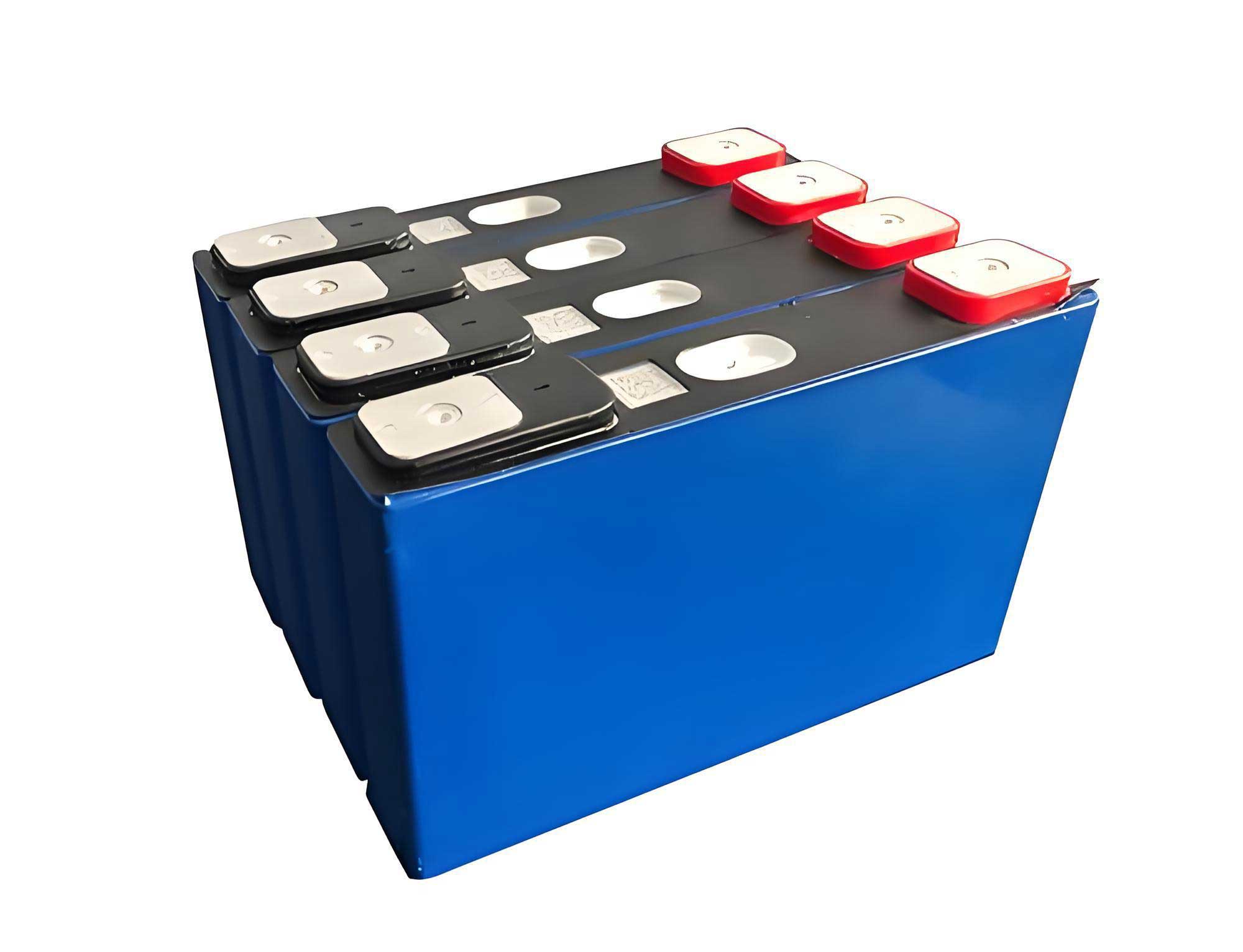
Common fault mechanisms in lifepo4 battery systems primarily revolve around voltage and temperature anomalies. Voltage-related faults often arise from state-of-charge (SOC) imbalances among cells. Over time, capacity fading and internal resistance variations cause some cells to reach voltage limits earlier than others during charging or discharging. This premature triggering of protection thresholds can reduce the usable capacity of the entire lifepo4 battery system and lead to inefficient operation. For instance, if a single cell in a series string reaches over-voltage during charging, the entire string may be halted, even though other cells are not fully charged. This imbalance can be quantified using the following relationship for cell voltage deviation:
$$ \Delta V = V_{\text{cell}} – \bar{V}_{\text{pack}} $$
where \(\Delta V\) is the voltage deviation, \(V_{\text{cell}}\) is the individual cell voltage, and \(\bar{V}_{\text{pack}}\) is the average pack voltage. Excessive deviation indicates potential fault conditions in the lifepo4 battery system.
Temperature-related faults are equally critical. The lifepo4 battery generates heat during operation due to internal electrochemical reactions and ohmic losses. Inadequate thermal management can lead to localized hotspots, accelerating degradation or triggering thermal runaway. Thermal runaway in lifepo4 battery systems is a chain reaction characterized by rapid temperature rise, often exceeding 1°C per minute in severe cases. The process can be divided into stages: self-heating (with a temperature rise rate \(\geq 0.02°C/\text{min}\)) and thermal runaway (with a rate \(\geq 1°C/\text{min}\)). The heat generation rate \(Q\) can be modeled as:
$$ Q = I^2 R + \Delta H \frac{dSOC}{dt} $$
where \(I\) is the current, \(R\) is the internal resistance, \(\Delta H\) is the enthalpy change, and \(SOC\) is the state of charge. This formula highlights how operational parameters influence thermal behavior in lifepo4 battery systems.
To illustrate common fault types and their characteristics, Table 1 summarizes key fault mechanisms in lifepo4 battery systems.
| Fault Type | Primary Cause | Typical Symptoms | Impact on Lifepo4 Battery System |
|---|---|---|---|
| Voltage Imbalance | Cell aging, SOC variation | Early voltage limit triggering | Reduced capacity, inefficient operation |
| Overheating | Poor thermal management, internal short | Temperature rise > 5°C above ambient | Accelerated degradation, thermal runaway risk |
| Internal Short Circuit | Manufacturing defects, mechanical stress | Sudden voltage drop, local heating | Potential fire or explosion |
| Connection Failure | Loose terminals, corrosion | Increased resistance, voltage fluctuation | System instability, power loss |
Existing protection mechanisms for lifepo4 battery systems typically rely on Battery Management Systems (BMS). These systems monitor parameters such as cell voltage, current, and temperature, and trigger protection actions when predefined thresholds are exceeded. However, current BMS implementations have several weaknesses that compromise the safety of lifepo4 battery systems. First, there is a lack of bidirectional coordination between devices. For example, fire suppression systems often operate independently from the BMS, only activating when environmental sensors detect smoke or high temperature. By that time, a lifepo4 battery cell may already be in irreversible thermal runaway. Second, data storage granularity is coarse, with sampling intervals on the order of minutes. This makes it difficult to capture transient events or calculate precise rates of change, such as \(\frac{dV}{dt}\) or \(\frac{dT}{dt}\), which are crucial for early fault detection.
Moreover, protection thresholds in BMS are usually fixed and do not adapt to the aging of the lifepo4 battery. As the battery degrades, its voltage and temperature profiles shift, rendering static thresholds ineffective or overly conservative. This can lead to false alarms or missed detections. Additionally, the BMS combines data acquisition, storage, and protection functions, which can overwhelm its processing capabilities and delay response times. To address these issues, a new transient protection approach is proposed, focusing on real-time curve coupling and dynamic threshold adjustment for lifepo4 battery systems.
The core idea of transient protection for lifepo4 battery systems is to replace fixed thresholds with adaptive curves derived from operational data. This involves continuously monitoring voltage and temperature trajectories and comparing them to reference templates. Deviations beyond allowable limits trigger protective actions. This method enhances sensitivity and speed by focusing on rate-based indicators rather than absolute values. For instance, the temperature rise rate \(\alpha_T\) can be computed as:
$$ \alpha_T = \frac{T(t) – T(t-\Delta t)}{\Delta t} $$
where \(T(t)\) is the temperature at time \(t\), and \(\Delta t\) is the sampling interval. If \(\alpha_T\) exceeds a setpoint (e.g., 0.02°C/min for warning or 1°C/min for critical alarm), the system can initiate cooling or disconnect the lifepo4 battery. Similarly, voltage deviation rates can be used to detect anomalies.
Another key aspect is improving coordination with auxiliary systems. The fire suppression system should receive early warning signals from the BMS based on temperature rise rates, enabling preemptive action before thermal runaway escalates. This bidirectional联动 ensures that all protective devices work in concert to safeguard the lifepo4 battery system. Furthermore, data storage should be separated from protection functions, with dedicated modules for high-resolution logging placed outside the battery enclosure to preserve data integrity during faults.
To implement transient protection, a logic framework is designed, as summarized in Table 2. This framework uses curve coupling and rate-based checks to dynamically adjust protection parameters for lifepo4 battery systems.
| Step | Action | Mathematical Representation | Outcome for Lifepo4 Battery |
|---|---|---|---|
| 1 | Set initial voltage and temperature thresholds based on historical data | \(\{U_1\}, \{U_2\}, \{T_1\}, t_1\) | Baseline protection values established |
| 2 | Generate template curves for voltage and temperature | \(V_{\text{template}}(t), T_{\text{template}}(t)\) | Reference for normal operation |
| 3 | Monitor real-time curves during operation | \(V_{\text{real}}(t), T_{\text{real}}(t)\) | Continuous data acquisition |
| 4 | Compute deviations: \(\Delta V = V_{\text{real}} – V_{\text{template}}\), \(\Delta T = T_{\text{real}} – T_{\text{template}}\) | If \(\Delta V \notin \{U_1\}\), check \(V – \bar{V}_{\text{neighbor}}\) | Detect voltage anomalies |
| 5 | If \(\Delta T \notin \{T_1\}\), activate cooling and start timer \(t\) | If \(t \geq t_1\), stop system | Prevent thermal runaway |
The protection logic flow can be formalized using conditional statements. For voltage protection in a lifepo4 battery system, let \(U_{\text{actual}}\) be the measured voltage, \(U_{\text{avg}}\) be the average voltage of adjacent cells, and \(\{U_1\}\) and \(\{U_2\}\) be tolerance sets. The decision process is:
If \( |U_{\text{actual}} – U_{\text{template}}| \notin \{U_1\} \), then compute \( \delta = U_{\text{actual}} – U_{\text{avg}} \). If \( \delta \notin \{U_2\} \), proceed to check temperature deviation \(\Delta T\). If \(\Delta T \notin \{T_1\}\), issue a thermal risk warning to the fire system; otherwise, flag the voltage data as anomalous. This layered approach reduces false positives and ensures that genuine faults in the lifepo4 battery are promptly addressed.
For temperature protection, the system monitors \(\Delta T\) relative to \(\{T_1\}\). If exceeded, cooling equipment is activated, and a timer starts. If the temperature fails to normalize within time \(t_1\), the lifepo4 battery system is shut down to prevent damage. This logic incorporates both absolute and rate-based criteria, as shown in the following composite condition for thermal fault detection:
$$ \text{Fault} = \begin{cases}
\text{true} & \text{if } \Delta T > T_{\text{threshold}} \text{ and } \alpha_T > \alpha_{\text{critical}} \\
\text{false} & \text{otherwise}
\end{cases} $$
where \(T_{\text{threshold}}\) is the temperature deviation limit, and \(\alpha_{\text{critical}}\) is the critical temperature rise rate (e.g., 1°C/min). This formula enables early detection of thermal issues in lifepo4 battery systems.
To further illustrate the benefits of transient protection, consider the performance comparison in Table 3 between traditional BMS and the proposed method for lifepo4 battery systems.
| Aspect | Traditional BMS Protection | Transient Protection for Lifepo4 Battery |
|---|---|---|
| Threshold Adaptation | Fixed, static values | Dynamic, curve-based updates |
| Data Granularity | Coarse (minute-level sampling) | Fine (second-level or faster) |
| Response to Thermal Events | Delayed, after environmental triggers | Immediate, based on rate signals |
| Coordination with Fire System | Limited, unidirectional alerts | Bidirectional, integrated warnings |
| False Alarm Rate | Higher due to static thresholds | Lower due to curve coupling |
Implementation of this transient protection scheme requires careful calibration of parameters. For a typical lifepo4 battery system, the voltage deviation limits \(\{U_1\}\) and \(\{U_2\}\) might be set to ±50 mV and ±100 mV, respectively, based on experimental data. Temperature limits \(\{T_1\}\) could be ±5°C, with a timer \(t_1\) of 60 seconds for cooling response. These values should be periodically adjusted as the lifepo4 battery ages, using machine learning algorithms to update template curves from historical performance. This adaptive capability is crucial for maintaining protection efficacy over the lifespan of the lifepo4 battery system.
In addition to logic design, hardware considerations are vital. High-precision sensors with fast sampling rates (e.g., 10 Hz) should be deployed to capture transient behaviors in voltage and temperature. Data from these sensors can be processed locally at the battery cluster level, reducing latency compared to centralized BMS architectures. The protection module should have dedicated processing units to execute curve comparisons and rate calculations in real-time, ensuring that the lifepo4 battery system is monitored continuously without gaps.
Future work will focus on refining the curve-coupling algorithm to account for noise and fluctuations in operational data. For instance, advanced filtering techniques such as Kalman filters can be applied to smooth voltage and temperature signals, improving the accuracy of deviation calculations. The relationship can be expressed as:
$$ \hat{x}_k = F_k \hat{x}_{k-1} + K_k (z_k – H_k F_k \hat{x}_{k-1}) $$
where \(\hat{x}_k\) is the estimated state (e.g., voltage), \(z_k\) is the measurement, \(F_k\) is the state transition matrix, \(H_k\) is the observation matrix, and \(K_k\) is the Kalman gain. This enhances the reliability of protection decisions for lifepo4 battery systems.
Moreover, integration with cloud-based analytics can enable predictive maintenance for lifepo4 battery systems. By analyzing long-term trends in voltage and temperature curves, potential faults can be anticipated before they occur, allowing for proactive interventions. This aligns with the broader goal of enhancing the safety and longevity of lifepo4 battery technology in energy storage applications.
In conclusion, the proposed transient protection method offers a significant improvement over existing schemes for lifepo4 battery systems. By leveraging real-time curve coupling and dynamic threshold adjustment, it addresses the shortcomings of traditional BMS, such as poor coordination, coarse data granularity, and static thresholds. The use of rate-based indicators like temperature rise rate and voltage deviation rate enables early detection of faults, improving the sensitivity and speed of protection actions. This approach not only safeguards the lifepo4 battery system but also optimizes its performance and lifespan. Continued research will focus on implementing and validating this methodology in large-scale lifepo4 battery installations, with the aim of setting new standards for safety in electrochemical energy storage.
The lifepo4 battery remains a cornerstone of modern energy storage, and advancing its protection strategies is essential for sustainable deployment. Through innovative approaches like transient protection, we can mitigate risks and unlock the full potential of lifepo4 battery technology in diverse applications, from grid storage to electric vehicles. As the field evolves, ongoing collaboration between researchers and industry will drive further enhancements, ensuring that lifepo4 battery systems operate safely and efficiently for years to come.