
In the realm of renewable energy, photovoltaic (PV) systems have gained prominence due to their eco-friendly and sustainable nature. However, the intermittent and uneven distribution of solar energy poses significant challenges to efficient power generation. To optimize the utilization of solar electricity, effective monitoring of PV systems has become imperative. Among the key components, the solar inverter plays a pivotal role in converting DC power from PV arrays into AC power for grid integration or local consumption. Traditional monitoring approaches often relied on 8-bit or 16-bit microcontrollers, which offered limited functionality, poor performance, and inadequate real-time capabilities, hindering intelligent supervision of solar inverters. Therefore, leveraging advanced technologies for monitoring solar inverters is crucial to ensure the normal, reliable, and efficient operation of PV systems. This article presents an in-depth study on an embedded-based monitoring platform for solar inverters, utilizing wireless communication and distributed processing to achieve real-time data acquisition, storage, and proactive alerting.
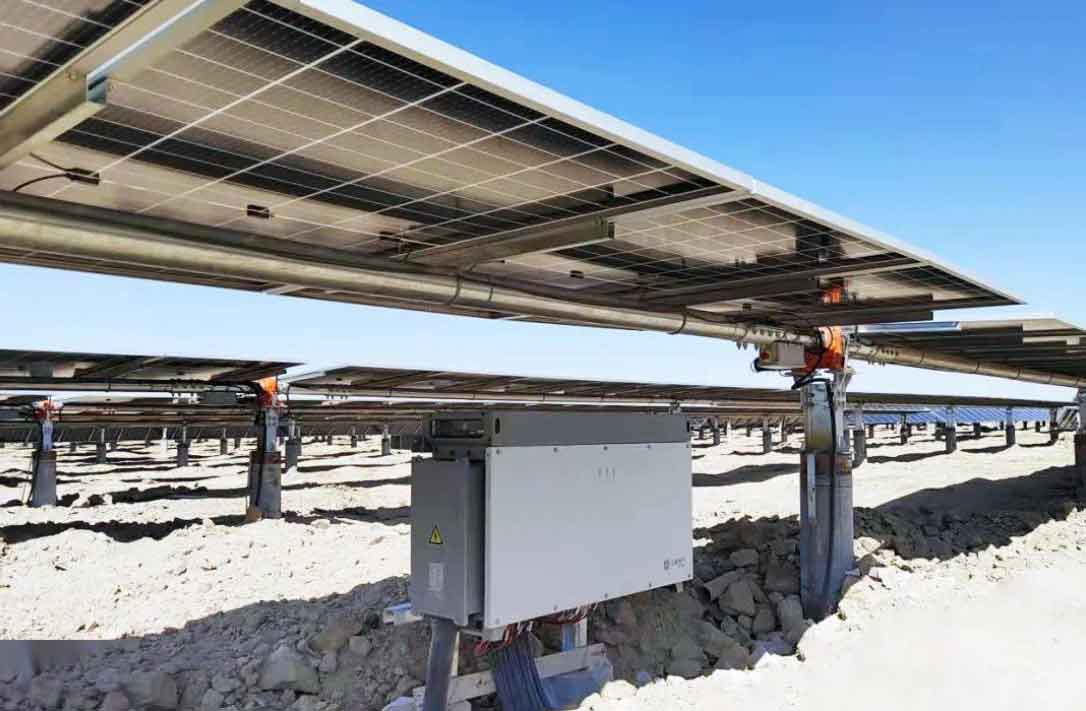
The solar inverter is a power electronic device that transforms DC electricity from PV arrays into AC electricity compatible with standard electrical grids or loads. Its design must accommodate the unique characteristics of PV systems, including wide voltage fluctuations from PV panels, high conversion efficiency, and stable output with strong anti-interference capabilities. A typical high-efficiency sine-wave solar inverter consists of several stages: input filtering, a main power module based on a full-bridge inverter circuit using IGBT switches, output inductors, and a transformer for voltage adjustment. The core function involves modulating the DC input through pulse-width modulation (PWM) techniques to generate a sinusoidal AC output. Key parameters for monitoring include input voltage and current, output voltage and current, temperature, humidity, and operational status, all of which influence the overall performance and lifespan of the solar inverter.
The monitoring platform is architected as a two-part system: a lower-level data acquisition circuit and an upper-level main control circuit. The data acquisition circuit employs various sensors to measure parameters such as voltage, current, temperature, and humidity from the solar inverter components. These sensors are interfaced with a wireless short-range communication network based on ZigBee technology, which transmits data via serial ports to the main control unit. The main control circuit, centered around an embedded processor, includes components like data storage, human-machine interface (HMI), Ethernet interface, wireless communication interface, and JTAG debugging interface. It serves as the processing hub, performing preliminary data analysis, fault prediction using alert algorithms, and forwarding processed data to a remote monitoring center through the Internet. This distributed approach enhances scalability and reliability, allowing multiple solar inverters to be monitored simultaneously across a PV installation.
For hardware implementation, the core controller utilizes a 32-bit ARM microprocessor, specifically the S3C6410 RISC processor. Compared to 8-bit or 16-bit microcontrollers, the ARM processor offers richer on-chip peripherals, higher performance, and better stability, making it ideal for real-time monitoring applications. The S3C6410 features a 64-bit internal bus architecture (AXI, AHB, and APB buses), powerful hardware accelerators, and support for Linux operating system transplantation. Its abundant USB and Ethernet ports facilitate seamless connectivity. The hardware design includes memory modules (e.g., SDRAM and NAND Flash) for data storage, power management circuits for stable operation, and interfaces for peripherals. The lower-level data acquisition relies on ZigBee nodes built around the CC2530 system-on-chip, which integrates an 8051 microcontroller and RF transceiver compliant with the ZigBee protocol stack. Each solar inverter is equipped with sensor nodes that form a star-topology wireless sensor network (WSN), where end devices (reduced-function devices) collect data and forward it to a central ZigBee coordinator (full-function device). The coordinator aggregates data and communicates with the ARM core via UART serial interface. For remote communication, the platform incorporates the CS8900 Ethernet controller to enable Internet connectivity, allowing data transmission to cloud-based monitoring servers. This hardware setup ensures robust, low-power, and flexible monitoring of solar inverters in distributed PV systems.
The embedded system software for data acquisition is designed using an interrupt-driven framework to ensure real-time responsiveness. The driver module operates within a Linux environment on the ARM processor, managing serial port communication with ZigBee coordinators. Data packets from sensors are parsed, validated, and stored in a local database. Key algorithms include noise filtering, calibration routines, and threshold-based alert generation. For instance, if the output voltage of a solar inverter deviates beyond a safe range (e.g., ±5% of nominal value), the system triggers an alert. The software also implements a lightweight web server using embedded libraries like Boa or Lighttpd, providing a web-based interface for local configuration and status viewing. Data processing involves mathematical models to compute efficiency metrics, such as the conversion efficiency η of the solar inverter, given by:
$$ \eta = \frac{P_{\text{out}}}{P_{\text{in}}} \times 100\% = \frac{V_{\text{out}} \times I_{\text{out}} \times \text{功率因数}}{V_{\text{in}} \times I_{\text{in}}} \times 100\% $$
where \( P_{\text{out}} \) is the AC output power, \( P_{\text{in}} \) is the DC input power, \( V \) and \( I \) denote voltage and current, and power factor accounts for AC phase alignment. Continuous monitoring of this efficiency helps identify degradation or faults in the solar inverter. Additionally, temperature effects on performance are modeled using Arrhenius equation-based approximations for component aging. The system logs time-stamped data for trend analysis, enabling predictive maintenance. To handle multiple data streams, multithreading techniques are employed, with separate threads for data acquisition, processing, and communication. Below is a table summarizing key monitored parameters and their typical ranges for a standard solar inverter in a PV system:
| Parameter | Symbol | Typical Range | Alert Threshold |
|---|---|---|---|
| Input DC Voltage | \( V_{\text{in}} \) | 200-500 V | <180 V or >550 V |
| Input DC Current | \( I_{\text{in}} \) | 0-20 A | >25 A |
| Output AC Voltage | \( V_{\text{out}} \) | 220-240 V | <210 V or >250 V |
| Output AC Current | \( I_{\text{out}} \) | 0-15 A | >18 A |
| Temperature | \( T \) | -20°C to 60°C | >70°C |
| Conversion Efficiency | \( \eta \) | 95-98% | <90% |
Wireless communication in this platform uses ZigBee protocols for its low power consumption and mesh networking capabilities. The ZigBee network operates in the 2.4 GHz ISM band, with data rates up to 250 kbps. Each sensor node samples data at configurable intervals (e.g., every 5 seconds) and transmits it via acknowledged packets to ensure reliability. The coordinator employs a media access control (MAC) layer to manage collisions and retries. For long-range connectivity, the Ethernet interface uses TCP/IP protocols to send data to remote servers, where advanced analytics can be performed. The platform also supports Modbus over TCP for integration with industrial automation systems. Security measures include data encryption (e.g., AES-128 in ZigBee) and secure shell (SSH) for remote access.
Performance evaluation of the monitoring platform involves testing under various environmental conditions. Experiments were conducted on a prototype system with multiple solar inverters in a simulated PV setup. Data accuracy was validated against calibrated instruments, showing errors within ±1% for voltage and current measurements. Real-time performance was assessed by measuring latency from sensor to cloud server, which averaged 500 ms, meeting requirements for most PV applications. The system demonstrated stability over continuous operation of 30 days, with no data loss or crashes. The proactive alerting mechanism successfully identified simulated faults, such as overvoltage or overheating, triggering notifications via email or SMS. To illustrate, the fault detection algorithm uses a weighted sum of deviations:
$$ \text{Fault Score} = \sum_{i} w_i \left( \frac{|X_i – X_{i,\text{nom}}|}{X_{i,\text{nom}}} \right) $$
where \( X_i \) represents a parameter (e.g., voltage, temperature), \( X_{i,\text{nom}} \) is its nominal value, and \( w_i \) is a weight based on criticality. If the fault score exceeds a threshold, an alert is generated. This enhances the reliability of the solar inverter by enabling early intervention.
In terms of scalability, the platform can monitor hundreds of solar inverters by adding more ZigBee coordinators and leveraging IP subnetting. The embedded web server allows local operators to view real-time dashboards, as shown in the following table for a sample inverter cluster:
| Inverter ID | Status | Input Power (W) | Output Power (W) | Efficiency (%) | Temperature (°C) |
|---|---|---|---|---|---|
| INV_001 | Normal | 4500 | 4320 | 96.0 | 45 |
| INV_002 | Alert | 4800 | 4560 | 95.0 | 68 |
| INV_003 | Normal | 4600 | 4416 | 96.0 | 42 |
Future enhancements could incorporate machine learning algorithms for predictive analytics, using historical data to forecast failures or optimize inverter settings. Additionally, integration with energy management systems (EMS) could enable dynamic control of solar inverters based on grid demands. The use of open-source software tools, such as Node-RED for flow-based programming, could simplify customization. Overall, this embedded platform provides a cost-effective and robust solution for monitoring solar inverters in diverse PV installations.
In conclusion, the development of an embedded-based monitoring platform for solar inverters addresses the need for intelligent supervision in photovoltaic systems. By combining wireless ZigBee networks, ARM processors, and Ethernet connectivity, the system achieves real-time data acquisition, distributed processing, and remote monitoring. The hardware design centered on the S3C6410 and CC2530 chips ensures high performance and low power consumption, while the software implements interrupt-driven data collection and web-based interfaces. Experimental results confirm stable operation, high data accuracy, and strong real-time capabilities, making it suitable for reliable analysis of solar inverter performance. This platform not only enhances the operational efficiency of solar inverters but also contributes to the overall reliability of PV power generation, supporting the global transition to sustainable energy. As solar technology evolves, such monitoring systems will become increasingly vital for maximizing energy yield and ensuring grid stability.