
In the field of photovoltaic power generation control, the single phase inverter plays a crucial role in energy conversion. Traditional dual closed-loop control strategies, such as proportional-integral (PI) control, are widely used in the outer voltage loop and inner current loop. However, these linear control methods often fail to account for the nonlinear characteristics of the single phase inverter system, leading to poor dynamic and static performance and reduced robustness. To address these limitations, this paper proposes an improved dual closed-loop control strategy that combines a modified linear active disturbance rejection controller (LADRC) with PI control. The enhanced LADRC incorporates an output error compensation term into the linear state error feedback law to mitigate oscillations and improve stability in the single phase inverter. This modified LADRC is applied to the voltage outer loop, while the current inner loop retains PI control. Through parameter tuning and controller performance analysis, the control of a 1.2 kW single phase inverter system is achieved. Simulations in Matlab/Simulink demonstrate that the improved LADRC-PI dual closed-loop control offers superior stability, faster response, and better dynamic and static performance compared to traditional dual-loop PI control.
The single phase inverter is a key component in photovoltaic systems, converting DC power from solar panels into AC power for grid integration or local loads. Its control strategy significantly impacts power quality and system reliability. The dual closed-loop control structure, consisting of an outer voltage loop and an inner current loop, is commonly employed to enhance performance. In conventional approaches, both loops use PI controllers, but this setup may not effectively handle nonlinearities and disturbances inherent in the single phase inverter. The improved LADRC-PI strategy aims to overcome these challenges by leveraging the disturbance estimation and compensation capabilities of LADRC, tailored for the single phase inverter’s operational requirements.
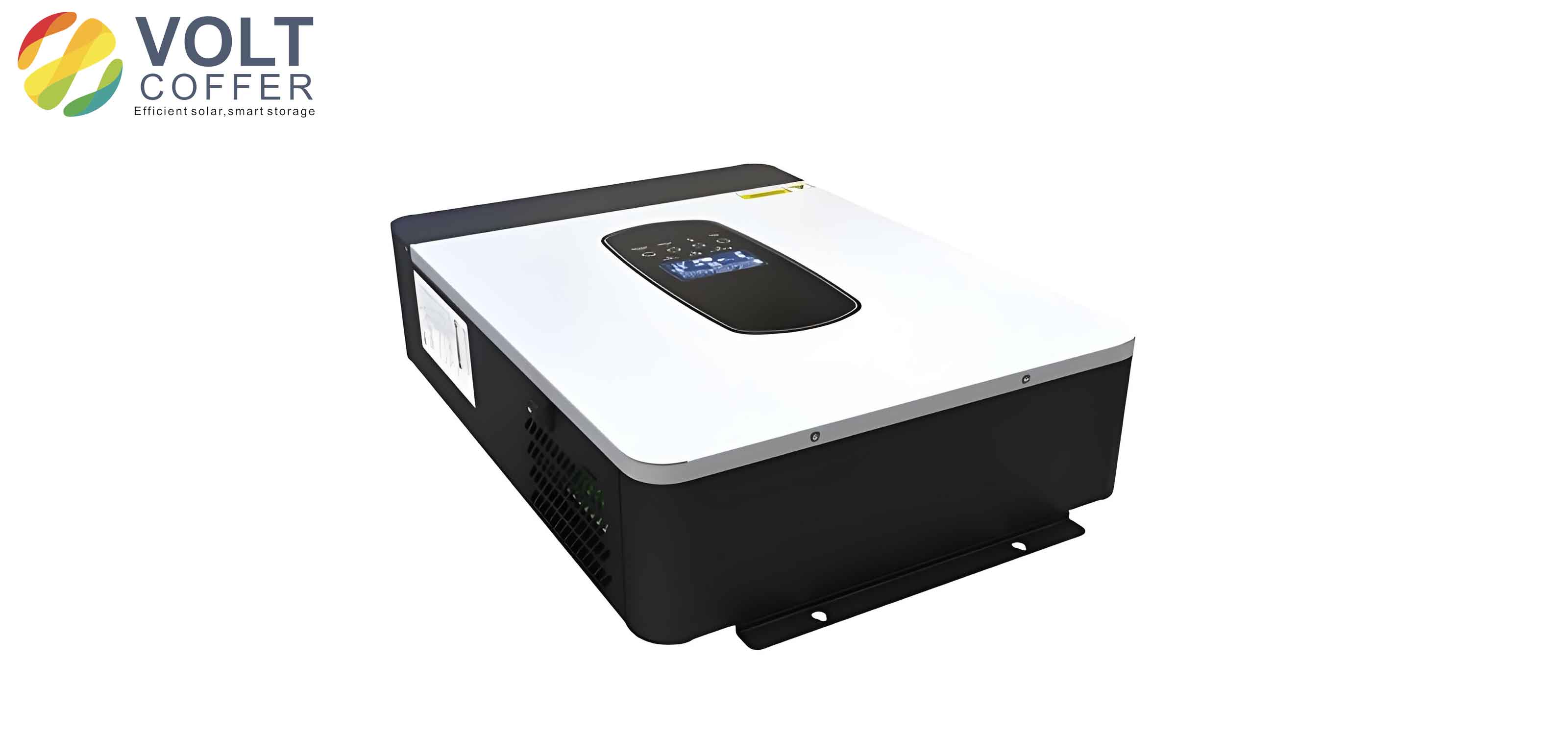
The mathematical model of the single phase inverter is derived to facilitate controller design. The system can be represented by a state-space model that captures the dynamics of the inverter circuit, including the filter components and load variations. The output voltage \( V_o \) and inductor current \( i_L \) are key state variables. The transfer function of the single phase inverter system is given by:
$$ G_{PV}(s) = \frac{V_o(s)}{V_{ab}(s)} = \frac{1}{LCs^2 + RCs + 1} $$
where \( L \) is the filter inductance, \( C \) is the filter capacitance, and \( R \) is the equivalent resistance. The state equations are expressed as:
$$ \dot{x}_1 = x_2 $$
$$ \dot{x}_2 = a_0 x_1 + a_1 x_2 + b_0 u + f $$
$$ y = x_1 $$
with \( a_0 = -\frac{1}{LC} \), \( a_1 = -\frac{R}{L} \), and \( b_0 = \frac{1}{LC} \). Here, \( f \) represents the total disturbance, including internal and external perturbations affecting the single phase inverter. The state vector \( \mathbf{x} = [x_1, x_2, x_3]^T \) includes the output voltage, its derivative, and the disturbance, enabling the design of a third-order linear extended state observer (LESO) for the improved LADRC.
The improved LADRC design consists of two main components: the LESO and the modified linear state error feedback (LSEF) law. The LESO estimates the system states and disturbances in real-time, using a bandwidth parameter \( \omega_o \) for tuning. The observer dynamics are described by:
$$ \dot{\mathbf{z}} = \mathbf{A} \mathbf{z} + \mathbf{B} u + \mathbf{L} (y – \hat{y}) $$
$$ \hat{y} = \mathbf{C} \mathbf{z} $$
where \( \mathbf{z} = [z_1, z_2, z_3]^T \) are the estimated states, \( \mathbf{A} \), \( \mathbf{B} \), and \( \mathbf{C} \) are system matrices, and \( \mathbf{L} \) is the observer gain matrix. The gains are parameterized as \( \mathbf{L} = [3\omega_o, 3\omega_o^2, \omega_o^3]^T \) to place the observer poles at \( -\omega_o \), ensuring rapid and accurate estimation for the single phase inverter.
The modified LSEF law incorporates an output error compensation term to reduce oscillations and improve tracking performance. The control law is given by:
$$ u = \frac{u_c – z_3 – T}{b_0} $$
$$ u_c = k_p (V_{ref} – z_1) – k_d z_2 $$
$$ T = \beta_2 (V_{ref} – z_1) $$
where \( u_c \) is the conventional PD control signal, \( T \) is the output error compensation term, \( k_p \) and \( k_d \) are feedback gains, and \( \beta_2 \) is a compensation coefficient. The gains are set as \( k_p = \omega_c^2 \) and \( k_d = 2\omega_c \), where \( \omega_c \) is the controller bandwidth. This modification enhances the robustness of the single phase inverter by actively compensating for errors and disturbances.
Parameter tuning for the improved LADRC-PI control involves selecting appropriate values for \( \omega_o \) and \( \omega_c \) based on the single phase inverter system parameters. The table below summarizes the key system parameters used in this study:
| Parameter | Value | Parameter | Value |
|---|---|---|---|
| DC side voltage \( V_{dc} \) (V) | 400 | Filter inductance \( L \) (mH) | 4.06 |
| Switching frequency (kHz) | 10 | Filter capacitance \( C \) (μF) | 6.23 |
| Grid frequency (Hz) | 50 | Equivalent resistance \( R \) (Ω) | 0.1 |
For the LESO, \( \omega_o \) is set to 14,000 rad/s through bandwidth analysis, while \( \omega_c \) is chosen as 6,000 rad/s to optimize controller performance. The current inner loop PI parameters are \( k_{pi} = 24 \) and \( k_{ii} = 7 \), ensuring smooth integration with the voltage outer loop.
The performance of the improved LADRC-PI controller is analyzed in terms of anti-disturbance capability, tracking accuracy, and stability. The anti-disturbance performance is evaluated using the Bode plot of the transfer function \( z_{e3}/f \), which represents the estimation error for the disturbance. The plot indicates that with \( \omega_o = 14,000 \) rad/s, the single phase inverter achieves a balance between steady-state accuracy and noise suppression. The tracking performance is assessed by comparing the Bode plots of the output-to-reference transfer functions for both dual-loop PI and improved LADRC-PI controls. The improved LADRC-PI shows higher bandwidth and reduced phase lag, resulting in faster response and better tracking for the single phase inverter.
Stability analysis using the Routh-Hurwitz criterion confirms that the closed-loop system with improved LADRC-PI control is stable. The characteristic equation of the system is:
$$ D(s) = s^5 + \phi_4 s^4 + \phi_3 s^3 + \phi_2 s^2 + \phi_1 s + \phi_0 $$
where the coefficients \( \phi_i \) are derived from the system parameters. The Routh table is constructed as follows:
| \( s^5 \) | \( s^4 \) | \( s^3 \) | \( s^2 \) | \( s^1 \) | \( s^0 \) |
|---|---|---|---|---|---|
| 1 | \( \phi_4 \) | \( \phi_6 \) | \( \phi_7 \) | \( \phi_8 \) | \( \phi_0 \) |
| \( \phi_3 \) | \( \phi_2 \) | \( \phi_5 \) | \( \phi_0 \) | – | – |
| \( \phi_1 \) | \( \phi_0 \) | – | – | – | – |
All elements in the first column are positive, ensuring stability for the single phase inverter system under the proposed control.
Simulation results in Matlab/Simulink validate the effectiveness of the improved LADRC-PI control. Under steady-state conditions with a resistive load, the output voltage and current waveforms are compared between dual-loop PI and improved LADRC-PI controls. The improved LADRC-PI reduces the voltage overshoot from 4.23% to 0.28% and decreases the total harmonic distortion (THD) from 2.54% to 0.28%, demonstrating superior steady-state performance for the single phase inverter. The table below summarizes the steady-state performance metrics:
| Metric | Dual-Loop PI | Improved LADRC-PI |
|---|---|---|
| Voltage overshoot (%) | 4.23 | 0.28 |
| THD (%) | 2.54 | 0.28 |
| Base amplitude (V) | 309.8 | 300.7 |
Dynamic performance is evaluated under load switching scenarios, including resistive, inductive, and resistive-inductive loads. The improved LADRC-PI control achieves near-instantaneous response with no waveform distortion during transitions, whereas the dual-loop PI control exhibits noticeable response delays and distortions. This highlights the enhanced robustness and transient performance of the single phase inverter with the proposed control strategy.
In conclusion, the improved LADRC-PI dual closed-loop control strategy effectively addresses the limitations of traditional PI control in single phase inverter applications. By integrating an output error compensation term into the LSEF law and optimizing observer and controller parameters, the single phase inverter achieves better steady-state accuracy, faster dynamic response, and improved disturbance rejection. The simulation results confirm the superiority of the proposed method, making it a viable solution for high-performance photovoltaic systems. Future work could explore real-time implementation and adaptation to varying operational conditions for the single phase inverter.