
In recent years, the lifepo4 battery has gained widespread adoption in various applications due to its excellent safety profile, long cycle life, and environmental friendliness. However, the nominal operating voltage of a single lifepo4 battery cell is only around 3.2 V, which necessitates the series connection of multiple cells to achieve higher voltage levels required for practical applications. During manufacturing and usage, inconsistencies among individual lifepo4 battery cells arise due to factors such as production tolerances and environmental conditions. These inconsistencies can severely degrade the overall performance and lifespan of the battery pack. Therefore, effective balancing management is crucial to mitigate the adverse effects of cell imbalance. This study focuses on designing and implementing a balancing management system tailored for lifepo4 battery packs under different operational modes: standing, charging, and discharging.
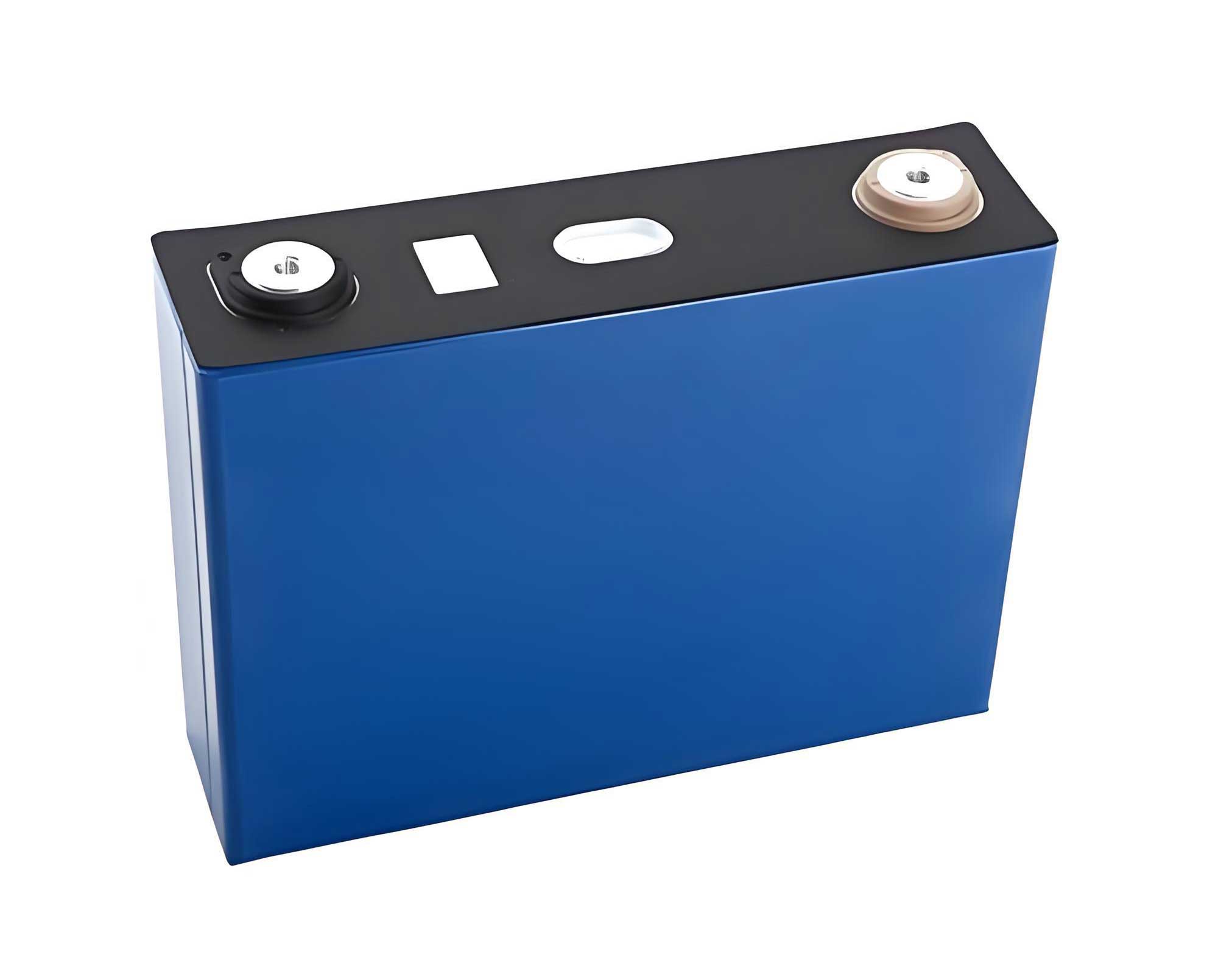
Balancing management typically consists of two core components: the balancing circuit and the balancing strategy. Balancing circuits can be broadly categorized into dissipative and non-dissipative types. Dissipative circuits, often using resistors to bleed excess energy, are simple to implement but suffer from energy loss, heat generation, and prolonged balancing times. Non-dissipative circuits, on the other hand, transfer energy between cells or via an intermediate energy storage element, offering higher efficiency. For lifepo4 battery packs, non-dissipative approaches are preferable to preserve energy and minimize thermal issues. Common balancing strategies include methods based on maximum voltage, average voltage, voltage difference comparison, and fuzzy logic control. In this work, I developed a bidirectional balancing circuit based on a Buck-Boost topology and devised a balancing strategy that uses cell voltage difference as the control signal, with adaptive thresholds for different working modes.
Design of the Bidirectional Balancing Circuit for Lifepo4 Battery Packs
To address cell inconsistencies in lifepo4 battery packs, I designed a bidirectional balancing circuit based on the Buck-Boost converter structure. This circuit facilitates energy transfer between adjacent cells, leveraging power inductors as the energy transfer medium. The core idea is to redistribute energy from higher-voltage cells to lower-voltage cells, thereby reducing voltage disparities and enhancing pack uniformity. The circuit structure for a section of a lifepo4 battery pack is illustrated below, where B1, B2, B3 represent individual lifepo4 battery cells, L is the power inductor, R is a demagnetizing resistor, Q are MOSFET switches (combining P-channel and N-channel types), and D are the body diodes of the MOSFETs.
The balancing operation can be divided into three stages based on the energy transfer process: high-voltage cell discharging, low-voltage cell charging, and inductor demagnetization. These stages correspond to the different phases of circuit operation during balancing.
Stage 1: Discharging of High-Voltage Lifepo4 Battery Cell
When the voltage of a lifepo4 battery cell, say B2, is detected to be above the balancing threshold while an adjacent cell B1 is below the threshold, the balancing circuit initiates energy transfer from B2 to B1. In this stage, MOSFET Q2 is turned on, creating a discharge loop through inductor L1 and Q2. The energy from lifepo4 battery cell B2 is converted into magnetic energy stored in the inductor. The current through inductor L1 during this discharge phase can be described by the following differential equation, considering the circuit resistance:
$$ \frac{dI}{dt} = \frac{V_2 – I R_{on}}{L} $$
Solving this equation yields the expression for the inductor current during discharge:
$$ I(t) = \frac{V_2}{R_{on}} \left(1 – e^{-\frac{R_{on}}{L} t}\right) $$
where \( V_2 \) is the voltage of lifepo4 battery cell B2, \( R_{on} \) is the total resistance in the discharge loop (including MOSFET on-resistance and inductor resistance), \( L \) is the inductance of L1, and \( t \) is the time since the start of discharge, ranging from 0 to \( t_{on} \), the on-time of Q2. The maximum current at \( t = t_{on} \) is:
$$ I_{max} = \frac{V_2}{R_{on}} \left(1 – e^{-\frac{R_{on}}{L} t_{on}}\right) $$
This current represents the peak energy transfer rate from the high-voltage lifepo4 battery cell.
Stage 2: Charging of Low-Voltage Lifepo4 Battery Cell
After the discharge phase, MOSFET Q2 is turned off. Due to the inductor’s continuity, the stored magnetic energy is released into the low-voltage lifepo4 battery cell B1 through the body diode D1 of MOSFET Q1, forming a charging loop. The inductor current during this charging phase decays as it transfers energy to B1. The current dynamics are governed by:
$$ \frac{dI}{dt} = -\frac{V_D + V_1 + I R_{off}}{L} $$
where \( V_D \) is the forward voltage drop of diode D1, \( V_1 \) is the voltage of lifepo4 battery cell B1, and \( R_{off} \) is the total resistance in the charging loop. The solution for the current during charging is:
$$ I(t) = I_{max} e^{-\frac{R_{off}}{L} t} – \frac{V_D + V_1}{R_{off}} \left(1 – e^{-\frac{R_{off}}{L} t}\right) $$
This process continues until the inductor current reaches zero, completing the energy transfer to the low-voltage lifepo4 battery cell.
Stage 3: Inductor Demagnetization
After multiple balancing cycles, residual magnetic energy can accumulate in the inductor, risking magnetic saturation. To prevent this, a demagnetization stage is incorporated. Following the charging phase, the inductor’s remaining energy is dissipated through a demagnetizing resistor R. The circuit during demagnetization can be modeled as an RLC resonant circuit, where the MOSFETs and battery cells exhibit capacitive effects. Since the equivalent capacitance of the MOSFET, \( C_{MOS} \), is much smaller than that of the lifepo4 battery cell, \( C_{B1} \), the resonant frequency and quality factor are approximated as:
$$ f_0 = \frac{1}{2\pi \sqrt{L C_{MOS}}} $$
$$ Q = \frac{1}{R} \sqrt{\frac{L}{C_{MOS}}} $$
where \( f_0 \) is the resonant frequency, \( Q \) is the quality factor, and \( R \) is the demagnetizing resistance. Proper selection of R ensures efficient energy dissipation without excessive ringing.
The balancing circuit for lifepo4 battery packs is scalable to multiple cells by replicating this basic unit between adjacent cells. Key parameters, such as inductance and MOSFET ratings, are chosen based on the specific requirements of the lifepo4 battery pack, including cell voltage and maximum balancing current.
Design of Balancing Strategy for Lifepo4 Battery Packs
The balancing strategy is critical for determining when and how to activate the balancing circuit. I developed a strategy centered on cell voltage difference, as voltage is easily measurable and correlates with cell state of charge (SOC) for lifepo4 battery cells. However, due to hysteresis effects in lifepo4 battery cells, a hysteresis control approach is adopted. This allows the voltages of participating cells to first converge toward an intermediate mean, then adjust for hysteresis, and finally stabilize at a similar level.
The balancing strategy uses voltage extremum difference (the difference between the highest and lowest cell voltages in the pack) as the trigger. When this difference exceeds a predefined start threshold, balancing is initiated; when it falls below a stop threshold, balancing is halted. The thresholds are tailored to different working modes of the lifepo4 battery pack: standing, charging, and discharging, each with varying charge/discharge rates.
To establish appropriate thresholds, I analyzed the relationship between open-circuit voltage (OCV) and SOC for lifepo4 battery cells. The specifications of the lifepo4 battery cells used in this study are summarized in the table below.
| Parameter | Value |
|---|---|
| Capacity | 10 Ah |
| Nominal Voltage | 3.2 V |
| Internal Resistance | < 5 mΩ |
| Maximum Cut-off Voltage | 3.6 V |
| Minimum Cut-off Voltage | 2.4 V |
| Maximum Charge Current | 10 A |
| Maximum Discharge Current | 30 A |
| Cycle Life | > 1500 cycles |
The OCV-SOC relationship for lifepo4 battery cells is nonlinear, with a flat region (plateau) between approximately 20% and 90% SOC. Within this plateau, OCV changes minimally, making voltage-based balancing challenging. The table below details the OCV-SOC correspondence for lifepo4 battery cells, highlighting the small voltage differences in the plateau.
| SOC (%) | OCV (V) | ΔOCV (mV) |
|---|---|---|
| 100 | 3.459 | — |
| 90 | 3.352 | 107 |
| 80 | 3.323 | 29 |
| 70 | 3.309 | 14 |
| 60 | 3.297 | 12 |
| 50 | 3.281 | 16 |
| 40 | 3.260 | 21 |
| 30 | 3.228 | 32 |
| 20 | 3.177 | 51 |
| 10 | 3.076 | 101 |
During the standing mode, the lifepo4 battery pack is neither charging nor discharging. Here, OCV is the primary indicator. The smallest ΔOCV in the plateau is 12 mV. To enable timely balancing even under small imbalances, I set the start threshold for standing mode to 12 mV.
For charging and discharging modes, the voltage behavior of lifepo4 battery cells is influenced by current rates due to ohmic and polarization effects. Higher currents cause larger voltage deviations. I conducted tests at different discharge rates (0.5C, 0.8C, and 1C) to observe voltage-SOC curves. The results showed that at 0.5C discharge, the minimum ΔOCV is around 17 mV, while at higher rates (0.8C and 1C), voltage differences increase by 3-14 mV. Therefore, to avoid frequent balancing activation and deactivation, I set higher thresholds for higher current rates.
The balancing thresholds for different working modes of the lifepo4 battery pack are summarized in the table below. These thresholds ensure efficient energy transfer while minimizing unnecessary balancing actions.
| Working Mode | Condition | Start Threshold ΔV_on (mV) | Stop Threshold ΔV_off (mV) | Maximum Balancing Current I_max (A) |
|---|---|---|---|---|
| Standing | — | 12 | 5 | 3 |
| Charging/Discharging | Current ≤ 5 A (≤0.5C) | 17 | 10 | 5 |
| Charging/Discharging | Current > 5 A (>0.5C) | 25 | 20 | 7 |
The balancing control algorithm continuously monitors cell voltages in the lifepo4 battery pack. When the voltage extremum difference exceeds ΔV_on, the system identifies the cells with the highest and lowest voltages as balancing targets. It then generates PWM signals to control the MOSFETs in the balancing circuit, initiating energy transfer. The process continues until the voltage difference falls below ΔV_off. The timing parameters for each balancing stage depend on circuit components and operating conditions. Based on the selected inductor value of 22 µH and loop resistances (approximately 80 mΩ for discharge and 20 mΩ for charge), I calculated the durations for discharge and charge phases, as well as the demagnetization time. The table below presents the control timings for different modes.
| Stage | Standing Mode | Charging/Discharging Mode (Current ≤ 5 A) | Charging/Discharging Mode (Current > 5 A) |
|---|---|---|---|
| Discharge Phase Duration (µs) | 20.89 | 35.75 | 51.47 |
| Charge Phase Duration (µs) | 15.79 | 25.84 | 35.53 |
| Total Balancing Cycle Time (µs) | 37.60 | 63.39 | 89.81 |
| Duty Cycle D (%) | 55.56 | 56.40 | 57.31 |
The balancing strategy flowchart is implemented in software, ensuring adaptive control across all operational modes of the lifepo4 battery pack. This approach enhances the longevity and performance of lifepo4 battery packs by maintaining cell uniformity.
Experimental Validation of Balancing Management for Lifepo4 Battery Packs
To validate the proposed balancing circuit and strategy, I constructed an experimental platform comprising six 18650-type lifepo4 battery cells connected in series. The platform included voltage sensors, a microcontroller for control, the balancing circuits, and a programmable load/charger to simulate different working modes. The lifepo4 battery cells were initially conditioned to have slight imbalances to test the balancing effectiveness.
Experiment 1: Balancing in Standing Mode for Lifepo4 Battery Pack
In this test, the lifepo4 battery pack was left in a standing state with no external charge or discharge. The initial voltage extremum difference was 60 mV. Upon enabling the balancing system, cells B2 and B5 were identified as primary balancing targets (having lower voltages), and energy was transferred from cells B3, B4, and B6 to B2 and B5. Over 60 minutes, the voltage extremum difference reduced to 33 mV, a decrease of 45%. All cell voltages gradually converged, demonstrating effective balancing. The results confirm that the balancing system can efficiently redistribute energy in lifepo4 battery packs during standing mode, mitigating inconsistencies without external energy input.
Experiment 2: Balancing in Discharging Mode for Lifepo4 Battery Pack
I conducted discharge tests at two constant current rates: 0.3C (3 A) and 0.7C (7 A). For each rate, tests were performed both with and without balancing enabled to compare outcomes.
At 0.3C discharge, without balancing, the voltage extremum difference decreased from 89 mV to 42 mV after 60 minutes, primarily due to cells entering the discharge plateau. With balancing enabled, cells B2 and B6 were targeted, and energy was transferred from other cells. The voltage extremum difference reduced from 92 mV to 18 mV, an 80.4% improvement. Comparing the two cases, balancing reduced the final extremum difference from 42 mV to 18 mV, a 57.1% enhancement. This shows that the balancing system significantly improves voltage uniformity in lifepo4 battery packs under moderate discharge rates.
At 0.7C discharge, without balancing, the voltage extremum difference increased from 97 mV to 420 mV after 60 minutes, as cell B2 reached the cut-off voltage earlier than others. With balancing enabled, cells B2 and B6 were again targeted, and energy transfer reduced the extremum difference from 98 mV to 40 mV, a 59.2% reduction. The final difference with balancing was 40 mV compared to 420 mV without balancing, a 90.5% improvement. This highlights the critical role of balancing in preventing premature cell depletion in lifepo4 battery packs under high discharge rates.
The voltage trends during these tests underscore the adaptability of the balancing strategy to different discharge conditions for lifepo4 battery packs.
Experiment 3: Balancing in Charging Mode for Lifepo4 Battery Pack
Similarly, charging tests were performed at 0.3C and 0.7C constant current rates. For 0.3C charging, without balancing, the voltage extremum difference decreased from 160 mV to 43 mV over 60 minutes, but this reduction was minor and likely temporary. With balancing enabled, cells B2 and B6 were targeted, and the extremum difference dropped from 157 mV to 17 mV, an 81.5% reduction. The final difference with balancing was 17 mV versus 43 mV without balancing, a 74.4% improvement. This indicates that balancing during charging ensures more uniform cell voltages in lifepo4 battery packs, preventing overcharging of individual cells.
For 0.7C charging, without balancing, the extremum difference decreased from 163 mV to 138 mV, with cells B3 and B5 reaching cut-off voltage first. With balancing, cells B3 and B5 were targeted, and energy transfer reduced the difference from 166 mV to 17 mV, a 90% reduction. The final difference with balancing was 17 mV compared to 138 mV without balancing, an 87.7% improvement. These results validate that the balancing system effectively manages cell imbalances during fast charging of lifepo4 battery packs.
The experimental data are summarized in the table below, showcasing the performance gains achieved by the balancing management system across different modes for lifepo4 battery packs.
| Working Mode | Condition | Initial Voltage Extremum Difference (mV) | Final Voltage Extremum Difference Without Balancing (mV) | Final Voltage Extremum Difference With Balancing (mV) | Improvement with Balancing (%) |
|---|---|---|---|---|---|
| Standing | — | 60 | 33 (after 60 min, natural relaxation) | 33 (after 60 min, with balancing) | 45% reduction from initial |
| Discharging | 0.3C | 92 | 42 | 18 | 57.1% reduction in final difference |
| Discharging | 0.7C | 98 | 420 | 40 | 90.5% reduction in final difference |
| Charging | 0.3C | 157 | 43 | 17 | 74.4% reduction in final difference |
| Charging | 0.7C | 166 | 138 | 17 | 87.7% reduction in final difference |
The experiments consistently demonstrate that the balancing circuit and strategy effectively reduce voltage disparities in lifepo4 battery packs under various operational scenarios. The adaptive thresholds ensure that balancing is activated only when necessary, optimizing energy transfer efficiency and minimizing circuit stress.
Mathematical Modeling and Analysis for Lifepo4 Battery Pack Balancing
To further analyze the balancing process, I developed a mathematical model for energy transfer in lifepo4 battery packs. The model considers the dynamics of the inductor current and cell voltages during balancing cycles. For a pair of adjacent lifepo4 battery cells, the energy transferred per balancing cycle can be estimated from the inductor energy storage. The energy stored in the inductor during discharge is:
$$ E_L = \frac{1}{2} L I_{max}^2 $$
Assuming ideal conditions, this energy is transferred to the low-voltage cell during charging. However, losses occur due to resistances and diode drops. The efficiency of a single balancing transfer can be expressed as:
$$ \eta = \frac{V_1 \cdot \Delta Q}{V_2 \cdot \Delta Q} \approx \frac{V_1}{V_2} $$
where \( \Delta Q \) is the charge transferred. For small voltage differences typical in lifepo4 battery packs, efficiency is high. The total balancing time for a pack with N cells can be approximated by considering the number of transfers needed to equalize voltages. If the initial voltage extremum difference is \( \Delta V_0 \) and the balancing current is I, the time to reduce the difference to a target \( \Delta V_t \) is:
$$ t_{balance} = \frac{C_{cell} (\Delta V_0 – \Delta V_t)}{I} $$
where \( C_{cell} \) is the effective capacitance of a lifepo4 battery cell, related to its capacity. For example, a 10 Ah lifepo4 battery cell has a capacity of 36000 C (since 1 Ah = 3600 C), and its voltage change per charge unit depends on the OCV-SOC curve. In the plateau region, the capacitance is large, requiring more charge transfer for a given voltage change. This model helps in sizing components and predicting balancing durations for lifepo4 battery packs.
Additionally, the thermal implications of balancing in lifepo4 battery packs are considered. The power dissipated in the balancing circuit during discharge and charging phases contributes to heating. The average power loss per balancing cycle is:
$$ P_{loss} = I_{rms}^2 R_{total} $$
where \( I_{rms} \) is the root-mean-square current through the inductor, and \( R_{total} \) is the total resistance in the loop. For the designed circuit with I_max = 5 A and R_on = 80 mΩ, the peak power loss during discharge is approximately 2 W. Over multiple cycles, this can cause temperature rise in the lifepo4 battery pack, but it is manageable with proper thermal design. The demagnetization resistor also dissipates energy, but its value (1.7 MΩ) ensures low power loss.
The model confirms that the balancing approach is efficient for lifepo4 battery packs, with minimal energy loss compared to dissipative methods.
Discussion on Advanced Balancing Techniques for Lifepo4 Battery Packs
While voltage-based balancing is effective for lifepo4 battery packs, advanced techniques could further enhance performance. For instance, incorporating State of Charge (SOC) estimation could provide a more accurate indicator of cell imbalance, especially since voltage hysteresis in lifepo4 battery cells can lead to errors. SOC can be estimated using methods like Coulomb counting or Kalman filtering, though these add computational complexity. Alternatively, balancing based on cell capacity or internal resistance might offer improvements, but these parameters are harder to measure online.
Another avenue is to optimize the balancing topology. The adjacent-cell transfer used in this work is simple but may require multiple hops for non-adjacent imbalances. A switched-capacitor or transformer-based balancing circuit could enable direct energy transfer between any cells, potentially speeding up balancing for lifepo4 battery packs with widely scattered imbalances. However, such circuits increase cost and control complexity.
For large-scale lifepo4 battery packs, such as those in electric vehicles or grid storage, hierarchical balancing strategies could be employed. Local balancing units manage small groups of cells, while a central controller coordinates overall pack balance. This distributed approach scales well and reduces wiring complexity. The principles developed in this study—using voltage differences and adaptive thresholds—can be extended to such systems.
Moreover, the impact of temperature on lifepo4 battery pack balancing cannot be ignored. Temperature variations affect cell voltage and internal resistance, potentially altering balancing behavior. Future work could integrate temperature sensors to adjust thresholds dynamically, ensuring robust balancing across thermal gradients in lifepo4 battery packs.
Conclusion
In this study, I designed and implemented a comprehensive balancing management system for lifepo4 battery packs operating under different modes: standing, charging, and discharging. The core of the system is a bidirectional balancing circuit based on a Buck-Boost topology, utilizing power inductors for energy transfer between adjacent lifepo4 battery cells. The circuit operates in three stages—discharge, charge, and demagnetization—ensuring efficient and safe energy redistribution. I derived mathematical models to describe the current dynamics and energy transfer efficiency, confirming the circuit’s suitability for lifepo4 battery packs.
The balancing strategy employs cell voltage difference as the control signal, with hysteresis control to account for voltage hysteresis in lifepo4 battery cells. Adaptive thresholds are set based on the working mode and current rate, enabling timely balancing activation without unnecessary interventions. Experimental validation on a six-cell lifepo4 battery pack demonstrated significant improvements in voltage uniformity. In standing mode, balancing reduced the voltage extremum difference by 45%. During discharging at 0.3C and 0.7C, balancing improved the final difference by 57.1% and 90.5%, respectively. Similarly, during charging at 0.3C and 0.7C, improvements of 74.4% and 87.7% were achieved. These results verify the feasibility and effectiveness of the proposed balancing circuit and strategy for lifepo4 battery packs.
The system offers a practical solution for enhancing the performance and longevity of lifepo4 battery packs in real-world applications, from portable electronics to electric vehicles. By maintaining cell balance, it mitigates inconsistencies that lead to reduced capacity and premature failure. Future work could explore integration with battery management systems for holistic lifepo4 battery pack monitoring and control. Overall, this research contributes to the advancement of energy storage technologies by providing a robust balancing approach tailored for lifepo4 battery packs under diverse operational conditions.