
In the context of the global energy transition towards clean and low-carbon systems, energy storage technology has become increasingly critical as a key enabler for integrating high proportions of renewable energy and ensuring grid stability. Among various options, the lithium iron phosphate (LiFePO4) battery has emerged as the dominant technology in electrochemical energy storage, particularly for grid-scale, commercial, industrial, and residential storage applications, owing to its excellent thermal stability, long cycle life, low cost, and absence of heavy metal pollution. Market data indicates that LiFePO4 batteries now account for over 92% of global shipments of energy storage lithium-ion batteries. However, as installation scales expand and application scenarios diversify, higher demands are placed on the lifespan, safety, and full lifecycle cost of energy storage batteries, necessitating breakthroughs through material-level innovations.
Despite the comprehensive advantages of LiFePO4 batteries, traditional liquid-electrolyte systems face significant challenges when targeting the ultra-long design life (typically ≥20 years) and extreme operating conditions required for power grid storage. The main bottlenecks lie in cycle life and safety. For power storage systems, batteries must exhibit ultra-long cycle life (often ≥8000 cycles) and calendar life (≥20 years). In liquid LiFePO4 batteries, continuous interfacial side reactions, irreversible consumption of active lithium, and dissolution of metal ions from the cathode lead to accelerated capacity decay. Especially under high-temperature conditions above 45°C, electrolyte decomposition and continuous thickening of the solid electrolyte interphase (SEI) film on electrodes drastically increase the capacity fade rate, making it difficult to meet the lifespan requirements for grid-scale storage.
Safety is the lifeline of energy storage systems. The flammable organic solvents in liquid electrolytes can trigger thermal runaway under abuse conditions such as internal short circuits or overcharging, leading to fires or explosions, as evidenced by frequent accidents in energy storage stations worldwide in recent years. Additionally, a long-overlooked but critical issue is electrolyte stratification. Similar to the “acid stratification” phenomenon in flooded lead-acid batteries, in liquid-rich LiFePO4 energy storage batteries that remain stationary for extended periods under gravity, concentration gradients of lithium salts can develop, causing vertical stratification. This not only results in uneven current distribution within the battery, with bottom regions chronically undercharged or overcharged, accelerating local polarization and lithium plating, but also triggers capacity跳水, sharp increases in internal resistance, and significantly elevates the risk of thermal runaway.
To address these inherent defects of liquid LiFePO4 energy storage batteries, we have innovatively proposed a systematic technology for gel-type LiFePO4 batteries. This approach combines two original core technologies: 1) Cathode lithium compensation: By introducing a Li4SiO4@S composite slow-release lithium reservoir material into the LiFePO4 cathode, active lithium is continuously supplemented during battery cycling to compensate for lithium loss due to SEI formation and growth, thereby enhancing the energy density and cycle life of the LiFePO4 battery. 2) In-situ electrolyte gelation: By incorporating trace amounts of S into the LiFePO4 cathode, oxidation and reduction polymerization reactions occur at the positive and negative electrode interfaces during charge-discharge cycles. The oxidation reaction at the cathode: S is electrochemically oxidized by EC intermediates to generate alkyl lithium sulfate (R-OSO2OLi). The reduction reaction at the anode: S slightly dissolves into the electrolyte and gradually diffuses to the anode, where it is electrochemically reduced to polysulfides, subsequently initiating ring-opening decarboxylation of EC, ultimately forming PEO-like polymers. Through these in-situ gelation reactions, a gel-like electrolyte layer forms at the electrode interfaces, maintaining electrode wetness and stability during long-term storage and cycling, and eliminating risks of electrolyte stratification and drying.
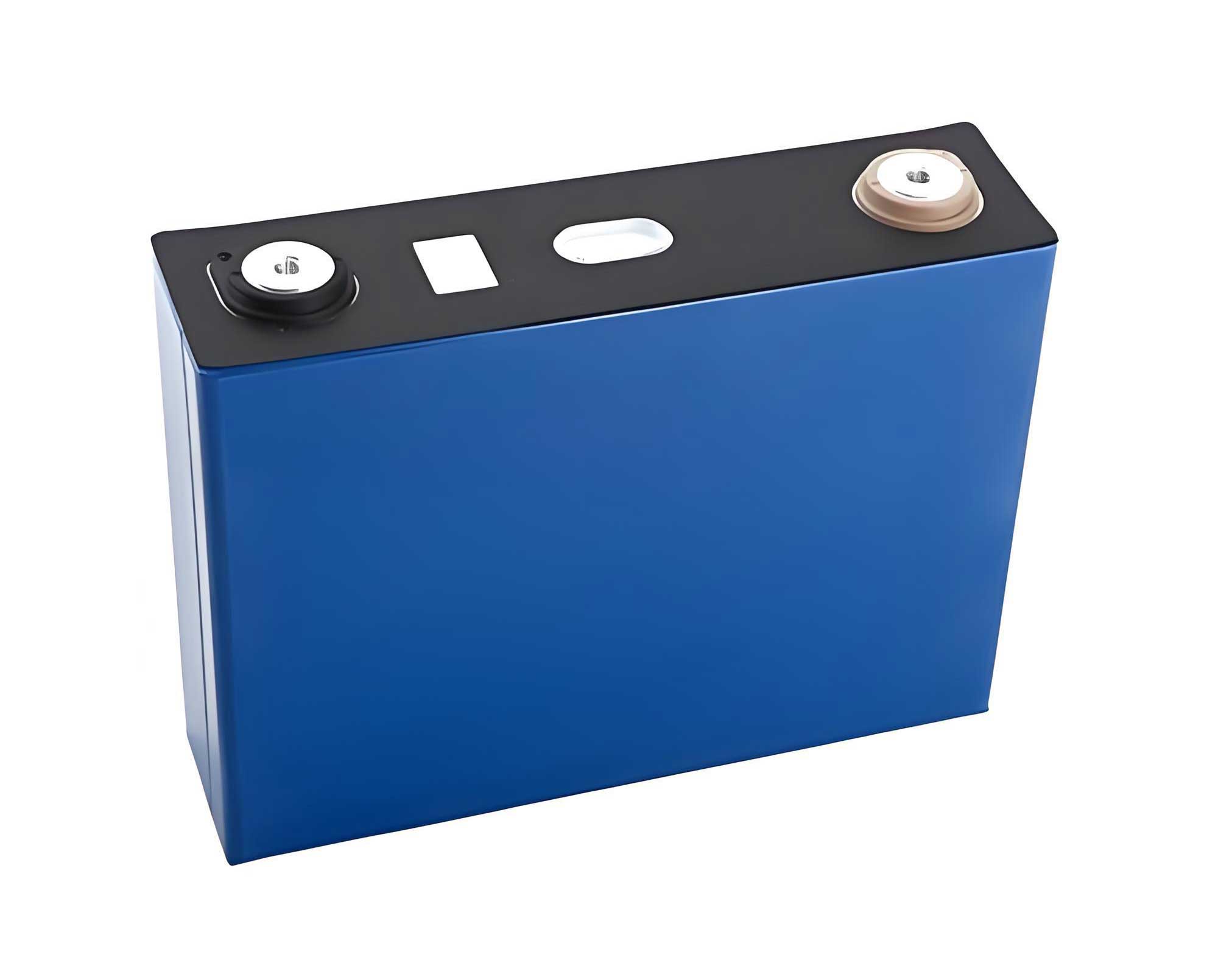
This gel-type LiFePO4 battery technology, by constructing stable electrode/electrolyte interfaces, significantly enhances battery stability, eliminates risks of electrolyte stratification and drying, and addresses continuous lithium loss during cycling through slow-release cathode lithium compensation. It is particularly suitable for static energy storage scenarios requiring long life and high safety. In this paper, we present our research and development of this lithium-compensated gel-type LiFePO4 energy storage battery technology, detailing material synthesis, electrochemical performance, and application outcomes.
We began by synthesizing the Li4SiO4@S composite material. Li4SiO4 was prepared via solid-state sintering using SiO2 and Li2CO3 with glucose as a carbon source, followed by heating at 750°C under nitrogen atmosphere to obtain carbon-coated Li4SiO4. This was then mixed with elemental sulfur and heated at 120°C under vacuum to produce the final carbon-coated Li4SiO4@S composite. Characterization via scanning electron microscopy (SEM) and energy-dispersive spectroscopy (EDS) confirmed a core-shell structure with uniform carbon and sulfur layers on the Li4SiO4 core. X-ray diffraction (XRD) patterns showed the composite consisted of distinct Li4SiO4 and S phases.
For electrode preparation, we used commercial LiFePO4 as the cathode active material. The cathode slurry was prepared by mixing LiFePO4, conductive carbon black, and PVDF binder in a mass ratio of 97:1:2 using NMP as solvent. For the lithium-compensated gel-type cathodes, Li4SiO4@S was added at mass ratios of 0.5%, 1%, and 2% relative to the total solid content. The slurry was coated onto carbon-coated aluminum foil and calendared to a density of approximately 2.55 g/cm³. The anode comprised artificial graphite, conductive carbon black, CMC, and SBR in a mass ratio of 93:2:2:3, coated on copper foil and calendared to about 1.5 g/cm³. The electrolyte was 1.0 M LiPF6 in EC/DMC/EMC (1:1:1 by volume) with 2% vinylene carbonate (VC) additive.
Electrochemical testing included coin cell and pouch cell evaluations. Coin cells (2032-type) were assembled with cathode discs (14 mm diameter) and anode discs (15 mm diameter), and cycled between 2.50–3.65 V. Pouch cells (2.5 Ah) were assembled by stacking electrodes, sealed in aluminum laminate, and subjected to formation, aging, and capacity grading before testing. Cycle life tests were conducted at room temperature and 45°C at 1C rate, and rate capability tests at various C-rates. High-temperature storage tests involved storing fully charged cells at 55°C for 7 days followed by room-temperature cycling.
The lithium compensation effect of Li4SiO4@S was first investigated in coin cells. For a LFP||graphite cell without additive, the initial discharge specific capacity was 141.5 mAh/g (based on LiFePO4 active mass). In contrast, the cell with 2% Li4SiO4@S additive showed an initial capacity of 146.2 mAh/g, which gradually increased to 152.5 mAh/g over the first 10 cycles due to slow release of active lithium, and remained stable for 200 cycles without decay. The lithium compensation reaction can be described by:
$$2 Li_4SiO_4 + S \rightarrow SiO_2 + Li_2SO_4 + 6Li^+ + 6e^-$$
This indicates that each mole of Li4SiO4@S can theoretically deliver 6 moles of lithium ions, corresponding to a high specific capacity of 598 mAh/g, effectively compensating irreversible capacity loss in LiFePO4 batteries without generating gaseous by-products.
The electrolyte gelation effect was studied through X-ray photoelectron spectroscopy (XPS) and electrochemical impedance spectroscopy (EIS). XPS analysis of cathodes from cells cycled 10 times revealed signals for elemental S at 163.0 eV and alkyl lithium sulfate (RO-SO2-OLi) at 169.2 eV, confirming oxidation of S at the cathode interface. After Ar+ sputtering, the alkyl lithium sulfate signal persisted, indicating formation of a stable interface layer. On the anode, XPS showed C-S bonds at 285.2 eV and polysulfide (Sn2-) signals at 164.2 eV, evidence of PEO-like polymer formation from the reaction between polysulfides and EC. The gelation reactions can be summarized as:
At the cathode: $$S + EC \rightarrow RO-SO_2-OLi \text{ (via electrochemical oxidation)}$$
At the anode: $$S \rightarrow S_n^{2-} \rightarrow \text{PEO-like polymer} \text{ (via ring-opening polymerization of EC)}$$
EIS measurements showed that cells with Li4SiO4@S additive exhibited continuously decreasing charge transfer resistance (Rct) over the first 25 cycles, from about 15 Ω to 11.3 Ω, while reference cells without additive stabilized around 17.8 Ω. This reduction in impedance is attributed to the conductive alkyl lithium sulfate at the cathode and the stable gel-like interface at the anode, facilitating lithium-ion transport and enhancing interface stability.
Pouch cell tests provided comprehensive performance data. The table below summarizes the cycle life performance of pouch cells with different Li4SiO4@S additive amounts at room temperature and 45°C, 1C rate.
| Cell Type | Additive Amount | Initial Capacity (mAh/g) | Capacity after 500 cycles (mAh/g) | Retention after 500 cycles | Capacity after 1000 cycles (mAh/g) | Retention after 1000 cycles |
|---|---|---|---|---|---|---|
| Reference (RT) | 0% | 128.0 | 120.9 | 94.5% | 108.5 | 84.8% |
| Gel-type (RT) | 0.5% | 129.3 | 124.7 | 96.4% | 120.1 | 92.9% |
| Gel-type (RT) | 1% | 130.7 | 127.6 | 97.6% | 123.4 | 94.4% |
| Gel-type (RT) | 2% | 129.4 | 125.9 | 97.3% | 122.5 | 94.7% |
| Reference (45°C) | 0% | 134.6 | 121.4 | 90.2% | N/A | N/A |
| Gel-type (45°C) | 0.5% | 135.7 | 124.5 | 91.7% | 119.2 | 87.8% |
| Gel-type (45°C) | 1% | 136.8 | 126.4 | 92.4% | 121.8 | 89.0% |
| Gel-type (45°C) | 2% | 136.1 | 126.0 | 92.6% | 121.3 | 89.1% |
All capacities are based on total cathode coating mass. The cells with Li4SiO4@S additive showed initial capacity activation over the first 50 cycles due to slow lithium release. At room temperature, the 1% additive cell delivered the highest specific capacity and maintained 94.4% retention after 1000 cycles, outperforming the reference cell (84.8%). At 45°C, the gel-type cells also exhibited superior cycle life, with the 1% additive cell retaining 89.0% capacity after 1000 cycles. Charge-discharge curves indicated stable voltage plateaus and minimal polarization increase for gel-type cells over cycling, unlike reference cells which showed significant polarization growth.
Rate capability tests on the 1% additive pouch cell after 50 room-temperature cycles demonstrated excellent high-rate performance. Discharge capacities at 1C, 2C, 3C, and 4C rates were 132.1, 129.4, 128.3, and 127.1 mAh/g, respectively, corresponding to retention rates of 100%, 98.0%, 97.1%, and 96.2% relative to 1C capacity. The reference cell showed lower capacities and retention, especially at 4C (91.4%). This enhanced rate capability is attributed to the reduced interfacial impedance from the gel-like electrolyte layers.
High-temperature storage tests at 55°C for 7 days on fully charged cells revealed superior stability for the gel-type LiFePO4 battery. The 1% additive cell recovered 100% of its initial capacity after 28 cycles post-storage and remained stable for 200 cycles, while the reference cell only recovered 99.3% after 60 cycles and showed gradual decay thereafter. This indicates that the gel-type battery can better withstand extreme temperatures, meeting calendar life requirements for energy storage applications.
Based on this technology, we developed a 71173 model 320 Ah gel-type LiFePO4 energy storage battery cell. Compared to traditional liquid LiFePO4 batteries, this gel-type battery offers significantly improved cycle life and safety. Room-temperature cycling at 0.5P rate showed the gel-type battery maintained 97.6% energy retention after 1000 cycles, with a projected cycle life exceeding 12,000 cycles (to 70% state of health), potentially doubling the service life of energy storage stations and reducing levelized cost of storage. Safety characterization via differential scanning calorimetry (DSC) on anodes from cycled cells indicated that the gel-type battery had a higher thermal runaway onset temperature (146.2°C vs. 141.3°C for reference) and lower heat release (58.72 mJ/g vs. 79.27 mJ/g), demonstrating enhanced safety over long-term cycling.
The performance advantages of the gel-type LiFePO4 battery over commercial liquid types can be summarized as follows:
| Parameter | Gel-type LiFePO4 Battery | Commercial Liquid LiFePO4 Battery |
|---|---|---|
| Energy Density | Higher (due to lithium compensation) | Standard |
| Cycle Life (to 70% SOH) | >12,000 cycles (projected) | ~6,000 cycles |
| High-Temperature Stability | Excellent (100% recovery after 55°C storage) | Moderate |
| Safety (Thermal Runaway) | Higher onset temperature, lower heat release | Standard risk |
| Electrolyte Stratification | Eliminated (gel structure) | Potential risk |
| Rate Capability | High (96.2% retention at 4C) | Lower |
In conclusion, our research demonstrates a novel lithium-compensated gel-type LiFePO4 energy storage battery technology that addresses key limitations of traditional liquid systems. By incorporating Li4SiO4@S composite into the LiFePO4 cathode, we achieve simultaneous lithium compensation and in-situ electrolyte gelation. This dual-functionality significantly enhances the cycle life, rate capability, high-temperature stability, and safety of LiFePO4 batteries, making them ideal for long-duration, stationary energy storage applications. The developed 320 Ah gel-type LiFePO4 battery cell showcases practical viability, offering a robust pathway towards more durable, safer, and cost-effective next-generation power storage systems. This technology holds great promise for advancing the high-quality development of the energy storage industry and supporting global carbon neutrality goals.