
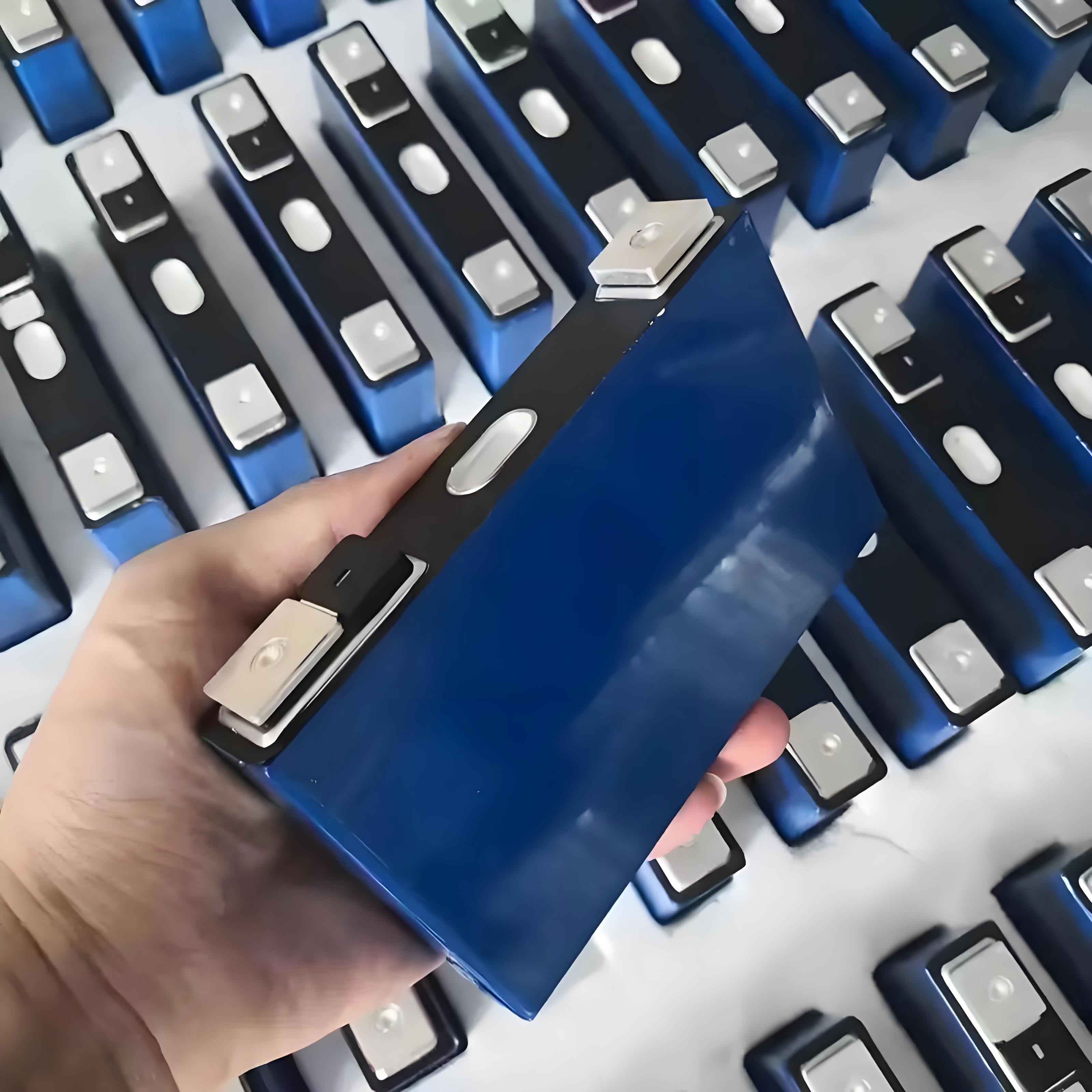
The exponential growth of the electric vehicle industry has led to a surge in demand for lithium-ion batteries (LIBs). Among various cathode materials, lithium iron phosphate (LiFePO4) stands out due to its high thermal stability, long cycle life, and low cost. However, retired LiFePO4 batteries, once their capacity drops below 80%, face challenges in recycling. Traditional hydrometallurgical methods are energy-intensive and environmentally burdensome. In this study, we propose a novel oxidative roasting-carbothermal reduction (ORCR) process to directly regenerate spent LiFePO4 cathodes, focusing on optimizing carbon layer defects to enhance electrochemical performance.
1. Introduction
LiFePO4 batteries dominate the energy storage market owing to their safety, eco-friendliness, and cost-effectiveness. However, after 3–6 years of service, these batteries accumulate capacity loss due to lithium depletion and structural degradation. Discarding retired LiFePO4 batteries poses environmental risks, as toxic electrolytes and heavy metals can leach into ecosystems. Direct regeneration—a process that restores structural integrity without dissolving the cathode—offers a sustainable alternative. Unlike wet-chemical methods, our ORCR approach minimizes chemical waste and simplifies recycling steps.
Key challenges in LiFePO4 regeneration include:
- Carbon impurities: Residual conductive additives (e.g., carbon black) hinder lithium diffusion.
- Lithium loss: Degraded LiFePO4 forms Li-deficient phases like FePO4.
- Non-uniform carbon coatings: Inhomogeneous coatings reduce electronic conductivity.
Our work addresses these issues by tailoring carbon layer defects using sugar-derived reductants, demonstrating that starch—a high-polymer carbohydrate—yields optimal results.
2. Experimental Design
2.1 Materials and Pretreatment
Spent LiFePO4 batteries were sourced from a recycling facility in Hunan, China. The cathode material (denoted as S-LFP) was extracted through the following steps:
- Discharge: Batteries were submerged in saturated NaCl for 72 hours.
- Dismantling: Components (anode, separator, casing) were manually separated.
- Ethanol washing: Residual electrolytes were removed via ethanol rinsing.
- Drying and grinding: Cathode powder was dried at 70°C and ground into fine particles.
2.2 Regeneration Process
The ORCR process involves two stages:
- Oxidative roasting: S-LFP was heated at 500°C in air for 2 hours to remove carbon impurities.
- Carbothermal reduction:
- Carbon source: Glucose, sucrose, or starch (0.75 g) was mixed with oxidized S-LFP (5 g) in ethanol.
- Ball milling: Mixtures were ground at 400 rpm for 2 hours.
- Sintering: Samples were heated under H2 atmosphere (350°C for 4 hours, then 700°C for 10 hours).
Regenerated samples were labeled as PR-LFP (glucose), ZR-LFP (sucrose), and DR-LFP (starch).
3. Results and Analysis
3.1 Phase and Elemental Recovery
XRD and ICP analyses confirmed successful regeneration:
| Sample | Li (wt%) | Fe (wt%) | P (wt%) | Li/Fe/P (mol%) |
|---|---|---|---|---|
| S-LFP | 3.55 | 33.98 | 18.79 | 84.05:100:99.69 |
| DR-LFP | 4.55 | 34.88 | 19.24 | 104.95:100:99.45 |
Post-regeneration, lithium content in DR-LFP exceeded stoichiometric LiFePO4 (100% recovery), while Fe and P remained stable. XRD patterns (Fig. 2b) showed no impurity peaks, confirming phase purity.
3.2 Carbon Layer Defect Engineering
Raman spectroscopy revealed the relationship between carbon source polymerization and defect density:Defect intensity ratio: ID/IG=Peak intensity at 1350 cm−1Peak intensity at 1580 cm−1Defect intensity ratio: ID/IG=Peak intensity at 1580 cm−1Peak intensity at 1350 cm−1
| Sample | ID/IGID/IG | Defect Density | Coating Uniformity |
|---|---|---|---|
| S-LFP | 0.815 | Low | Poor |
| PR-LFP | 1.134 | Moderate | Moderate |
| ZR-LFP | 1.432 | High | Good |
| DR-LFP | 1.660 | Very High | Excellent |
Starch-derived carbon layers exhibited the highest ID/IGID/IG, indicating abundant defects that facilitate lithium-ion diffusion. SEM images (Fig. 4j–l) further confirmed uniform carbon coatings on DR-LFP particles.
3.3 Electrochemical Performance
Half-cells (Li metal anode, 1 M LiPF6 electrolyte) were tested at 2.5–4.2 V:
| Sample | Discharge Capacity (mAh/g) | Capacity Retention (500 cycles) | Polarization (ΔV) |
|---|---|---|---|
| S-LFP | 47.9 @ 2.0 C | 65% | 0.28 V |
| PR-LFP | 96.6 @ 2.0 C | 98% | 0.23 V |
| ZR-LFP | 105.0 @ 2.0 C | 99% | 0.18 V |
| DR-LFP | 117.1 @ 2.0 C | 100% | 0.17 V |
DR-LFP delivered superior rate capability and cycle stability. The reduced polarization (ΔVΔV) correlates with enhanced electronic conductivity and lithium diffusion kinetics, as validated by electrochemical impedance spectroscopy (EIS):Rct(DR-LFP)<Rct(ZR-LFP)<Rct(PR-LFP)<Rct(S-LFP)Rct(DR-LFP)<Rct(ZR-LFP)<Rct(PR-LFP)<Rct(S-LFP)
Here, RctRct represents charge-transfer resistance. DR-LFP’s low RctRct (Fig. 8d) underscores its optimized interface for ion/electron transport.
4. Mechanism of Defect-Enhanced Regeneration
The ORCR process restores LiFePO4 through:
- Oxidative removal: Air roasting eliminates carbon black and binder residues.
- Carbothermal reduction:
- Sugar pyrolysis generates reducing gases (H2, CH4) to reduce Fe³⁺ to Fe²⁺.
- Carbon layers form via dehydrogenation, with defect density governed by the polymer length.
Starch’s high polymerization promotes crosslinking during pyrolysis, creating a porous carbon matrix with high defect density. These defects act as lithium-ion channels, enabling multidirectional diffusion:DLi+=kBT6πηr⋅1RctDLi+=6πηrkBT⋅Rct1
Where DLi+DLi+ is the diffusion coefficient, kBkB is Boltzmann’s constant, TT is temperature, ηη is viscosity, and rr is ionic radius. Defect-rich carbon layers lower RctRct, boosting DLi+DLi+.
5. Economic and Environmental Impact
Starch, sourced from corn or wheat, is cost-effective and sustainable compared to glucose or sucrose:
| Carbon Source | Production Cost (RMB/500 g) | Scalability | Purity |
|---|---|---|---|
| Starch | 10–20 | High | High |
| Sucrose | 30–40 | Moderate | High |
| Glucose | 50–60 | Low | High |
Adopting starch reduces regeneration costs by 50–70%, aligning with industrial scalability.
6. Conclusion
We demonstrate that carbon layer defect engineering via starch-derived carbothermal reduction significantly enhances the regeneration of spent LiFePO4 batteries. Key findings include:
- Starch introduces uniform, defect-rich carbon coatings, improving lithium-ion diffusion.
- DR-LFP achieves 117.1 mAh/g at 2.0 C with zero capacity fade over 500 cycles.
- The ORCR process is economically viable and environmentally sustainable.
This work paves the way for large-scale, high-value recycling of LiFePO4 batteries, addressing both resource scarcity and environmental challenges. Future studies will optimize defect density for broader temperature ranges and ultra-fast charging applications.