
As I walked into the grand hall, the air buzzed with an electric sense of anticipation. I was attending a major national conference dedicated entirely to the future of energy storage—a gathering focused on the transformative potential of solid-state batteries. The event, held in a coastal city, brought together nearly a thousand minds: leading academics, industry pioneers, eager students, and innovators from across the globe. For two intense days, I immersed myself in a world where the boundaries of material science and electrochemistry are constantly being redrawn. The central theme, “The Current State and Future Development of Solid-State Battery Technology,” was not just a slogan; it was the pulse of every conversation, presentation, and debate. This is my first-person account and synthesis of the insights gained, aiming to translate the conference’s intellectual fervor into a detailed exploration of where solid-state battery technology stands and where it is racing toward.
The atmosphere was one of collaborative urgency. The opening ceremony set the tone, emphasizing the critical role solid-state batteries are poised to play in the global transition to sustainable energy. The shift from liquid to solid electrolytes represents a paradigm shift, promising unprecedented gains in safety, energy density, and longevity. Throughout the conference, one term resonated above all: solid-state battery. It was the anchor for every discussion on overcoming the limitations of conventional lithium-ion technology.
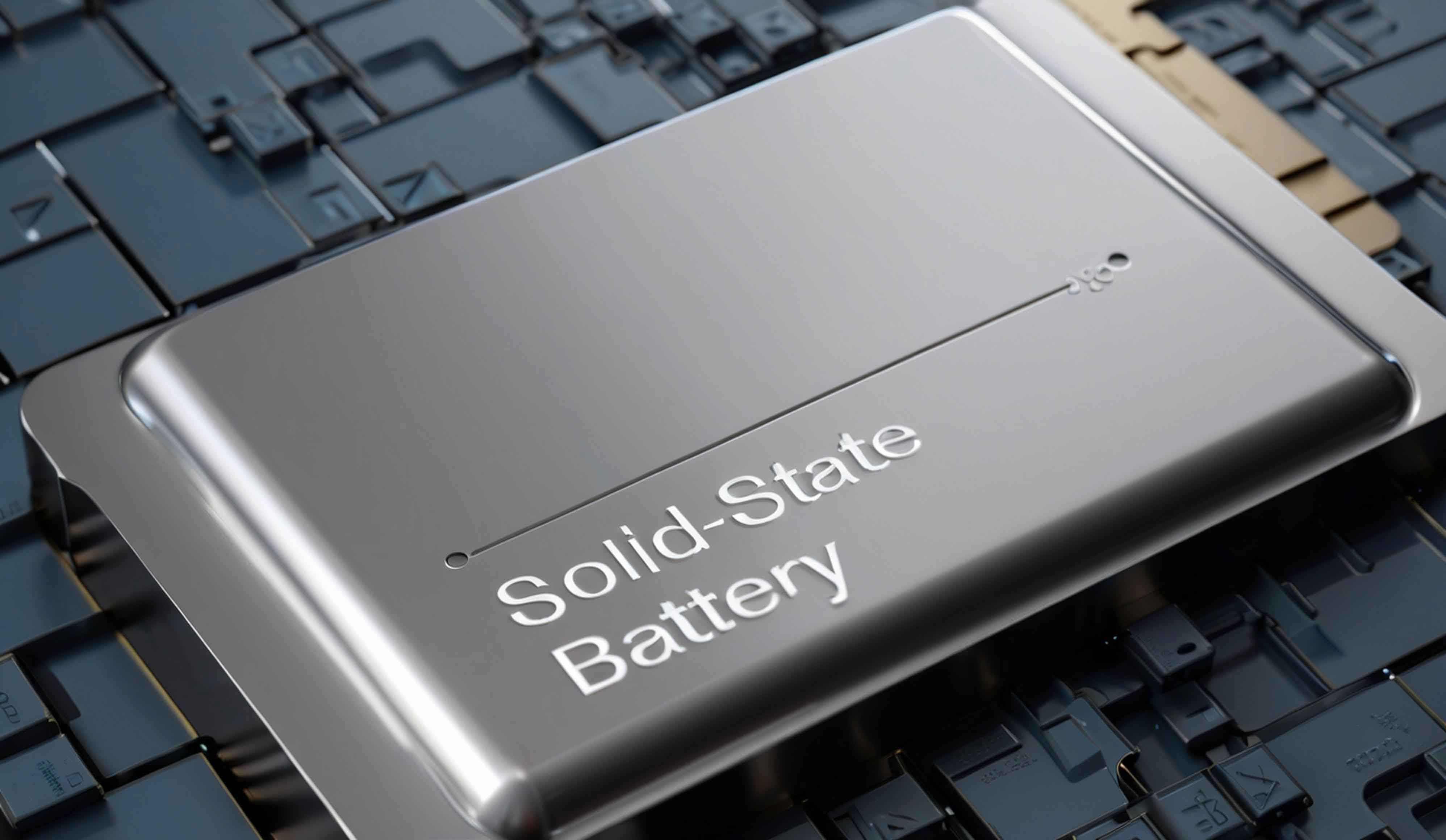
The technical core of the conference revolved around the fundamental components and challenges of a solid-state battery. A primary focus was the solid electrolyte itself, the heart of the technology. Presentations delved into the three main families: oxide-based, sulfide-based, and polymer-based electrolytes, each with its own trade-offs between ionic conductivity, electrochemical stability, and mechanical properties. The pursuit of a single perfect material seems elusive, leading to vigorous research into composites and novel chemistries. The ionic conductivity (σ) of these materials is a paramount metric, often described by the Arrhenius-type relationship:
$$ \sigma = \sigma_0 \exp\left(-\frac{E_a}{k_B T}\right) $$
where \(E_a\) is the activation energy for ion migration, \(k_B\) is the Boltzmann constant, and \(T\) is the absolute temperature. The race is to engineer materials that minimize \(E_a\) while maximizing \(\sigma_0\) at room temperature, a key hurdle for practical solid-state battery deployment.
To crystallize the comparisons, several presentations used data summaries akin to the following table, which I have reconstructed to encapsulate the prevailing discourse:
| Electrolyte Type | Exemplary Materials | Room-Temp Ionic Conductivity (S/cm) | Key Advantages | Primary Challenges |
|---|---|---|---|---|
| Oxide | Garnet-type (e.g., LLZO), Perovskites | 10-4 – 10-3 | High stability vs. Li, good mechanical strength | High sintering temps, brittle, poor interfacial contact |
| Sulfide | Li10GeP2S12 (LGPS), argyrodites | 10-3 – 10-2 | Exceptional ionic conductivity, cold-pressable | Poor stability in air, narrow electrochemical window |
| Polymer | PEO-based with Li salts | 10-5 – 10-4 | Excellent flexibility, easy processing | Low conductivity at RT, poor oxidative stability |
| Halide | Li3YCl6, Li3YBr6 | 10-3 – 10-2 | Good conductivity, stability vs. high-voltage cathodes | Moisture sensitivity, cost of raw materials |
| Composite/Hybrid | Polymer-in-ceramic, Ceramic-in-polymer | 10-4 – 10-3 | Balanced properties, improved interface | Complex fabrication, homogeneity issues |
Beyond the electrolyte, the interfaces within a solid-state battery emerged as the most formidable challenge. The presentations made it clear that the solid-solid interface between the electrolyte and the electrodes (both cathode and anode) is where many battles are lost. Issues of poor physical contact, chemical instability, and space-charge layer formation lead to high interfacial resistance. One expert framed the charge transfer resistance at the interface (\(R_{ct}\)) as a critical bottleneck, often modeled as part of the total cell impedance (\(Z_{cell}\)):
$$ Z_{cell} = R_{\Omega} + R_{ct} + Z_{W} $$
where \(R_{\Omega}\) is the ohmic resistance from the bulk electrolyte, and \(Z_{W}\) represents Warburg diffusion impedance. Strategies to mitigate this, such as introducing ultrathin interfacial coatings or designing gradient structures, were hot topics. For instance, the concept of a “functional interlayer” with its own ionic and electronic transport properties was discussed extensively. The goal is to satisfy the compatibility requirements described by the electrochemical potential continuity condition at the interface:
$$ \mu_{Li, electrode} = \mu_{Li, electrolyte} $$
which is often disrupted by side reactions forming resistive interphases.
The conference dedicated significant attention to electrode design tailored for solid-state batteries. A compelling session detailed the “dry-process” electrode fabrication technique. This method eliminates toxic solvents, directly mixing active material, solid electrolyte, and conductive agent, then pressing or spraying to form the electrode. The advantages for manufacturing solid-state batteries are profound: better compatibility, higher density, and simpler, more sustainable processing. The porosity (\(\epsilon\)) and tortuosity (\(\tau\)) of such electrodes are key parameters influencing effective ionic conductivity (\(\sigma_{eff}\)):
$$ \sigma_{eff} = \sigma_{bulk} \cdot \frac{\epsilon}{\tau} $$
Optimizing this microstructure is vital for achieving high energy and power density in a solid-state battery.
Another fascinating frontier is the pairing of novel cathode and anode materials with solid electrolytes. High-voltage nickel-manganese-cobalt (NMC) or lithium-rich cathodes require electrolytes with a wide electrochemical stability window. The stability window is determined by the HOMO-LUMO gap for polymers or the band gap for inorganic solids, dictating the voltage range before decomposition. On the anode side, the dream of using metallic lithium is closer to reality with a solid electrolyte acting as a physical barrier to dendrite growth. The critical current density (\(J_{crit}\)) for dendrite initiation in a solid-state battery can be described by models considering shear modulus and surface energy:
$$ J_{crit} \propto \frac{G \cdot \gamma}{L \cdot \eta} $$
where \(G\) is the shear modulus of the solid electrolyte, \(\gamma\) is the surface energy of Li, \(L\) is the electrolyte thickness, and \(\eta\) is overpotential. This underscores why mechanically robust solid electrolytes are crucial for enabling lithium metal anodes in a safe solid-state battery.
The conference structure, with its plenary and parallel sessions, allowed for deep dives. One plenary talk masterfully outlined the research hotspots, highlighting the convergence of artificial intelligence and materials discovery for solid-state batteries. Machine learning models are now used to screen millions of potential solid electrolyte compositions, predicting properties like ionic conductivity and stability. The speaker illustrated this with a formula for a descriptor-based prediction:
$$ \text{Property} = f(\text{Ionic Radius, Electronegativity, Polarizability, …}) $$
This data-driven approach is accelerating the development cycle for next-generation solid-state battery materials.
Another comprehensive plenary focused on halide-based solid electrolytes. The speaker detailed the crystal structure design principles that enable superior Li+ transport, often involving face-sharing octahedra that create low-energy migration pathways. The discussion extended to sodium-ion solid-state batteries, highlighting the search for analogous Na+ conductors, a growing field for grid-scale storage. The general form of the ionic conductivity in such frameworks was linked to the activation energy barrier for hopping between sites, a concept central to any solid-state battery electrolyte.
Polymer-oxide composite electrolytes were presented as a pragmatic path forward. By embedding ceramic fillers into a polymer matrix, one can achieve enhanced ionic conductivity (via new conduction pathways at the interface) and improved mechanical strength. The effective medium theory was invoked to explain property enhancements:
$$ \sigma_{comp} = \sigma_p \left( \frac{3\phi_c}{2 + \phi_c} \right) \quad \text{(for certain models)} $$
where \(\sigma_p\) is the polymer conductivity and \(\phi_c\) is the ceramic filler volume fraction. This approach is seen as highly promising for manufacturing flexible and robust solid-state battery cells.
Progress toward the ultimate goal—the all-solid-state battery—was a recurrent theme. A detailed analysis was presented on the key performance indicators (KPIs) for commercialization. I have synthesized the discussed targets into the following table:
| Parameter | Current State (Lab/Cell Level) | Commercialization Target | Impact on Solid-State Battery Viability |
|---|---|---|---|
| Energy Density (Wh/kg) | 300 – 450 | > 500 | Enables longer EV range |
| Cycle Life (at 80% capacity) | 500 – 1000 cycles | > 1000 cycles | Ensures product longevity |
| Charge Rate (C-rate) | 0.5C – 1C | > 2C (fast charge) | Improves user convenience |
| Operating Temperature Range | -20°C to 60°C | -40°C to 80°C | Widens application scope |
| Cost ($/kWh) | > 200 | < 100 | Critical for market adoption |
| Solid Electrolyte Areal Loading | > 100 μm | < 50 μm | Reduces inactive material, boosts energy density |
The path to a viable solid-state battery is not just scientific but deeply technological. Sessions on manufacturing processes highlighted the gap between lab-scale coin cells and scalable production. Techniques like multilayer stacking, thin-film deposition, and roll-to-roll processing for solid electrolytes were compared. The importance of quality control and defect minimization was stressed, as a single void or crack in the solid electrolyte layer can lead to cell failure. The yield (\(Y\)) in manufacturing a multilayer solid-state battery stack was discussed in terms of the individual layer yield (\(y\)):
$$ Y = y^n $$
where \(n\) is the number of critical layers, highlighting the need for exceptionally reliable processes.
Beyond the plenaries, the invited and theme-specific reports were where specialized knowledge flourished. Over sixty focused talks covered topics from atomistic modeling of ion migration barriers to the thermal management of solid-state battery packs. A session on characterization techniques was particularly enlightening. Advanced tools like in-situ/ex-situ neutron diffraction, X-ray photoelectron spectroscopy (XPS), and cryo-electron microscopy are indispensable for probing the buried interfaces and degradation mechanisms within a solid-state battery. The analysis of impedance spectroscopy data, often represented by equivalent circuit models, was shown to be an art form in diagnosing specific failures.
The interactive portions of the conference were as valuable as the formal talks. The poster session was a vibrant marketplace of ideas, where early-career researchers presented cutting-edge work on topics like sulfide electrolyte synthesis, interface engineering with atomic layer deposition, and novel solid-state battery architectures. The exhibition area featured companies showcasing materials, testing equipment, and prototyping services dedicated to solid-state battery development. The energy in these spaces was palpable, with heated discussions occurring at every corner.
The final day culminated in a recognition of outstanding contributions through awards for excellent posters and exhibitions, celebrating the community’s collective effort. The closing remarks reinforced the message that collaboration across academia, national labs, and industry is the only way to overcome the remaining hurdles. The successful staging of such a large event itself signaled the maturity and importance of the solid-state battery field.
Reflecting on the entire experience, I am left with a clear conviction: the solid-state battery is no longer a distant promise but a tangible technological race. The conference served as a powerful snapshot of a field in rapid motion. The fundamental science is advancing, with new materials and deeper understanding of interfaces emerging constantly. The engineering challenges are being tackled with increasing sophistication, drawing from adjacent fields like semiconductor processing and additive manufacturing. The integration of AI and high-throughput computation is providing an unprecedented accelerant.
However, the journey is far from over. The ultimate test for the solid-state battery will be its seamless integration into real-world applications—electric vehicles, portable electronics, and stationary storage—at a competitive cost and with reliable performance. This requires not just incremental improvements but continued systemic innovation. The discussions repeatedly circled back to a holistic view of the solid-state battery as a system, where the optimization of one component (like a superionic conductor) must be balanced against its impact on interfaces, stability, and processability.
In conclusion, my attendance at this national conference was a profound education. It illuminated the brilliant complexity and exhilarating challenge of building a better energy storage device. The collective intelligence in that room, focused on the singular goal of perfecting the solid-state battery, was a testament to human ingenuity. The road ahead is paved with both fundamental questions and practical obstacles, but the momentum is undeniable. The solid-state battery, in its various evolving forms, stands as a beacon for a safer, more energy-dense, and sustainable electrochemical future. As I departed, the conversations continued in the corridors and lobbies, a sure sign that the quest to unlock the full potential of the solid-state battery is charging ahead at full speed.