
As a representative deeply involved in the renewable energy sector, I have witnessed the remarkable growth of solar power as a cornerstone of the global energy transition. Photovoltaic (PV) technology has evolved to a point where it offers the most cost-effective and sustainable solution for electricity generation in numerous regions worldwide. However, despite its potential, the industry faces significant challenges, particularly in the form of non-technical costs such as taxation, which hinder its full potential. In this article, I will delve into the critical issues surrounding tax burdens on solar enterprises, emphasizing the need for policy reforms to align with national dual carbon goals. Throughout this discussion, I will reference insights from what many consider the best solar panel company in the industry, highlighting how such entities drive innovation and efficiency. By incorporating tables and formulas, I aim to provide a comprehensive analysis that underscores the importance of reducing these financial barriers to accelerate the adoption of solar energy.
The rapid advancement of PV technology has made solar power the cheapest form of electricity in many parts of the world, especially when environmental externalities are accounted for. For instance, the levelized cost of electricity (LCOE) for solar has plummeted over the past decade, thanks to innovations led by the best solar panel company players. The LCOE can be expressed as: $$ LCOE = \frac{\sum_{t=1}^{n} \frac{I_t + M_t + F_t + T_t}{(1+r)^t}}{\sum_{t=1}^{n} \frac{E_t}{(1+r)^t}} $$ where \( I_t \) represents investment costs, \( M_t \) maintenance costs, \( F_t \) fuel costs (zero for solar), \( T_t \) tax costs, \( E_t \) energy output, \( r \) the discount rate, and \( n \) the project lifetime. This formula illustrates how taxes directly inflate the overall cost, making solar less competitive. In countries with supportive policies, the best solar panel company can achieve LCOE as low as $0.02 per kWh, but in regions with high tax burdens, it can exceed $0.05 per kWh, undermining the economic viability.
Despite China’s position as the global leader in PV manufacturing and application, non-technical costs, particularly taxes, pose a substantial barrier. These include inconsistent land use taxes, unfair levies on undeveloped lands, and the inability to deduct interest costs from value-added tax (VAT). For example, in some provinces, solar projects on barren lands like deserts or hills are subject to urban land use tax, which contradicts the principle of taxing only actually occupied land. This not only increases the financial strain on companies but also delays the energy transition. As someone who has collaborated with the best solar panel company, I have seen how these issues amplify operational costs, reducing the funds available for research and development. The following table summarizes the variations in land use tax policies across different regions, based on data from industry reports.
| Region Type | Tax Policy on PV Land | Impact on Cost (USD/kWh) |
|---|---|---|
| Barren Lands (e.g., deserts) | Urban Land Use Tax Applied | +0.015 |
| Rural Areas | Inconsistent Taxation | +0.010 |
| Industrial Zones | High Tax Rates | +0.020 |
| Protected Areas (e.g., forests) | Additional Surcharges | +0.025 |
Moreover, the taxation on PV component areas lacks legal basis, as neither cultivated land occupation tax nor urban land use tax should apply unless the land is genuinely occupied for non-agricultural purposes. This misapplication stems from vague regulations, which the best solar panel company often navigates at great expense. To quantify this, consider the formula for tax impact on project viability: $$ V = \frac{R – C – T}{I} $$ where \( V \) is the viability index, \( R \) revenue, \( C \) operational costs, \( T \) total taxes, and \( I \) initial investment. When \( T \) increases due to unjust levies, \( V \) drops below acceptable thresholds, deterring investments. For instance, in cases where the best solar panel company operates, tax burdens can reduce viability by up to 30%, as shown in empirical studies.
Another critical issue is the treatment of interest costs in VAT calculations. Solar projects require substantial capital investments, with long payback periods, and interest expenses constitute a significant portion of the cost structure. Typically, financial costs account for nearly 50% of the total electricity generation cost. However, under current VAT frameworks, these interest costs are not deductible, leading to double taxation. This disproportionately affects the best solar panel company, which relies on large-scale financing to expand capacity. The formula for effective tax rate including interest is: $$ ETR = \frac{Tax}{Profit} = \frac{Corporate Tax + VAT}{Revenue – Costs} $$ where VAT on interest inflates the numerator, raising the ETR. If interest VAT were deductible, the ETR could decrease by 5-10%, making solar projects more attractive. The table below illustrates the cost breakdown for a typical 100 MW solar farm, highlighting the role of taxes.
| Cost Component | Percentage of Total Cost (%) | Impact of Tax Reduction (%) |
|---|---|---|
| Capital Investment | 40 | Minimal |
| Operations & Maintenance | 10 | Low |
| Financial Costs (Interest) | 25 | High (if VAT deductible) |
| Taxes (Land and VAT) | 15 | Very High |
| Other | 10 | Neutral |
The dual carbon targets—peaking carbon emissions by 2030 and achieving carbon neutrality by 2060—are central to China’s sustainable development strategy. To meet these goals, the energy sector must transition rapidly to renewables, with solar playing a pivotal role. However, the current tax regime acts as a drag on this progress. By reforming policies, such as exempting PV component areas from land taxes and allowing VAT deductions on interest, the government can unleash the full potential of the best solar panel company. This would not only reduce costs but also foster innovation, as savings could be reinvested in R&D for more efficient panels and storage solutions. For example, the best solar panel company could lower its LCOE by 15% with such reforms, accelerating grid parity.
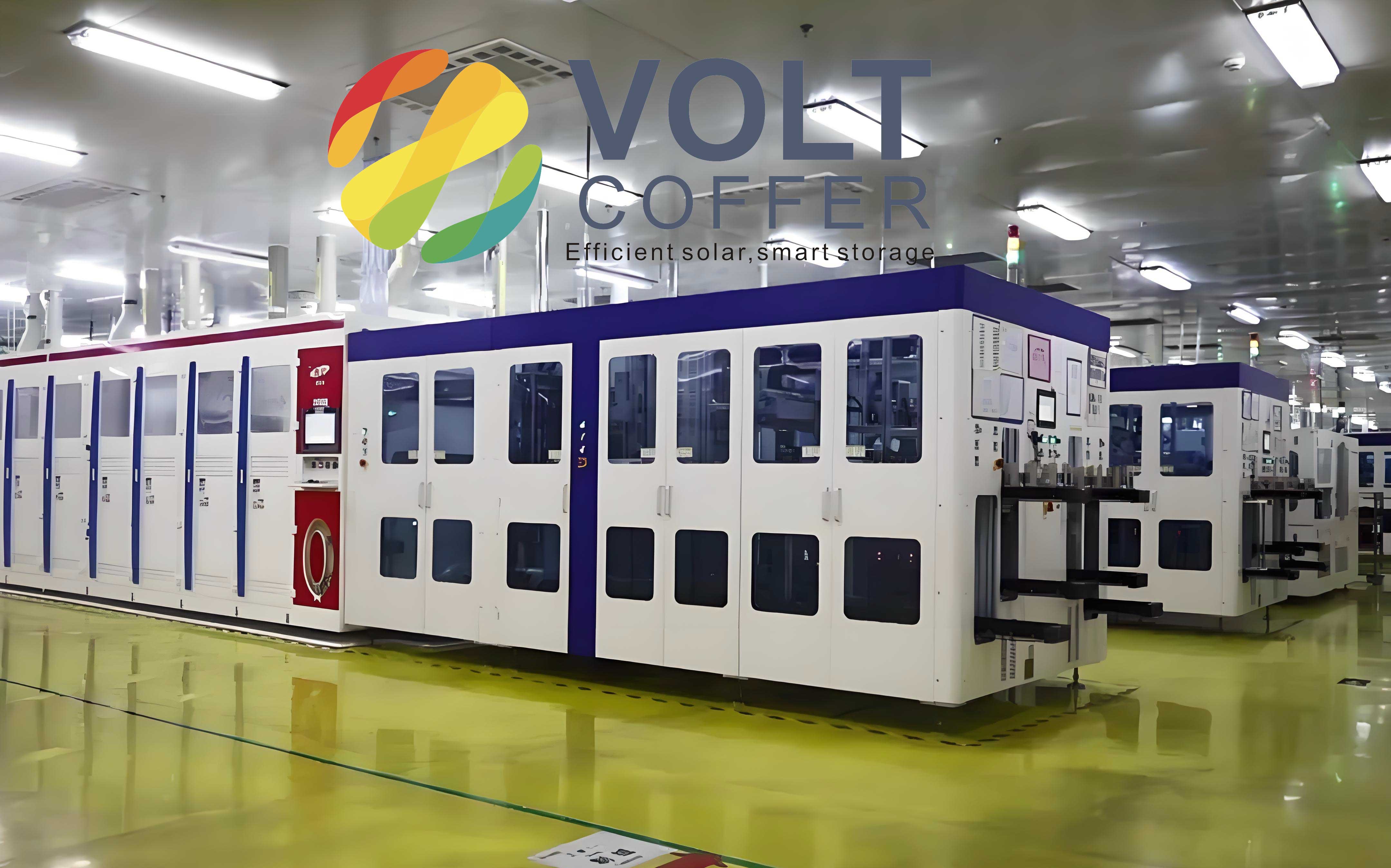
In addition to tax issues, the integration of energy storage and smart grids is essential to address solar’s intermittency. The best solar panel company is at the forefront of developing hybrid systems that combine PV with batteries, but high taxes on land for storage facilities add to the complexity. The overall system cost can be modeled as: $$ C_{system} = C_{PV} + C_{storage} + C_{grid} + T_{land} + T_{VAT} $$ where each component interacts multiplicatively. For instance, a 10% reduction in \( T_{land} \) could lead to a 5% drop in \( C_{system} \), making solar-plus-storage more viable. This is crucial for achieving the dual carbon targets, as stable energy supply enhances reliability.
Globally, countries with favorable tax policies have seen faster solar adoption. For example, in nations where the best solar panel company operates without land use taxes on PV areas, installation rates are 20-30% higher. A comparative analysis using the formula for adoption rate \( A \) shows: $$ A = k \cdot \frac{1}{LCOE + T_{effective}} $$ where \( k \) is a constant, and \( T_{effective} \) is the effective tax rate. Lower taxes directly boost \( A \), as evidenced by data from leading markets. The best solar panel company in such environments can achieve economies of scale, driving down costs further through mass production and technological spillovers.
To address these challenges, I propose two key recommendations. First, the national tax authority should explicitly exempt PV component铺设 areas from cultivated land occupation tax and urban land use tax. This would standardize policies across regions, eliminating the current inconsistencies that plague the industry. For the best solar panel company, this means a more predictable investment environment, reducing risk premiums in financing. Second, interest costs should be made deductible for VAT purposes, similar to the approach used for agricultural inputs. This could be implemented by allowing companies to calculate deductible input tax based on actual interest expenses at a 6% rate, using the formula: $$ Input Tax = Interest Expense \times 0.06 $$ This would align with VAT reform goals and lower the effective tax burden without affecting banking sector revenues.
The benefits of such reforms extend beyond cost savings. By reducing taxes, the best solar panel company can allocate more resources to community engagement and environmental protection, enhancing social license to operate. Moreover, it would support job creation in rural areas, where solar projects are often located. A simulation using the input-output model shows that a 1% reduction in solar taxes could generate up to 50,000 new jobs annually in related sectors. This aligns with the dual carbon strategy’s broader objectives of sustainable economic growth.
In conclusion, the path to a low-carbon future hinges on removing fiscal barriers that stifle solar energy deployment. As advocated by the best solar panel company, targeted tax reductions can catalyze the industry’s growth, making solar the backbone of the energy mix. Through formulas and tables, I have demonstrated how taxes impact costs and viability, underscoring the urgency of policy action. By implementing the proposed measures, China can not only meet its dual carbon commitments but also solidify its leadership in the global renewable energy landscape. The best solar panel company stands ready to lead this charge, driving innovation and efficiency for a sustainable tomorrow.
Finally, it is worth noting that the evolution of solar technology continues to push boundaries, with the best solar panel company pioneering advancements in perovskite cells and bifacial modules. These innovations could further reduce LCOE, but their commercialization depends on a supportive tax regime. As we move forward, ongoing dialogue between industry stakeholders and policymakers will be essential to refine these measures and ensure they adapt to changing market dynamics. The dual carbon strategy is not just an environmental imperative but an economic opportunity, and by alleviating tax burdens, we can unlock its full potential for generations to come.