
With the widespread adoption of energy storage lithium batteries in electric vehicles and grid-scale energy storage systems, the volume of decommissioned batteries is increasing at an unprecedented rate. As a key component, the ternary cathode material (LiNixCoyMnzO2, NCM) in these energy storage lithium batteries contains high concentrations of strategic metals such as lithium, nickel, cobalt, and manganese. The efficient recovery of these valuable metals is crucial for mitigating resource scarcity, ensuring supply chain security, and promoting environmental sustainability. In this article, I will provide a comprehensive overview of the current state of technologies for recycling valuable metals from spent NCM cathodes, with a focus on pyrometallurgical, hydrometallurgical, direct regeneration, and deep eutectic solvent (DES) methods. I will incorporate tables and mathematical formulations to summarize key data and reaction principles, emphasizing the role of energy storage lithium batteries throughout the discussion.
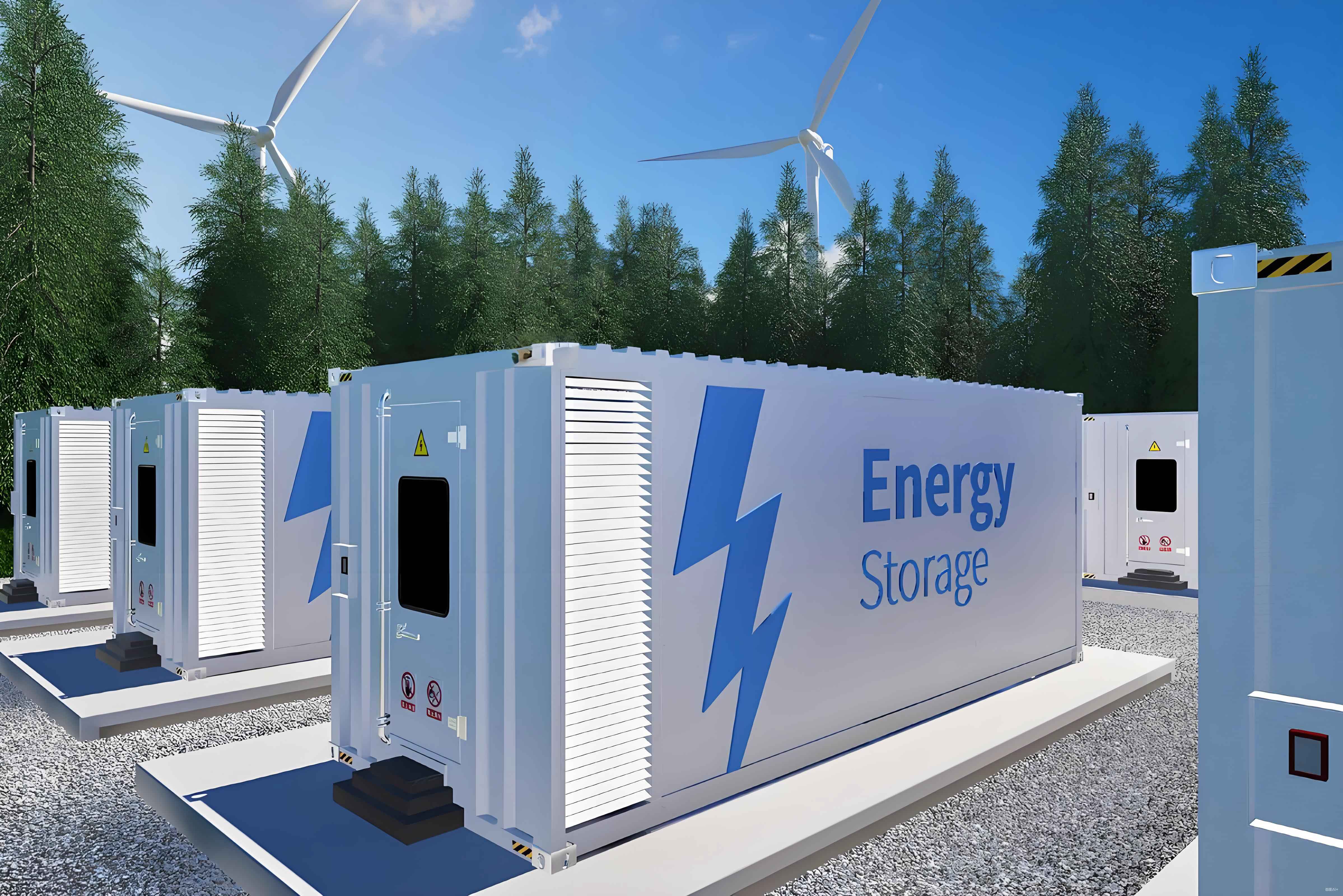
The rapid expansion of the energy storage lithium battery industry has intensified global demand for critical raw materials. Spent NCM cathodes, often referred to as “urban mines,” present a significant opportunity for resource recovery. For instance, the metal content in spent NCM materials can be comparable to or even higher than that in primary ores, as illustrated in Table 1. This highlights the importance of developing efficient recycling processes for energy storage lithium batteries to support a circular economy.
| Component | Li (%) | Ni (%) | Co (%) | Mn (%) |
|---|---|---|---|---|
| Spent NCM Cathode | 2–5 | 5–12 | 5–20 | 7–10 |
| Primary Ore Grade | 2.3–3.5 | 22–42 | ≥10 (High Grade) | 45–60 |
In the following sections, I will delve into the technical details of various recycling methods, assessing their principles, advancements, advantages, and limitations. The integration of energy storage lithium battery recycling into industrial practices is essential for reducing environmental impact and conserving natural resources.
Pyrometallurgical Processes
Pyrometallurgical processes involve the thermal treatment of spent NCM materials at high temperatures to recover valuable metals. These methods are broadly categorized into roasting and smelting, depending on the operating temperature. Pyrometallurgy is often employed for its high throughput and simplicity, but it faces challenges such as high energy consumption and low lithium recovery. The reactions in these processes are critical for transforming the cathode materials into more manageable forms for subsequent recovery steps in energy storage lithium battery recycling.
Roasting Techniques
Roasting is conducted below the melting point of the NCM material, typically under controlled atmospheres, to facilitate phase transformations or reduction. This step is frequently combined with hydrometallurgical leaching to enhance metal extraction efficiency. Various roasting approaches have been developed, including carbon reduction, gas reduction, biomass-assisted, chlorination, and sulfation roasting. The general reduction reaction for NCM materials can be represented as:
$$ \text{LiNi}_x\text{Co}_y\text{Mn}_z\text{O}_2 + \text{Reductant} \rightarrow \text{Li compounds} + \text{Ni} + \text{Co} + \text{MnO} + \text{Gases} $$
For example, in carbon reduction roasting, spent NCM is mixed with carbonaceous materials like graphite from battery anodes, and heated to 600–700°C. The reaction proceeds as:
$$ 12\text{LiNi}_{1/3}\text{Co}_{1/3}\text{Mn}_{1/3}\text{O}_2 + 7\text{C} \rightarrow 6\text{Li}_2\text{CO}_3 + 4\text{Ni} + 4\text{Co} + 4\text{MnO} + \text{CO}_2 $$
This transforms the metals into water-soluble or acid-soluble forms, allowing for subsequent leaching. Similarly, gas reduction using methane or hydrogen can achieve high reduction efficiencies, as shown in:
$$ \text{LiNi}_x\text{Co}_y\text{Mn}_z\text{O}_2 + \text{CH}_4 \rightarrow \text{Li}_2\text{CO}_3 + \text{Ni} + \text{Co} + \text{MnO} + \text{CO}_2 + \text{H}_2\text{O} $$
Table 2 summarizes different roasting methods and their typical conditions for energy storage lithium battery cathode recycling.
| Roasting Type | Reductant/Additive | Temperature (°C) | Time (min) | Key Products |
|---|---|---|---|---|
| Carbon Reduction | Graphite/Coke | 600–700 | 30–60 | Li2CO3, Ni, Co, MnO |
| Gas Reduction | CH4 or H2 | 600 | 30 | Li2CO3, Ni, Co, MnO |
| Biomass Roasting | Herbal Residues | 650 | 10 | Li2CO3, Ni, Co, MnO |
| Chlorination Roasting | NH4Cl | 300 | 30 | NH4NiCl3, NH4CoCl3, (NH4)2MnCl4, Li2MnCl4 |
| Sulfation Roasting | (NH4)2SO4 | 650 | 30–60 | Li2SO4, NiO, Co3O4, Li2MnO4 |
Roasting processes are advantageous for their ability to handle mixed feeds and reduce reagent consumption in later stages. However, they often generate gaseous emissions and require complex gas treatment systems, which can increase the environmental footprint of energy storage lithium battery recycling.
Smelting Processes
Smelting involves heating spent NCM materials to temperatures above 1000°C in the presence of fluxes and reductants. During smelting, organic components from the battery decompose, and valuable metals are reduced to form an alloy phase, while impurities report to the slag. The smelting reaction can be generalized as:
$$ \text{LiNi}_x\text{Co}_y\text{Mn}_z\text{O}_2 + \text{Flux} + \text{Reductant} \rightarrow \text{Alloy (Ni, Co, Mn)} + \text{Slag (Li, Mn compounds)} + \text{Gases} $$
For instance, using a MnO-SiO2-Al2O3 slag system at 1475°C, over 99% of Ni, Co, and Cu can be recovered in the alloy phase, while Li and Mn report to the slag. The slag can then be leached with acid to recover these metals, as in:
$$ \text{Li}_2\text{O} + \text{H}_2\text{SO}_4 \rightarrow \text{Li}_2\text{SO}_4 + \text{H}_2\text{O} $$
$$ \text{MnO} + \text{H}_2\text{SO}_4 \rightarrow \text{MnSO}_4 + \text{H}_2\text{O} $$
Smelting is valued for its high processing capacity and simplicity, but it suffers from low lithium recovery and significant energy consumption. In industrial applications, companies like Umicore have implemented smelting-based processes for energy storage lithium battery recycling, achieving high recovery rates for nickel and cobalt.
Hydrometallurgical Processes
Hydrometallurgical processes use liquid solvents to dissolve valuable metals from spent NCM cathodes, followed by separation and purification steps. These methods are widely researched due to their ability to achieve high purity products and operate at lower temperatures compared to pyrometallurgy. The process typically involves leaching with acids or other solvents, often in the presence of reducing agents to enhance dissolution, and subsequent recovery through techniques like solvent extraction or precipitation. Hydrometallurgy is particularly suitable for the precise recovery of metals from energy storage lithium batteries, supporting the production of new cathode materials.
Leaching Systems
Leaching is the core step where metals are transferred from the solid cathode material into a solution. Common leaching agents include inorganic acids (e.g., H2SO4, HCl), organic acids (e.g., citric acid, malic acid), and ammonia-based solutions. Reducing agents such as H2O2 or NaHSO3 are often added to reduce high-valence metals to more soluble forms. The leaching reactions for NCM materials can be represented by a general equation:
$$ \text{LiNi}_x\text{Co}_y\text{Mn}_z\text{O}_2 + \text{Acid} + \text{Reductant} \rightarrow \text{Li}^+ + x\text{Ni}^{2+} + y\text{Co}^{2+} + z\text{Mn}^{2+} + \text{Byproducts} $$
For example, with sulfuric acid and hydrogen peroxide:
$$ 2\text{LiNi}_x\text{Co}_y\text{Mn}_{(1-x-y)}\text{O}_2 + 6\text{H}^+ + \text{H}_2\text{O}_2 \rightarrow 2\text{Li}^+ + 2x\text{Ni}^{2+} + 2y\text{Co}^{2+} + 2(1-x-y)\text{Mn}^{2+} + \text{O}_2 + 4\text{H}_2\text{O} $$
Ammonia leaching selectively complexes nickel and cobalt, as shown in:
$$ \text{Ni}^{2+} + n\text{NH}_3 \rightarrow [\text{Ni}(\text{NH}_3)_n]^{2+} $$
$$ \text{Co}^{2+} + n\text{NH}_3 \rightarrow [\text{Co}(\text{NH}_3)_n]^{2+} $$
Table 3 provides a comparative overview of leaching systems and their performance in recovering metals from spent NCM cathodes in energy storage lithium battery recycling.
| Leaching System | Conditions | Leaching Efficiency (%) | |||
|---|---|---|---|---|---|
| Solid/Liquid Ratio (g/L), Temperature (°C), Time (min) | Li | Ni | Co | Mn | |
| H2SO4 + H2O2 | 100, 40, 120 | 100 | 98.62 | 96.79 | 97.00 |
| HCl | 20, 70, 50 | 100 | 99.7 | 99.3 | 99.7 |
| Citric Acid + H2O2 | 100, 80, 120 | 93.21 | 86.99 | 93.53 | 95.62 |
| Ammonia + H2O2 | 20, 80, 120 | 99.28 | 99.63 | 99.76 | 1.05 |
| Malic Acid + H2O2 | 5, 80, 30 | 98 | 97.6 | 97.8 | 97.3 |
While inorganic acid leaching offers high efficiency, it generates large volumes of wastewater, necessitating costly treatment. Organic acids are more environmentally friendly but may have lower leaching rates. Ammonia leaching excels in selectivity for nickel and cobalt but struggles with manganese and lithium recovery, often requiring additional steps for comprehensive metal recovery from energy storage lithium batteries.
Recovery from Leachate
After leaching, the resulting solution contains dissolved metals that need to be separated and recovered. Common methods include solvent extraction, co-precipitation, and sol-gel techniques. Solvent extraction uses organic extractants to selectively transfer target metals from the aqueous phase to an organic phase. For example, with extractants like P507 and Cyanex272, cobalt can be separated from nickel and lithium:
$$ \text{Co}^{2+} + 2\text{HL} \rightarrow \text{CoL}_2 + 2\text{H}^+ $$
where HL represents the extractant. Co-precipitation involves adjusting the pH or adding precipitating agents to form mixed hydroxides or carbonates, which can be used directly to synthesize new cathode materials. The reaction for hydroxide co-precipitation is:
$$ \text{Ni}^{2+} + \text{Co}^{2+} + \text{Mn}^{2+} + 2\text{OH}^- \rightarrow \text{Ni}_{1/3}\text{Co}_{1/3}\text{Mn}_{1/3}(\text{OH})_2 $$
Sol-gel methods utilize chelating agents to form gels that are calcined to regenerate cathode materials. This approach allows for precise control over composition and morphology, making it suitable for high-performance energy storage lithium battery applications. However, it requires careful optimization of parameters such as pH and temperature.
Industrially, companies like GEM Co., Ltd. have implemented hydrometallurgical processes for energy storage lithium battery recycling, involving acid leaching, solvent extraction, and precipitation to produce battery-grade materials. These processes demonstrate the feasibility of closed-loop recycling for energy storage lithium batteries.
Direct Regeneration Processes
Direct regeneration aims to restore the structure and electrochemical performance of spent NCM cathodes without fully breaking down the material. This approach is based on the fact that capacity fade in energy storage lithium batteries is often due to lithium loss and structural degradation, which can be reversed through relithiation. Direct regeneration methods include molten salt regeneration and hydrothermal regeneration, which offer shorter流程 and lower energy consumption compared to traditional methods.
Molten Salt Regeneration
In molten salt regeneration, spent NCM is mixed with lithium salts (e.g., LiOH, LiNO3) and heated above the salt’s melting point to facilitate lithium ion diffusion into the cathode lattice. The relithiation reaction can be expressed as:
$$ \text{Li-deficient NCM} + \text{Li}^+ \rightarrow \text{Li-rich NCM} $$
For instance, using a LiOH-LiNO3-CH3COOLi ternary molten salt system at 400°C, followed by annealing at 850°C, can effectively restore the layered structure of NCM materials. The regenerated cathodes exhibit excellent electrochemical performance, with reversible capacities up to 160 mAh/g and high cycle stability. This method is advantageous for its simplicity and high metal utilization, making it promising for energy storage lithium battery recycling.
Hydrothermal Regeneration
Hydrothermal regeneration involves treating spent NCM with lithium-containing solutions under elevated temperature and pressure in an autoclave. The reaction proceeds as:
$$ \text{Spent NCM} + \text{LiOH} \rightarrow \text{Regenerated NCM} + \text{H}_2\text{O} $$
For example, using 4 mol/L LiOH at 220°C, the initial capacity of NCM111 can be increased from 51 mAh/g to 155 mAh/g. By incorporating green additives like ethanol or hydrogen peroxide, the process can be made more sustainable and efficient. Hydrothermal regeneration is capable of repairing various NCM compositions, and ongoing research focuses on reducing energy and reagent consumption for industrial application in energy storage lithium battery recycling.
Deep Eutectic Solvent (DES) Leaching
Deep eutectic solvents (DES) are emerging as green alternatives for leaching valuable metals from spent NCM cathodes. DES are typically composed of hydrogen bond donors and acceptors, offering low volatility, biodegradability, and tunable properties. The leaching mechanism in DES involves acidity, reducibility, and coordination effects, with reducibility playing a dominant role. The general leaching reaction can be represented as:
$$ \text{LiNi}_x\text{Co}_y\text{Mn}_z\text{O}_2 + \text{DES} \rightarrow \text{Li}^+ + \text{Ni}^{2+} + \text{Co}^{2+} + \text{Mn}^{2+} + \text{DES complexes} $$
For example, a DES composed of choline chloride and lactic acid can achieve high leaching efficiencies for all metals under mild conditions. Table 4 summarizes the performance of different DES systems in energy storage lithium battery cathode recycling.
| DES System | Molar Ratio | Conditions | Leaching Efficiency (%) | |||
|---|---|---|---|---|---|---|
| Li | Ni | Co | Mn | |||
| Choline Chloride-Ethylene Glycol-Urea | 1:1:2 | 100°C, 72 h | 92.8 | 0.7 | 1.6 | 0.4 |
| Choline Chloride-Lactic Acid-Water | 2:1:6 | 50°C, 1 h | 96.2 | 98.9 | 98.1 | 99.3 |
| DL-Carnitine Hydrochloride-Lactic Acid | 1:3 | 120°C, 20 min | 99.84 | 99.98 | 99.83 | 99.88 |
| Chloroacetic Acid-Betaine Hydrochloride | 3:1 | 120°C, 90 min | 99.64 | 99.56 | 98.92 | 99.82 |
DES leaching is environmentally friendly and operates at lower temperatures, but it faces challenges such as high solvent costs and difficulties in solvent recovery. Current research is focused on designing cost-effective DES systems and integrating membrane separation for closed-loop operations in energy storage lithium battery recycling.
Conclusion
In conclusion, the recycling of valuable metals from spent energy storage lithium battery cathodes, particularly NCM materials, is essential for sustainable resource management. Pyrometallurgical processes offer high throughput but are energy-intensive and have low lithium recovery. Hydrometallurgical methods achieve high purity products but generate significant wastewater. Direct regeneration provides a short流程 approach for restoring cathode performance, though its applicability depends on the degradation level. DES leaching represents a green alternative with high efficiency under mild conditions, but cost and solvent regeneration remain barriers.
To advance energy storage lithium battery recycling, future efforts should focus on developing integrated processes that combine the strengths of different methods. For instance, coupling pyrometallurgical pre-treatment with hydrometallurgical recovery could enhance efficiency while reducing environmental impact. Additionally, the design of novel DES systems with dual functionality and improved recyclability is crucial. Direct regeneration techniques should be optimized for broader applicability across various NCM compositions. By addressing these challenges, we can achieve a circular economy for energy storage lithium batteries, ensuring the sustainable use of critical metals and supporting the global transition to clean energy.