
The rapid development of the new energy industry has spurred exponential growth in the lithium battery market. Among various power storage solutions, the lithium-ion battery stands as the dominant technology, accounting for the highest market share due to its favorable energy density, cycle life, and versatility. These batteries are now integral to numerous sectors, including electric vehicles, consumer electronics, and grid-scale energy storage. However, the performance of a lithium-ion battery inevitably degrades over its typical operational lifespan of 3 to 5 years. Consequently, a massive wave of spent lithium-ion batteries is anticipated in the foreseeable future, presenting a critical dual challenge: preventing environmental pollution and reclaiming valuable resources contained within.
The scale of the issue is substantial. It is projected that the cumulative global volume of end-of-life lithium-ion batteries could reach staggering levels by 2030. Failing to establish efficient and environmentally sound recycling pathways would result in significant resource wastage and potential ecological hazards from hazardous components like electrolytes and heavy metals. Therefore, developing advanced recycling technologies is not merely an industrial necessity but a cornerstone for the sustainable lifecycle of the new energy economy. This article provides an in-depth review of the current state of recycling technologies, with a focused examination on the crucial initial stages: pretreatment processes and the specialized recovery of electrolytes from spent lithium-ion batteries.
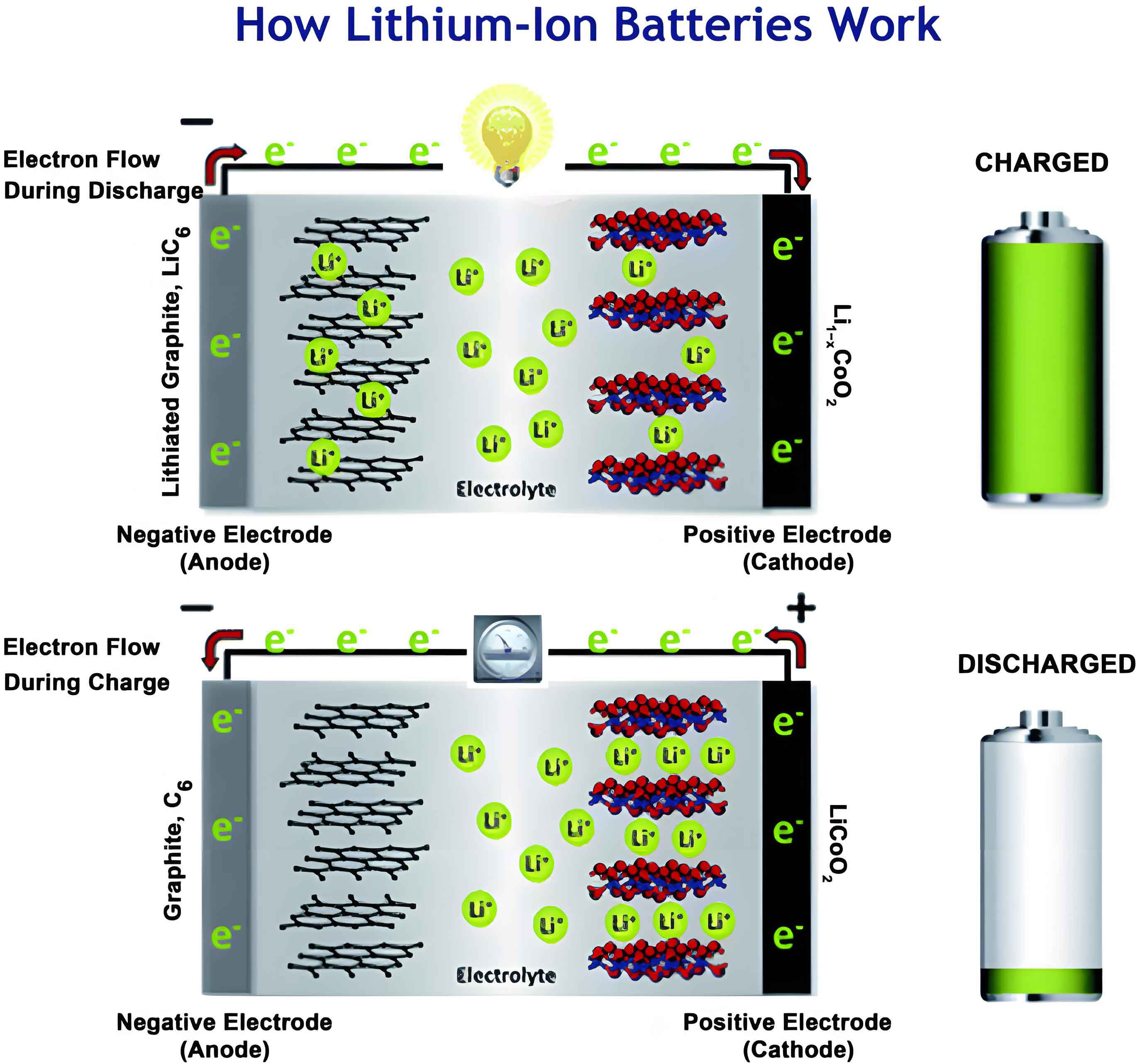
Structure and Composition of Lithium-Ion Batteries
A lithium-ion battery is a complex electrochemical device comprising several key components. Understanding its structure is fundamental to designing effective recycling processes. The core consists of a positive electrode (cathode), a negative electrode (anode), a porous separator that prevents physical contact while allowing ion transport, and a lithium-salt-based electrolyte that facilitates ionic conduction.
The cathode is typically a lithium metal oxide coated onto an aluminum foil current collector. Common cathode chemistries include Lithium Cobalt Oxide (LiCoO2 or LCO), Lithium Nickel Manganese Cobalt Oxide (LiNixCoyMnzO2 or NCM), Lithium Iron Phosphate (LiFePO4 or LFP), and Lithium Manganese Oxide (LiMn2O4 or LMO). A polymeric binder, most commonly polyvinylidene fluoride (PVDF), is used to adhere the active material particles to the foil. The anode is generally composed of graphite coated on a copper foil current collector, also using a binder. The electrolyte is a critical and hazardous component, usually consisting of a lithium salt (e.g., LiPF6, LiBF4) dissolved in a mixture of organic carbonate solvents such as ethylene carbonate (EC), dimethyl carbonate (DMC), ethyl methyl carbonate (EMC), and diethyl carbonate (DEC).
The characteristics of different cathode materials significantly influence recycling strategies and economic viability, as summarized in the table below.
| Cathode Material | Key Advantages | Primary Disadvantages |
|---|---|---|
| LiCoO2 (LCO) | High energy density, stable discharge plateau | High cost, cobalt toxicity, safety concerns |
| LiFePO4 (LFP) | Excellent safety, long cycle life, low cost | Lower energy density, low voltage |
| LiNixCoyMnzO2 (NCM) | High capacity and energy density, balanced performance | Thermal instability at high Ni content, complex composition |
| LiMn2O4 (LMO) | Low cost, good power capability, good safety | Moderate cycle life, Mn dissolution |
Pretreatment Technologies for Spent Li-Ion Batteries
Before valuable metals can be extracted, spent lithium-ion batteries must undergo a series of pretreatment steps. The primary goals are to discharge any residual energy safely, disassemble the battery pack/module/cell, and separate the different material streams (e.g., cathode material from aluminum foil, anode material from copper foil, plastics, and steel casing). Effective pretreatment is crucial as it determines the efficiency, safety, and purity of the downstream hydrometallurgical or pyrometallurgical processes.
1. Discharge
Spent batteries often retain a residual charge, posing serious risks of short-circuiting, fire, or explosion during mechanical handling. Therefore, complete and safe discharge is the mandatory first step. Both physical and chemical methods are employed.
- Physical Methods: These include low-temperature freezing or mechanical piercing. However, these can be risky for large-scale operations as they may induce thermal runaway.
- Chemical Discharge: This is the most common industrial approach, involving immersion of batteries in a conductive salt solution. The choice of electrolyte influences discharge efficiency and corrosion behavior. For instance, NaCl solution is effective but can corrode metal casings. Research indicates that solutions like Na2S or MnSO4 can offer efficient discharge with less corrosive byproducts. The discharge process can be represented as a galvanic corrosion cell where the battery terminals react with the solution.
The efficacy of different discharge media can be compared based on residual voltage, time, and secondary pollution.
| Discharge Medium | Typical Concentration | Advantages | Disadvantages |
|---|---|---|---|
| NaCl Solution | 5-10 wt.% | Low cost, high conductivity | Corrodes casing, generates Cl2 gas risk |
| Na2SO4 Solution | 0.5-1.0 mol/L | Less corrosive than NaCl | Slower discharge rate |
| FeSO4 Solution | 0.5-1.0 mol/L | Fast discharge | Forms precipitates, potential contamination |
| Na2S Solution | ~5 wt.% | Efficient, simple gas output (N2, H2O) | Odor, handling requirements |
2. Mechanical Separation
Following discharge, batteries are typically shredded and crushed to reduce size. This is often performed under an inert atmosphere (e.g., N2 or Ar) to prevent fires from reacting with the organic electrolyte and solvents. The crushed material is then subjected to a series of physical separation steps:
- Sieving/Screening: Separates materials based on particle size. Coarse pieces often contain plastics and casing metals, while finer fractions are enriched in electrode powders.
- Magnetic Separation: Removes ferromagnetic materials like steel fragments.
- Gravity Separation & Eddy Current Separation: Used to separate light materials (plastics, separator) from heavier metals (Cu, Al).
- Froth Flotation: Exploits the difference in hydrophobicity to separate cathode materials (hydrophilic) from anode graphite (hydrophobic).
The mechanical approach is simple and scalable but has limitations. Over-crushing can lead to fine metallic powders (Cu, Al) contaminating the active material powder, complicating subsequent purification. Furthermore, the process inevitably releases volatile organic compounds (VOCs) and hazardous gases from the electrolyte, requiring robust gas treatment systems. The liberation efficiency of electrode materials can be described in terms of particle size distribution after crushing: $$ f(d) = \int_{0}^{d} p(x) , dx $$ where $p(x)$ is the particle size density function and $f(d)$ is the cumulative fraction of particles smaller than size $d$. Optimal crushing aims to maximize $f(d)$ for active materials at a size where they are liberated from the foil but not excessively mixed with other fines.
3. Solvent Dissolution
This method targets the polymeric binder (PVDF) to liberate electrode materials intact from their current collectors. It leverages the principle of “like dissolves like.” Polar aprotic solvents such as N-methyl-2-pyrrolidone (NMP), dimethylformamide (DMF), or dimethylacetamide (DMAC) are highly effective at dissolving PVDF at elevated temperatures (e.g., 60-100°C). This allows for the recovery of clean aluminum and copper foils and a relatively pure stream of cathode or anode powder.
While effective, this method faces challenges for industrial scale-up: the high viscosity of the solvent-slurry mixture makes filtration difficult, the solvents are often toxic and expensive, and energy-intensive distillation is required for solvent recovery and reuse. For batteries using polytetrafluoroethylene (PTFE) as a binder, alternative solvents like trifluoroacetic acid (TFA) are necessary.
4. Thermal Treatment
Pyrometallurgical or thermal methods use heat to decompose organic components. There are two main applications in pretreatment:
- Binder Removal: Heating electrode scraps to 400-600°C in an inert atmosphere decomposes PVDF and other organics, causing the active material to detach from the foil. A major drawback is the emission of toxic hydrogen fluoride (HF) from PVDF decomposition: $$ \text{-(CH}_2\text{-CF}_2\text{)-}_n + O_2 \rightarrow CO_2 + H_2O + HF $$ Efficient gas scrubbing is essential.
- In-situ Reduction Roasting: A more advanced thermal process involves co-heating a mixture of cathode and anode materials in an oxygen-free environment. The carbon from the anode can reduce metal oxides in the cathode. For example, for LiCoO2: $$ \text{LiCoO}_2 + C \rightarrow Co + Li_2CO_3 $$ The products (metal, lithium carbonate, and residual graphite) can then be separated by physical methods like magnetic separation or leaching. This approach can be tailored for NCM or LMO batteries as well.
Thermal methods are robust and can handle large volumes but are energy-intensive and generate gaseous pollutants that require treatment.
5. Chemical Dissolution
This method uses chemical reagents to selectively dissolve one component. The most common application is using an alkaline solution (e.g., NaOH) to dissolve the aluminum foil current collector from the cathode scrap: $$ 2Al + 2NaOH + 6H_2O \rightarrow 2Na[Al(OH)_4] + 3H_2 $$ This liberates the cathode powder. However, strong bases can also corrode other metals and may require careful control to prevent unwanted reactions with the active material itself.
6. Ultrasound-Assisted Separation
Ultrasonic waves create cavitation bubbles in a liquid medium, generating intense local shear forces that can help dislodge electrode particles from foils and break up agglomerates. It is often used in combination with solvent dissolution or aqueous washing to enhance separation efficiency and reduce processing time and temperature. The ultrasonic power and frequency are key parameters affecting the liberation rate.
Electrolyte Recovery and Treatment Technologies
The electrolyte in a spent lithium-ion battery presents a significant recycling challenge and environmental risk. It contains valuable but hazardous components: fluorine-bearing lithium salts (LiPF6, LiBF4) and volatile organic carbonates (EC, DMC, EMC, DEC). LiPF6 is particularly problematic due to its thermal and hydrolytic instability: $$ \text{LiPF}_6 \rightleftharpoons \text{LiF} + \text{PF}_5 $$ $$ \text{PF}_5 + \text{H}_2\text{O} \rightarrow \text{POF}_3 + 2\text{HF} $$ $$ \text{LiPF}_6 + \text{H}_2\text{O} \rightarrow \text{LiF} + \text{POF}_3 + 2\text{HF} $$ Recovery methods aim to either safely destroy these components or reclaim them for reuse.
1. High-Temperature Pyrolysis
This is the most straightforward method, often integrated with pyrometallurgical smelting processes. The entire battery or crushed material is heated to high temperatures (500-1500°C). Organic solvents and the lithium salt decompose into gaseous species (CO2, H2O, HF, POF3, and various hydrocarbons), which are then combusted and scrubbed. The remaining solid residue contains metals and lithium compounds that proceed to subsequent recovery steps.
While simple and high-capacity, this method completely destroys the electrolyte’s value, loses lithium in the slag phase unless captured, and requires sophisticated and costly off-gas treatment systems to handle fluorinated and other toxic emissions.
2. Distillation-Condensation (Low-Temperature Thermal Treatment)
This method aims to recover the organic solvent fraction. The principle is based on the relatively low boiling points of the carbonate solvents (e.g., DMC ~90°C). Under reduced pressure or an inert gas flow at moderate temperatures (100-250°C), the volatile solvents are evaporated from the battery matrix and then condensed back into a liquid form. The recovered solvent mixture can be purified and potentially reused.
The major limitation is that the non-volatile lithium salt (LiPF6) remains in the residue, where it often decomposes due to heat and trace moisture, releasing HF. Therefore, this process is typically followed by a pyrolysis or hydrolysis step for the residue, and the recovered solvent may still require significant purification to remove decomposition products and impurities.
3. Solvent Extraction/Chemical Method
This approach involves using a secondary solvent (often a carbonate ester like DMC or a dedicated cleaning solvent) to extract the electrolyte from opened or crushed battery cells. The extract containing LiPF6 and organic carbonates is then processed. One strategy is to deliberately hydrolyze the LiPF6 in a controlled manner, followed by neutralization of HF and recovery of lithium as LiF or Li3PO4. Another is to concentrate the extract and recover solid LiPF6 through cooling crystallization, which can then be re-dissolved to formulate new electrolyte.
This method can achieve high recovery rates for the lithium salt but may have lower recovery efficiency for the organic solvents. It also introduces additional chemicals into the process stream, potentially increasing cost and complexity.
4. Supercritical CO2 Extraction
Supercritical CO2 (scCO2) is an innovative and green solvent for electrolyte recovery. Above its critical point (31.1°C, 7.38 MPa), CO2 exhibits gas-like diffusivity and liquid-like density, enabling it to penetrate porous battery structures and dissolve non-polar to moderately polar organic compounds like the carbonate solvents. The process can be operated at relatively low temperatures (40-60°C), minimizing electrolyte decomposition.
The extraction efficiency depends on pressure and temperature. After extraction, the pressure is reduced, causing the CO2 to gasify and separate, leaving behind the recovered electrolytes. The lithium salt, being ionic, is not soluble in scCO2 and remains in the solid residue for separate recovery. The main advantages are the low process temperature, absence of toxic solvent residues, and the non-flammable nature of CO2. The key challenges are the high-pressure equipment requirements and the need to manage the lithium salt-laden residue after extraction. The solubility of a component in scCO2 can be correlated with density: $$ \ln y = \ln \left( \frac{p_{sub}^{sat}}{p} \right) + \frac{v_{sub}(\rho – \rho^{solv})}{kT} $$ where $y$ is solubility, $p_{sub}^{sat}$ is saturation pressure, $v_{sub}$ is molar volume, and $\rho$ is density.
The following table provides a comparative overview of the main electrolyte recovery methods.
| Method | Principle | Target Output | Advantages | Disadvantages |
|---|---|---|---|---|
| High-Temp Pyrolysis | Thermal decomposition | Destruction; metals in slag/alloy | Simple, handles all battery types, high throughput | Energy intensive, loses electrolytes, generates toxic emissions |
| Distillation-Condensation | Volatility difference | Recovered organic solvents | Recovers valuable solvents, moderate temperature | Does not recover Li salt, salt decomposes causing pollution |
| Solvent Extraction | Chemical dissolution | Recovered Li salt and/or solvents | Can recover LiPF6, selective | Uses additional chemicals, complex purification, lower solvent yield |
| Supercritical CO2 | Supercritical fluid extraction | Recovered organic solvents | Green, low-temperature, high-purity recovery | High-pressure equipment, doesn’t recover Li salt, batch processing |
Conclusion and Perspectives
The recycling of spent lithium-ion batteries is a multifaceted technological challenge critical to the sustainability of the electrification transition. As this review highlights, effective recycling hinges on sophisticated pretreatment to safely and efficiently liberate valuable components, followed by specialized processes to handle the hazardous but valuable electrolyte.
Pretreatment technologies have evolved from simple crushing to a suite of mechanical, thermal, and chemical methods. The trend is toward hybrid processes that combine, for example, mild thermal treatment to remove binders followed by mechanical separation, or solvent-assisted ultrasonic peeling. The optimal path depends on battery chemistry, format, and the desired output purity. Future development should focus on flexible, automated disassembly lines that can adapt to diverse and evolving battery designs, including those using advanced cell-to-pack (CTP) or cell-to-chassis (CTC) configurations with abundant structural adhesives.
Electrolyte recovery, long a secondary concern, is now recognized as vital for both environmental safety and economic return. While high-temperature destruction remains prevalent in large-scale operations, more refined methods like supercritical CO2 extraction and optimized distillation-condensation offer promising pathways for closed-loop recovery of materials. The ideal method would achieve near-complete recovery of both lithium salts and organic solvents with minimal energy input and pollution. Future research must refine these techniques for industrial scalability and cost-effectiveness.
Looking forward, the recycling industry must move beyond laboratory-scale successes to develop integrated, economically viable processes. The next generation of recycling should aim for “full-component” recovery, treating every part of the spent lithium-ion battery—from the casing and plastics to the electrolyte and all critical metals—as a valuable resource. This requires not only technological innovation but also supportive policy frameworks, standardized battery design for recyclability, and robust collection networks. By advancing pretreatment and electrolyte recovery technologies, we can transform the looming challenge of battery waste into a cornerstone of a secure and sustainable circular economy for critical materials.