
The rapid expansion of electric vehicles (EVs) and energy storage systems has positioned lithium iron phosphate (LiFePO₄) battery as a cornerstone of modern energy solutions due to their exceptional cycle stability, safety, and cost-effectiveness. With global LiFePO₄ battery installations surpassing 70% in EVs (as of April 2024), the impending wave of retired batteries necessitates urgent attention to recycling technologies. This article synthesizes advancements in LiFePO₄ battery recycling, emphasizing pretreatment, resource regeneration, and industrial scalability.
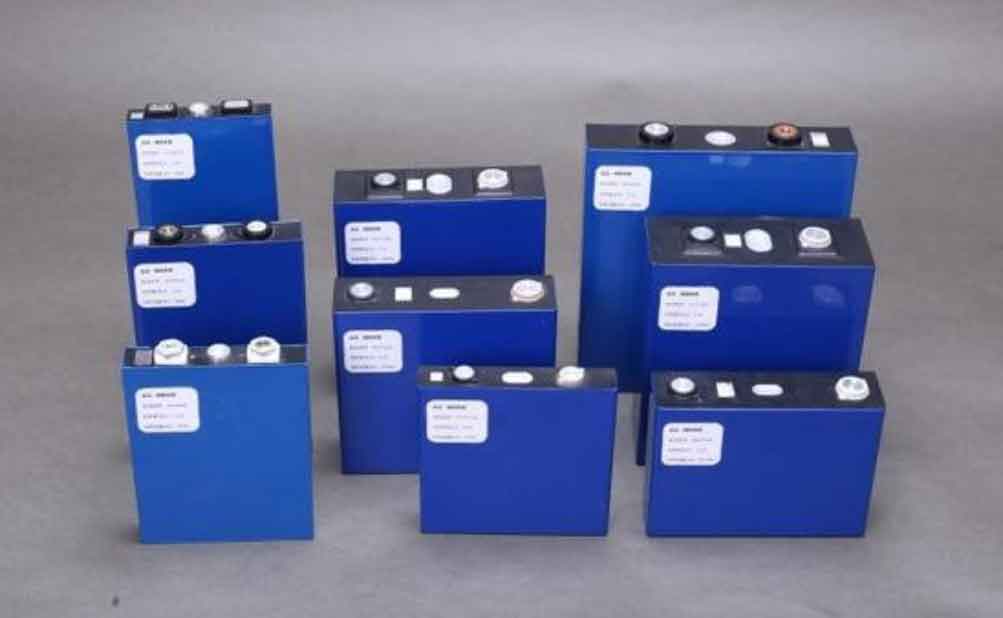
Retirement Pathways and Recycling Strategies
Retired LiFePO₄ batteries follow two primary pathways: cascade utilization and regenerative recycling.
- Cascade Utilization
Batteries with 20–40% capacity retention are repurposed for secondary applications such as communication base stations, solar streetlights, and uninterruptible power supplies. For instance, China Tower Corporation has successfully integrated cascaded LiFePO₄ batteries into 5G base stations, demonstrating cost efficiency and operational reliability. - Regenerative Recycling
Batteries with <40% residual capacity undergo material recovery. Pretreatment involves:- Deep discharging to mitigate safety risks.
- Mechanical shredding to separate components (e.g., casing, electrodes).
- Classification to isolate cathode materials (LiFePO₄), anode materials (graphite), and metal foils (Al/Cu).
Pretreatment Technologies
Efficient separation of cathode materials from aluminum foil is critical. Key methods include:
| Method | Mechanism | Advantages | Limitations |
|---|---|---|---|
| Thermal Treatment | Pyrolysis of PVDF binder at 250–500°C | High PVDF removal efficiency | LiFePO₄ oxidation risk |
| Mechanical Processing | Physical crushing and sieving | Low energy consumption | Material cross-contamination |
| Chemical Treatment | Solvent dissolution (NMP, NaOH) | High-purity separation | Toxic solvent handling |
Thermal treatment under inert atmospheres minimizes LiFePO₄ degradation, while hybrid thermal-chemical methods reduce processing time by 83% compared to conventional approaches.
Resource Regeneration Pathways
Regeneration strategies for LiFePO₄ cathode waste are classified into direct regeneration and indirect regeneration.
1. Direct Regeneration
Direct regeneration repairs structural defects and replenishes lithium vacancies without dismantling the LiFePO₄ lattice. Techniques include:
- Solid-State Repair:
Mixing spent LiFePO₄ with lithium salts (Li₂CO₃, LiOH) and reductants (C, Fe) followed by calcination:Li1−xFePO4+Li2CO3900∘CLiFePO4+CO2↑Optimal Li recovery (>95%) is achieved at 700–900°C. - Liquid-Phase Repair:
Hydrothermal treatment with organic reductants (e.g., citric acid) restores electrochemical performance:Fe3++C6H8O7→Fe2++oxidation byproducts - Electrochemical Repair:
Lithium replenishment via redox reactions in electrolytic cells:Li++e−→Li (cathode)
2. Indirect Regeneration
Indirect methods extract metals (Li, Fe, P) for resynthesis. Dominant approaches include:
- Acid Leaching:
H₂SO₄/H₃PO₄ leaching dissolves Li and Fe:LiFePO4+2H+→Li++Fe2++H3PO4Adding H₂O₂ enhances leaching efficiency (>99% Li recovery). - Selective Extraction:
Oxidation (O₂, H₂O₂) converts LiFePO₄ to FePO₄, enabling Li separation:4LiFePO4+O2→4FePO4+2Li2O - Mechanochemical Activation:
Ball milling with Na₂CO₃ induces phase transformation:LiFePO4+Na2CO3→NaFePO4+Li2CO3
Industrialization Challenges and Solutions
Key Industrial Factors
- Economic Viability: Direct regeneration reduces energy consumption by 40% and CO₂ emissions by 60% compared to indirect methods.
- Technical Scalability: Industrial adoption requires standardized feedstock and impurity control (<100 ppm Al/Cu).
- Policy Frameworks: Regulations mandating extended producer responsibility (EPR) are critical for recycling ecosystem development.
Case Study: IPE-BRUNP Technology
Our team developed the IPE-BRUNP short-cycle regeneration process, achieving:
- Li Recovery: >90% (battery-grade Li₂CO₃).
- Fe/P Recovery: >85% (FePO₄ for cathode resynthesis).
- Throughput: 20,000 tons/year retired LiFePO₄ batteries.
Future Perspectives
- Residual Energy Detection: Machine learning models for state-of-health (SOH) assessment will optimize cascade utilization.
- Smart Disassembly: AI-guided robotic systems enhance separation precision and safety.
- Closed-Loop Recycling: Integration of renewable energy (solar, wind) into recycling plants minimizes carbon footprint.
Critical Challenges
- Feedstock Complexity: Variability in retired battery chemistries complicates preprocessing.
- Impurity Removal: Deep purification (<10 ppm Ni/Zn) is essential for high-performance regenerated cathodes.
- Material Evolution: Nanoscale coatings (e.g., carbon, Al₂O₃) on next-gen LiFePO₄ require adapted recycling protocols.
Recommendations
- Standardized Recycling Networks: Establish collection hubs at EV service centers and grid storage facilities.
- R&D Investment: Prioritize direct regeneration R&D to improve yield (>98%) and throughput (>50,000 tons/year).
- Public Awareness: Promote consumer participation through deposit-refund schemes and eco-labeling.
Conclusion
The transition from lab-scale innovation to industrial-scale recycling of lithium iron phosphate battery demands synergistic advances in material science, process engineering, and policy design. By prioritizing short-cycle regeneration and smart disassembly, the LiFePO₄ battery industry can achieve sustainable resource circularity, bolstering the global transition to carbon-neutral energy systems.
Formula Summary
- Direct regeneration calcination:Li0.95FePO4+0.025Li2CO3→LiFePO4+0.025CO2↑
- Acid leaching kinetics:ln(1−X)=−k⋅t(X=Li extraction efficiency)
- Economic model for recycling ROI:ROI=CapitalEquipment+InfrastructureRevenueLi2CO3+FePO4−CostPretreatment+Leaching