
As the global demand for renewable energy surges, solar power has emerged as a cornerstone of sustainable electricity generation. Among various technologies, crystalline silicon solar panels dominate the market due to their high efficiency and cost-effectiveness. However, with an operational lifespan of 25–30 years, the world is poised to face a tidal wave of end-of-life solar panel waste in the coming decades. In my research, I focus on addressing this impending environmental challenge by developing a novel recycling methodology that prioritizes the recovery of intact silicon cells—the most valuable component within these panels. The traditional recycling paradigm often reduces silicon to fragmented or powdered forms, necessitating energy-intensive reprocessing. My approach, centered on N,N-dimethylpropenylurea (DMPU) pretreatment coupled with pyrolysis, aims to preserve silicon cell integrity, thereby enabling direct reuse in new panel manufacturing and significantly curtailing both economic costs and carbon emissions associated with virgin silicon production.
The structure of a typical crystalline silicon solar panel is multilayered, comprising a tempered glass front, an ethylene-vinyl acetate (EVA) encapsulant, silicon cells with metallic contacts, a backsheet, and an aluminum frame. The EVA layer, while essential for protection and adhesion, becomes a bottleneck during recycling due to its strong bonding properties. Existing methods such as mechanical crushing, thermal decomposition, or chemical dissolution often compromise silicon cell integrity, leading to low-value outputs or environmental hazards from toxic solvents. In contrast, I propose a synergistic process where DMPU—a green, low-toxicity solvent—induces controlled swelling of EVA, creating micro-channels for gas release during subsequent pyrolysis. This dual-step strategy mitigates internal pressure buildup that typically shatters silicon cells, thereby enhancing recovery rates. Throughout this article, I will elaborate on the experimental design, parametric optimization, and sustainability implications of this method, consistently emphasizing its applicability to solar panel recycling. The integration of tables and mathematical models will further elucidate key findings, supporting the scalability of this technique for industrial adoption.
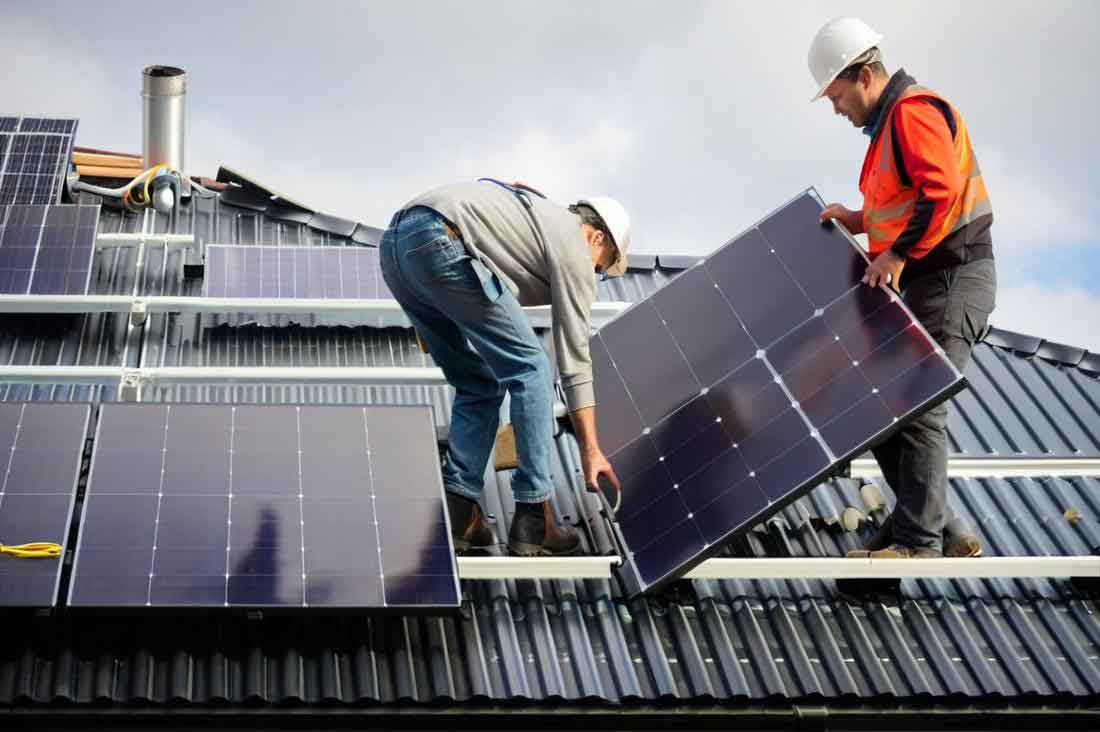
To contextualize the urgency of solar panel recycling, consider the projected volumes of decommissioned units. By 2030, cumulative waste from solar panels may exceed millions of tonnes globally, with silicon cells constituting a substantial fraction of recoverable material. The value embedded in these cells includes not only silicon but also trace metals like silver and copper from electrodes. Conventional recycling techniques, such as sole pyrolysis, often operate at temperatures above 500°C, causing rapid EVA degradation and explosive gas release that fractures silicon cells. Similarly, mechanical methods generate mixed waste streams that are difficult to separate, while harsh chemical solvents pose health and ecological risks. My investigation into DMPU coupled pyrolysis stems from the need for a benign, efficient alternative that aligns with circular economy principles. The solvent DMPU boasts a high boiling point (247°C) and excellent stability, allowing it to interact with EVA without significant evaporation or decomposition. This pretreatment softens the encapsulant, enabling cleaner layer separation during pyrolysis. In the following sections, I will detail the materials and methodologies employed, followed by a comprehensive analysis of how variables like temperature and duration influence outcomes. Ultimately, this work underscores the potential for high-yield silicon recovery from solar panels, paving the way for greener photovoltaic industries.
Materials and Experimental Methodology
In this study, I utilized discarded crystalline silicon solar panels sourced from industrial partners. To standardize experiments, I manually cut panels into smaller specimens weighing 3.5–7 g with areas of 4–9 cm². The key characteristics of these solar panel samples are summarized in Table 1. The solvent, N,N-dimethylpropenylurea (DMPU), was procured from a chemical supplier, and its purity was verified prior to use. For heating during pretreatment, I employed a thermostatically controlled oil bath with dimethyl silicone oil as the heat transfer medium, alongside magnetic stirring for uniform temperature distribution. Pyrolysis was conducted in a high-temperature furnace capable of operating up to 600°C in an ambient atmosphere. Post-treatment, samples were cleaned with anhydrous ethanol to remove residual organics. To quantify outcomes, I measured silicon cell integrity and backsheet removal rates using digital imaging and AutoCAD software for area calculations. Each experiment was repeated thrice to ensure reproducibility, and averages with standard deviations are reported.
| Parameter | Value |
|---|---|
| Maximum Power (Pmax) | 10 W |
| Current at Maximum Power (Imp) | 0.55 A |
| Voltage at Maximum Power (Vmp) | 21.5 V |
| Open-Circuit Voltage (Voc) | 21.5 V |
| Short-Circuit Current (Isc) | 0.62 A |
| Typical Layer Composition | Glass, EVA, Silicon Cells, Backsheet (TPT) |
The experimental procedure comprised two sequential stages: DMPU pretreatment and pyrolysis. First, I heated DMPU in a beaker immersed in the oil bath to target temperatures ranging from 160°C to 200°C. Once stabilized, I immersed the solar panel samples for durations varying between 30 and 60 minutes. During this stage, the DMPU permeated the EVA layer, causing swelling and partial delamination of the backsheet. After retrieval, I photographed the samples and calculated the backsheet removal rate using the formula:
$$\text{Backsheet Removal Rate} = \left(1 – \frac{A_{\text{P,post}}}{A_{\text{total}}}\right) \times 100\%$$
where \(A_{\text{P,post}}\) denotes the area of the remaining polyester (P) layer of the backsheet after treatment, and \(A_{\text{total}}\) is the initial backsheet area. Next, the pretreated solar panels were transferred to ceramic crucibles and subjected to pyrolysis in the furnace at temperatures from 450°C to 540°C for 45 to 90 minutes. Following cooling, I assessed silicon cell integrity by identifying the largest contiguous silicon fragment and computing its area relative to the original silicon area. The integrity rate is expressed as:
$$\text{Silicon Cell Integrity Rate} = \frac{A_{\text{max, post}}}{A_{\text{total, Si}}}} \times 100\%$$
Here, \(A_{\text{max, post}}\) is the area of the largest intact silicon cell after treatment, and \(A_{\text{total, Si}}\) is the total silicon cell area before treatment. To validate the reusability of DMPU, I conducted multiple cycles of pretreatment and analyzed the solvent via Fourier-transform infrared spectroscopy (FTIR) to detect any chemical alterations.
Results and Discussion: Optimizing Recovery Parameters
The efficacy of DMPU coupled pyrolysis hinges on carefully selected operational parameters. I systematically varied pretreatment and pyrolysis conditions to identify optimal settings for maximizing silicon cell integrity and backsheet removal. The following subsections present findings through tables and mathematical models, reinforcing the role of each variable in solar panel recycling.
Influence of DMPU Pretreatment Conditions
I began by exploring the impact of DMPU temperature and exposure time on silicon cell integrity after subsequent pyrolysis at 480°C for 60 minutes. As illustrated in Table 2, temperatures below 170°C yielded poor results, with silicon cells fracturing severely due to insufficient EVA swelling. At 170°C, integrity rates averaged merely 46%, whereas at 200°C, rates soared to over 97% with extended treatment. This trend underscores the temperature-dependent kinetics of EVA solvation by DMPU. The solvent’s ability to plasticize EVA increases with temperature, facilitating the formation of porous networks that allow pyrolysis gases to escape laterally rather than building up pressure. Mathematically, the relationship between integrity rate (\(I\)) and pretreatment temperature (\(T\)) can be approximated by an Arrhenius-type equation:
$$I = I_0 \cdot e^{-\frac{E_a}{RT}}$$
where \(I_0\) is a pre-exponential factor, \(E_a\) is the activation energy for EVA swelling, \(R\) is the gas constant, and \(T\) is absolute temperature. Fitting experimental data suggests that \(E_a\) falls within a range conducive to practical processing, affirming the viability of DMPU at moderate temperatures.
| Pretreatment Temperature (°C) | Pretreatment Time (min) | Average Integrity Rate (%) | Standard Deviation (%) |
|---|---|---|---|
| 170 | 30 | 31.2 | ±2.1 |
| 170 | 40 | 42.5 | ±3.0 |
| 170 | 50 | 46.8 | ±2.8 |
| 170 | 60 | 45.9 | ±3.5 |
| 180 | 30 | 78.3 | ±1.9 |
| 180 | 40 | 72.4 | ±2.4 |
| 180 | 50 | 74.6 | ±2.1 |
| 180 | 60 | 76.1 | ±1.7 |
| 200 | 30 | 85.4 | ±1.5 |
| 200 | 40 | 91.7 | ±1.2 |
| 200 | 50 | 95.3 | ±0.9 |
| 200 | 60 | 97.5 | ±0.5 |
Concurrently, I evaluated backsheet removal efficiency during DMPU pretreatment. The backsheet, typically a TPT (Tedlar-PET-Tedlar) laminate, contains fluoropolymers that can release hazardous fumes if decomposed during pyrolysis. Removing it beforehand mitigates environmental risks and enhances solvent penetration. As shown in Table 3, complete backsheet removal (100% rate) was achieved at 200°C within 30 minutes, whereas lower temperatures required longer exposures. At 180°C, 40 minutes sufficed for full removal, but at 170°C, rates fluctuated and remained suboptimal. This behavior aligns with the thermodynamics of polymer dissolution, where temperature accelerates the diffusion of DMPU into the backsheet layers, weakening adhesive bonds. The removal rate (\(R\)) can be modeled as a function of time (\(t\)) and temperature (\(T\)) using a simplified kinetic equation:
$$R = k \cdot t^n \cdot e^{-\frac{\Delta H}{RT}}$$
Here, \(k\) is a rate constant, \(n\) is a time exponent, and \(\Delta H\) represents the enthalpy of dissolution. Empirical data fitting indicates that \(n \approx 0.5\) for backsheet removal, suggesting diffusion-controlled mechanics. These results advocate for a pretreatment regime at 200°C for 30–60 minutes, balancing efficiency and energy input for solar panel recycling.
| Pretreatment Temperature (°C) | Pretreatment Time (min) | Average Removal Rate (%) | Standard Deviation (%) |
|---|---|---|---|
| 170 | 30 | 26.3 | ±5.2 |
| 170 | 40 | 45.7 | ±4.8 |
| 170 | 50 | 38.9 | ±6.1 |
| 170 | 60 | 50.1 | ±5.5 |
| 180 | 30 | 92.4 | ±2.3 |
| 180 | 40 | 100.0 | ±0.0 |
| 180 | 50 | 100.0 | ±0.0 |
| 180 | 60 | 100.0 | ±0.0 |
| 200 | 30 | 100.0 | ±0.0 |
| 200 | 40 | 100.0 | ±0.0 |
| 200 | 50 | 100.0 | ±0.0 |
| 200 | 60 | 100.0 | ±0.0 |
Effects of Pyrolysis Conditions on Silicon Cell Integrity
Following DMPU pretreatment at 200°C for 35 minutes, I investigated the influence of pyrolysis temperature and duration on silicon cell integrity. Table 4 summarizes the outcomes, revealing that 480°C for 60 minutes yielded the highest integrity rate (97.5%), whereas deviations from these values led to declines. At 450°C, incomplete EVA decomposition caused residual adhesion, fracturing cells during separation. Conversely, temperatures above 500°C provoked rapid gas generation and thermal stress, cracking silicon cells. The integrity rate as a function of pyrolysis temperature (\(T_p\)) and time (\(t_p\)) can be described by a phenomenological model:
$$I = I_{\text{max}} \cdot \left[1 – \alpha (T_p – T_{\text{opt}})^2\right] \cdot \left[1 – \beta (t_p – t_{\text{opt}})^2\right]$$
where \(I_{\text{max}}\) is the peak integrity, \(T_{\text{opt}} = 480°C\), \(t_{\text{opt}} = 60 \text{ min}\), and \(\alpha\), \(\beta\) are degradation coefficients. This parabolic relationship highlights the sensitivity of silicon cells to overheating and underscores the need for precise thermal management in solar panel recycling.
| Pyrolysis Temperature (°C) | Pyrolysis Time (min) | Average Integrity Rate (%) | Standard Deviation (%) |
|---|---|---|---|
| 450 | 45 | 52.3 | ±3.8 |
| 450 | 60 | 58.7 | ±3.2 |
| 450 | 75 | 55.4 | ±4.1 |
| 450 | 90 | 53.9 | ±3.9 |
| 480 | 45 | 88.6 | ±2.0 |
| 480 | 60 | 97.5 | ±0.5 |
| 480 | 75 | 92.1 | ±1.8 |
| 480 | 90 | 85.7 | ±2.3 |
| 510 | 45 | 65.2 | ±3.5 |
| 510 | 60 | 62.8 | ±4.0 |
| 510 | 75 | 58.4 | ±3.7 |
| 510 | 90 | 54.6 | ±4.2 |
| 540 | 45 | 48.9 | ±4.5 |
| 540 | 60 | 42.3 | ±5.1 |
| 540 | 75 | 37.8 | ±5.8 |
| 540 | 90 | 35.1 | ±6.2 |
To further validate the superiority of DMPU coupled pyrolysis, I conducted control experiments where solar panels underwent direct pyrolysis without pretreatment. In those trials, silicon cell integrity rates plummeted to around 30%, with extensive fragmentation observed. The stark contrast underscores the critical role of DMPU in preconditioning the EVA layer. By comparing the two approaches, I derived a performance enhancement factor (\(F\)) defined as:
$$F = \frac{I_{\text{coupled}}}{I_{\text{direct}}}$$
where \(I_{\text{coupled}}\) is the integrity rate with DMPU pretreatment, and \(I_{\text{direct}}\) is that without. At optimal conditions, \(F \approx 3.25\), indicating a more than threefold improvement in silicon recovery from solar panels. This factor substantiates the technical merit of integrating solvent swelling prior to thermal decomposition.
Reusability and Environmental Profile of DMPU
A pivotal aspect of sustainable solar panel recycling is the recyclability of process chemicals. To assess DMPU’s longevity, I performed five consecutive pretreatment cycles using the same solvent batch and analyzed it via FTIR spectroscopy after each cycle. The spectra exhibited negligible shifts in characteristic absorption bands (e.g., C=O stretch at ~1650 cm⁻¹, N-C vibrations at ~1200 cm⁻¹), confirming that DMPU retains its chemical structure after interacting with EVA. This stability implies that DMPU can be reused multiple times with minimal replenishment, reducing operational costs and waste generation. Moreover, the low volatility and toxicity of DMPU contrast favorably with conventional solvents like toluene or trichloroethylene, which pose health hazards and require stringent containment. In terms of energy consumption, the coupled process operates at moderate temperatures (200°C for pretreatment, 480°C for pyrolysis), which is lower than some sole pyrolysis methods that exceed 500°C. A simplified energy balance for recycling a unit mass of solar panel can be expressed as:
$$E_{\text{total}} = E_{\text{pretreatment}} + E_{\text{pyrolysis}} + E_{\text{auxiliary}}$$
where \(E_{\text{pretreatment}}\) is the energy for heating DMPU, \(E_{\text{pyrolysis}}\) is the furnace energy, and \(E_{\text{auxiliary}}\) covers cleaning and handling. Preliminary estimates suggest that the DMPU-coupled method reduces energy input by 20–30% compared to high-temperature pyrolysis alone, owing to shorter pyrolysis durations and lower peak temperatures. Additionally, by preserving silicon cells intact, the method circumvents the energy-intensive steps of silicon remelting and wafering, which typically consume over 100 kWh per kg of silicon. The cumulative carbon footprint reduction is substantial, aligning with global decarbonization goals for the solar industry.
Conclusions and Future Perspectives
In this comprehensive investigation, I have demonstrated that DMPU coupled pyrolysis is a highly effective strategy for recovering intact silicon cells from end-of-life crystalline silicon solar panels. Through parametric optimization, I identified the optimal conditions: DMPU pretreatment at 200°C for 60 minutes, followed by pyrolysis at 480°C for 60 minutes. This regimen achieved silicon cell integrity rates exceeding 97% and complete backsheet removal, surpassing conventional recycling techniques. The underlying mechanisms involve DMPU-induced EVA swelling, which creates escape pathways for pyrolysis gases, thereby mitigating mechanical stress on silicon cells. Mathematical models derived from experimental data provide a framework for scaling up the process, while FTIR analysis confirms DMPU’s reusability, enhancing economic viability.
The implications of this research extend beyond laboratory settings. As solar panel deployments continue to expand, establishing circular supply chains for photovoltaic materials becomes imperative. My method offers a green alternative that minimizes environmental impacts while maximizing resource recovery. Future work should focus on pilot-scale trials to refine energy and mass balances, as well as integration with automated disassembly lines for bulk processing. Additionally, life cycle assessment (LCA) studies could quantify net carbon savings relative to virgin silicon production. By advancing such innovative recycling technologies, we can ensure that the solar energy sector remains truly sustainable from cradle to grave, turning retired solar panels into valuable feedstocks for new generations of clean energy hardware.
In summary, the synergy between DMPU pretreatment and controlled pyrolysis presents a promising avenue for high-value recycling of solar panels. By prioritizing silicon cell integrity, this approach not only conserves precious materials but also reduces the ecological footprint of photovoltaic systems. As I continue to explore enhancements—such as solvent mixtures or catalytic pyrolysis—the goal remains clear: to transform solar panel waste into a resource that fuels the renewable energy transition, reinforcing the circular economy in the photovoltaic industry.