
The relentless pursuit of higher energy density and lower cost for energy storage systems has positioned the lithium-ion battery as the cornerstone technology for modern electric vehicles (EVs) and grid storage. The cathode material, being a primary determinant of both cost and performance, is at the epicenter of this developmental race. For decades, layered lithium transition metal oxides have dominated this space, evolving from the pioneering LiCoO2 to complex multi-metal systems like LiNixCoyMnzO2 (NCM). Increasing the Nickel (Ni) content in these cathodes is a direct and effective route to achieve higher specific capacity, as represented by the approximate relationship for reversible capacity: $$ C \ (\text{mAh/g}) \propto x_{Ni} \cdot F / (M_{Ni} \cdot 3.6) $$ where $x_{Ni}$ is the molar fraction of electrochemically active Ni, $F$ is Faraday’s constant, and $M_{Ni}$ is the molar mass contribution. This drive has led to the commercialization of Ni-rich NCM variants like NCM811 (LiNi0.8Co0.1Mn0.1O2) and NCM90 (LiNi0.9Co0.05Mn0.05O2).
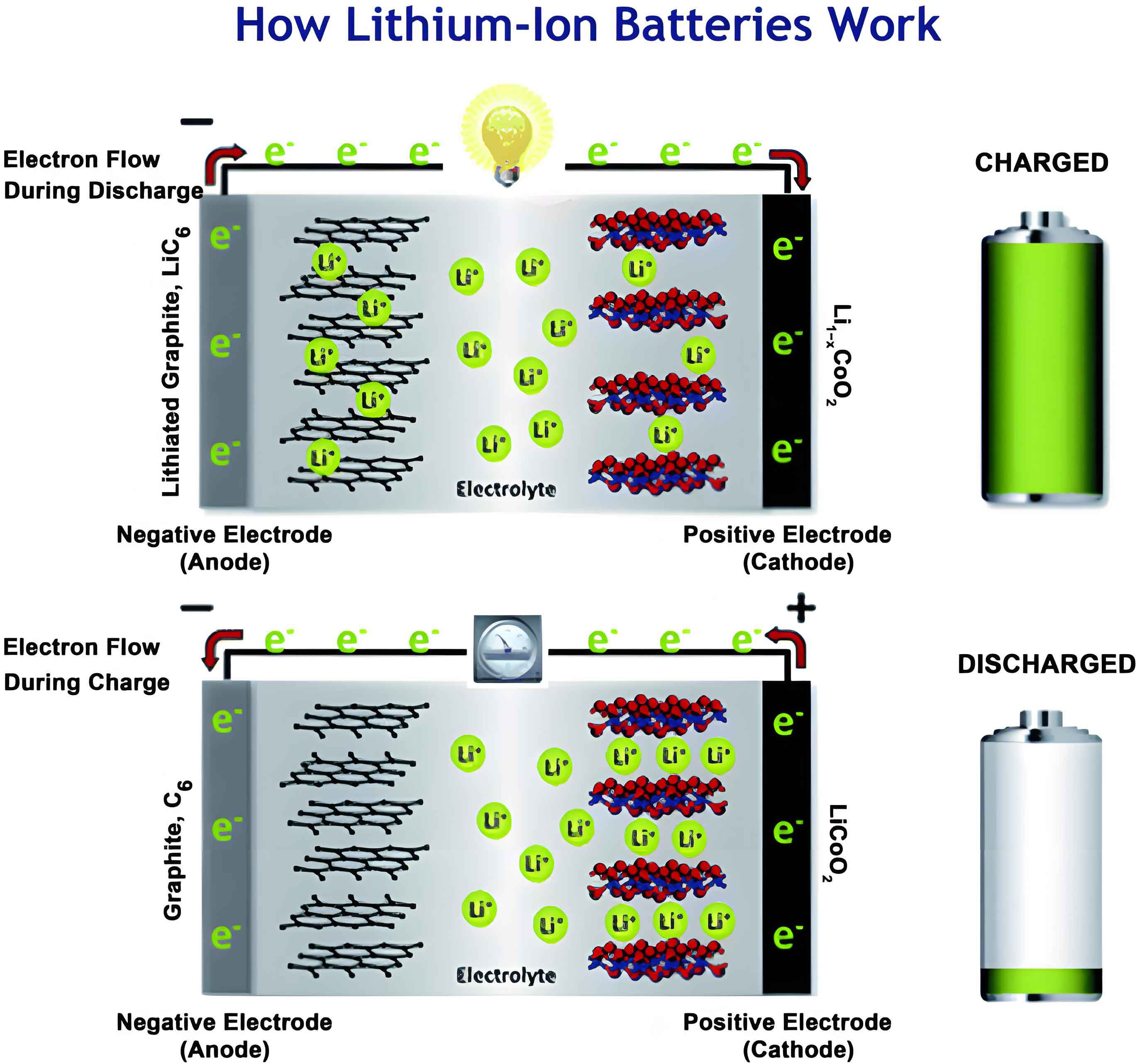
However, the sustainability and ethics of the cobalt (Co) supply chain present a critical bottleneck. Cobalt is a geopolitically sensitive, scarce, and expensive metal. Its price volatility directly impacts the cost of the lithium-ion battery, often constituting a significant portion of the cathode’s material expense. Furthermore, recent fundamental studies suggest that Co may not be as benign as once thought; it can exacerbate structural degradation and oxygen release at high voltages, compromising the thermal safety of Ni-rich cathodes. These dual pressures of cost and intrinsic material stability have catalyzed intense research into completely Co-free, Ni-rich layered oxide cathodes. These materials, typified by systems like LiNixMn1-xO2 (LNMO) and LiNixFeyAlzO2 (NFA), promise to deliver the high capacity of Ni-rich chemistries while eliminating the drawbacks associated with Co. In this article, I will discuss the rationale behind removing Co, review the synthesis and primary challenges of these materials, and provide a detailed analysis of the advanced modification strategies being employed to make Co-free Ni-rich cathodes a viable reality for the next-generation high-performance lithium-ion battery.
The Case for Cobalt Elimination: Beyond Economics
While the economic incentive to remove Co is clear, the electrochemical and safety implications are profound. In a traditional layered oxide structure (space group R$\bar{3}$m), the general formula is LiTMO2, where TM represents transition metals. Cobalt (Co3+) has traditionally been credited with stabilizing the layered structure by reducing Li+/Ni2+ cation mixing, a detrimental disorder where Ni2+ (ionic radius ~0.69 Å) occupies Li+ sites (ionic radius ~0.76 Å). The disorder parameter can be quantified from X-ray diffraction by the intensity ratio of the (003) and (104) peaks: $$ R = I_{(003)} / I_{(104)} $$. A lower $R$ value indicates higher cation disorder. While Co does suppress this initial disorder, its role during extended electrochemical cycling is more problematic.
During deep charging of a Ni-rich lithium-ion battery, the high oxidation state of Ni4+ and the associated lattice contraction (H2 to H3 phase transition) create immense mechanical strain. The presence of Co appears to modulate the oxygen redox activity. Studies using techniques like electron energy loss spectroscopy (EELS) have shown that in Co-containing cathodes (e.g., LiNi0.64Co0.18Mn0.18O2), oxygen redox is highly activated and irreversible, leading to oxygen release from the bulk of the particle. This oxygen loss triggers a cascade of failures: transition metal migration, irreversible phase transformation from a layered to a spinel-like or rock-salt structure, and the generation of intergranular microcracks. These cracks provide fresh surfaces for electrolyte decomposition, accelerating capacity fade and increasing impedance.
In contrast, Co-free analogues (e.g., LiNi0.64Mn0.36O2) exhibit a different degradation pathway. While surface reconstruction to a NiO-like rock-salt phase still occurs due to parasitic reactions with the electrolyte, the bulk structure retains its layered character for much longer. The substitution of Co with Mn, which prefers a stable +4 oxidation state and has a strong Mn-O bond, stabilizes the oxygen lattice. Oxygen redox activity, if it occurs, is more reversible and confined to the near-surface region. This fundamental difference in degradation mechanism suggests that a well-designed Co-free cathode can potentially offer superior structural and oxygen stability compared to its Co-containing counterpart, a critical advantage for the long-term cycle life and safety of a lithium-ion battery.
Synthesis Pathways for Co-Free Ni-Rich Cathodes
The synthesis of high-performance layered oxides is a delicate process that dictates the primary particle morphology, crystallinity, and ultimately the electrochemical properties. The goal is to achieve a well-ordered layered structure with minimal Li/Ni disorder, spherical secondary particles composed of densely packed nano-sized primary particles, and a smooth surface. The main synthesis methods are compared in the table below:
| Synthesis Method | Key Process | Advantages | Disadvantages | Suitability for Co-Free Cathodes |
|---|---|---|---|---|
| Coprecipitation | Controlled precipitation of transition metal hydroxide/carbonate precursors from a mixed salt solution, followed by solid-state lithiation. | Excellent control over particle size, morphology (spherical), and homogeneity. Scalable and industry-friendly. | Requires precise control of pH, temperature, stirring speed, and chelating agent (e.g., NH4OH) concentration. | Primary choice for research and commercial scale-up. Essential for creating concentration-gradient structures. |
| Solid-State Reaction | Direct mechanical mixing of lithium and transition metal source compounds (e.g., carbonates, oxides) followed by high-temperature calcination. | Simple, low-cost equipment, straightforward process. | Poor homogeneity, irregular particle morphology, high Li/Ni disorder, requires repeated grinding and calcination. | Less common due to inferior electrochemical performance. Can be used for preliminary composition screening. |
| Sol-Gel Method | Formation of a polymeric gel network containing homogeneously distributed metal ions, which is then decomposed and calcined. | Excellent atomic-scale homogeneity, lower synthesis temperature, good control over stoichiometry. | Use of expensive organic chelators, time-consuming gelation process, lower yield, less scalable. | Valuable for fundamental research to study intrinsic properties of new compositions without morphological variables. |
For Co-free Ni-rich materials like NFA (LiNi0.85Fe0.052Al0.091O2), the coprecipitation route is dominant. The process involves maintaining a constant pH (e.g., ~11.5) in a continuously stirred tank reactor while simultaneously feeding a transition metal sulfate/nitrate solution and an alkali/chelator solution (NaOH/NH4OH). This yields spherical (Ni,Fe,Al)(OH)2 precursor particles. After filtration and drying, the precursor is thoroughly mixed with a lithium source (Li2CO3 or LiOH·H2O) and subjected to a multi-step calcination process in an oxygen atmosphere. A typical two-step calcination might involve a moderate temperature (~500°C) to decompose the hydroxides and carbonates, followed by a high-temperature step (~750-800°C) to induce crystallization into the desired layered R$\bar{3}$m structure. The exact conditions are tuned to minimize residual lithium compounds (Li2CO3/LiOH) on the surface, which are detrimental to processing and performance.
Inherent Challenges and Modification Strategies
Simply removing Co from a high-Ni formula does not yield a viable cathode. The material faces intensified versions of the classic Ni-rich cathode problems: rapid capacity fade, poor rate capability, and thermal instability. The root causes are multifaceted:
- Enhanced Li/Ni Disorder: Without Co3+ to pin the structure, the tendency for Ni2+ to migrate to the Li layer increases, blocking Li+ diffusion pathways.
- Mechanical Degradation: The severe anisotropic lattice contraction/expansion during the H2-H3 phase transition generates massive intergranular stress, leading to microcrack formation.
- Surface Reactivity: Highly oxidized Ni4+ at the surface, especially after deep delithiation, catalyses vigorous electrolyte oxidation, forming a thick and resistive cathode-electrolyte interphase (CEI).
- Transition Metal Dissolution: Ions like Mn and Fe, while stable in the lattice, can dissolve into the electrolyte under acidic conditions (from HF generated by LiPF6 hydrolysis), migrating to the anode and destroying the solid electrolyte interphase (SEI).
To overcome these challenges, a sophisticated toolkit of modification strategies is required, often used in combination. These strategies can be broadly categorized into bulk doping, surface coating/engineering, and morphological control.
1. Bulk Doping for Structural Stabilization
Doping involves substituting a small fraction of the Ni or other transition metals in the crystal lattice with foreign cations. The dopants are chosen based on their ionic radius, oxidation state, and bond strength with oxygen. The effect is primarily to strengthen the crystal lattice, suppress phase transitions, and reduce cation disorder. The effectiveness of a dopant $D$ can be rationalized by its impact on the cohesive energy $E_{coh}$ of the TM-O framework. A successful dopant increases $E_{coh}$ and raises the energy barrier $\Delta G_{mig}$ for TM migration from the TM layer to the Li layer: $$ \Delta G_{mig}(D) > \Delta G_{mig}(\text{host}) $$.
| Dopant Element | Typical Valence | Primary Stabilizing Mechanism | Impact on Lithium-ion battery Performance |
|---|---|---|---|
| Mg2+ | +2 | Acts as a “pillar” in the TM layer. Its stable +2 state reduces overall oxidation state of Ni, mitigating oxygen loss. Can also occupy Li sites to form a “pillaring” effect, expanding Li layer spacing for faster diffusion. | Improves cycle life, enhances thermal stability, slightly increases initial capacity by facilitating Li+ kinetics. |
| Al3+ | +3 | Forms strong Al-O bonds (higher bond dissociation energy than Ni-O) that stabilize the oxygen framework. Suppresses the H2-H3 phase transition by reducing unit cell volume change. | Significantly improves structural and thermal stability, reduces gas generation, may slightly reduce initial capacity. |
| Ti4+, Zr4+, Nb5+ | +4 / +5 | High-valent cations create charge-compensating Li+ vacancies or lower the average Ni oxidation state. They form very strong M-O bonds (e.g., Zr-O), dramatically increasing oxygen retention. | Greatly enhances cycle stability, especially at high voltage. Improves storage stability against moisture/CO2. Zr4+ is known for forming a protective Li2ZrO3-like surface layer. |
| Mn4+ | +4 | While a major component in NMA cathodes, as a dopant it provides electrochemical inertness and strong Mn4+-O bonds, localizing and stabilizing oxygen redox activity. | Improves overall structural integrity and suppresses oxygen release, key for Co-free systems. |
A sophisticated development is the use of dual or multi-dopants with complementary functions. For example, Mg2+ doping in the bulk stabilizes the lattice and expands Li-slab spacing, while a surface-enriched dopant like Ti4+ or Zr4+ forms a robust surface layer that resists electrolyte corrosion. This hierarchical doping strategy tackles bulk and surface degradation simultaneously.
2. Surface Engineering and Coating
The surface is the frontline where degradation begins. Surface engineering aims to create a physical and chemical barrier between the reactive cathode and the electrolyte. This can involve:
- Inert Oxide Coatings: Thin, uniform layers of Al2O3, TiO2, ZrO2, or Li-containing compounds like Li3PO4 and Li2ZrO3 are applied via wet-chemical methods, atomic layer deposition (ALD), or mechanochemical processes. These coatings scavenge HF, suppress transition metal dissolution, and physically inhibit direct contact.
- Conductive Coatings: Materials like carbon, graphene, or electronically conductive polymers (e.g., PEDOT) are used to enhance the surface electronic conductivity, which is particularly beneficial for the rate performance of the lithium-ion battery.
- Functional Composite Coatings: Advanced coatings like Li-ion conductors (e.g., Li1.4Al0.4Ti1.6(PO4)3 – LATP) or materials that can transform into favorable interfaces (e.g., MoO3 transforming into LixMoOy during cycling) are gaining attention. They not only protect but also facilitate Li+ transport across the interface.
The coating process must be precisely controlled to avoid blocking Li+ diffusion. An optimal coating is nanoscale, conformal, and ionically conductive.
3. Morphological and Architectural Design
The macroscopic and microscopic shape of cathode particles plays a crucial role in mitigating mechanical stress and shortening Li+ diffusion paths.
- Radial Alignment of Primary Particles: Engineering secondary spherical particles where the primary, nano-sized grains are aligned radially from the center to the surface creates straight, low-tortuosity channels for Li+ transport. This significantly enhances rate capability. Furthermore, this radial structure can better accommodate anisotropic strain, reducing microcrack propagation compared to randomly oriented primary particles.
- Concentration-Gradient (Core-Shell) Design: This is a pinnacle of architectural control. The particle has a Ni-rich core (e.g., LiNi0.9Mn0.1O2) for high capacity, surrounded by a shell with gradually decreasing Ni and increasing Mn (or Al) concentration. The Mn/Al-rich outer layer provides exceptional structural and thermal stability, protects the reactive core from the electrolyte, and helps suppress the harmful H2-H3 phase transition in the outer regions, which in turn mitigates internal strain on the entire particle. The composition profile can be described as a function of radial position $r$: $$ \text{Ni}(r) = \text{Ni}_{core} – \alpha r, \quad \text{Mn}(r) = \text{Mn}_{core} + \beta r $$ for $r$ from the core-shell boundary to the surface, with $\alpha, \beta > 0$.
- Single-Crystal Cathodes: Moving away from polycrystalline secondary particles altogether, single-crystal micro-sized particles eliminate grain boundaries. Without grain boundaries, the primary failure mode of intergranular cracking is completely absent. This leads to dramatically improved cycle life, especially under high-voltage conditions. However, synthesizing large, high-quality single crystals of Co-free Ni-rich materials and ensuring adequate Li+ diffusion kinetics remain significant challenges.
Future Perspectives and Conclusion
The development of layered Ni-rich Co-free cathodes represents a vital pathway toward sustainable, high-energy, and safe lithium-ion battery technologies. The progress has been substantial, moving from simple binary LiNiO2 to sophisticated multi-element doped (e.g., NMA: LiNixMnyAlzO2, NFA: LiNixFeyAlzO2) and architecturally designed materials. However, several frontiers demand continued exploration:
- Deep Understanding of Oxygen Redox: In Co-free systems, the role of anionic redox needs precise control. Strategies to activate reversible, high-capacity oxygen redox while suppressing irreversible oxygen release are key to pushing capacities beyond the traditional cationic limit.
- Advanced Electrolytes and Interphases: The cathode material cannot be optimized in isolation. The development of novel electrolytes—localized high-concentration electrolytes, fluorinated solvents, or new salts—that form stable, protective CEI layers on these aggressive Ni-rich surfaces is equally critical.
- AI-Driven Discovery: The vast compositional and synthetic space (dopants, gradients, coatings) is ideal for machine learning and high-throughput computational screening to identify the most promising candidates, accelerating the R&D cycle.
- Scale-Up and Recycling: Translating lab-scale successes to cost-effective, large-scale manufacturing with consistent quality is the final hurdle. Concurrently, designing these Co-free materials with recyclability in mind will close the loop on a truly sustainable lithium-ion battery ecosystem.
In conclusion, the elimination of cobalt from high-nickel layered oxide cathodes is no longer just an economic aspiration but a technically sound strategy to enhance the intrinsic stability of next-generation battery materials. Through the synergistic application of rational doping, nanoscale surface engineering, and particle architecture design, the performance gap between Co-free and Co-containing cathodes is rapidly closing. The continued convergence of synthesis science, advanced characterization, and computational modeling promises to unlock the full potential of these materials, paving the way for their imminent commercialization and ushering in a new era of high-performance, sustainable energy storage.