
As the global demand for clean energy intensifies, solar power has emerged as a pivotal solution, with solar panel installations growing exponentially worldwide. However, the long-term exposure of solar panels to harsh environmental conditions inevitably leads to defects that compromise efficiency and safety. In this article, we explore the recent progress in infrared imaging techniques for detecting defects in solar panels, drawing on advancements over the past decade. We will delve into the types and causes of solar panel faults, the evolution of infrared thermography (IRT) and electroluminescence (EL) methods, and the sophisticated image processing algorithms that enhance detection accuracy. Our discussion also addresses the challenges facing the solar panel inspection industry and outlines future directions for research and application. By integrating tables and formulas, we aim to provide a comprehensive overview that underscores the critical role of infrared imaging in maintaining solar panel performance and reliability.
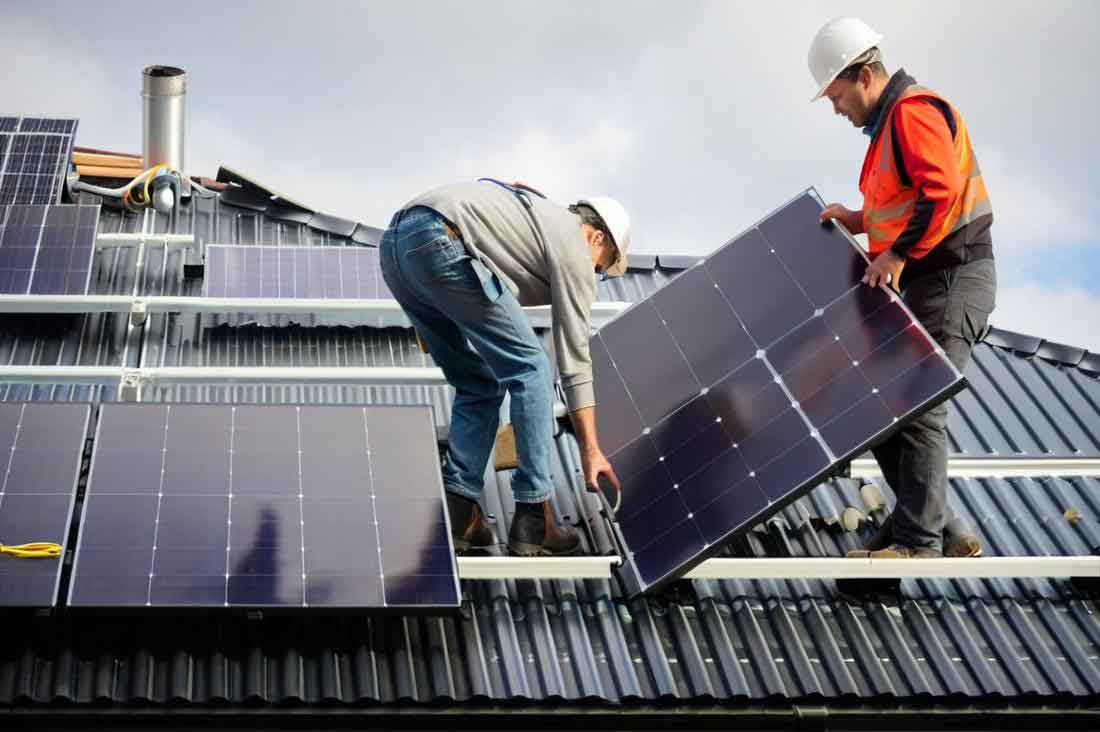
The adoption of infrared imaging for solar panel defect detection has gained traction due to its non-invasive nature, real-time capabilities, and cost-effectiveness. Unlike electrical methods that rely on I-V characteristic curves, infrared imaging captures thermal patterns on solar panel surfaces, revealing hotspots indicative of faults such as cracks, shading, or degradation. This approach is particularly valuable for large-scale solar farms, where manual inspection is impractical. In recent years, the integration of unmanned aerial vehicles (UAVs) with thermal cameras has revolutionized solar panel monitoring, enabling rapid data acquisition over vast areas. We begin by examining the common fault types in solar panels, which are essential for understanding the thermal signatures detected by infrared imaging.
Solar panel faults can be broadly categorized into three groups: optical degradation, electrical mismatch and degradation, and other miscellaneous failures. Optical degradation involves the deterioration of materials like encapsulants and glass due to environmental stressors such as UV radiation, temperature fluctuations, and moisture. For instance, delamination and bubble formation occur when adhesion between layers weakens, leading to reduced thermal conductivity and localized heating. The temperature rise in affected solar panel regions typically ranges from 1 to 5 K, as described by the formula for heat flux: $$ q = -k \nabla T $$ where \( q \) is the heat flux, \( k \) is the thermal conductivity, and \( \nabla T \) is the temperature gradient. In solar panels, lower \( k \) in degraded areas results in higher \( T \), visible in infrared images. Electrical mismatch, on the other hand, stems from partial shading, cell cracks, or broken interconnects, causing certain solar panel cells to act as loads and generate excessive heat. This can lead to hotspots with temperature differentials of 15–45 K, significantly impacting solar panel output. Other faults, like potential-induced degradation (PID) or bypass diode failures, are more subtle but still detectable through thermal anomalies. To summarize, we present a table of solar panel fault types, causes, and impacts, emphasizing how infrared imaging aids in their identification.
| Fault Category | Specific Fault Types | Causes | Impact on Solar Panels |
|---|---|---|---|
| Optical Degradation | Delamination, bubbles, encapsulant discoloration, glass breakage | Environmental factors (e.g., UV exposure, humidity); low-quality materials | Energy loss up to 10%, localized temperature rise of 1–5 K |
| Electrical Mismatch and Degradation | Cracks, snail trails, broken interconnects, shading, short circuits | Mechanical stress, aging, partial shading, production defects | Power loss, hotspot formation with ΔT of 15–45 K, risk of thermal damage |
| Other Faults | PID, bypass diode failure, open circuits in submodules | High voltage stress, mechanical impacts | Performance degradation, temperature variations in solar panel arrays |
Infrared imaging techniques for solar panel defect detection primarily include electroluminescence (EL) and infrared thermography (IRT). EL imaging involves applying a forward bias to the solar panel, causing it to emit light proportional to voltage; defects appear as dark shadows due to reduced electrical activity. This method is highly effective for identifying micro-cracks and fractures in solar panel cells but may overlook deeper faults like delamination. In contrast, IRT captures thermal radiation from operating solar panels, highlighting hotspots where faults cause excessive heat generation. The thermal contrast can be quantified using the Stefan-Boltzmann law: $$ P = \epsilon \sigma A T^4 $$ where \( P \) is the radiant power, \( \epsilon \) is emissivity, \( \sigma \) is the Stefan-Boltzmann constant, \( A \) is the area, and \( T \) is temperature. For solar panels, variations in \( \epsilon \) and \( T \) due to defects lead to distinct infrared signatures. Recent studies have leveraged UAV-mounted thermal cameras to automate solar panel inspections, achieving efficient coverage of large installations. For example, aerial thermography can generate orthophoto maps that geolocate faults within solar panel arrays, streamlining maintenance workflows. We note that the fusion of IRT with electrical measurements, such as I-V curve analysis, enhances diagnostic accuracy by correlating thermal patterns with performance data. This integrated approach is crucial for addressing complex solar panel faults that manifest both thermally and electrically.
The effectiveness of infrared imaging for solar panel defect detection hinges on advanced image processing algorithms. Traditional methods involve preprocessing steps like Gaussian filtering, median filtering, and edge detection to reduce noise and enhance features in solar panel infrared images. For instance, a Gaussian filter applies convolution: $$ G(x,y) = \frac{1}{2\pi\sigma^2} e^{-\frac{x^2+y^2}{2\sigma^2}} $$ to smooth thermal images, making hotspots more discernible. Wavelet transforms have also been employed to analyze transient thermal signals in solar panels, particularly for subsurface defects. However, the advent of machine learning and deep learning has revolutionized this domain. Convolutional neural networks (CNNs) can automatically classify faults in solar panel infrared images with high accuracy. A lightweight CNN model, for instance, might process EL images to identify cracks or snail trails, achieving over 90% accuracy. Similarly, region-based CNNs (R-CNNs) detect and localize hotspots in thermal images, enabling real-time monitoring of solar panel health. To illustrate the evolution, we summarize key image processing techniques in a table, highlighting their applications to solar panel inspection.
| Algorithm Category | Specific Techniques | Application in Solar Panel Imaging | Benefits |
|---|---|---|---|
| Traditional Image Processing | Gaussian filtering, median filtering, edge detection, wavelet transforms | Noise reduction, feature enhancement for solar panel infrared images | Improved clarity of defects, suitable for real-time analysis |
| Machine Learning | Naive Bayes classifiers, random forests, scale-invariant feature transform (SIFT) | Fault classification based on texture and gradient features in solar panel thermal images | High accuracy (e.g., 94.1%), reduced computational cost |
| Deep Learning | CNNs, R-CNNs, transfer learning, generative adversarial networks (GANs) | Automated defect detection and localization in solar panel EL and infrared images | Superior performance, adaptability to large-scale solar panel datasets |
Despite these advancements, the solar panel inspection industry faces several challenges. First, the cost of deploying advanced infrared imaging systems, including UAVs and high-resolution thermal cameras, can be prohibitive for small-scale operators. We need cost-effective solutions that maintain high diagnostic accuracy for diverse solar panel installations. Second, the variability in environmental conditions—such as ambient temperature, solar irradiance, and wind—affects thermal signatures, complicating fault detection in solar panels. Algorithms must account for these factors through normalization techniques, perhaps using a corrected temperature model: $$ T_{corrected} = T_{measured} – \alpha (G – G_{ref}) $$ where \( \alpha \) is a coefficient, \( G \) is irradiance, and \( G_{ref} \) is a reference value. Third, emerging fault types in solar panels, like PID or new degradation mechanisms, require continuous updates to detection methodologies. Future research should focus on developing adaptive AI models that learn from evolving solar panel fault patterns. Additionally, the integration of multi-modal data—combining infrared, visual, and electrical measurements—will provide a holistic view of solar panel health. The trend toward autonomous inspection using IoT and edge computing promises to make solar panel monitoring more efficient and scalable. We anticipate that standards for infrared-based solar panel assessment will evolve, ensuring consistency across the industry.
In conclusion, infrared imaging has become an indispensable tool for defect detection in solar panels, offering non-invasive, rapid, and accurate insights into fault conditions. Through techniques like EL and IRT, coupled with sophisticated image processing algorithms, we can identify a wide range of solar panel faults, from optical degradation to electrical mismatches. The integration of UAVs and AI further enhances the scalability of these methods for large solar farms. However, challenges related to cost, environmental variability, and evolving fault types necessitate ongoing innovation. We recommend prioritizing research into affordable sensing technologies, robust algorithms adaptable to changing conditions, and standardized protocols for solar panel infrared inspection. As the solar energy sector expands, advancements in infrared imaging will play a critical role in ensuring the longevity and efficiency of solar panel systems, contributing to a sustainable energy future. This review underscores the importance of continuous improvement in detection technologies to keep pace with the growing complexity of solar panel installations.