
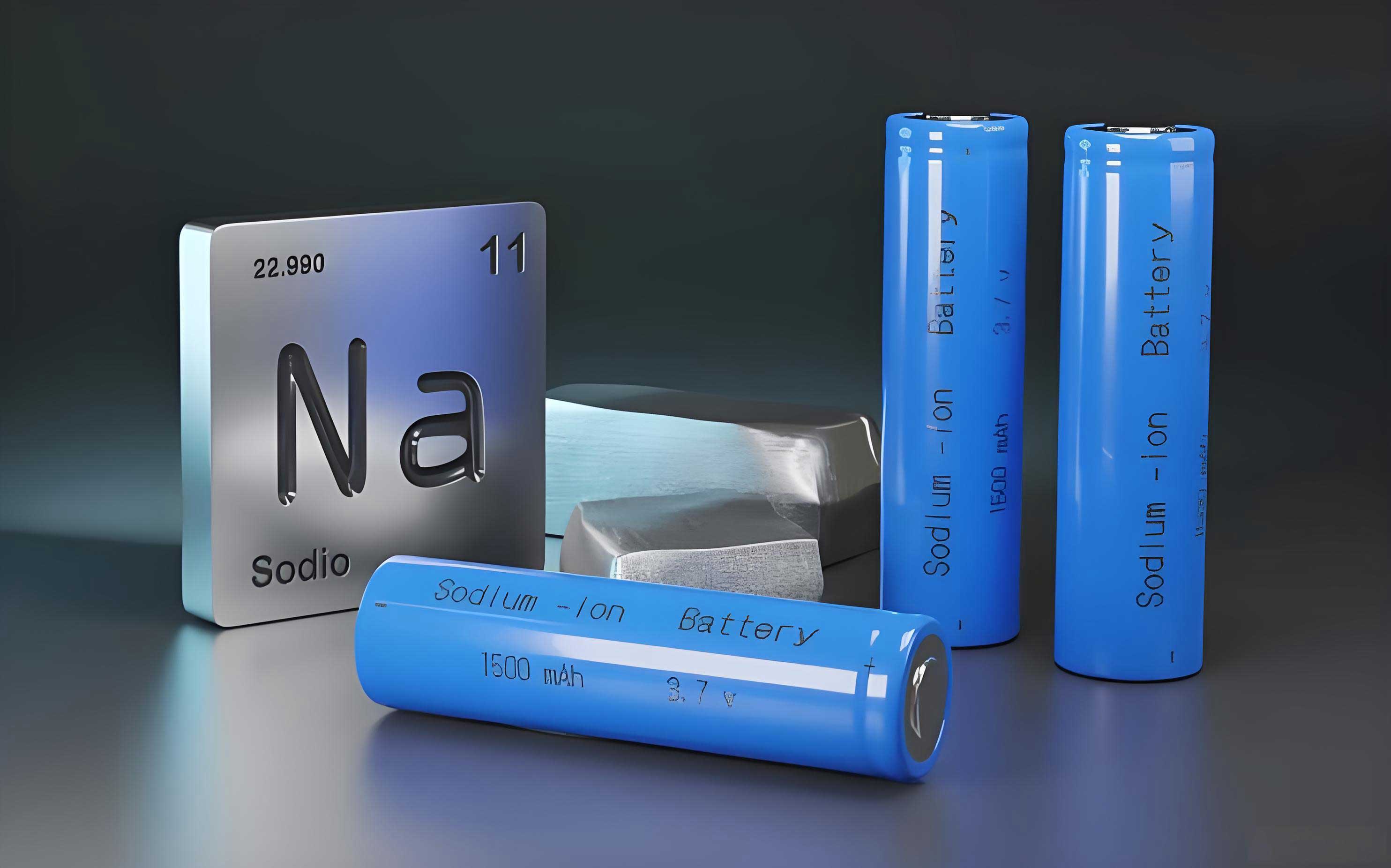
In recent decades, the escalating concerns of global warming and fossil fuel depletion have intensified the focus on sustainable energy solutions. While technologies for harnessing solar, wind, and hydrogen energy are crucial, their practical implementation is inherently dependent on efficient energy storage systems. Among these, rechargeable alkaline-ion batteries, particularly those based on lithium (Li+), sodium (Na+), and potassium (K+), hold paramount importance. Lithium-ion batteries (LIBs), renowned for their high energy density, long cycle life, and superior power performance, currently dominate the markets for portable electronics and electric vehicles. However, the growing demand and geopolitical concerns over lithium resources necessitate the exploration of alternative chemistries. Sodium-ion batteries (SIBs) emerge as a compelling candidate for large-scale energy storage due to the natural abundance and low cost of sodium, alongside physicochemical and electrochemical similarities between Na+ and Li+. The performance, cost, and longevity of a sodium-ion battery are fundamentally governed by its electrode materials, making their rational design and development a critical research frontier.
Within the landscape of potential electrode materials for the sodium-ion battery, Prussian blue (PB) and its analogs (PBAs) have garnered significant attention. PB, with a general formula of Fe43+[Fe2+(CN)6]3 or Fe2+[Fe3+(CN)6], is a coordination polymer belonging to the metal-organic framework (MOF) family. Its open, face-centered cubic framework is constructed from FeII/III ions bridged by cyanide (CN–) ligands, creating large interstitial sites capable of hosting alkali ions like Na+. The structural formula can be generalized as AxMA[MB(CN)6]y·zH2O (0 < x < 2; 0 < y < 1), where A represents an interstitial alkali metal, and MA and MB are transition metals (e.g., Fe, Co, Ni, Mn, Cu) coordinated to the N and C atoms of the cyanide ligands, respectively. PBAs are derived by substituting the Fe centers in PB with other transition metals while preserving the overall framework architecture. This tunability of chemical composition and physical properties makes PB and PBAs exceptionally versatile. Their intrinsic advantages for electrochemical storage include: (i) a rigid, open 3D framework facilitating rapid ion diffusion, (ii) abundant and reversible redox-active sites, (iii) low-cost synthesis from abundant precursors, and (iv) theoretical capacities of up to ~170 mAh g-1 for specific compositions. Consequently, PB and PBAs are directly employed as high-performance cathode materials for sodium-ion battery systems. Furthermore, their well-defined nanostructures and tunable metal compositions make them ideal sacrificial templates or precursors for synthesizing various nanostructured metal compounds (e.g., oxides, sulfides, selenides, phosphides) and their composites, which serve as promising anode materials for the sodium-ion battery. This article, from the perspective of ongoing research, comprehensively reviews the progress in utilizing PB, PBAs, and their derived materials for sodium-ion storage in half-cell and full-cell configurations.
PB and PBAs as Cathode Materials for Sodium-Ion Batteries
The quest for high-performance, cost-effective cathodes is central to advancing the sodium-ion battery technology. Promising candidates include polyanionic compounds, layered oxides, organic polymers, and PB/PBAs. Among these, PB and PBAs stand out due to their facile synthesis, economic viability, and favorable structural properties that enable high operating voltages and stable long-term cycling. Their 3D open channels allow for rapid Na+ (de)insertion with minimal lattice strain, a key advantage over many layered materials.
Prussian Blue (PB) Cathodes
The archetypal material, PB or iron hexacyanoferrate (Fe-HCF), offers a high theoretical capacity (~170 mAh g-1) based on the reversible redox of both FeII/III couples. However, materials synthesized via conventional co-precipitation often suffer from poor Coulombic efficiency and rapid capacity fading. The primary culprits are structural defects, namely [Fe(CN)6] vacancies and coordinated water molecules (zH2O in the general formula). These vacancies degrade electronic conductivity and can lead to framework collapse during cycling, while water molecules occupy interstitial spaces, hindering Na+ migration and potentially decomposing at the electrode/electrolyte interface. Therefore, research has focused on synthesizing high-quality, low-defect PB crystals.
A significant advancement involved using Na4Fe(CN)6 as a single iron source, yielding a material with composition approximating Na0.61Fe[Fe(CN)6]0.94. This material exhibited a low water content and a reduced number of vacancies. The redox mechanism primarily involves the FeIII/II couple at the N-coordinated site (often denoted as the high-spin Fe). The stabilized framework minimizes mechanical strain during Na+ (de)intercalation, as described by the simplified reaction:
$$ \text{Na}_x\text{Fe}^{III}[\text{Fe}^{II}(\text{CN})_6] \rightleftharpoons \text{Fe}^{III}[\text{Fe}^{III}(\text{CN})_6] + x\text{Na}^+ + x e^- $$
where x can approach 2 in an ideal, defect-free structure. This high-quality PB demonstrated significantly improved capacity retention and near-100% Coulombic efficiency compared to its low-quality counterpart. Another innovative approach led to the synthesis of hollow Na1.58Fe[Fe(CN)6]0.92 nanospheres. This hierarchical hollow structure provides a larger active surface area, a rigid framework to accommodate volume changes, and shortened diffusion paths for both Na+ and electrons, resulting in enhanced rate capability and cycle life.
| Material | Composition / Structure | Capacity (mAh g-1) / Rate | Cycle Performance | Key Features |
|---|---|---|---|---|
| High-Quality PB | Na0.61Fe[Fe(CN)6]0.94 (Low H2O, low vacancy) | ~140-150 / Low C-rate | Excellent stability, ~100% CE | Controlled synthesis minimizes defects |
| Hollow PB Nanospheres | Na1.58Fe[Fe(CN)6]0.92 | ~142 / 0.1C | ~90% retention after 800 cycles | Hierarchical hollow structure |
| Nickel-Substituted PBA | Fe(1-y)Niy-HCF (y ~ 0.03) | Improved vs. pure PB | Enhanced cycling stability | Inert Ni stabilizes framework, tunes potential |
| Nickel-Cobalt PBA | NaxNi0.3Co0.7[Fe(CN)6] | ~145 / 15 mA g-1 | ~90% retention after 600 cycles at 5C | Synergy: Co provides capacity, Ni stabilizes |
| Ternary PBA | Na2Ni0.4Co0.6Fe(CN)6 | High | Stable, ~100% CE | Optimized Ni/Co ratio |
Prussian Blue Analogs (PBAs) Cathodes
To achieve an optimal balance between high capacity and structural stability, the Fe in PB can be partially or fully substituted with other transition metals, forming PBAs. The choice of metals allows precise tuning of operating voltage, capacity, and cycling robustness. A common strategy involves incorporating electrochemically inactive or less active metals to act as a structural pillar. For instance, substituting a small percentage (~3%) of Fe with Ni was shown to enhance the Na+ diffusion rate within the lattice and improve overall cyclability without significantly sacrificing capacity. The NiII ions, being relatively inert in the typical voltage window, help maintain the structural integrity of the framework during the redox processes of the active Fe centers.
A more advanced approach utilizes binary or ternary metal systems. For example, a series of high-quality NixCo1-x[Fe(CN)6] compounds were synthesized. Here, the inert Ni stabilizes the structure and modulates the depth of charge/discharge, while the active Co provides additional redox capacity. An optimal composition, Ni0.3Co0.7[Fe(CN)6], delivered a high capacity and outstanding rate performance, retaining 90% capacity after 600 cycles at a 5C rate. The enhanced performance can be attributed to the synergistic effect and the high crystallinity/low defect concentration achieved through controlled synthesis using chelating agents. Similarly, a ternary compound Na2NixCo1-xFe(CN)6 was developed, where systematic optimization found the composition with x=0.4 to offer the best performance, leveraging Co for capacity and Ni for framework stability.
PB/PBA-Based Composite Cathodes
Despite improvements, the inherent electronic conductivity of PB/PBAs remains moderate. Compositing them with conductive matrices is a highly effective strategy to overcome this limitation, enhancing rate capability and cycle life for the sodium-ion battery.
Polymer Composites: Conductive polymers like polyaniline (PANI), polypyrrole (PPy), and poly(3,4-ethylenedioxythiophene) (PEDOT) are excellent coating materials. For instance, PB@PANI core-shell nanocubes were synthesized using polyvinylpyrrolidone (PVP) as a mediating agent. The PANI shell not only improves electronic conductivity but also contributes pseudo-capacitance via its proton doping/dedoping mechanism. This composite demonstrated remarkable cycling stability with negligible capacity loss over 1000 cycles at a high current density. Similarly, coating Na1+xMnFe(CN)6 with PPy served multiple purposes: enhancing conductivity, suppressing the dissolution of Mn2+ into the electrolyte, and adding extra capacity from the polymer itself. In-situ polymerization techniques have also been used to create MnHCF@PEDOT composites, where the PEDOT layer effectively inhibits the dissolution of both Mn2+ and Fe2+, leading to ultra-long cycle life.
Carbonaceous Composites: Carbon materials, including graphene, reduced graphene oxide (rGO), and amorphous carbon, are ideal partners for PB/PBAs. A one-dimensional tubular composite of Fe-HCF nanosheets wrapped in graphene scrolls (Fe-HCF NSs@GRs) was designed as a binder-free flexible cathode. The graphene encapsulation prevented active material dissolution and provided a robust conductive network, yielding excellent cycling stability. In another work, cubic K0.33FeFe(CN)6 was composited with rGO using a surfactant-assisted method. The composite maintained the cubic framework, offered a high surface area for reaction, and significantly reduced lattice water defects, resulting in a high capacity retention of 92.2% after 1000 cycles. Simpler approaches, such as mechanical ball-milling of Na4Fe(CN)6 with conductive carbon or in-situ growth of PB nanocubes on carbon substrates, have also proven effective. The carbon matrix buffers volume changes, prevents nanoparticle aggregation, and drastically improves electronic conduction.
Core-Shell PB/PBA Composites: Designing hierarchical structures within the PB/PBA family itself is another innovative route. A Fe-HCF@Ni-HCF composite was fabricated by coating a Ni-HCF shell onto Fe-HCF cubic cores. The Ni-HCF shell, with its different electrochemical activity and stability, helped suppress side reactions at high voltages and provided structural reinforcement, leading to improved average Coulombic efficiency and cycle life. Similarly, a CoNi-HCF@Ni-HCF core-shell material was developed. Cyclic voltammetry studies confirmed that the Ni-HCF shell effectively minimized parasitic reactions between the core material and the electrolyte at potentials above 3.56 V, thereby enhancing the overall sodium-ion battery performance.
PB/PBA-Derived Materials as Anode for Sodium-Ion Batteries
While PB/PBAs excel as cathodes, the quest for high-capacity, stable anodes is equally critical for a high-energy-density sodium-ion battery. Conversion-type anode materials, which undergo reversible redox reactions with Na+ to form new compounds, offer much higher theoretical capacities than intercalation materials. PB and PBAs, with their well-defined metal centers and nanostructures, serve as excellent precursors/templates for synthesizing nanostructured metal compounds (oxides, sulfides, selenides, phosphides) for anodes. The general derivation process can be represented as:
$$ \text{A}_x\text{M}_A[\text{M}_B(\text{CN})_6]_y \cdot z\text{H}_2\text{O} \xrightarrow[\text{Anion Exchange}]{\text{Calcination / Sulfidation / Selenidation / Phosphidation}} \text{M}_A\text{X}_m / \text{M}_B\text{X}_n \text{ or composites} $$
where X = O, S, Se, P. The derived materials often inherit the morphological advantages of the precursor, such as porous or hollow structures, which are crucial for mitigating the large volume changes associated with conversion reactions in a sodium-ion battery.
Metal Oxides
Although metal oxides are widely studied for LIBs, their application in SIBs is more challenging due to larger Na+ ions causing severe lattice mismatch and sluggish kinetics. Research on PB-derived oxides for SIB anodes is relatively limited. One example is the synthesis of porous CoFe2O4 nanocrystals via thermal annealing of a Co-Fe PBA. The hierarchical porous structure buffered volume expansion and provided ample electrode-electrolyte contact. Another study produced hollow MgFe2O4 microboxes from PBA precursors. The hollow structure facilitated efficient Na+ diffusion and accommodated volume changes, resulting in a respectable reversible capacity. However, challenges like poor electronic conductivity and large volume expansion remain significant hurdles for oxide-based anodes in the sodium-ion battery.
Metal Sulfides and Composites
Metal sulfides are promising anode materials due to their good electronic conductivity and high theoretical capacities based on conversion reactions (e.g., MSx + 2xNa+ + 2xe– ⇌ M + xNa2S). However, they suffer from polysulfide dissolution and large volume expansion. Using PBA precursors allows for sophisticated design. For instance, carbon-coated Fe-Co bimetallic sulfide hollow nanocubes were prepared by sulfurizing a polydopamine-coated PBA. The carbon coating and hollow structure synergistically enhanced conductivity, accommodated volume stress, and trapped polysulfides, leading to superior rate performance and stability. More complex architectures like (NiCo)S@rGO@NC (nitrogen-doped carbon) nanocomposites have been synthesized via spray pyrolysis and sulfurization. The rGO and dual N-doped carbon layers created a highly conductive and robust matrix, enabling an impressive initial discharge capacity and good cycling performance. Another creative design involved growing two-dimensional WS2 nanosheets vertically on hierarchical carbon nanocubes derived from PB, forming a 3D/2D hybrid WS2@NCs. This structure provided a large surface area, short ion diffusion paths, and a stable carbon framework to buffer volume changes, resulting in excellent cycling stability with Coulombic efficiency consistently above 99%.
Metal Selenides and Composites
Metal selenides generally exhibit higher electronic conductivity than their sulfide counterparts and offer high capacities via multi-electron conversion reactions. However, they face similar challenges of volume expansion and polyselenide shuttling. Our own work has focused on designing hierarchical coral-like NixCo1-xSe2 from PBAs. The optimized Ni0.47Co0.53Se2 demonstrated remarkable long-term cycling stability, retaining a high capacity over thousands of cycles with an extremely low decay rate per cycle. A sophisticated design led to double-carbon-coated CoSe2 (DCC-CoSe2) microcubes, where CoSe2 nanoparticles were embedded within a nitrogen-doped carbon matrix derived from the PBA. This structure effectively confined the active material, alleviated volume changes, and boosted conductivity. Further innovation involved synthesizing Cu-doped CoSe2 hierarchical hollow microcubes via ion-exchange. The Cu doping and hollow structure endowed the material with high reversible capacity and excellent rate capability. Similarly, nitrogen-doped graphitic carbon-encapsulated Fe7Se8 nanoparticles (Fe7Se8@NC) were derived from a PBA. The core-shell structure was critical in maintaining integrity during cycling, enabling a stable capacity over 1200 cycles.
| Material | Precursor / Synthesis | Capacity (mAh g-1) / Rate | Cycle Performance | Key Features |
|---|---|---|---|---|
| Porous CoFe2O4 NCs | Co-Fe PBA / Annealing | Moderate | Stability dependent on binder | Hierarchical porous structure |
| Coral-like Ni0.47Co0.53Se2 | Ni-Co PBA / Selenidation | ~321 / 2 A g-1 | 2000 cycles, 0.011% decay/cycle | Hierarchical 3D coral structure |
| DCC-CoSe2 Microcubes | Co-Co PBA / Selenidation+C coating | ~480 / Moderate rate | 94.5% retention after 200 cycles | Dual carbon coating, N-doping |
| Fe7Se8@NC Nanoparticles | Fe-based PBA / Selenidation | ~367 / 500 mA g-1 | ~339 mAh g-1 after 1200 cycles @ 1 A g-1 | Core-shell, N-doped graphitic carbon |
| Porous FeP/NC Nanocubes | Fe-based PBA / Low-T Phosphidation | High | Excellent rate & cycling performance | Porous carbon skeleton with FeP NPs |
| RGO@CoP@C-FeP Microcubes | Co-Fe PBA / Phosphidation + RGO | High | Good rate capability & stability | Core-shell, graphene-linked, porous |
Metal Phosphides and Composites
Metal phosphides (MPs) are attractive due to their high theoretical capacity and good metalloid conductivity. The conversion reaction typically follows: MPx + (3x)Na+ + (3x)e– ⇌ M + xNa3P. The large volume change during the formation of Na3P necessitates careful nanostructural design. A porous FeP/C nanocomposite was synthesized by low-temperature phosphidation of a PB nanocube precursor. The resulting material consisted of FeP nanoparticles uniformly distributed within a porous carbon nanocube framework. This structure provided fast pathways for electrons/ions, ample active sites, and buffering space for volume changes, leading to outstanding rate performance and cycle life. Another advanced design yielded a composite of graphene-linked porous core-shell CoP@C-FeP microcubes (RGO@CoP@C-FeP). The integrated graphene network enhanced overall conductivity, while the porous core-shell structure effectively accommodated strain, contributing to high reversible capacity and stability in the sodium-ion battery.
Application in Sodium-Ion Full Cells
The ultimate test for any electrode material is its performance in a practical full-cell configuration, where a cathode and anode are paired with a limited sodium reservoir. Research on PB/PBA-based full sodium-ion battery systems is actively progressing. A prominent example paired a high-quality Ni0.3Co0.7[Fe(CN)6] cathode with a NaTi2(PO4)3 anode, demonstrating a stable capacity over 300 cycles with negligible decay. Single-crystal FeFe(CN)6 nanoparticles have also been used as a cathode in full cells, showing excellent rate capability (32 mAh g-1 at 20C) and capacity retention. On the anode side, a full cell constructed with Fe7Se8@NC as the anode and Fe-HCF as the cathode delivered a stable reversible capacity, highlighting the practical potential of PBA-derived anodes. Another study successfully integrated a Ni0.67Fe0.33Se2 anode with a Ni-Fe PBA cathode, achieving a respectable full-cell capacity at a reasonable current density. These studies collectively affirm the viability of PB and PBA-based materials for constructing practical, high-performance sodium-ion battery systems.
Conclusions and Perspectives
This review has systematically examined the significant progress in utilizing Prussian blue and its analogs for sodium-ion battery applications. As cathode materials, PB and PBAs benefit from an open, stable 3D framework ideal for rapid Na+ migration. The primary challenge of structural defects ([Fe(CN)6] vacancies and water) has been addressed through advanced synthesis strategies, elemental substitution (e.g., with Ni, Co), and compositing with conductive polymers or carbonaceous materials. These modifications have yielded materials with high specific capacity, excellent rate capability, and outstanding long-term cycling stability, making them among the most promising cathodes for cost-effective SIBs.
Furthermore, the utility of PB/PBAs extends beyond their direct application. Their role as versatile precursors for synthesizing nanostructured conversion-type anode materials (sulfides, selenides, phosphides) is particularly valuable. The derived materials often retain beneficial morphological features (e.g., hollow, porous, or hierarchical structures) from the PBA templates, which are essential for mitigating the substantial volume changes during sodiation/desodiation. Compositing these derived materials with carbon matrices further enhances their electronic conductivity and mechanical resilience, leading to anode materials with high capacity and robust cycle life for the sodium-ion battery.
Looking forward, several research directions appear critical. For PB/PBA cathodes, continued efforts to achieve near-perfect, water-free crystals with minimal vacancies through scalable, green synthesis methods are paramount. Deeper understanding of the structure-property relationships, particularly the role of different transition metals and their local coordination environments, will guide the design of next-generation materials with higher operating voltages and capacities. Exploring novel PB/PBA composites with emerging materials like MXenes or covalent organic frameworks could unlock further performance enhancements.
For PBA-derived anodes, the focus should be on engineering architectures that can withstand the extreme volume changes over thousands of cycles while maintaining high electrode density for practical energy density. In-situ characterization techniques will be vital to unravel the complex conversion mechanisms and degradation pathways in these materials. Finally, the development of “born-to-match” full cells, where both cathode and anode are derived from or compatible with PB/PBA chemistry, could streamline manufacturing and optimize overall cell performance. The continuous innovation in the chemistry and nanostructuring of Prussian blue-based materials holds great promise for realizing efficient, durable, and affordable sodium-ion battery technology for large-scale energy storage.