
In recent years, the rapid development of clean energy technologies has led to a significant increase in the installed capacity of photovoltaic (PV) power generation. However, PV systems face critical challenges, such as poor power quality due to the intermittent and fluctuating nature of solar resources, and difficulties in large-scale energy storage. Hydrogen, as a clean energy carrier with high energy density, long lifespan, and ease of storage and transmission, offers a promising solution for utilizing and storing excess PV electricity. Off-grid solar systems, which operate independently of the main grid, can leverage abandoned or wasted PV electricity to produce hydrogen on a large scale, thereby reducing hydrogen production costs and enhancing overall system efficiency. This approach plays a vital role in the transformation and upgrading of PV systems, particularly in regions with abundant solar resources like Northwest China.
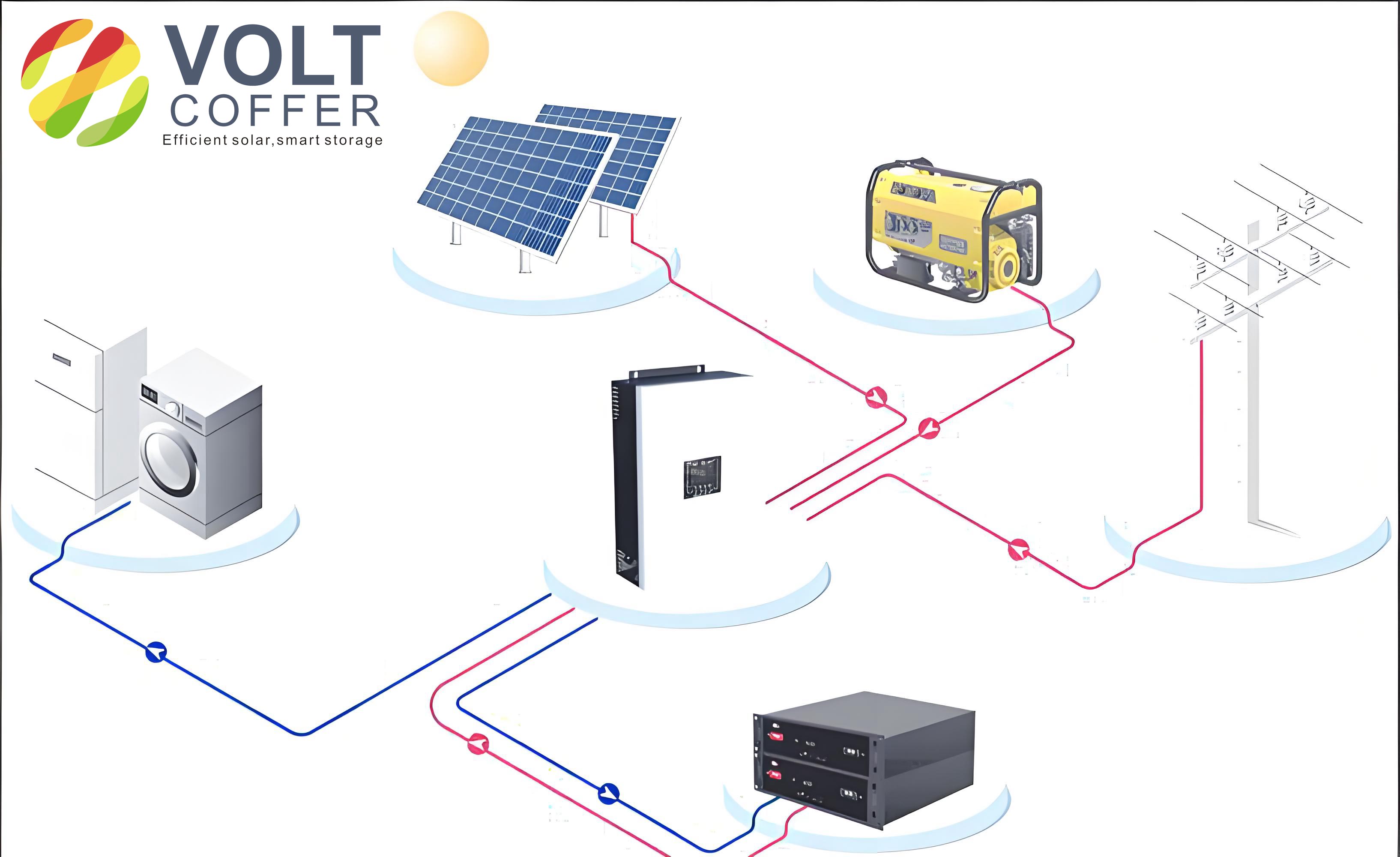
The integration of off-grid solar systems with hydrogen production technologies enables the conversion of discarded PV electricity into hydrogen, which can be applied in various sectors, such as blending into natural gas networks, powering fuel cells, or supplying hydrogen refueling stations. This paper explores the advancements in wide-power off-grid solar hydrogen production, focusing on technical routes, storage and transportation methods, and economic feasibility. By analyzing the current state of PV-coupled hydrogen production, we evaluate system performance and economy, and propose a technical pathway suitable for demonstration in Northwest China. The keyword “off grid solar system” is central to this discussion, as it represents a decentralized approach to energy generation and storage, crucial for remote areas with high solar potential.
Off-grid solar systems are designed to operate autonomously, without connection to the main electrical grid. This independence allows for greater flexibility in scaling hydrogen production facilities and avoids grid-related constraints. However, the variable nature of solar power necessitates hydrogen production systems that can adapt to wide power fluctuations. Wide-power off-grid solar hydrogen production refers to systems that can efficiently operate across a broad range of power inputs, typically from 20% to 100% of rated capacity, making them ideal for handling the intermittency of PV generation. This capability is essential for maximizing the utilization of abandoned PV electricity, which often occurs during peak solar hours when grid demand is low.
Hydrogen Production Technologies for Off-Grid Solar Systems
Several electrolysis technologies are available for hydrogen production, each with distinct advantages and limitations when integrated with off-grid solar systems. The most common methods include alkaline water electrolysis (AEC), proton exchange membrane electrolysis (PEM), and solid oxide electrolysis (SOEC). AEC is the most mature and widely used technology, characterized by simple structure, low cost, and long lifespan, though it suffers from lower efficiency and slower response times. PEM technology offers rapid response and high efficiency but involves higher costs and the use of precious metal catalysts. SOEC, while highly efficient at elevated temperatures, is still in the experimental stage due to material stability issues. For off-grid solar systems, AEC is currently the most suitable due to its cost-effectiveness and compatibility with fluctuating power sources.
The performance of these technologies can be summarized using key parameters. For instance, the efficiency of hydrogen production is often expressed as the ratio of the energy content of the hydrogen produced to the electrical energy input. This can be represented by the formula: $$ \eta = \frac{E_{\text{H2}}}{E_{\text{elec}}} \times 100\% $$ where \( \eta \) is the efficiency, \( E_{\text{H2}} \) is the energy of hydrogen produced (based on lower heating value), and \( E_{\text{elec}} \) is the electrical energy consumed. In off-grid solar systems, the dynamic load range is critical, as it determines the system’s ability to handle power variations. A wider range, such as 20-100% for AEC, allows better integration with PV generation.
| Parameter | AEC | PEM | SOEC |
|---|---|---|---|
| Gas Purity (%) | >99.5 | >99.99 | 99.9 |
| Cold Start Time (h) | 1-2 | <0.17 | >1 |
| Dynamic Load Range (%) | 20-100 | 0-160 | 20-100 |
| Efficiency (%) | 60-85 | 75-90 | 82-90 |
| Lifetime (h) | 70,000-95,000 | 20,000-60,000 | 500-2,000 |
| Cost (USD/kW) | 600-1,500 | 1,200-1,900 | 2,900-5,700 |
In off-grid solar systems, the choice of electrolysis technology impacts the overall system efficiency and cost. For example, AEC systems can achieve an energy consumption of approximately 4.8 kWh per normal cubic meter of hydrogen produced, which aligns well with the variable output of PV systems. The wide-power adaptability of AEC allows it to operate efficiently even when solar power fluctuates, making it a robust choice for decentralized hydrogen production. Moreover, the low manufacturing cost of AEC in regions like China further enhances its suitability for large-scale deployment in Northwest China, where off-grid solar systems are prevalent.
The integration of off-grid solar systems with hydrogen production also involves power electronics, such as DC/DC converters, to match the voltage and current characteristics of PV panels with electrolyzers. This ensures optimal power transfer and minimizes losses. The power output of a PV system can be modeled as: $$ P_{\text{PV}} = G \times A \times \eta_{\text{PV}} $$ where \( P_{\text{PV}} \) is the power output, \( G \) is the solar irradiance, \( A \) is the area of PV panels, and \( \eta_{\text{PV}} \) is the efficiency of the PV modules. In off-grid configurations, this power directly feeds the electrolyzer, and any mismatch can reduce hydrogen yield. Therefore, control strategies, such as maximum power point tracking (MPPT), are employed to optimize performance.
Hydrogen Storage and Transportation Methods
Once hydrogen is produced using off-grid solar systems, efficient storage and transportation are crucial for its utilization. Common methods include high-pressure gaseous storage, liquid hydrogen storage, and pipeline transportation. High-pressure storage is suitable for short-distance, small-scale transport, with pressures typically above 24 MPa. Liquid hydrogen storage, though energy-intensive due to liquefaction requirements, offers high volumetric density and is ideal for long-distance, large-scale transport. Pipeline transportation, with operating pressures of 1-6 MPa, provides low operational costs but high initial investment. For off-grid solar systems in remote areas, a combination of these methods may be used based on economic and logistical considerations.
The energy density and cost of these storage methods vary significantly. For instance, the volumetric hydrogen density for high-pressure storage is around 14.5 kg/m³, while for liquid hydrogen, it can reach 64 kg/m³. The cost of transportation also depends on the distance and scale, with pipeline transport being the most economical for long distances. The energy required for liquefaction is substantial, approximately 15 kWh per kg of hydrogen, which must be accounted for in the overall efficiency of the off-grid solar system. The formula for the total energy cost of hydrogen delivery can be expressed as: $$ E_{\text{total}} = E_{\text{prod}} + E_{\text{storage}} + E_{\text{transport}} $$ where \( E_{\text{prod}} \) is the production energy, \( E_{\text{storage}} \) is the energy for storage, and \( E_{\text{transport}} \) is the transportation energy.
| Method | Pressure (MPa) | Volumetric Density (kg/m³) | Cost (USD/kg) | Energy (kWh/kg) | Economic Distance (km) |
|---|---|---|---|---|---|
| High-Pressure Trailer | 24 | 14.5 | 2.10 | 1.00-1.28 | ≤150 |
| Pipeline | 1-6 | 3.2 | 0.35 | 0.22 | ≥600 |
| Liquid Hydrogen Tanker | 0.8 | 64.0 | 12.50 | 15.00 | ≥300 |
In the context of off-grid solar systems, hydrogen storage allows for the decoupling of energy production and consumption, enabling continuous supply even when solar power is unavailable. For example, hydrogen produced during sunny periods can be stored and used at night or during cloudy days. This is particularly important in Northwest China, where solar resources are abundant but intermittent. Additionally, blending hydrogen into existing natural gas networks is a promising approach to reduce transportation costs. Studies show that hydrogen can be mixed with natural gas at ratios of 2-5% without modifying infrastructure, and higher ratios up to 20% are being explored in projects like those in Germany and Italy.
The integration of off-grid solar systems with hydrogen storage also involves safety considerations, such as the use of certified containers and pressure relief devices. The storage capacity must be sized based on the hydrogen production rate and demand patterns. For instance, if an off-grid solar system produces hydrogen at a rate of \( \dot{m}_{\text{H2}} \) kg/h, the required storage volume \( V \) for a desired autonomy period \( T \) days can be estimated as: $$ V = \frac{\dot{m}_{\text{H2}} \times T \times 24}{\rho} $$ where \( \rho \) is the density of hydrogen under storage conditions. This ensures that the system can handle fluctuations in both production and consumption.
Economic Analysis of Wide-Power Off-Grid Solar Hydrogen Production in Northwest China
The economic feasibility of wide-power off-grid solar hydrogen production depends on several factors, including the scale of electrolysis, efficiency, total investment, electricity cost, and abandonment rate of PV power. In Northwest China, regions like Xinjiang have high solar resources but also face significant PV curtailment rates, often exceeding 5% due to grid constraints. By utilizing this abandoned electricity for hydrogen production, off-grid solar systems can improve overall economics. The levelized cost of hydrogen (LCOH) is a key metric, calculated as: $$ \text{LCOH} = \frac{\text{Total Cost}}{\text{Total Hydrogen Production}} $$ where total cost includes capital expenditure (CAPEX), operating expenditure (OPEX), and energy costs.
For a typical 60 MW PV plant in Xinjiang with a curtailment rate of 3%, the optimal hydrogen production scale is around 700 m³/h, which corresponds to a power consumption of approximately 3.4 MW. At this scale, the utilization rate of abandoned electricity reaches 90%, and the internal rate of return (IRR) can exceed 9%. If the scale is too small, the utilization rate drops, reducing economic returns. Conversely, larger scales may not significantly improve utilization due to diminishing returns. The relationship between hydrogen production scale and IRR can be modeled empirically based on project data.
| Hydrogen Production Scale (m³/h) | Investment Cost (kUSD) | Power Consumption (MW) | Abandoned Electricity Utilization Rate (%) | Internal Rate of Return (%) |
|---|---|---|---|---|
| 300 | 520 | 1.4 | 45 | 5.8 |
| 400 | 660 | 1.9 | 56 | 6.7 |
| 500 | 800 | 2.4 | 68 | 7.5 |
| 600 | 940 | 2.9 | 80 | 8.3 |
| 700 | 1,080 | 3.4 | 90 | 9.1 |
| 800 | 1,220 | 3.8 | 92 | 9.2 |
| 900 | 1,360 | 4.3 | 92 | 9.2 |
The electricity cost is a major driver of hydrogen production costs. For off-grid solar systems, the effective electricity price for hydrogen production should be below 0.03 USD/kWh to be competitive with conventional methods. In Northwest China, the grid electricity price for PV plants ranges from 0.035 to 0.05 USD/kWh, but by using abandoned electricity, the effective cost can be reduced to nearly zero, significantly improving economics. Additionally, the investment in electrolyzers must be optimized; for instance, AEC systems have a lower CAPEX compared to PEM, making them more suitable for large-scale deployments. The cost of hydrogen production can be broken down as: $$ \text{LCOH} = \frac{C_{\text{cap}} + C_{\text{op}} + C_{\text{elec}}}{M_{\text{H2}}} $$ where \( C_{\text{cap}} \) is capital cost, \( C_{\text{op}} \) is operating cost, \( C_{\text{elec}} \) is electricity cost, and \( M_{\text{H2}} \) is annual hydrogen production.
Hybrid systems, combining AEC with a small proportion of PEM (e.g., less than 5%), can enhance dynamic response but may increase costs. For example, if PEM accounts for 10% of the total hydrogen production capacity, the IRR drops to 2.2% due to higher equipment costs. Therefore, for off-grid solar systems, it is advisable to limit PEM integration unless its cost decreases substantially or operational hours increase. The trade-off between performance and cost must be carefully evaluated based on local conditions. The net present value (NPV) of such projects can be calculated to assess long-term viability: $$ \text{NPV} = \sum_{t=1}^{n} \frac{R_t – C_t}{(1 + r)^t} – I_0 $$ where \( R_t \) is revenue in year t, \( C_t \) is cost, \( r \) is discount rate, and \( I_0 \) is initial investment.
In Northwest China, the abundant solar resources and high curtailment rates make off-grid solar systems an attractive option for hydrogen production. Projects in this region can achieve hydrogen production costs as low as 2-3 USD/kg when leveraging abandoned electricity, compared to 4-6 USD/kg for grid-connected electrolysis. This cost advantage, combined with supportive policies and growing demand for green hydrogen, creates a favorable environment for demonstration and scaling. However, challenges such as infrastructure development and market integration must be addressed to fully realize the potential of wide-power off-grid solar hydrogen production.
Future Prospects and Development Pathways
The future of wide-power off-grid solar hydrogen production in Northwest China looks promising, driven by technological advancements, cost reductions, and policy support. Key development pathways include optimizing electrolyzer designs for wider power ranges, improving energy management systems, and expanding hydrogen infrastructure. For instance, research is focused on enhancing the dynamic load range of AEC systems to handle power fluctuations from 10% to 100%, which would further increase the utilization of PV electricity. Additionally, the integration of artificial intelligence and IoT technologies can enable real-time monitoring and control of off-grid solar systems, maximizing efficiency and reliability.
Another important aspect is the standardization of components and safety protocols for decentralized hydrogen production. As off-grid solar systems become more widespread, establishing codes and standards for electrolyzers, storage tanks, and transportation methods will be essential to ensure safe operation. Moreover, partnerships between industry, academia, and government can accelerate innovation and deployment. For example, pilot projects in Xinjiang or Gansu provinces can demonstrate the technical and economic feasibility of wide-power off-grid solar hydrogen production, providing valuable data for replication in other regions.
The global shift towards carbon neutrality also boosts the prospects for green hydrogen produced from renewable sources. Off-grid solar systems, with their ability to operate independently and utilize local resources, are well-positioned to contribute to this transition. In Northwest China, where land availability is high and solar irradiation is strong, large-scale off-grid solar hydrogen farms could become a significant source of clean energy. The hydrogen produced can be used locally for industrial applications, such as fertilizer production or refining, or exported to other regions via pipelines or liquid hydrogen carriers.
In conclusion, wide-power off-grid solar hydrogen production represents a viable solution to the challenges of PV intermittency and energy storage. By leveraging abandoned electricity and adapting to power fluctuations, this approach can reduce hydrogen costs and enhance system efficiency. For Northwest China, a technical pathway focusing on AEC technology, scaled to match curtailment rates, and combined with cost-effective storage and transportation, is recommended for demonstration. Continued research and development, along with supportive policies, will be crucial to unlocking the full potential of this technology in the coming years.