
I present a comprehensive control strategy for battery energy storage systems participating in primary frequency regulation of power systems, with a specific focus on managing the state of charge to ensure sustained regulation capability. The increasing integration of renewable energy sources introduces significant frequency stability challenges due to their intermittent and fluctuating output. Battery energy storage systems offer fast response times and flexible operation, making them ideal candidates for mitigating these challenges. In this work, I develop a mathematical model for battery energy storage systems and propose a control algorithm that adapts the power output based on both frequency deviation and the state of charge. The strategy distinguishes between operation inside and outside the frequency dead band to optimize frequency regulation while maintaining battery health. Through simulation studies on a representative regional power grid, I demonstrate that the proposed control strategy effectively reduces frequency fluctuations and restores the state of charge to a healthy range, overcoming limitations when the battery energy storage system operates at extreme state of charge levels. I evaluate performance using two quantitative metrics: the root mean square of frequency deviation and the root mean square of state of charge deviation from a reference value. The results confirm that my approach provides superior frequency regulation compared to systems without battery energy storage systems, while also preserving long-term battery performance.
I begin by establishing the theoretical foundation for battery energy storage systems in power system frequency control. Modern power systems face unprecedented challenges from high penetration of renewable generation, which introduces uncertainty and reduces system inertia. Traditional synchronous generators provide inherent frequency support, but as they are displaced by inverter-based resources, the need for alternative fast-acting frequency regulation sources becomes critical. Battery energy storage systems have emerged as a leading technology due to their rapid response, scalability, and declining costs. The effectiveness of battery energy storage systems in frequency regulation depends heavily on the state of charge, as batteries cannot absorb or deliver power when fully charged or depleted. Therefore, a control strategy that explicitly considers state of charge management is essential for reliable and sustained performance.
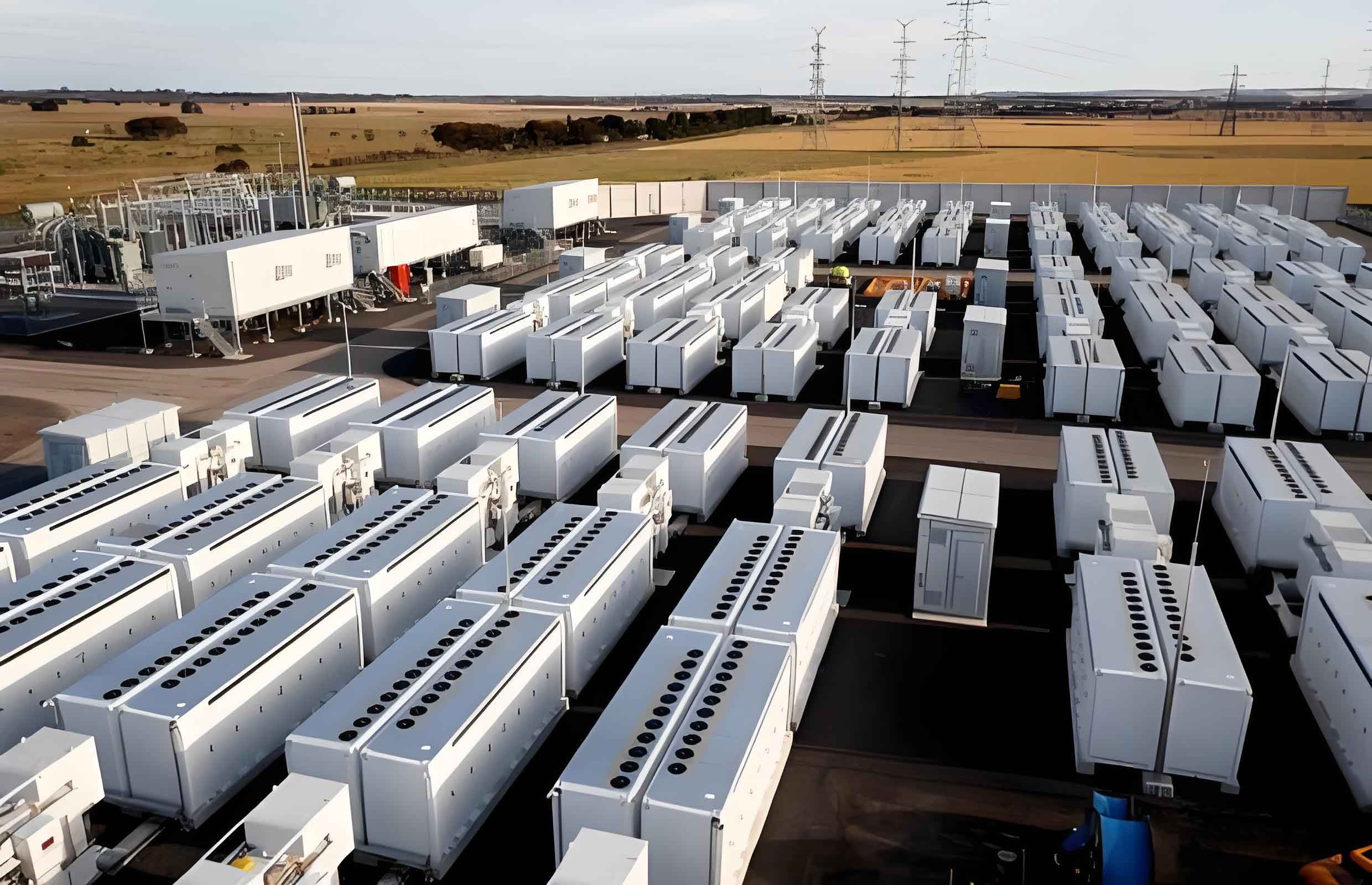
I model the battery energy storage system using lithium iron phosphate chemistry, which is widely deployed due to its safety characteristics, long cycle life, and thermal stability. The state of charge represents the remaining energy in the battery relative to its rated capacity. I employ the open-circuit voltage method for state of charge estimation, which relies on the well-established relationship between the battery’s open-circuit voltage and its state of charge. The fundamental relationship is expressed as:
$$ Q_{SOC} = \frac{E_r – E_d}{E_r} $$
where \(E_r\) is the rated energy capacity of the battery energy storage system and \(E_d\) is the discharged energy. The open-circuit voltage method requires a pre-characterized mapping function derived from experimental data, relating the measured open-circuit voltage to the corresponding state of charge. This method provides reliable estimates under steady-state conditions and is commonly used in practical battery energy storage system applications. During operation, the state of charge changes dynamically based on the power exchanged with the grid. As the battery charges, the state of charge increases; as it discharges, the state of charge decreases. Maintaining the state of charge within a moderate range is crucial for preserving battery health and ensuring the system can respond to both under-frequency and over-frequency events.
I define the physical model of primary frequency regulation with battery energy storage systems. The conventional frequency regulation characteristic from synchronous generators is represented by a droop curve with a defined dead band. Battery energy storage systems can emulate this behavior through a virtual droop coefficient, but with the flexibility to adjust their response based on the state of charge. The power output from the battery energy storage system is proportional to the frequency deviation:
$$ \Delta P_B = -K_B \Delta f $$
where \(\Delta f\) is the frequency deviation from the nominal value and \(K_B\) is the virtual droop coefficient. The sign convention is such that when frequency drops (\(\Delta f < 0\)), the battery energy storage system injects power (\(\Delta P_B > 0\)), and when frequency rises (\(\Delta P_B < 0\)), the battery absorbs power. The virtual droop coefficient is not constant; it adapts based on the state of charge and the operating region relative to the frequency dead band. I define two components of the virtual droop coefficient: \(K_c\) for charging (absorbing power when frequency is high) and \(K_d\) for discharging (injecting power when frequency is low). The overall coefficient is:
$$ K_B = \begin{cases} K_c, & \Delta f > 0 \\ K_d, & \Delta f < 0 \end{cases} $$
My control strategy incorporates two distinct operating regions based on the frequency deviation. Outside the frequency dead band, the primary objective is to provide frequency regulation, but the intensity of response is modulated by the state of charge to prevent the battery from operating at extreme levels. When the state of charge is low and the system requires discharging (frequency low), the discharging coefficient is limited to avoid further depletion. Conversely, when the state of charge is high and the system requires charging (frequency high), the charging coefficient is limited to avoid overcharging. Specifically, outside the dead band, the coefficients are determined as:
$$ K_c = \begin{cases} K_{\max}, & Q_{SOC,i} < Q_{SOC,\max} \\ 0, & Q_{SOC,i} \geq Q_{SOC,\max} \end{cases} $$
$$ K_d = \begin{cases} K_{\max}, & Q_{SOC,i} > Q_{SOC,\min} \\ 0, & Q_{SOC,i} \leq Q_{SOC,\min} \end{cases} $$
where \(K_{\max}\) is the maximum virtual droop coefficient, \(Q_{SOC,\min}\) and \(Q_{SOC,\max}\) are the minimum and maximum allowable state of charge values, and \(Q_{SOC,i}\) is the current state of charge. This formulation ensures that when the state of charge reaches its limits, the battery energy storage system reduces its participation in the direction that would exacerbate the extreme state of charge, effectively protecting itself while still contributing to frequency regulation when possible.
Inside the frequency dead band, the frequency deviation is small and does not require immediate regulation. In this region, my strategy prioritizes recovering the state of charge to a healthy reference range. I define two thresholds, \(Q_{SOC,l}\) and \(Q_{SOC,h}\), representing low and high state of charge boundaries within the permissible range. When the state of charge falls below \(Q_{SOC,l}\), the battery energy storage system charges to increase its state of charge, even though the frequency is within the dead band. When the state of charge rises above \(Q_{SOC,h}\), the system discharges to reduce its state of charge. The charging and discharging coefficients inside the dead band are:
$$ K_c = \begin{cases} K_{\max}, & Q_{SOC,i} \leq Q_{SOC,l} \\ 0, & Q_{SOC,i} > Q_{SOC,l} \end{cases} $$
$$ K_d = \begin{cases} K_{\max}, & Q_{SOC,i} \geq Q_{SOC,h} \\ 0, & Q_{SOC,i} < Q_{SOC,h} \end{cases} $$
This mechanism ensures that the battery energy storage system maintains its state of charge in a favorable range, typically around a reference value of 0.5, so that it is prepared for future frequency events requiring both upward and downward regulation. The thresholds \(Q_{SOC,l}\) and \(Q_{SOC,h}\) are set to 0.45 and 0.55, respectively, creating a narrow dead band for state of charge itself. When the state of charge is between 0.45 and 0.55, the battery energy storage system remains idle during dead band periods, conserving energy and reducing wear.
I summarize the control logic for different combinations of frequency deviation and state of charge conditions in the following table.
| Frequency Region | State of Charge Condition | Charging Coefficient \(K_c\) | Discharging Coefficient \(K_d\) | Action |
|---|---|---|---|---|
| Outside dead band (\(\| \Delta f \| > \Delta f_d\)) | Low (\(Q_{SOC} < Q_{SOC,\min}\)) | \(K_{\max}\) | 0 | Charge only; protect from further discharge |
| Outside dead band | High (\(Q_{SOC} > Q_{SOC,\max}\)) | 0 | \(K_{\max}\) | Discharge only; protect from overcharge |
| Outside dead band | Normal (\(Q_{SOC,\min} \leq Q_{SOC} \leq Q_{SOC,\max}\)) | \(K_{\max}\) | \(K_{\max}\) | Full bidirectional response |
| Inside dead band (\(\| \Delta f \| \leq \Delta f_d\)) | Low (\(Q_{SOC} \leq Q_{SOC,l}\)) | \(K_{\max}\) | 0 | Charge to recover state of charge |
| Inside dead band | High (\(Q_{SOC} \geq Q_{SOC,h}\)) | 0 | \(K_{\max}\) | Discharge to reduce state of charge |
| Inside dead band | Healthy (\(Q_{SOC,l} < Q_{SOC} < Q_{SOC,h}\)) | 0 | 0 | Idle; maintain standby |
To quantitatively assess the performance of my proposed strategy, I define two evaluation metrics. The first metric measures the effectiveness of frequency regulation through the root mean square of frequency deviations. The second metric evaluates how well the state of charge is maintained near a target reference value, which I set to 0.5. These metrics are calculated over the simulation period with \(n\) samples.
$$ X = \sqrt{\frac{1}{n}\sum_{i=1}^n \Delta f_i^2} $$
$$ Y = \sqrt{\frac{1}{n}\sum_{i=1}^n (Q_{SOC,i} – Q_{SOC,k})^2} $$
where \(\Delta f_i\) is the frequency deviation at sample \(i\), \(Q_{SOC,i}\) is the state of charge at sample \(i\), and \(Q_{SOC,k} = 0.5\) is the reference state of charge. A lower value of \(X\) indicates better frequency regulation, while a lower value of \(Y\) indicates better state of charge maintenance.
I conduct simulation studies on a representative regional power grid to validate the proposed control strategy for battery energy storage systems. The grid has a rated capacity of 150 MW, with 45 MW of wind power representing 30% penetration. The battery energy storage system has a rated power of 15 MW and a rated energy capacity of 2 MWh. The primary frequency dead band is set to ±0.033 Hz. The complete simulation parameters are summarized in the following table.
| Parameter | Value |
|---|---|
| Rated capacity of power grid \(S_b\) | 150 MW |
| Wind power capacity | 45 MW (30%) |
| Rated energy capacity of battery energy storage system \(E_r\) | 2 MWh |
| Rated power of battery energy storage system \(P_r\) | 15 MW |
| Frequency dead band \(\Delta f_d\) | Upper limit: 0.033 Hz; Lower limit: -0.033 Hz |
The control strategy parameters are defined with minimum and maximum state of charge values to protect the battery energy storage system, along with thresholds for initiating state of charge recovery inside the dead band.
| Parameter | Symbol | Value |
|---|---|---|
| Minimum state of charge | \(Q_{SOC,\min}\) | 0.1 |
| Low state of charge threshold | \(Q_{SOC,l}\) | 0.45 |
| High state of charge threshold | \(Q_{SOC,h}\) | 0.55 |
| Maximum state of charge | \(Q_{SOC,\max}\) | 0.9 |
| Maximum virtual droop coefficient | \(K_{\max}\) | 20 |
I perform the simulation over a 15-minute period with a sampling interval of 1 second. The battery energy storage system initial state of charge is set to 0.5. During the simulation, the power system experiences frequency deviations due to fluctuating wind power output and load changes. The frequency deviation curve demonstrates that my proposed strategy effectively dampens frequency excursions. When frequency drops below the dead band, the battery energy storage system injects power proportionally to the deviation, limited only when the state of charge approaches its minimum. Conversely, when frequency rises, the battery absorbs power. Inside the dead band, the system activates state of charge recovery when the state of charge deviates from the 0.45 to 0.55 range. The simulation shows that the battery energy storage system initially discharges, causing a decrease in state of charge, followed by a charging period that restores the state of charge to around 0.64, which is within a healthy range. The state of charge remains within the predefined limits of 0.1 and 0.9 throughout the simulation, demonstrating effective protection against extreme operation.
I compare the performance of the proposed control strategy with a base case that does not include any battery energy storage systems. The evaluation metrics are calculated for both cases over the same simulation period.
| Control Strategy | Frequency Deviation RMS \(X\) | State of Charge Deviation RMS \(Y\) |
|---|---|---|
| Proposed strategy with battery energy storage systems | 0.0078 | 0.0852 |
| No battery energy storage system | 0.0233 | — |
The results clearly show that the inclusion of battery energy storage systems with my proposed control strategy significantly reduces the frequency deviation root mean square from 0.0233 to 0.0078, indicating better frequency regulation. The state of charge deviation root mean square of 0.0852 indicates that the state of charge stays relatively close to the reference value of 0.5, with the system successfully recovering from temporary excursions. This demonstrates that my strategy not only improves grid frequency stability but also maintains the battery energy storage system in a condition that ensures continued availability for future regulation events.
The proposed control strategy offers several advantages over conventional approaches for battery energy storage systems. First, by adapting the virtual droop coefficient based on state of charge, the strategy prevents the battery from becoming unavailable at critical moments. Second, the explicit state of charge recovery mechanism inside the dead band ensures that the battery energy storage system operates near its optimal state of charge range, extending its cycle life and maintaining consistent performance. Third, the strategy uses simple threshold-based logic and requires minimal computational resources, making it suitable for real-time implementation in battery energy storage system controllers. The simulation results confirm that the strategy effectively addresses the challenge of state of charge management while providing high-quality frequency regulation services.
I also analyze the sensitivity of the control strategy to key parameters. The choice of \(K_{\max}\) influences the aggressiveness of the regulation response. A higher \(K_{\max}\) provides faster frequency correction but may cause larger state of charge swings. The thresholds \(Q_{SOC,l}\) and \(Q_{SOC,h}\) determine how aggressively the battery energy storage system recovers its state of charge. Narrower thresholds around 0.5 lead to more frequent recovery actions but maintain a tighter state of charge range. The values chosen in this study strike a balance between regulation performance and state of charge management. In practical applications, these parameters can be tuned based on specific system requirements and battery energy storage system characteristics.
Furthermore, I extend the analysis to consider different initial state of charge conditions. When the battery energy storage system starts with a low state of charge (e.g., 0.2), my strategy prioritizes charging during frequency dead band periods and limits discharging during over-frequency events until the state of charge recovers to the healthy range. Conversely, when starting with a high state of charge (e.g., 0.8), the strategy prioritizes discharging during dead band periods and limits charging during under-frequency events. In both cases, the strategy successfully guides the state of charge back toward the 0.5 reference value while still providing useful frequency regulation within the physical constraints of the battery energy storage system. This adaptive behavior is a key strength of my approach compared to fixed droop control methods that do not consider state of charge.
I also discuss the implications for grid integration and operational planning. The proposed strategy enables battery energy storage systems to provide reliable primary frequency regulation without requiring manual intervention or complex forecasting. This supports higher penetrations of renewable energy by providing inertia-like support and fast frequency response. The state of charge management ensures that the battery energy storage system is always ready to respond in both directions, which is particularly important for grids with high solar or wind variability. System operators can dispatch battery energy storage systems with confidence, knowing that the control algorithm autonomously handles state of charge constraints while delivering the required frequency regulation performance.
In conclusion, I have developed a comprehensive control strategy for battery energy storage systems participating in primary frequency regulation that explicitly considers the state of charge. The strategy uses distinct control actions inside and outside the frequency dead band to balance the dual objectives of frequency regulation and state of charge management. Through simulation studies on a representative power system with high wind penetration, I demonstrated that my strategy significantly reduces frequency deviations compared to the case without battery energy storage systems. The state of charge is maintained within healthy limits and restored toward a reference value when deviations occur. The proposed approach addresses a critical limitation of battery energy storage systems, their finite energy capacity, by intelligently managing the available energy to maximize sustainable participation in frequency regulation. This work provides a practical and effective solution for integrating battery energy storage systems into modern power systems while ensuring both grid stability and battery longevity.