
In the rapidly evolving landscape of portable electronics, electric vehicles, and renewable energy storage, the demand for high-performance energy storage systems has surged. Among these, the lithium ion battery stands out as a cornerstone technology due to its high energy density, long cycle life, and environmental friendliness. The anode material plays a critical role in determining the overall performance of a lithium ion battery, and natural graphite has emerged as a prominent candidate owing to its abundance, cost-effectiveness, and favorable electrochemical properties. However, natural graphite in its raw form exhibits anisotropic characteristics, layer exfoliation tendencies, and significant irreversible capacity, which hinder its direct application in lithium ion batteries. To address these challenges, spherical modification of graphite has been developed to enhance its electrochemical performance. This study focuses on the preparation of anode material from fine flake graphite sourced from Inner Mongolia, detailing the processes of spheroidization, purification, coating, and carbonization, followed by comprehensive electrochemical evaluation for lithium ion battery applications.
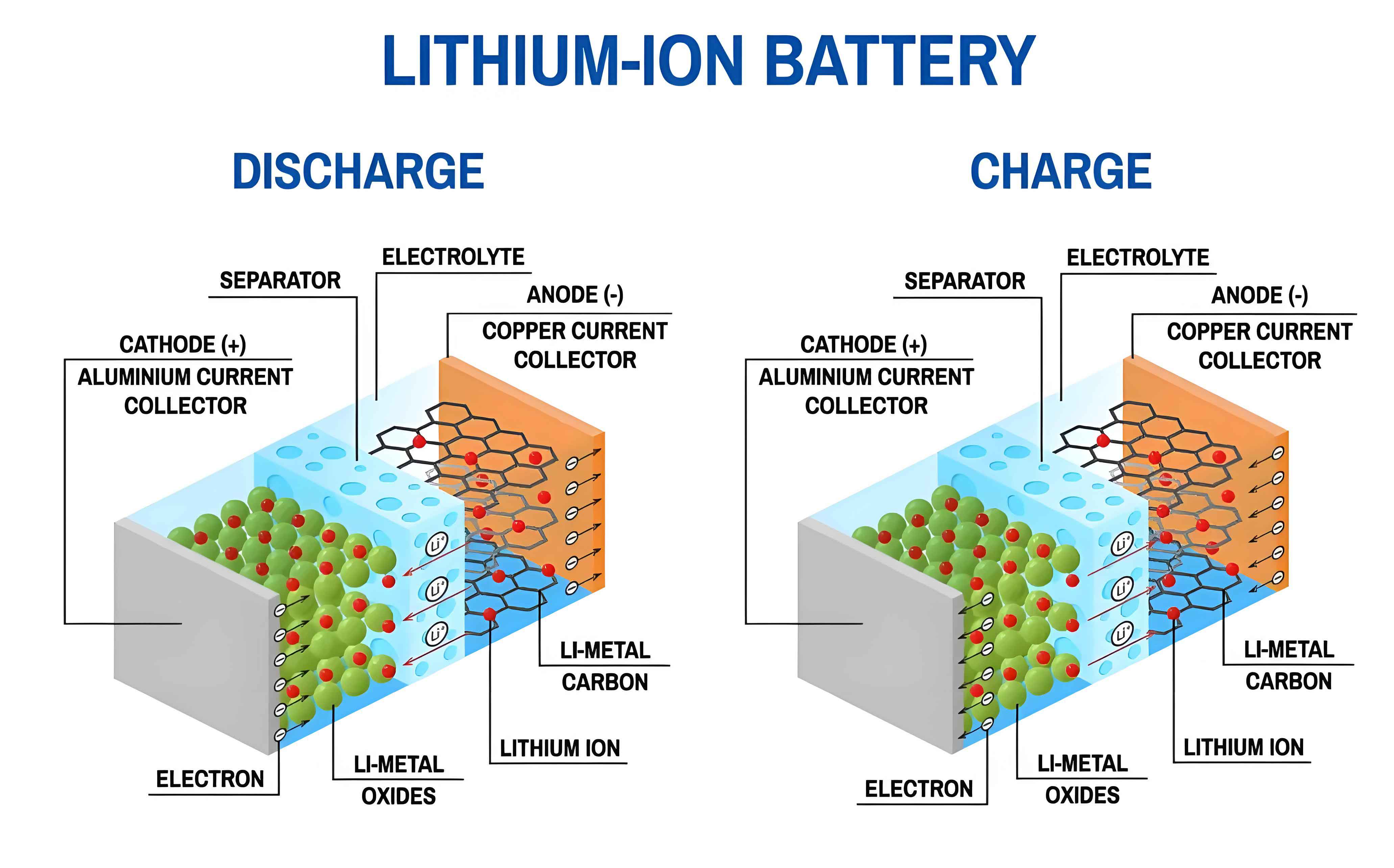
The inherent limitations of natural graphite, such as its flaky morphology and impurities, necessitate post-processing to meet the stringent requirements of lithium ion battery anodes. Spherical graphite offers advantages like reduced specific surface area, controllable particle size, high charge-discharge capacity, and improved cycle stability, making it an ideal anode material for lithium ion batteries. In this work, we employ a vortex micro-pulverizer for spheroidization, mixed acid purification, and pitch coating to transform fine flake graphite into high-quality anode material. The electrochemical performance is rigorously tested to validate its suitability for lithium ion battery systems. Through this research, we aim to contribute to the optimization of graphite-based anodes, thereby supporting the advancement of lithium ion battery technology.
The raw material used in this study is fine flake graphite from Inner Mongolia, with a median particle size (D50) of 40.3 μm. Initial characterization revealed a fixed carbon content of 95.61%, with impurities primarily consisting of aluminosilicates and iron oxides, as identified by X-ray diffraction (XRD) and X-ray fluorescence (XRF) analyses. The physical properties, including tap density and specific surface area, were evaluated to assess the suitability for spheroidization. The flake graphite exhibited a tap density of 0.46 g/cm³ and a specific surface area of 2.8 m²/g, with a morphology characterized by thick flakes and low aspect ratio, which is conducive to spherical formation during mechanical processing.
The spheroidization process was carried out using a QCI vortex micro-pulverizer, which integrates crushing and shaping stages. The principle involves the mechanical action of shearing and friction to round the sharp edges of graphite flakes, followed by rolling and compaction into spherical or near-spherical particles. The process parameters, such as rotor speed and airflow rate, were optimized to achieve high spheroidization efficiency. Two spherical products were obtained: a larger spherical product with D50 of 16.42 μm and a smaller one with D50 of 11.68 μm. The tap density increased significantly from 0.46 g/cm³ to 0.95 g/cm³ and 0.80 g/cm³ for the large and small spheres, respectively. The total spheroidization rate reached 50.48%, indicating effective transformation of the fine flake graphite.
To quantify the spheroidization efficiency, we define the spheroidization rate (SR) as the mass percentage of spherical product relative to the total feed mass. This can be expressed as:
$$ SR = \frac{M_s}{M_f} \times 100\% $$
where \( M_s \) is the mass of spherical product and \( M_f \) is the mass of feed material. In our experiments, the spheroidization process involved multiple crushing and shaping cycles, as summarized in Table 1.
| Processing Stage | Product ID | D10 (μm) | D50 (μm) | D90 (μm) | Tap Density (g/cm³) |
|---|---|---|---|---|---|
| Initial Feed | Raw Graphite | 9.771 | 40.30 | 107.1 | 0.46 |
| Crushing (6 cycles) | Intermediate | 7.164 | 19.09 | 54.00 | 0.45 |
| Shaping (Large Sphere) | Large Sphere | 9.360 | 16.42 | 29.02 | 0.95 |
| Shaping (Small Sphere) | Small Sphere | 6.763 | 11.68 | 19.29 | 0.80 |
The particle size distribution shifts during spheroidization can be modeled using a log-normal distribution function:
$$ f(d) = \frac{1}{d \sigma \sqrt{2\pi}} \exp\left(-\frac{(\ln d – \mu)^2}{2\sigma^2}\right) $$
where \( d \) is the particle diameter, \( \mu \) is the mean, and \( \sigma \) is the standard deviation of the natural logarithm of particle size. This model helps in understanding the narrowing of size distribution after spheroidization, which is crucial for consistent performance in lithium ion battery anodes.
Following spheroidization, the spherical graphite products were subjected to purification using a mixed acid method to remove residual impurities. The fixed carbon content of the spherical products was 95.57% for the large sphere and 95.65% for the small sphere, which is below the required 99.95% for lithium ion battery anodes. The mixed acid, comprising hydrofluoric acid (HF) and hydrochloric acid (HCl), effectively dissolves silicate and oxide impurities. The purification conditions were optimized through a series of experiments varying liquid-to-solid ratio, HF concentration, reaction temperature, and time. The optimized parameters are presented in Table 2.
| Parameter | Large Sphere Product | Small Sphere Product |
|---|---|---|
| Liquid-to-Solid Ratio (mL/g) | 2.5 | 2.0 |
| HF Concentration (vol%) | 50 | 40 |
| Reaction Temperature (°C) | 60 | 60 |
| Reaction Time (h) | 3 | 2 |
| Fixed Carbon Content After Purification (%) | 99.95 | 99.97 |
The purification efficiency can be described by the removal rate of impurities, which is governed by the reaction kinetics. For a first-order reaction, the impurity concentration \( C \) over time \( t \) is given by:
$$ C = C_0 \exp(-kt) $$
where \( C_0 \) is the initial impurity concentration and \( k \) is the rate constant dependent on temperature and acid concentration. This model underscores the importance of optimizing reaction conditions to achieve high-purity graphite for lithium ion battery applications.
After purification, the high-purity spherical graphite was coated with pitch to form an amorphous carbon layer, which enhances the electrochemical performance by repairing surface defects and reducing specific surface area. The coating process involved dissolving pitch in tetrahydrofuran, mixing with graphite, and evaporating the solvent, followed by carbonization at 700°C under nitrogen atmosphere. The coating thickness was approximately 50 nm for the large sphere and 14 nm for the small sphere, as confirmed by transmission electron microscopy (TEM). The coated graphite exhibited a smooth and continuous surface, which is beneficial for stable solid-electrolyte interphase (SEI) formation in lithium ion batteries.
The structural and morphological characterization of the purified and coated graphite was performed using scanning electron microscopy (SEM), XRD, and XRF. The XRD patterns showed only graphite peaks, with no detectable impurity phases, indicating effective purification. The elemental analysis via XRF revealed trace impurities at levels below 10 ppm for key elements like Fe, Al, and Si, meeting the purity standards for lithium ion battery anodes. The internal structure of the spherical particles, observed through focused ion beam SEM, consisted of stacked graphite layers with some internal voids, more pronounced in the small sphere product. These structural features influence the lithium ion intercalation kinetics and overall battery performance.
To evaluate the electrochemical performance, coin cells (CR2032 type) were assembled using the coated spherical graphite as the anode, lithium metal as the counter electrode, and a LiPF6-based electrolyte. The charge-discharge tests were conducted at 0.1C rate (36 mA/g) within a voltage range of 0.001–3.0 V. The initial discharge specific capacities were 366.60 mAh/g for the large sphere and 364.30 mAh/g for the small sphere, close to the theoretical capacity of graphite (372 mAh/g). The initial coulombic efficiencies were 93.40% and 92.32%, respectively, indicating low irreversible capacity loss. The capacity retention after 30 cycles exceeded 99% for both products, demonstrating excellent cycling stability for lithium ion battery applications.
The electrochemical behavior can be analyzed using models for lithium ion intercalation. The discharge capacity \( Q \) is related to the lithium ion concentration in graphite, given by:
$$ Q = nF \int_{0}^{t} I \, dt $$
where \( n \) is the number of electrons transferred, \( F \) is Faraday’s constant, and \( I \) is the current. The high capacity retention suggests minimal structural degradation during cycling, a key attribute for long-life lithium ion batteries.
Further analysis of the charge-discharge curves reveals typical plateaus associated with lithium intercalation stages in graphite. The voltage profile during discharge shows a rapid drop from 1.2 V to 0.2 V, followed by a prolonged plateau, corresponding to SEI formation and staged intercalation. This behavior is consistent with high-quality graphite anodes for lithium ion batteries. The small sphere product exhibited a slightly higher initial voltage drop, possibly due to its larger internal voids affecting ion diffusion.
To provide a comprehensive summary, Table 3 compares the key electrochemical parameters of the spherical graphite anodes.
| Parameter | Large Sphere Anode | Small Sphere Anode |
|---|---|---|
| Initial Discharge Capacity (mAh/g) | 366.60 | 364.30 |
| Initial Charge Capacity (mAh/g) | 392.5 | 394.6 |
| Irreversible Capacity (mAh/g) | 25.9 | 30.3 |
| Initial Coulombic Efficiency (%) | 93.40 | 92.32 |
| Capacity Retention After 30 Cycles (%) | 99.40 | 99.15 |
The cycling stability is a critical metric for lithium ion battery anodes, as it reflects the ability to maintain capacity over repeated charge-discharge cycles. The high retention rates observed here are attributed to the spherical morphology, which minimizes volume changes, and the carbon coating, which stabilizes the electrode-electrolyte interface. These factors collectively enhance the durability of the lithium ion battery.
In addition to the electrochemical tests, we explored the influence of spheroidization parameters on the final anode performance. The relationship between tap density and spheroidization degree can be expressed empirically as:
$$ \rho_t = \rho_0 + k_s \cdot SR $$
where \( \rho_t \) is the tap density after spheroidization, \( \rho_0 \) is the initial tap density, \( k_s \) is a proportionality constant, and SR is the spheroidization rate. This linear correlation highlights the importance of achieving high spheroidization for dense packing in lithium ion battery electrodes.
The purification process also plays a vital role in determining the electrochemical performance. Impurities such as iron and silicon can catalyze side reactions, leading to capacity fading in lithium ion batteries. The mixed acid method effectively reduces these impurities to trace levels, as quantified by the purification efficiency \( P \):
$$ P = \left(1 – \frac{C_f}{C_i}\right) \times 100\% $$
where \( C_i \) and \( C_f \) are the initial and final impurity concentrations, respectively. For our products, \( P \) exceeded 99.9%, ensuring high purity for reliable lithium ion battery operation.
Looking ahead, the development of advanced anode materials for lithium ion batteries continues to be a dynamic field. Our work demonstrates that fine flake graphite, often underutilized due to its small size, can be transformed into high-performance spherical graphite through mechanical spheroidization and chemical purification. The resulting anode material exhibits excellent capacity, efficiency, and cycle life, making it a promising candidate for next-generation lithium ion batteries. Future research could focus on scaling up the process, optimizing the coating thickness for enhanced rate capability, and integrating with other battery components for full-cell testing.
In conclusion, this study successfully prepared anode material from fine flake graphite for lithium ion batteries. The spheroidization process achieved a total spheroidization rate of 50.48%, with tap density improvements up to 0.95 g/cm³. Purification via mixed acid raised the fixed carbon content above 99.95%, and pitch coating further enhanced the electrochemical properties. The anodes delivered high initial discharge capacities (over 364 mAh/g) and outstanding cycle stability (over 99% retention after 30 cycles). These results underscore the potential of fine flake graphite as a valuable resource for lithium ion battery applications, contributing to the sustainable advancement of energy storage technologies.