
As a researcher deeply involved in the development of energy storage systems for electric mobility, I have focused my efforts on understanding and predicting the longevity of lithium iron phosphate (LiFePO4) batteries. The lifespan of a LiFePO4 battery is not merely a specification; it is a critical performance metric that directly impacts the total cost of ownership, reliability, and sustainability of electric vehicles (EVs). The gradual decline in capacity and power over time and use—a process we term “aging”—is inevitable. However, by deconstructing this process through rigorous modeling and accelerated testing, we can predict the service life of a LiFePO4 battery with remarkable accuracy. This predictive capability is fundamental for battery management system (BMS) design, warranty assessment, and second-life applications. In this article, I will share insights from our modeling work, which synergizes mechanistic understanding with empirical data, heavily relying on the well-established Arrhenius equation to quantify aging rates under varied stress conditions.
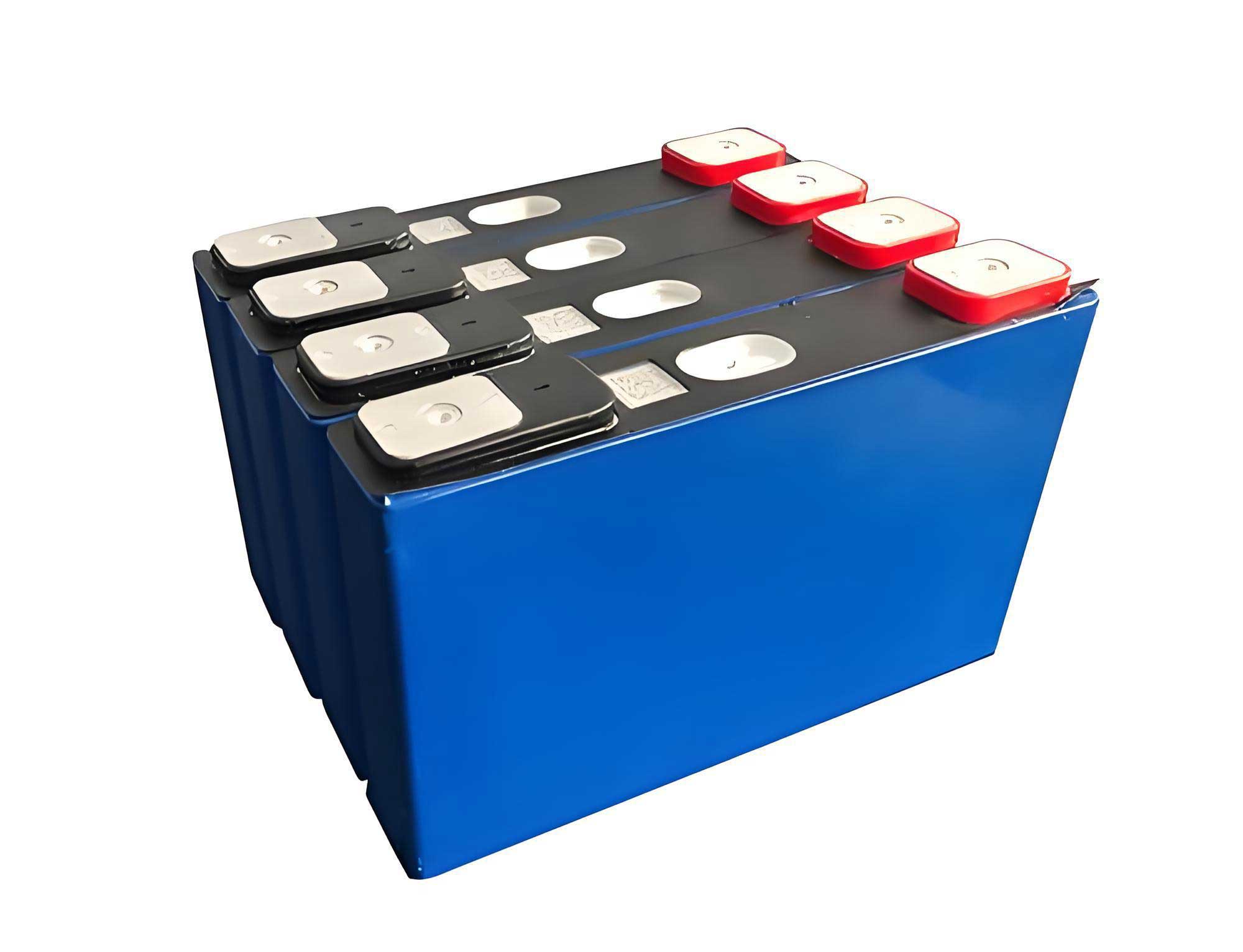
Deconstructing LiFePO4 Battery Aging: Calendar vs. Cycle Aging
The degradation of a LiFePO4 battery manifests through a gradual loss of accessible lithium inventory and active electrode material. We categorize this into two primary, often concurrent, mechanisms: calendar aging and cycle aging. Calendar aging occurs when the LiFePO4 battery is at rest, typically during storage. Even without any external current flow, parasitic reactions proceed slowly, consuming cyclable lithium ions. The dominant process is the continuous growth and modification of the Solid Electrolyte Interphase (SEI) layer on the graphite anode. This layer, while essential for initial stability, thickens over time, irreversibly trapping lithium ions. The rate of this chemical degradation is profoundly sensitive to the storage temperature and the battery’s State of Charge (SOC).
Cycle aging, on the other hand, is driven by the repeated insertion and extraction of lithium ions during charge and discharge operations. Each cycle induces mechanical stress on the electrode particles (leading to particle cracking and loss of electrical contact), promotes further SEI growth due to periodic volume changes of the anode, and may cause undesired side reactions at elevated voltages or temperatures. The intensity of cycle aging is governed by operational stressors: temperature (T), charge/discharge current rate (C-rate), depth of discharge (DOD), and the upper cut-off voltage.
For a LiFePO4 battery, the relatively stable olivine structure of the cathode offers excellent resistance to cycling stress compared to layered oxide chemistries. Therefore, the anode-side degradation, primarily SEI-related, is often the life-limiting factor. Accurately modeling a LiFePO4 battery’s lifespan requires separately characterizing and then combining the effects of these two aging modes.
Mathematical Foundation: The Arrhenius-Based Aging Model
To translate the physical-chemical aging processes into a quantifiable prediction tool, we employ a semi-empirical model anchored in the Arrhenius equation. This approach links the rate of a chemical reaction—in our case, capacity loss—to the operating temperature. The core model for capacity loss (Qloss) is expressed as:
$$
Q_{\text{loss}} = B \cdot \exp\left(-\frac{E_a + \alpha \cdot (C_{\text{rate}})}{R \cdot T}\right) \cdot (A_h)^z
$$
Where:
- $Q_{\text{loss}}$ is the percentage of capacity lost (%)
- $B$ is the pre-exponential factor (dimensionless)
- $E_a$ is the activation energy (kJ/mol)
- $\alpha$ is a coefficient accounting for the rate dependency of the activation barrier (e.g., 370.3 in some empirical fits)
- $C_{\text{rate}}$ is the charge or discharge current rate (C)
- $R$ is the universal gas constant (8.314 J/mol·K)
- $T$ is the absolute temperature (K)
- $A_h$ is the total charge throughput, or the cumulative amp-hours processed by the LiFePO4 battery (Ah)
- $z$ is the power-law time exponent, typically between 0.5 and 1.
The total charge throughput $A_h$ for cycle aging is calculated as:
$$
A_h = N \cdot \text{DOD} \cdot C_{\text{nom}}
$$
where $N$ is the number of full-equivalent cycles, DOD is the depth of discharge (as a fraction), and $C_{\text{nom}}$ is the nominal capacity of the LiFePO4 battery.
The State of Health (SOH), a key metric for life prediction, is defined as:
$$
\text{SOH} = \frac{C_{\text{current}}}{C_{\text{nom}}} \times 100\%
$$
where $C_{\text{current}}$ is the present maximum available capacity. End-of-life for an EV LiFePO4 battery is typically declared at SOH = 80%.
By taking the logarithm of the core model, we linearize the temperature dependence:
$$
\ln(Q_{\text{loss}}) = -\frac{E_a}{R} \cdot \frac{1}{T} + \ln(B) + z \cdot \ln(A_h)
$$
This form allows us to extract the activation energy $E_a$ from accelerated aging tests at different temperatures.
Quantifying Calendar Aging in LiFePO4 Batteries
Our investigation into calendar aging for a typical LiFePO4 battery involved storing cells at different constant temperatures and initial SOC levels for extended periods. The capacity fade was monitored periodically. The results underscore the critical influence of both storage SOC and temperature.
| Storage Temperature (°C) | Initial SOC 20% (2-year fade %) | Initial SOC 50% (2-year fade %) | Initial SOC 80% (2-year fade %) |
|---|---|---|---|
| 0 | ~0.5% | ~1.2% | ~2.5% |
| 25 | ~1.8% | ~4.5% | ~8.5% |
| 40 | ~3.5% | ~9.0% | ~18.0% |
| 55 | ~7.0% | ~20.0% | ~35.0% |
The data reveals that high SOC storage significantly accelerates degradation, especially at elevated temperatures. This is consistent with the theory that a higher lithium concentration in the graphite anode (high SOC) increases the thermodynamic driving force for parasitic reactions that thicken the SEI layer. For long-term storage of a LiFePO4 battery, our recommendation is to maintain a low to moderate SOC (e.g., 30-50%) in a cool environment.
Analyzing Cycle Aging Factors for LiFePO4 Batteries
Cycle aging tests were conducted under controlled stress factors. The Arrhenius model parameters were fitted to the experimental data to quantify the impact of each factor.
1. Temperature Dominance
Holding C-rate (1C) and DOD (60%) constant, temperature was varied. The results starkly highlight the Arrhenius relationship.
| Cycling Temperature (°C) | Estimated Cycles to 80% SOH | Relative Lifespan vs. 25°C |
|---|---|---|
| 25 | ~2,400 | 100% |
| 35 | ~1,500 | 62.5% |
| 45 | ~900 | 37.5% |
| 55 | ~500 | 20.8% |
Every 10°C rise approximately halves the cycle life of the LiFePO4 battery in this temperature range. This underscores the paramount importance of an effective thermal management system in an EV to keep the LiFePO4 battery pack within an optimal, moderate temperature window.
2. Impact of Charge/Discharge Rate (C-rate)
At a fixed temperature of 25°C and 60% DOD, varying the C-rate reveals the mechanical and kinetic stresses induced by high currents.
| Charge/Discharge C-rate | Estimated Cycles to 80% SOH | Primary Degradation Accelerator |
|---|---|---|
| 0.5C | ~3,200 | Minimal stress |
| 1C | ~2,400 | Moderate SEI growth |
| 2C | ~1,400 | Particle cracking, Li plating risk |
| 3C | ~800 | Severe kinetic limitations, heat generation |
High C-rates increase polarization, potentially driving the anode potential into the lithium plating region, which causes rapid and irreversible capacity loss. For maximizing the life of a LiFePO4 battery, operating at moderate C-rates is crucial.
3. Effect of Depth of Discharge (DOD)
Cycling at 25°C and 1C, but with varying DOD, shows the relationship between the amount of active material utilized per cycle and aging.
| Cycle Depth of Discharge (DOD) | Estimated Cycles to 80% SOH | Total Energy Throughput (Relative) |
|---|---|---|
| 20% (e.g., 80-60% SOC) | ~8,000 | ~1.0 |
| 50% (e.g., 90-40% SOC) | ~3,000 | ~0.94 |
| 80% (e.g., 90-10% SOC) | ~1,600 | ~0.85 |
| 100% (e.g., 100-0% SOC) | ~1,000 | ~0.80 |
While shallow cycling dramatically increases cycle count, the total energy delivered over the battery’s life may be similar or even lower. There is a trade-off between cycle life and usable energy per cycle that must be optimized for the specific EV application. Limiting the maximum DOD for daily use can significantly extend the life of the LiFePO4 battery.
Integrated Life Prediction for EV Duty Cycles
The real-world duty cycle of an EV LiFePO4 battery is a complex sequence of variable-power driving (discharge), regenerative braking (partial charge), and full charging events, interspersed with parking periods. To predict lifespan, we construct a dynamic model that processes a drive cycle profile (e.g., WLTC, EPA FTP-75).
Step 1: Drive Cycle Discretization. The power demand profile $P(t)$ is converted into a current profile $I(t)$ for the LiFePO4 battery pack, considering pack voltage $V(t)$. This yields an instantaneous C-rate profile, $C_{\text{rate}}(t)$.
$$
C_{\text{rate}}(t) = \frac{I(t)}{C_{\text{nom}}}
$$
Step 2: SOC Tracking. The battery SOC is updated using the coulomb counting method:
$$
\text{SOC}(t+Δt) = \text{SOC}(t) – \frac{1}{3600 \cdot C_{\text{nom}}} \int_{t}^{t+Δt} I(\tau) d\tau
$$
Step 3: Incremental Aging Calculation. For each short time step $Δt$, we treat conditions as constant. The incremental capacity loss $ΔQ_{\text{loss}}$ is calculated using a differential form of the aging model. For cycle aging during driving/charging:
$$
ΔQ_{\text{loss, cycle}} = B \cdot \exp\left(-\frac{E_a + \alpha \cdot C_{\text{rate}}(t)}{R \cdot T(t)}\right) \cdot z \cdot (A_h)^{z-1} \cdot ΔA_h
$$
where $ΔA_h = |I(t)| \cdot Δt / 3600$ is the incremental charge throughput.
For calendar aging during parking (when $I(t)=0$), the model simplifies, with $C_{\text{rate}}=0$, and $ΔA_h=0$, but time proceeds:
$$
ΔQ_{\text{loss, calendar}} = B_{\text{cal}} \cdot \exp\left(-\frac{E_{a,\text{cal}}}{R \cdot T(t)}\right) \cdot f(\text{SOC}(t)) \cdot (t_{\text{cal}})^{z_{\text{cal}}-1} \cdot Δt
$$
where $B_{\text{cal}}$, $E_{a,\text{cal}}$, and $z_{\text{cal}}$ are calendar aging-specific parameters, and $f(\text{SOC})$ is a function capturing the SOC dependence.
Step 4: Life Prediction Simulation. The simulation runs repeatedly over the drive cycle and associated parking times, accumulating $Q_{\text{loss}}$ until it reaches 20% (SOH=80%). The total elapsed time or total distance driven gives the predicted life.
We simulated a scenario with a daily usage profile: 50 km driven (using a mix of urban and highway driving), followed by a full overnight charge at 0.5C, and parking at ~50% SOC for the rest of the day. Ambient temperature was varied as a parameter.
| Annual Average Ambient Temperature (°C) | Predicted Service Life (Years to 80% SOH) | Predicted Total Driving Distance (km) | Dominant Aging Mode |
|---|---|---|---|
| 15 | 12.5 | ~225,000 | Mixed (Cycle slightly dominant) |
| 25 | 8.2 | ~150,000 | Mixed |
| 35 | 4.8 | ~87,000 | Cycle aging (accelerated by heat) |
| 45 (with passive cooling) | 2.5 | ~45,000 | Severe cycle & calendar aging |
| 45 (with active cooling to 30°C) | 7.0 | ~125,000 | Mixed |
Conclusions and Practical Implications for LiFePO4 Battery Longevity
The modeling and analysis presented lead to several concrete conclusions and recommendations for enhancing the service life of LiFePO4 batteries in electric vehicles:
1. Temperature is the Single Most Critical Factor. The Arrhenius dependence is unequivocal. Maintaining a LiFePO4 battery pack between 15°C and 30°C via an active thermal management system can double or triple its lifespan compared to operation in consistently hot climates without cooling.
2. Moderate Operational Parameters Extend Life. Avoiding consistently high C-rates (especially during charging) and limiting the daily depth of discharge can significantly reduce mechanical and electrochemical stress. The BMS should be configured to taper charge currents at high SOC and, if possible, encourage user settings that avoid 100% DOD daily.
3. Storage Matters. For extended periods of inactivity (e.g., airport parking), an EV’s BMS should ideally automatically discharge or maintain the LiFePO4 battery at a medium SOC level (around 50%) to minimize calendar aging.
4. Predictive Models Enable Optimized Design. The integrated aging model allows engineers to simulate the impact of different drive cycles, climate zones, and BMS strategies on pack life. This is invaluable for sizing the battery, designing the cooling system, and setting warranty terms.
In summary, the longevity of a LiFePO4 battery is not a fixed number but a system-dependent outcome. By understanding the underlying physics through models like the one described, and by implementing intelligent thermal and electrical management, we can unlock the full, durable potential of LiFePO4 battery technology, making electric vehicles more reliable and economical over their entire lifespan. The journey of a LiFePO4 battery from manufacture to retirement can be accurately charted, ensuring it delivers on its promise of safe, stable, and long-lasting energy storage.