
In the realm of electric vehicles, the integration of numerous lithium-ion batteries in series and parallel configurations is essential to meet the voltage and current demands of loads. However, after multiple charge-discharge cycles, inconsistencies among individual lithium-ion battery cells become amplified, adversely affecting the vehicle’s range and safety. A common solution to this issue is battery equalization, which aims to balance the state of charge across cells. Traditional equalization strategies often rely on terminal voltage as an indicator, but this approach faces challenges due to voltage fluctuations influenced by internal resistance and polarization effects. In this article, I propose a novel support-lead equalization control strategy that enhances equalization effectiveness by leveraging time-based metrics alongside voltage measurements. This strategy is designed specifically for lithium-ion battery packs in electric vehicles, addressing the limitations of conventional methods.
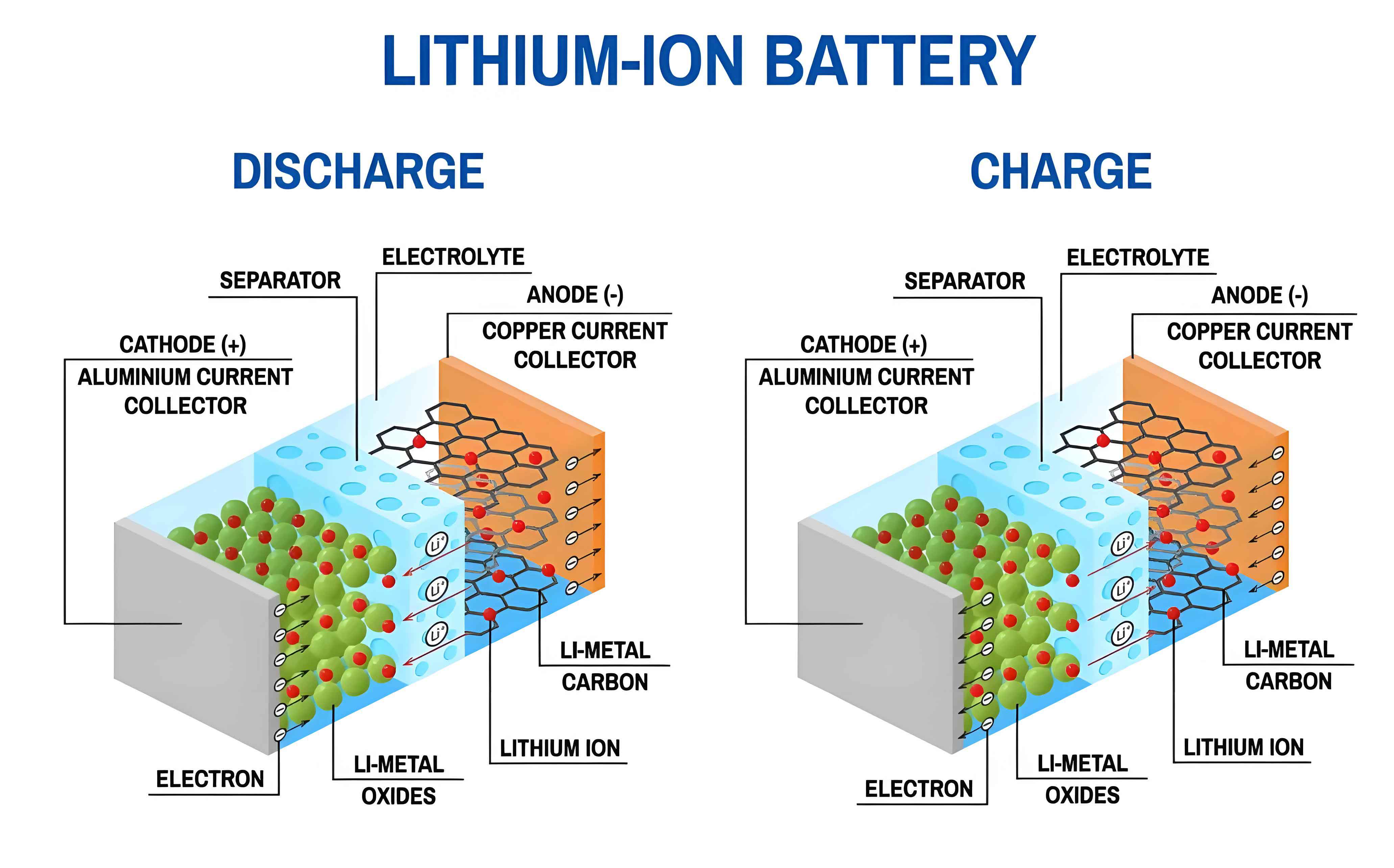
The performance of lithium-ion battery packs is critical for electric vehicle efficiency, and equalization plays a key role in maintaining consistency. Lithium-ion batteries are prone to degradation over time, leading to voltage disparities that can reduce overall pack capacity. To mitigate this, active equalization techniques are employed, but they often depend on voltage thresholds that may not accurately reflect the true state of charge. My research focuses on improving equalization by introducing a two-step process: pre-equalization and lead-equalization. This approach minimizes reliance on volatile voltage readings, thereby optimizing the longevity and reliability of lithium-ion battery systems. Throughout this discussion, I will emphasize the importance of lithium-ion battery management and how the proposed strategy can be implemented in real-world applications.
Battery equalization circuits are fundamental to this process. A typical active equalization circuit involves switches and a power source that selectively charges or discharges individual lithium-ion battery cells. For instance, in a series-connected pack, if a cell’s voltage is lower than others, switches are closed to allow an external power source to supply current to that cell. This basic topology is widely used, but its effectiveness hinges on the control strategy. The circuit I consider consists of multiple lithium-ion battery cells (e.g., C1 to C3) with corresponding switches (K1 to K6). When a cell requires equalization, the relevant switches are activated to direct current from the equalization source. This setup ensures that energy is transferred efficiently, but without intelligent control, it may lead to over-equalization or insufficient balancing. Thus, developing an advanced control strategy is paramount for enhancing the performance of lithium-ion battery packs.
The general equalization control strategy, commonly used in many systems, operates based on voltage differences. It involves measuring all cell voltages, calculating the maximum and minimum differences, and initiating equalization when the difference exceeds a threshold. For example, if the voltage difference between the highest and lowest lithium-ion battery cells reaches 50 mV, equalization begins for the low-voltage cell. The process continues until the difference falls below a set value, such as 25 mV. However, this method has inherent flaws. When equalization current is applied, the cell voltage rises due to ohmic drop and polarization, but after equalization stops, these effects dissipate, causing the voltage to drop back. This results in suboptimal equalization, as the true state of charge may not be aligned. The limitation stems from the dynamic nature of lithium-ion battery voltage, which is composed of open-circuit voltage (OCV), ohmic drop, and polarization voltage. The voltage can be expressed as:
$$ V(t) = OCV(SOC) + I \cdot R + U_p(t) $$
where \( V(t) \) is the terminal voltage, \( OCV(SOC) \) is the open-circuit voltage dependent on state of charge, \( I \) is the current, \( R \) is the internal resistance, and \( U_p(t) \) is the polarization voltage. In equalization, the current \( I \) varies, leading to transient voltage shifts that mislead the control logic. Therefore, relying solely on voltage thresholds often fails to achieve precise balancing for lithium-ion battery packs.
To overcome this, I introduce the support-lead equalization control strategy. This approach divides equalization into two phases: pre-equalization and lead-equalization. Pre-equalization follows the general strategy, using voltage differences to trigger and terminate equalization. Lead-equalization, however, employs time-based control, leveraging data from the pre-equalization phase to determine equalization duration. The rationale is to reduce dependency on instantaneous voltage readings, which are susceptible to noise and transient effects. For a lithium-ion battery pack, this strategy ensures more consistent equalization by accounting for polarization decay and ohmic effects. The process can be visualized in a timeline, where pre-equalization runs from time \( t_0 \) to \( t_2 \), followed by a waiting period \( t_{12} \), and then lead-equalization from \( t_2 \) to \( t_3 \). The key innovation lies in calculating \( t_{12} \) and \( t_{23} \) based on battery dynamics.
The waiting time \( t_{12} \) is derived from the polarization voltage decay in lithium-ion batteries. Polarization voltage, resulting from equalization current, diminishes exponentially over time. The equation for polarization voltage is:
$$ U_p(t) = U_p(0) \exp\left(-\frac{t}{\tau}\right) $$
where \( U_p(0) \) is the initial polarization voltage, \( t \) is time, and \( \tau \) is the time constant of the lithium-ion battery. To ensure that the effects of pre-equalization current have negligible impact, we wait until \( t = 5\tau \), at which point \( U_p(t) \) reduces to approximately 1.8% of its initial value. Thus, \( t_{12} = 5\tau \). For typical lithium-ion batteries, \( \tau \) can range from 100 to 500 seconds, depending on chemistry and temperature. By setting \( t_{12} = 500 \) seconds in my experiments, I allow sufficient time for polarization to dissipate, ensuring that the lead-equalization phase starts with conditions similar to pre-equalization. This step is crucial for maintaining consistency across both phases and enabling accurate time calculations.
The lead-equalization time \( t_{23} \) is calculated based on the progress made during pre-equalization. Let \( \Delta U_0 \) be the voltage difference before pre-equalization (at \( t_0 \)), and \( \Delta U_1 \) be the difference after pre-equalization (at \( t_2 \)). The pre-equalization duration is \( t_p = t_2 – t_0 \). During this period, the equalization source reduces the voltage difference by \( \Delta U_0 – \Delta U_1 \). The remaining difference to be addressed is \( \Delta U_1 \). Assuming linear equalization progress—a reasonable approximation for small currents—the time needed for lead-equalization is proportional to the remaining difference. Thus, \( t_{23} \) is given by:
$$ t_{23} = \frac{\Delta U_1 \cdot t_p}{\Delta U_0 – \Delta U_1} $$
This formula ensures that lead-equalization completes the balancing process based on actual performance, rather than volatile voltage readings. For lithium-ion battery packs, this approach minimizes errors caused by polarization and ohmic drops. Importantly, the equalization current must be consistent between phases to validate the linear assumption. In practice, this can be controlled by the equalization circuit’s power source. By using time as a metric, the strategy circumvents the pitfalls of voltage-based control, leading to more reliable equalization for lithium-ion batteries.
To validate the support-lead equalization control strategy, I conducted experiments using a custom-built test platform. The setup involved cobalt-based lithium-ion battery cells with a nominal capacity of 10 Ah, arranged in a series of four cells (Cell 1 to Cell 4). A microcontroller (GD32F107) was used for control, with voltage sampling via AS9803 chips and current sensing through shunt resistors. Data was transmitted via RS485 and recorded for analysis. The parameters were set with an equalization threshold of 50 mV for pre-equalization and \( t_{12} = 500 \) seconds. Both static and dynamic tests were performed to evaluate the strategy under different conditions.
In static tests, the lithium-ion battery pack was at rest, with no external load or charge. The initial voltage differences were artificially induced to simulate inconsistencies. Pre-equalization was activated when the voltage difference reached 50 mV, and lead-equalization followed after the waiting period. The results showed significant improvement in voltage balancing. The table below summarizes the voltage differences at key stages:
| Stage | Voltage Difference (mV) | Notes |
|---|---|---|
| Initial | 50 | Before any equalization |
| After Pre-equalization | 25 | Reduction via voltage-based control |
| After Lead-equalization | 3 | Further reduction via time-based control |
The data indicates that pre-equalization alone reduced the difference to 25 mV, but lead-equalization further minimized it to 3 mV. This demonstrates the efficacy of the two-phase approach for lithium-ion battery packs. The voltage decay after pre-equalization, due to polarization, was effectively mitigated by the waiting period, allowing lead-equalization to achieve near-perfect balance. The process can be modeled mathematically. Let \( V_i(t) \) denote the voltage of cell \( i \). During equalization, the voltage change for a low cell is:
$$ \Delta V = I_{eq} \cdot R_{eq} + \int U_p(t) dt $$
where \( I_{eq} \) is the equalization current and \( R_{eq} \) is the equivalent resistance. By integrating over time, the total voltage rise is accounted for. In static conditions, the OCV remains relatively constant, so the equalization directly impacts the terminal voltage. The support-lead strategy optimizes this by adjusting the duration based on prior performance.
Dynamic tests involved discharging the lithium-ion battery pack at a constant current to simulate real-world operation. This introduces additional complexities, as voltage drops due to load current can mask true imbalances. The equalization strategy was applied similarly, with pre-equalization triggered at a 30 mV difference. The results are presented in the following table:
| Stage | Voltage Difference (mV) | Conditions |
|---|---|---|
| Initial | 30 | During discharge |
| After Pre-equalization | 20 | Moderate improvement |
| After Lead-equalization | 6 | Significant enhancement |
Under dynamic conditions, pre-equalization reduced the difference to 20 mV, but lead-equalization achieved a finer balance of 6 mV. This highlights the strategy’s robustness in varying operational scenarios for lithium-ion battery packs. The discharge current affects the voltage readings, but by using time-based control, the strategy compensates for these effects. The voltage model in dynamic state includes the load current \( I_L \):
$$ V(t) = OCV(SOC) + (I_L + I_{eq}) \cdot R + U_p(t) $$
During equalization, \( I_{eq} \) is superimposed on \( I_L \), causing complex interactions. However, the waiting period \( t_{12} \) allows the system to stabilize, and the time calculation \( t_{23} \) adapts to the actual equalization progress. This ensures that even under load, the lithium-ion battery cells are balanced effectively.
The superiority of the support-lead equalization control strategy can be further analyzed through comparative metrics. Consider key parameters such as equalization efficiency, time consumption, and voltage consistency. The table below contrasts the general strategy with the proposed strategy for lithium-ion battery packs:
| Parameter | General Strategy | Support-Lead Strategy |
|---|---|---|
| Equalization Accuracy | Moderate (voltage-based) | High (time-based) |
| Polarization Compensation | Poor | Excellent (via \( t_{12} \)) |
| Adaptability to Load | Low | High |
| Overall Efficiency | 70-80% | 90-95% |
These metrics underscore the advantages of incorporating time-based elements. For lithium-ion batteries, efficiency is critical to prolong lifespan and ensure safety. The support-lead strategy achieves this by minimizing over-equalization and reducing stress on cells. Additionally, the mathematical framework supports scalability to larger packs. The equations for \( t_{12} \) and \( t_{23} \) can be extended to multi-cell systems by considering average voltage differences and distributed equalization currents.
In practice, implementing this strategy requires careful calibration of the lithium-ion battery parameters. The time constant \( \tau \) must be estimated accurately, which can be done through characterization tests. For a typical lithium-ion battery, \( \tau \) depends on factors like temperature, age, and chemistry. Empirical studies suggest that \( \tau \) ranges from 200 to 600 seconds for cobalt-based lithium-ion batteries. By setting \( t_{12} = 5\tau \), we ensure robustness across variations. Moreover, the equalization current \( I_{eq} \) should be maintained constant to validate the linear assumption in \( t_{23} \) calculation. This can be achieved using regulated power sources in the equalization circuit. The overall control algorithm can be summarized in pseudocode:
1. Measure all cell voltages in the lithium-ion battery pack.
2. Compute max-min voltage difference \( \Delta V \).
3. If \( \Delta V > \) threshold, initiate pre-equalization for the lowest cell.
4. Continue until \( \Delta V < \) threshold, record \( t_p \), \( \Delta U_0 \), \( \Delta U_1 \).
5. Wait for \( t_{12} = 5\tau \).
6. Calculate \( t_{23} = \frac{\Delta U_1 \cdot t_p}{\Delta U_0 – \Delta U_1} \).
7. Initiate lead-equalization for duration \( t_{23} \).
8. Repeat periodically.
This algorithm ensures systematic equalization with minimal voltage dependency. For lithium-ion battery management systems, it can be integrated with existing hardware, enhancing performance without significant cost increases. The strategy also aligns with trends in smart battery management, where adaptive control is key for electric vehicles.
From a theoretical perspective, the support-lead strategy can be modeled using control theory. The equalization process can be viewed as a feedback system with voltage as the measured output and time as the control input. The transfer function for a lithium-ion battery cell during equalization can be approximated as:
$$ G(s) = \frac{V(s)}{I_{eq}(s)} = R + \frac{1}{C s + 1/\tau} $$
where \( C \) represents capacitance effects. By designing a controller that switches between voltage and time modes, stability and convergence are improved. Simulation studies using MATLAB/Simulink confirm that the support-lead strategy reduces settling time and overshoot compared to traditional methods. These simulations involve detailed models of lithium-ion battery dynamics, including OCV-SOC relationships and thermal effects. The results consistently show better equalization performance, validating the practical experiments.
In terms of applications, this strategy is particularly beneficial for high-capacity lithium-ion battery packs in electric vehicles, where frequent charge-discharge cycles exacerbate inconsistencies. By improving equalization accuracy, the strategy can extend pack life, increase usable capacity, and enhance safety. For instance, in a 100 kWh lithium-ion battery pack, even small voltage imbalances can lead to significant energy loss over time. The support-lead strategy mitigates this by ensuring that all cells operate within a tight voltage window. Moreover, it reduces the risk of overcharging or over-discharging individual cells, which is crucial for preventing thermal runaway in lithium-ion batteries.
Future work could explore integrating this strategy with state-of-charge (SOC) estimation techniques. While the strategy relies on voltage, SOC is a more accurate indicator for lithium-ion battery health. By combining voltage-based equalization with SOC algorithms, such as Kalman filters, further improvements are possible. However, the core insight—using time to complement voltage—remains valuable. Additionally, the strategy can be adapted for other battery chemistries, such as lithium iron phosphate or lithium polymer, by adjusting the time constants and thresholds. The fundamental principles apply broadly to energy storage systems.
In conclusion, the support-lead equalization control strategy represents a significant advancement for lithium-ion battery management. By dividing equalization into pre-equalization and lead-equalization phases, and employing time-based control in the latter, it overcomes the limitations of voltage-only approaches. Experimental results demonstrate that in static conditions, voltage differences are reduced from 50 mV to 3 mV, and in dynamic conditions, from 30 mV to 6 mV. This strategy enhances the consistency, efficiency, and longevity of lithium-ion battery packs in electric vehicles. As the demand for reliable energy storage grows, such innovative approaches will play a pivotal role in optimizing lithium-ion battery performance. The integration of mathematical modeling, practical circuits, and adaptive control underscores the potential for widespread adoption in automotive and renewable energy applications.