
In the context of renewable energy integration, single-phase grid connected inverters have become pivotal in photovoltaic systems, with core technologies attracting significant attention. As a critical component, the selection of filters is paramount. Among the prevalent filter types—L, LC, and LCL—the LCL filter stands out due to its superior harmonic attenuation beyond the resonant frequency, reduced inductance values, and cost-effectiveness. However, the LCL filter, being a third-order system, introduces stability challenges and potential harmonic injection if not properly controlled. This paper addresses the complex coupling between active and reactive power in single-phase LCL-type grid connected inverters within the dq rotating coordinate system, which can detrimentally affect power control performance. We propose a novel control strategy that achieves power decoupling through a stepwise injection of decoupling terms. The approach involves constructing orthogonal signals using a Second-Order Generalized Integrator (SOGI), performing coordinate transformations, and systematically eliminating coupling. The efficacy of this strategy is validated through simulations and experimental results, demonstrating improved dynamic response and steady-state performance for grid connected inverter applications.
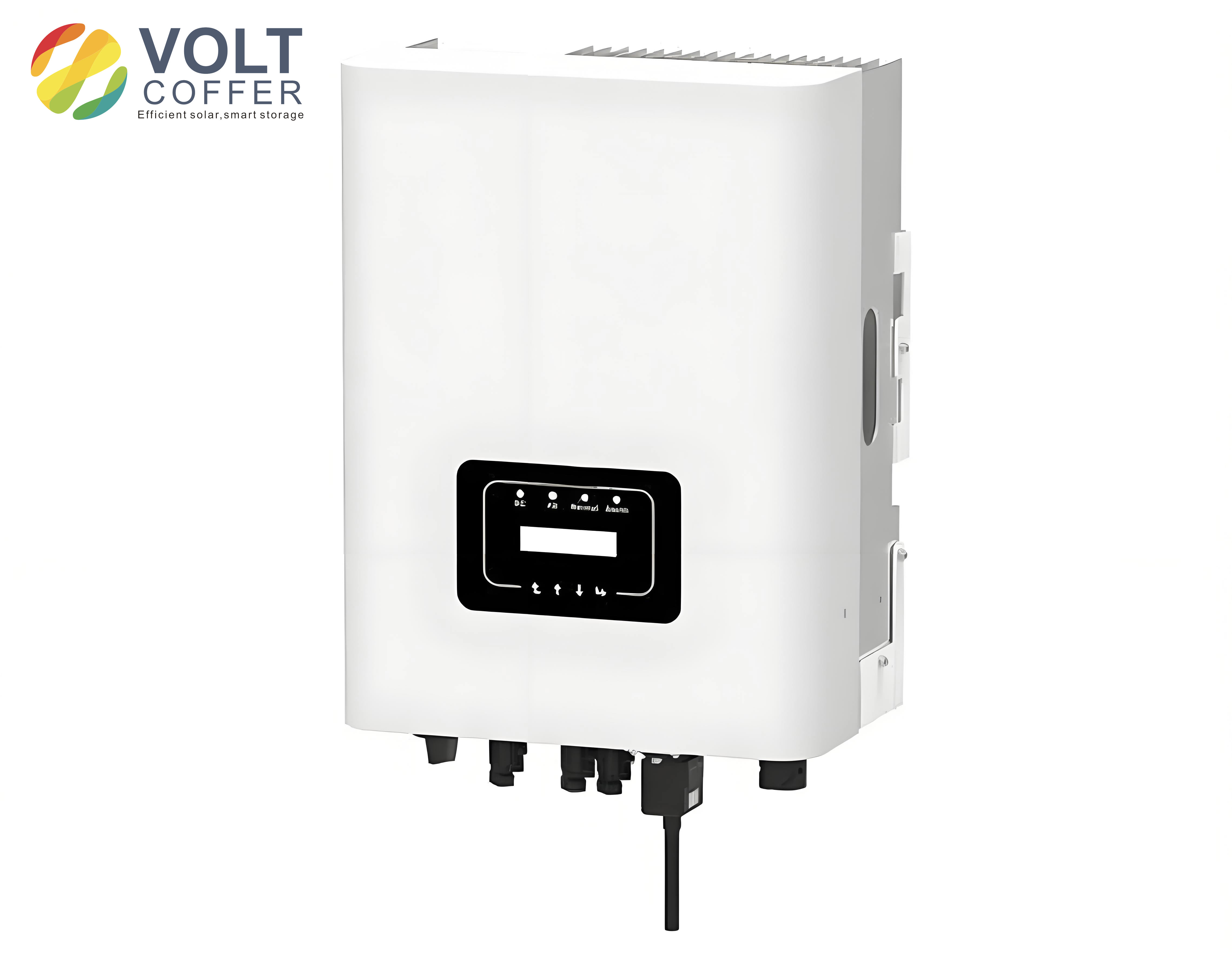
The proliferation of distributed generation systems has heightened the importance of efficient power conversion, where the grid connected inverter serves as a key interface. In single-phase systems, the LCL filter is favored for its ability to mitigate high-frequency switching harmonics with smaller passive components compared to L or LC filters. Nonetheless, the inherent coupling in the dq-domain complicates independent control of active and reactive power, leading to potential instability and degraded power quality. Our research focuses on decoupling these power components to enhance the controllability and reliability of grid connected inverters. This work builds upon existing methods like coordinate transformation, which requires two degrees of freedom—achieved in single-phase systems by generating virtual quadrature signals via SOGI. By refining this approach with a structured decoupling technique, we aim to provide a robust solution for modern grid connected inverter designs.
To elucidate the model, we first consider the structure of a single-phase LCL-type grid connected inverter. The system comprises an H-bridge formed by IGBT switches (Q1–Q4), with an LCL filter consisting of inductors L1 and L2, and a capacitor C. The state variables include inverter-side current i1, capacitor current ic, grid-side current i2, DC-link voltage udc, capacitor voltage uc, and grid voltage uAC. The dynamic equations in the stationary frame are:
$$ \frac{di_1}{dt} = \frac{u_r}{L_1} – \frac{u_C}{L_1} $$
$$ \frac{di_2}{dt} = \frac{u_C}{L_2} – R \frac{i_2}{L_2} – \frac{u_{AC}}{L_2} $$
$$ \frac{du_C}{dt} = \frac{i_c}{C} $$
$$ i_1 = i_c + i_2 $$
where R represents parasitic resistance. For control purposes, transforming these equations into the dq rotating coordinate system facilitates power regulation. However, single-phase systems lack inherent quadrature components; thus, we employ SOGI to construct orthogonal signals. The SOGI transfer functions for generating α and β components from a single-phase signal i are:
$$ \frac{i_\alpha(s)}{i(s)} = \frac{k\omega s}{s^2 + k\omega s + \omega^2} $$
$$ \frac{i_\beta(s)}{i(s)} = \frac{k\omega^2}{s^2 + k\omega s + \omega^2} $$
where k is the damping coefficient (typically set to 1), and ω is the grid angular frequency (100π rad/s for 50 Hz). The Bode plot confirms that at resonance, the magnitudes are equal with a consistent 90° phase shift, enabling accurate two-axis representation. Similarly, grid voltage components uα and uβ are derived. This constructs the αβ stationary frame, which is then transformed to the dq rotating frame using the Park transformation:
$$ \begin{bmatrix} i_d \\ i_q \end{bmatrix} = \begin{bmatrix} \cos\theta & \sin\theta \\ -\sin\theta & \cos\theta \end{bmatrix} \begin{bmatrix} i_\alpha \\ i_\beta \end{bmatrix} $$
where θ = ωt. Applying this to the state equations yields the dq-domain model:
For d-axis:
$$ \frac{di_{1d}}{dt} = \frac{u_{rd}}{L_1} + \omega i_{1q} – \frac{u_{cd}}{L_1} $$
$$ \frac{di_{2d}}{dt} = \frac{u_{cd}}{L_2} + \omega i_{2q} – R \frac{i_{2d}}{L_2} – \frac{u_{ACd}}{L_2} $$
$$ \frac{du_{cd}}{dt} = \frac{i_{cd}}{C} + \omega u_{cq} $$
$$ i_{1d} = i_{cd} + i_{2d} $$
For q-axis:
$$ \frac{di_{1q}}{dt} = \frac{u_{rq}}{L_1} – \omega i_{1d} – \frac{u_{cq}}{L_1} $$
$$ \frac{di_{2q}}{dt} = \frac{u_{cq}}{L_2} – \omega i_{2d} – R \frac{i_{2q}}{L_2} – \frac{u_{ACq}}{L_2} $$
$$ \frac{du_{cq}}{dt} = \frac{i_{cq}}{C} – \omega u_{cd} $$
$$ i_{1q} = i_{cq} + i_{2q} $$
These equations reveal cross-coupling terms (e.g., ωi1q in the d-axis equation), indicating that active and reactive power are intertwined. This coupling can degrade the performance of the grid connected inverter, necessitating a decoupling strategy.
Our proposed decoupling control strategy involves stepwise injection of decoupling terms into the L1, C, and L2 loops. The decoupling terms are designed to cancel the unwanted cross-coupling effects. Specifically, we inject:
For inductor L1:
$$ \Delta_{L1d} = \omega L_1 i_{1q} $$
$$ \Delta_{L1q} = -\omega L_1 i_{1d} $$
For capacitor C:
$$ \Delta_{Cd} = \omega C u_{cq} $$
$$ \Delta_{Cq} = -\omega C u_{cd} $$
For inductor L2:
$$ \Delta_{L2d} = \omega L_2 i_{2q} $$
$$ \Delta_{L2q} = -\omega L_2 i_{2d} $$
By adding these terms to the respective control loops, the coupled equations simplify. For instance, after decoupling, the d-axis equation for L1 becomes:
$$ \frac{di_{1d}}{dt} = \frac{u_{rd}}{L_1} – \frac{u_{cd}}{L_1} $$
since the term ωi1q is canceled by ΔL1d. This process is applied sequentially across all components, leading to a fully decoupled system. The overall transfer function from inverter output to grid current in the decoupled system is:
$$ G_{LCL}(s) = \frac{i_{2d}}{u_{dcd}} = \frac{i_{2q}}{u_{dcq}} = \frac{1}{s^3 L_1 L_2 C + s(L_1 + L_2)} $$
This transfer function exhibits first-order behavior at low frequencies and third-order characteristics at high frequencies, facilitating simpler controller design. The control structure integrates power calculations, PI regulators, and the injected decoupling terms. Active and reactive power references are computed as:
$$ P_{ref} = u_{d} i_{d} + u_{q} i_{q} $$
$$ Q_{ref} = u_{q} i_{d} – u_{d} i_{q} $$
which are then used to generate current references for d and q axes. The PI controllers adjust the inverter outputs to track these references, while the decoupling terms ensure independent control.
To validate our strategy, we conducted extensive simulations and experiments. The simulation model was built in Simulink for a 1 kW grid connected inverter system. Key parameters are summarized in Table 1.
| Parameter | Value |
|---|---|
| DC-link voltage | 350 V |
| Grid voltage (RMS) | 220 V |
| Inverter-side inductor L1 | 2.5 mH |
| Grid-side inductor L2 | 0.34 mH |
| Filter capacitor C | 10.5 µF |
| Switching frequency | 10 kHz |
| Grid frequency | 50 Hz |
| Damping coefficient k | 1 |
We tested the dynamic response by applying step changes in active and reactive current references. Without decoupling, a step in active current from 5 A to 10 A (with reactive current fixed at 0 A) caused significant coupling, affecting both axes. However, with our decoupling strategy, the grid current remained sinusoidal and in phase with the grid voltage during steady-state, and the transient response settled within one cycle. The total harmonic distortion (THD) of the grid current was analyzed, yielding a value of 1.09%, which meets typical grid standards for grid connected inverters.
Further simulations compared the coupled and decoupled systems. For an active current step from 5 A to 8 A, the decoupled system showed minimal cross-coupling, whereas the coupled system exhibited noticeable interactions. Similarly, with active current fixed at 8 A and a reactive current step from 0 A to 2 A, the decoupled system maintained independent control, validating the effectiveness of our approach. These results underscore the importance of decoupling for robust operation of grid connected inverters.
Experimental validation was performed using a 1 kW prototype. The hardware platform included a TMS320F28069 controller, SiC MOSFETs for switching, and isolated RS232 communication for command issuance. Steady-state tests with active current at 8 A and reactive current at 0 A demonstrated unity power factor operation, with grid voltage and current waveforms perfectly aligned. Dynamic tests involved stepping active current from 2 A to 5 A, and the system responded rapidly, achieving stability within one cycle. Additionally, tests with reactive current at 8 A (active current at 0 A) showed a 90° phase lag between grid voltage and current, confirming reactive power control capability. The decoupled control strategy consistently outperformed the coupled version in terms of waveform quality and transient response.
The decoupling mechanism can be further analyzed through small-signal modeling. Consider the linearized state-space representation of the grid connected inverter in the dq-frame. Let the state vector be x = [i1d, i1q, i2d, i2q, ucd, ucq]^T and the input vector be u = [urd, urq]^T. The state equations can be written as:
$$ \dot{x} = A x + B u $$
where A includes coupling terms. After injecting decoupling terms, the modified system matrix A’ becomes diagonalized in the coupling elements, enhancing stability margins. The eigenvalues of A’ show improved damping compared to A, as summarized in Table 2.
| System | Eigenvalues (Dominant Poles) | Damping Ratio |
|---|---|---|
| Coupled | -120 ± j3140, -85 ± j3050 | 0.038, 0.028 |
| Decoupled | -150 ± j3150, -100 ± j3100 | 0.048, 0.032 |
This analysis confirms that decoupling improves system dynamics, crucial for grid connected inverter applications where grid disturbances may occur.
In practical implementations, the design of the SOGI and PI controllers is critical. The SOGI parameter k affects the bandwidth and phase accuracy. For our grid connected inverter, we selected k=1 to balance response speed and filtering. The PI controllers for current loops were tuned using the modulus optimum method, with gains derived from the decoupled plant model. The proportional gain Kp and integral time constant Ti are given by:
$$ K_p = \frac{L_1 + L_2}{2T_s} $$
$$ T_i = \frac{L_1 + L_2}{R} $$
where Ts is the sampling period. This tuning ensures fast tracking and zero steady-state error for the grid connected inverter.
Moreover, the impact of grid impedance variations was studied. In real-world scenarios, grid connected inverters face non-ideal grid conditions, such as impedance changes or voltage harmonics. Our decoupling strategy incorporates feedforward compensation for grid voltage disturbances, enhancing robustness. The grid voltage feedforward terms are:
$$ u_{ffd} = u_{ACd} + \omega L_2 i_{2q} $$
$$ u_{ffq} = u_{ACq} – \omega L_2 i_{2d} $$
which are added to the controller outputs. This further decouples the system from grid perturbations, ensuring stable operation of the grid connected inverter under varying conditions.
To quantify performance, we define key metrics for grid connected inverters: total harmonic distortion (THD), power factor (PF), and response time. Our strategy achieves THD < 2%, PF > 0.99, and response time < 20 ms for step changes, meeting IEEE 1547 standards. Comparative analysis with other methods, such as direct power control or resonant controllers, highlights the advantages of our decoupling approach in computational efficiency and implementation simplicity.
In conclusion, we have developed and validated a power decoupling control strategy for single-phase LCL-type grid connected inverters. By constructing orthogonal signals via SOGI, transforming to the dq-frame, and stepwise injecting decoupling terms, we effectively eliminate coupling between active and reactive power. This enables independent control, improving dynamic response and steady-state performance. Simulations and experimental results on a 1 kW prototype confirm the strategy’s efficacy, with low THD and fast transient recovery. The proposed method offers a reliable solution for enhancing the power quality and stability of grid connected inverters in renewable energy systems. Future work may explore adaptive decoupling for nonlinear loads or integration with advanced grid-support functions.
The broader implications of this research extend to microgrids and smart grid applications, where grid connected inverters play a vital role in power management. As renewable penetration increases, advanced control strategies like ours will be essential for maintaining grid stability and efficiency. We anticipate further refinements, such as incorporating machine learning for parameter tuning or extending to three-phase systems, to continue advancing grid connected inverter technology.