
In recent years, renewable energy systems have gained significant attention due to their environmental benefits and sustainability. Among these, photovoltaic (PV) systems stand out for their noise-free, pollution-free, and low-emission characteristics, making them one of the fastest-growing green energy sources worldwide. Solar inverters play a crucial role in converting DC power from PV modules to AC power for grid integration, especially in medium-voltage applications. The cascaded H-bridge (CHB) multilevel converter has emerged as a preferred solution for large-scale solar inverters due to its modular structure, which allows independent maximum power point tracking (MPPT) for distributed PV arrays. However, a common challenge in three-phase CHB solar inverters is the inter-phase power imbalance caused by varying solar irradiance and temperature conditions across different PV modules. This imbalance leads to asymmetrical grid currents and unstable power output, compromising system reliability and power quality.
To address this issue, we propose a hybrid power routing strategy based on the CHB structure, incorporating a small number of energy storage (ES) modules within the solar inverter system. This configuration, referred to as the CHB-based energy router (CHB-ER), utilizes collaborative control between PV and ES elements to maintain stable power balance across phases. Additionally, it enables the solar inverter to meet grid-side power dispatch requirements dynamically, enhancing the overall stability and efficiency of PV power plants. In this paper, we analyze the system’s safe operating region under carrier phase-shift modulation, derive power limitations for the full-bridge sub-modules, and provide a detailed examination of PV and ES module configuration constraints. Finally, we validate the proposed topology and control strategy through simulations and experimental results.
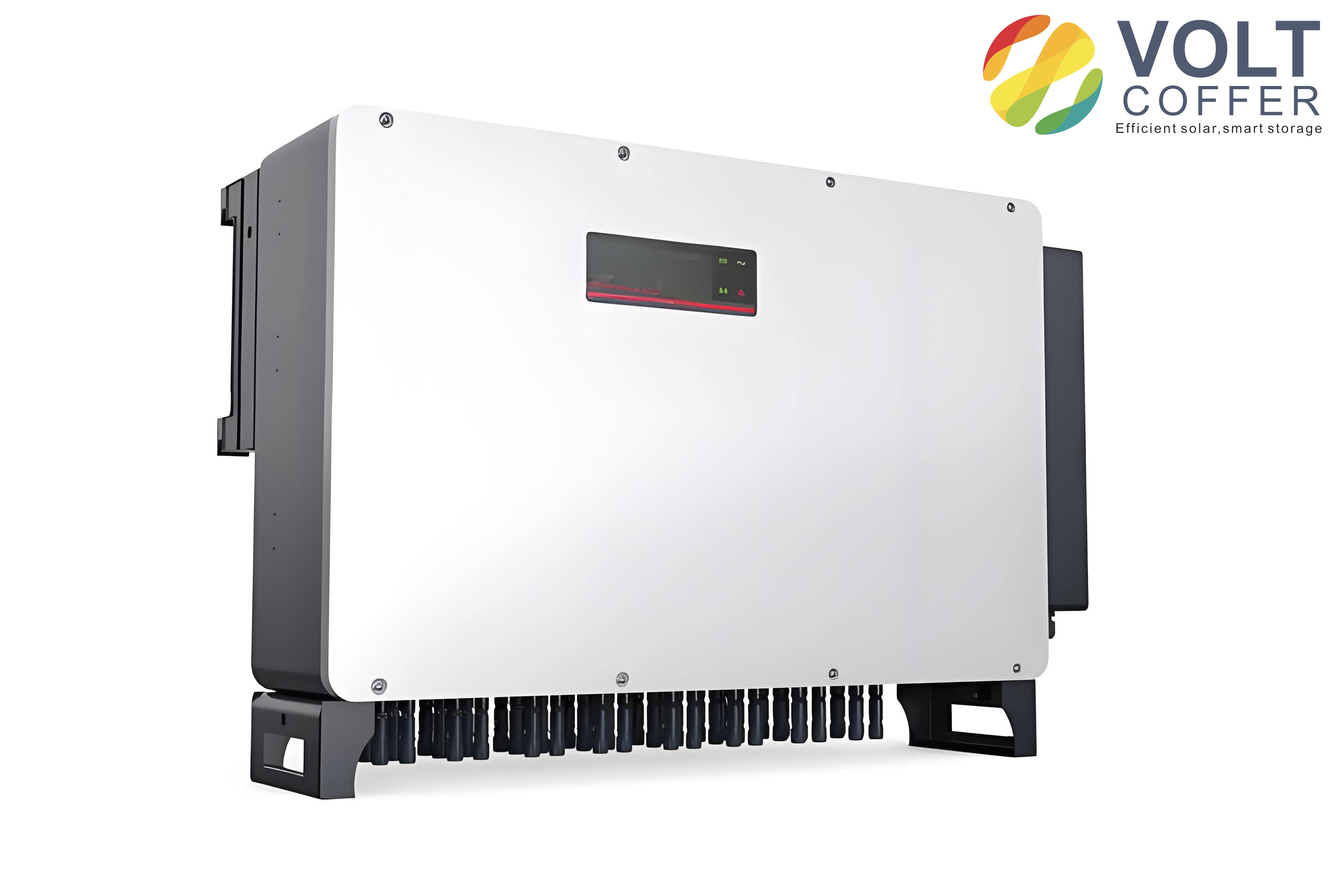
Mathematical Modeling of Three-Phase CHB Solar Inverters and Inter-Phase Power Imbalance
The three-phase CHB solar inverter consists of multiple H-bridge sub-modules per phase, each connected to a PV array via an isolated DC-DC converter. This structure enables decentralized MPPT control, but it also introduces the risk of power imbalance between phases due to non-uniform PV power generation. The equivalent model of a three-phase CHB solar inverter can be represented by the following equations, where $v_{gx}$ and $i_x$ (with $x = a, b, c$) denote the grid voltage and current per phase, $v_{Nx}$ is the inverter output voltage per phase, and $P_{pv\_xi}$ represents the power from the $i$-th PV module in phase $x$. The dynamics of the system are governed by Kirchhoff’s voltage law:
$$v_{Nx} = L_f \frac{di_x}{dt} + R_f i_x + v_{gx} + v_{NM}$$
Here, $L_f$ and $R_f$ are the filter inductance and resistance, respectively, and $v_{NM}$ is the common-mode voltage. The power output per phase is given by:
$$P_x = v_{Nx} i_x = P_{pv\_x} + P_{es\_x}$$
where $P_{pv\_x}$ is the total PV power in phase $x$, and $P_{es\_x}$ is the power contributed by the ES modules. When PV power is unbalanced ($P_{pv\_a} \neq P_{pv\_b} \neq P_{pv\_c}$), the grid currents become asymmetrical if no compensation is applied. Traditional methods, such as zero-sequence voltage injection, can mitigate this but often involve complex computations and limited balancing capability. In contrast, our approach integrates ES modules directly into the solar inverter structure, enabling more efficient power balancing without extensive computational overhead.
Proposed Hybrid Topology: CHB-Based Energy Router
The CHB-ER topology enhances the standard CHB solar inverter by incorporating $m$ ES modules per phase alongside $n$ PV modules, resulting in a total of $n + m$ sub-modules per phase. The ES modules are connected to a centralized energy storage (CES) system via a quad active bridge (QAB) converter, which facilitates bidirectional power flow. The QAB uses a phase-shift modulation strategy to control power transfer between the CES and the sub-modules, expressed as:
$$P_{es\_xi} = \frac{n_{ps} U_{csm} U_{es}}{2 \pi f_s L_s} \phi_x (1 – \frac{|\phi_x|}{\pi})$$
where $P_{es\_xi}$ is the power transferred to the $i$-th ES module in phase $x$, $n_{ps}$ is the transformer turns ratio, $f_s$ is the switching frequency, $L_s$ is the leakage inductance, and $\phi_x$ is the phase-shift angle. This configuration allows the solar inverter to balance power across phases by adjusting the ES power contributions, ensuring that the total output power per phase meets the grid dispatch requirement $P_{ac}$:
$$P_x = \frac{P_{ac}}{3} = \sum_{i=1}^{n} P_{pv\_xi} + \sum_{j=1}^{m} P_{es\_xj}$$
The modular design of the CHB-ER not only addresses power imbalance but also enhances the flexibility and reliability of solar inverters in large-scale PV plants.
Power Balance Mechanism and Control Strategy
The power balance in the CHB-ER is achieved through a hierarchical control system. The primary control layer maintains the total DC-link voltage and regulates grid currents using a synchronous reference frame approach. The MPPT controllers for the PV modules ensure optimal power extraction, while the ES modules are managed via phase-shift control in the QAB. The power reference for the ES modules is derived based on the imbalance between PV power and the desired grid power:
$$P_{es\_x}^* = \frac{P_{ac}}{3} – \sum_{i=1}^{n} P_{pv\_xi}$$
A power limiting unit monitors the sub-module power levels to prevent overloading and ensures operation within safe boundaries. The control algorithm adapts to varying conditions, such as changes in solar irradiance or grid demands, by adjusting the phase-shift angles and modulation indices. This dynamic control enables the solar inverter to maintain balanced currents and stable power output under diverse operating scenarios.
Analysis of PV and ES Module Configuration Constraints
The performance of the CHB-ER solar inverter is influenced by the ratio of ES to PV modules, denoted as $K = m/n$. Under carrier phase-shift sinusoidal pulse width modulation (CPS-SPWM), the power handling capability of the sub-modules is constrained by the maximum and minimum power limits. These limits depend on the modulation index $g$ and the ratio $K$. For a phase with $n$ PV modules and $m$ ES modules, the total DC-link voltage is $U_{sum\_dc} = (1 + K) U_{dc}$, where $U_{dc} = n U_{csm}$ is the DC voltage without ES modules. The power limits for the ES modules can be derived by analyzing the instantaneous voltage and current waveforms over a fundamental cycle.
For instance, in high modulation index mode ($g \geq 1/(1+K)$), the minimum power $P_{es\_min}$ for the ES modules is given by:
$$P_{es\_min}(g, K) = \frac{U_{dc} I}{T} \left[ 4(\sin \omega t_2 – \sin \omega t_1) – (1 + K)(\sin 2\omega t_2 – 2\omega t_2 – \sin 2\omega t_1 + 2\omega t_1) \right]$$
where $I$ is the grid current amplitude, and $t_1$, $t_2$ are time instants derived from the modulation waveform. Similarly, the maximum power $P_{es\_max}$ is:
$$P_{es\_max}(g, K) = \frac{U_{dc} I}{T} \left[ (1 + K)(2\pi – 2\omega t_{11} – \sin 2\omega t_{11}) – 4 \sin \omega t_{11} \right]$$
These equations highlight the trade-offs between $g$ and $K$. To illustrate, we summarize the power limits for different configurations in Table 1.
| Modulation Index $g$ | Ratio $K$ | $P_{es\_min}$ (p.u.) | $P_{es\_max}$ (p.u.) |
|---|---|---|---|
| 0.6 | 0.5 | -0.15 | 0.85 |
| 0.7 | 0.5 | -0.22 | 0.78 |
| 0.8 | 0.5 | -0.30 | 0.70 |
| 0.6 | 0.7 | -0.12 | 0.88 |
| 0.7 | 0.7 | -0.18 | 0.82 |
The data shows that increasing $K$ generally expands the power balancing range, but excessive $K$ may lead to underutilization of ES modules. Therefore, an optimal $K$ between 0.3 and 0.7 is recommended for practical solar inverter designs.
Simulation and Experimental Validation
To validate the CHB-ER topology, we conducted simulations and experiments under various scenarios, such as sudden changes in PV power and grid power dispatch. The solar inverter parameters are listed in Table 2.
| Parameter | Simulation Value | Experimental Value |
|---|---|---|
| DC-link Voltage $U_{sum\_dc}$ | 9.0 kV | 360 V |
| Grid Voltage $U_g$ | 6.3 kV | 150 V |
| Sub-module Capacitor Voltage $U_{csm}$ | 3.0 kV | 120 V |
| ES to PV Ratio $K$ | 0.5 | 0.5 |
| PV Rated Power | 540 kW | 1.3 kW |
| Grid Power $P_{ac}$ | 540 kW | 1.3 kW |
| CES Voltage $U_{ces}$ | 800 V | 72 V |
| Switching Frequency $f_s$ | 10 kHz | 10 kHz |
In Scenario 1, with minor PV power fluctuations, the ES modules successfully balanced the phase powers, resulting in symmetrical grid currents. The response time was less than 25 ms. In Scenario 2, with significant PV power changes (e.g., 40% reduction in one phase), the solar inverter maintained balance by adjusting ES power, demonstrating the robustness of the control strategy. In Scenario 3, the system responded to grid power dispatch changes by modulating ES power, with a response time of 35 ms. The experimental results confirmed that the CHB-ER solar inverter can effectively manage power imbalance and enhance grid stability.
Conclusion
In this paper, we presented a hybrid power balancing strategy for cascaded H-bridge solar inverters using integrated photovoltaic and energy storage modules. The proposed CHB-ER topology eliminates inter-phase power imbalance through collaborative control, while enabling dynamic response to grid power dispatch. We derived the power limitations for sub-modules under CPS-SPWM and analyzed the optimal configuration of PV and ES modules. Simulation and experimental results validated the effectiveness of the approach, showing improved stability and power quality in solar inverter applications. Future work will focus on optimizing the control algorithms for larger-scale systems and exploring real-time implementation in commercial solar inverters.