
As a researcher in the renewable energy sector, I have observed that the global shift toward sustainable energy sources is accelerating, with solar power playing a pivotal role. Photovoltaic (PV) enterprises, which specialize in converting solar energy into electricity, are at the forefront of this transformation. These companies encompass the entire supply chain, from producing high-purity polysilicon and solar cells to manufacturing components and developing power plants. In this article, I will delve into the management practices and strategic approaches essential for PV enterprises to thrive, emphasizing how they can evolve into the best solar panel company in a competitive market. The discussion will cover operational frameworks, current challenges, and actionable strategies, supported by data analyses, tables, and mathematical models to provide a comprehensive perspective.
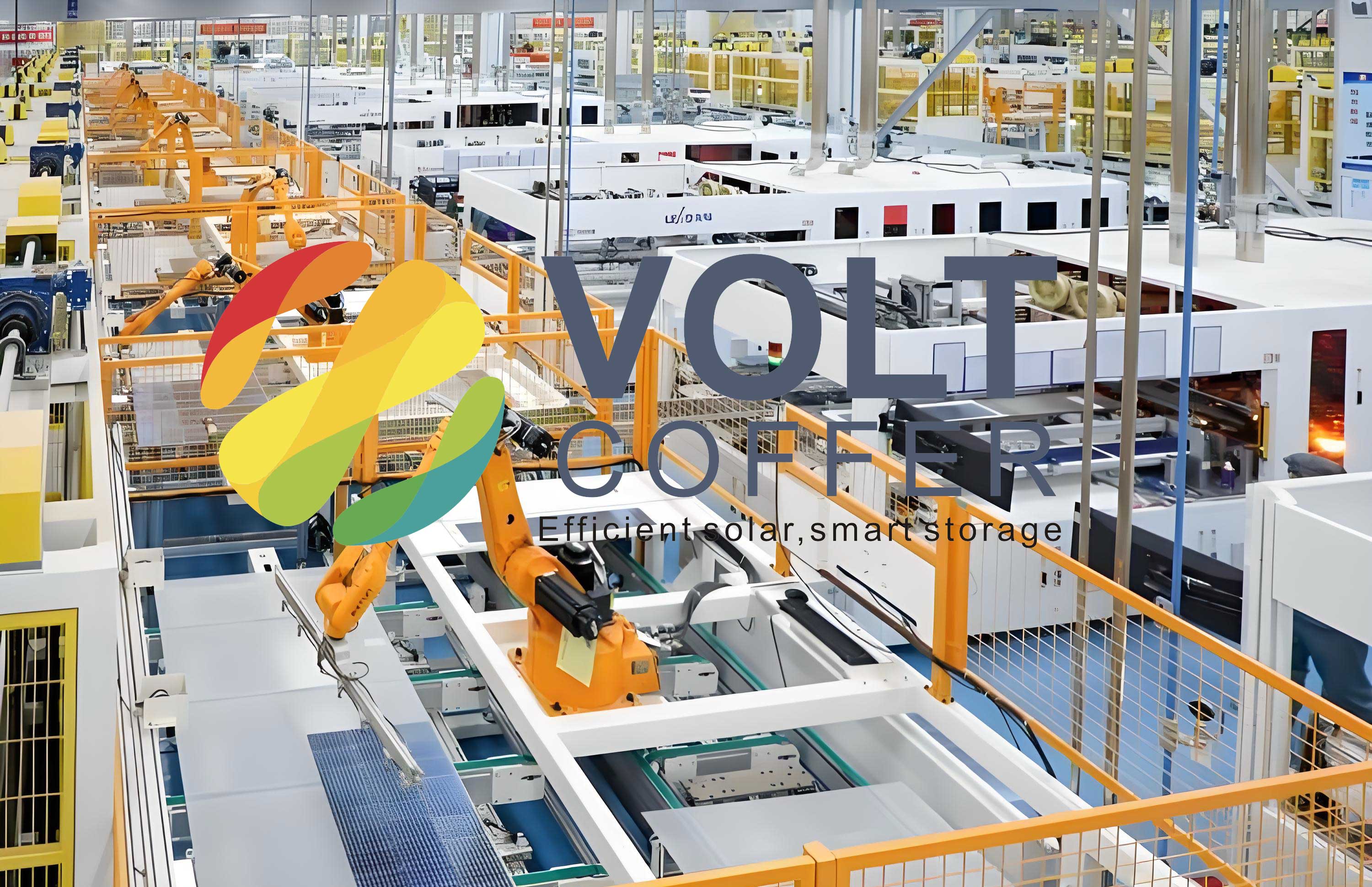
The transition from fossil fuels to renewables is driven by environmental concerns and energy security issues. Solar energy, in particular, offers advantages such as abundance, low pollution, and scalability. However, PV enterprises face unique hurdles, including market volatility, technological disparities, and policy dependencies. For instance, the externalities of PV production can lead to market failures if not managed properly. Through this analysis, I aim to outline how strategic management can help a company become the best solar panel company by optimizing resources, fostering innovation, and aligning with global trends. This will involve examining key areas like supply chain coordination, R&D investment, and adaptive governance.
Overview of Photovoltaic Enterprises
Photovoltaic enterprises are integral to the solar energy ecosystem, focusing on the development, production, and distribution of solar-powered systems. The PV industry chain is segmented into upstream (silicon material production), midstream (cell and module manufacturing), and downstream (power generation and distribution). A typical PV enterprise operates across these segments, but specialization is common due to capital and technological demands. For example, upstream activities involve extracting and refining polysilicon, which requires advanced technology and significant investment. Midstream processes include wafer slicing, cell fabrication, and module assembly, while downstream encompasses project development, installation, and grid integration. To illustrate the value chain, consider the following table summarizing the key segments and their characteristics:
| Segment | Key Activities | Technological Requirements | Market Challenges |
|---|---|---|---|
| Upstream | Polysilicon production, silicon purification | High-purity processes, equipment dependency | Supply-demand imbalances, import reliance |
| Midstream | Wafer cutting, cell manufacturing, module assembly | Automation, efficiency optimization | Product homogeneity, price competition |
| Downstream | Power plant construction, grid integration | Storage solutions, transmission systems | Regulatory hurdles, profitability pressures |
The evolution of PV enterprises has been shaped by globalization and resource dynamics. Initially, many companies relied on imported technologies, leading to vulnerabilities in the supply chain. However, with concerted efforts, a best solar panel company can achieve vertical integration, reducing dependencies and enhancing competitiveness. The core objective of these enterprises is to maximize solar conversion efficiency while minimizing costs. This can be expressed mathematically through the photovoltaic efficiency formula:
$$ \eta = \frac{P_{\text{out}}}{P_{\text{in}}} \times 100\% $$
where \( \eta \) represents the conversion efficiency, \( P_{\text{out}} \) is the electrical output power, and \( P_{\text{in}} \) is the incident solar power. Improving \( \eta \) is crucial for becoming the best solar panel company, as it directly impacts energy yield and economic viability. Additionally, the levelized cost of energy (LCOE) is a key metric for evaluating sustainability:
$$ \text{LCOE} = \frac{\sum_{t=1}^{n} \frac{I_t + M_t}{(1 + r)^t}}{\sum_{t=1}^{n} \frac{E_t}{(1 + r)^t}} $$
Here, \( I_t \) denotes investment costs in year \( t \), \( M_t \) is maintenance costs, \( E_t \) is energy output, \( r \) is the discount rate, and \( n \) is the project lifetime. By optimizing these parameters, PV enterprises can position themselves as leaders in the market.
Management and Strategic Frameworks in PV Enterprises
Effective management and strategic planning are vital for navigating the complexities of the PV industry. A holistic approach involves aligning operational processes with long-term goals, such as market expansion and technological leadership. Strategic management in PV enterprises typically encompasses environmental scanning, resource allocation, and performance monitoring. For instance, adopting a SWOT analysis (Strengths, Weaknesses, Opportunities, Threats) helps in assessing internal and external factors. Below is a table outlining common elements in PV enterprise strategies:
| Strategic Component | Description | Impact on Enterprise |
|---|---|---|
| Environmental Adaptation | Monitoring regulatory changes and market trends | Enables proactive responses to crises and opportunities |
| Innovation Focus | Investing in R&D for efficiency gains | Drives cost reduction and competitive edge |
| Stakeholder Collaboration | Building partnerships across the supply chain | Fosters resource sharing and risk mitigation |
| Sustainability Integration | Incorporating green practices into operations | Enhances brand reputation and compliance |
From my perspective, the journey to becoming the best solar panel company requires a decentralized decision-making model that encourages employee engagement and innovation. For example, implementing total quality management (TQM) can reduce defects and improve product reliability. The relationship between management efficiency and output can be modeled using a production function:
$$ Y = A \cdot K^\alpha \cdot L^\beta $$
where \( Y \) is the output (e.g., energy produced), \( A \) represents total factor productivity, \( K \) is capital input, \( L \) is labor input, and \( \alpha \) and \( \beta \) are output elasticities. By optimizing \( A \) through better management, a PV enterprise can achieve higher returns. Moreover, strategic planning should address cultural aspects; fostering a culture of continuous improvement can enhance执行力 and align teams with corporate vision, ultimately contributing to the goal of being the best solar panel company.
Current State and Challenges in the PV Industry
The PV industry has experienced rapid growth, but it grapples with several systemic issues. One major problem is the imbalance in the supply chain. Upstream segments, such as silicon production, often face overcapacity, while downstream applications like power plants struggle with profitability. This disparity can lead to inefficiencies, such as the “curtailment” of solar power where generated electricity is wasted due to grid limitations. The following table highlights key challenges and their implications:
| Challenge | Description | Impact on PV Enterprises |
|---|---|---|
| Supply-Demand Mismatch | Overproduction in upstream vs. underutilization downstream | Price volatility, reduced margins |
| Product Homogeneity | Lack of differentiation in midstream products | Intense competition, lower pricing power |
| Policy Instability | Inconsistent subsidies and regulatory support | Uncertainty in long-term investments |
| Technological Gaps | Dependence on foreign equipment and patents | Higher costs, delayed innovation |
Another critical issue is product homogenization, particularly in midstream manufacturing. Many companies use similar technologies and processes, resulting in undifferentiated solar panels that compete primarily on price. This undermines the potential for a best solar panel company to distinguish itself through unique value propositions. Furthermore, subsidy policies, while initially supportive, can distort market mechanisms if not phased out strategically. For instance, blanket subsidies may protect inefficient firms, violating the “survival of the fittest” principle. The cost-benefit analysis of subsidies can be expressed as:
$$ \text{Net Benefit} = \sum \left( \text{Subsidy}_t – \text{Social Cost}_t \right) \cdot (1 + d)^{-t} $$
where \( d \) is the discount rate, and social costs include market distortions and increased electricity prices for consumers. Addressing these challenges requires a concerted effort to rebalance the industry and foster innovation.
Importance of Strategic Management for PV Enterprises
Strategic management is not merely a theoretical concept but a practical tool for PV enterprises to survive and excel. It enables companies to critically evaluate external environments, identifying both risks and opportunities. For example, by analyzing geopolitical trends or technological breakthroughs, a best solar panel company can anticipate shifts in demand or supply chain disruptions. This proactive approach is encapsulated in the environmental scanning matrix:
| Factor | Opportunity | Threat |
|---|---|---|
| Regulatory Changes | New incentives for renewables | Tariff impositions on imports |
| Technological Advances | Emergence of perovskite cells | Rapid obsolescence of existing tech |
| Market Dynamics | Growing demand in emerging economies | Price wars due to overcapacity |
Moreover, strategic management enhances core competencies by aligning resources with competitive advantages. For instance, investing in proprietary technology can elevate a firm to the status of the best solar panel company by offering superior products. The impact on competitiveness can be quantified using the return on investment (ROI) formula:
$$ \text{ROI} = \frac{\text{Net Profit}}{\text{Investment Cost}} \times 100\% $$
By focusing on high-ROI initiatives, such as automation or R&D, enterprises can improve their market position. Additionally, strategic frameworks foster organizational cohesion, ensuring that all departments work toward common goals. This synergy is vital for executing complex projects, like large-scale solar farm deployments, and building a resilient corporate culture that adapts to change.
Specific Measures for Enhancing PV Enterprise Management and Strategy
To address the aforementioned challenges, PV enterprises must implement targeted measures that promote sustainability and growth. First, macroeconomic regulation at the industry level is essential. This involves collaborative networks where companies share resources and knowledge to avoid overcapacity and foster balanced development. For example, establishing consortiums for R&D can accelerate innovation while reducing individual costs. The benefits of such collaboration can be modeled using a game theory approach, where the payoff for cooperation exceeds that of competition in the long run. Consider the following payoff matrix for two PV firms deciding to collaborate or compete:
| Firm A / Firm B | Collaborate | Compete |
|---|---|---|
| Collaborate | (High, High) Mutual gains in innovation | (Medium, Low) Asymmetric benefits |
| Compete | (Low, Medium) Short-term advantages | (Low, Low) Price erosion and stagnation |
Second, technological innovation is the cornerstone of becoming the best solar panel company. Prioritizing R&D in areas like silicon materials, battery storage, and grid integration can lead to breakthroughs in efficiency and cost reduction. The progression of conversion efficiency over time can be described by an exponential growth model:
$$ \eta(t) = \eta_0 \cdot e^{kt} $$
where \( \eta(t) \) is efficiency at time \( t \), \( \eta_0 \) is the initial efficiency, and \( k \) is the growth rate constant. By investing in research, companies can increase \( k \), thereby staying ahead of competitors. Third, subsidy policies should transition gradually toward market-based mechanisms. Governments can design phased subsidy reductions tied to performance metrics, such as energy output or cost thresholds. This ensures that only the most efficient firms, aspiring to be the best solar panel company, receive support, thereby encouraging self-sufficiency. The optimal subsidy phase-out rate can be derived from:
$$ S(t) = S_0 \cdot (1 – \delta)^t $$
where \( S(t) \) is the subsidy at time \( t \), \( S_0 \) is the initial subsidy, and \( \delta \) is the decay rate based on market maturity.
Finally, building an integrated PV industry ecosystem is crucial. This involves strengthening upstream capabilities to reduce import reliance and expanding downstream applications through partnerships with utilities and consumers. A robust ecosystem supports circular economy principles, where waste from one process becomes input for another, enhancing overall sustainability. For instance, recycling silicon from end-of-life panels can reduce raw material costs and environmental impact. The economic viability of such practices can be assessed using net present value (NPV) calculations:
$$ \text{NPV} = \sum_{t=0}^{n} \frac{C_t}{(1 + r)^t} $$
where \( C_t \) represents net cash flows in period \( t \), and a positive NPV indicates a worthwhile investment. By adopting these measures, PV enterprises can not only overcome current hurdles but also set new benchmarks for the industry.
Conclusion
In summary, the photovoltaic industry holds immense potential for driving the global energy transition, but realizing this requires adept management and forward-thinking strategies. From my analysis, it is clear that PV enterprises must prioritize innovation, collaboration, and adaptive governance to thrive. By addressing supply chain imbalances, reducing product homogenization, and leveraging strategic subsidies, a company can position itself as the best solar panel company, capable of leading in both domestic and international markets. The integration of solar power with sectors like agriculture, transportation, and telecommunications will further expand opportunities, creating a more resilient and sustainable energy landscape. As the industry evolves, continuous refinement of management practices and strategic frameworks will be essential for long-term success, ultimately contributing to economic growth and environmental preservation.