
The quest for high-energy-density, safe, and long-lasting energy storage systems is a cornerstone of modern technological advancement, particularly for electric transportation and grid-scale applications. While conventional lithium-ion batteries (LIBs) with liquid electrolytes have dominated the market, their inherent safety risks due to flammable organic solvents and limited energy density ceilings have spurred intensive research into next-generation alternatives. The solid-state battery paradigm, which replaces liquid electrolytes with solid counterparts, promises a transformative leap forward. These systems offer the potential for dramatically improved safety, higher voltage operation enabling the use of advanced cathodes, and, crucially, the safe integration of high-capacity anode materials like lithium metal. However, the practical realization of high-performance solid-state batteries is fraught with challenges, primarily concerning interfacial instability, poor ionic contact, and the daunting task of controlling lithium dendrite growth at the anode.
The energy density of a solid-state battery is fundamentally governed by the capacity and potential of its electrode materials. On the anode side, the choice is critical. Metallic lithium, with its ultra-high theoretical specific capacity (3860 mAh/g) and lowest electrochemical potential (-3.04 V vs. SHE), is the ultimate target. Yet, its application is severely hindered by uncontrolled dendrite formation during cycling, leading to short circuits and cell failure, a problem that persists even in many solid-state configurations. Graphite, the incumbent anode in commercial LIBs, provides excellent stability and interfacial compatibility but suffers from a modest theoretical capacity of 372 mAh/g, which restricts the achievable energy density. Alloy-type anodes, such as silicon (Si, ~4200 mAh/g) and phosphorus (P, ~2600 mAh/g), offer a compelling middle ground with significantly higher capacities. Silicon’s main drawback, besides massive volume expansion (>300%), is its very low lithiation potential (~0.2 V vs. Li/Li+), which can still promote lithium plating under fast charging or high current conditions. Red phosphorus, in contrast, operates at a more moderate and safer potential (~0.7 V vs. Li/Li+), which inherently reduces the driving force for lithium dendrite formation while still providing a substantial energy boost over graphite.
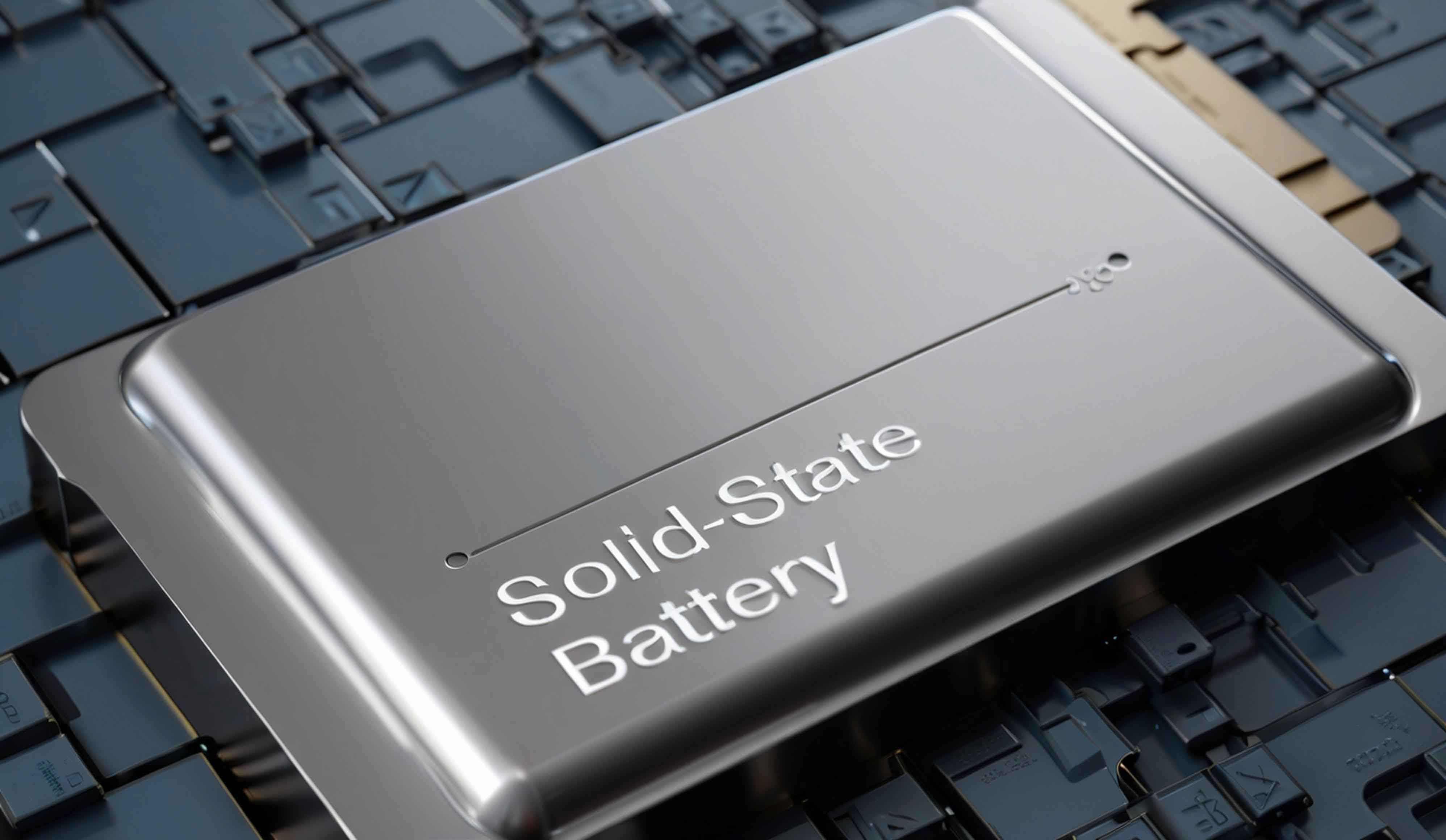
Despite its advantages, the direct use of phosphorus in a solid-state battery is impractical due to its intrinsic limitations: extremely low electronic conductivity, colossal volume expansion upon alloying with lithium (nearly 300%), and the continuous consumption of active lithium to form and repair a solid electrolyte interphase (SEI), leading to poor initial Coulombic efficiency and rapid capacity fade. This work addresses these multifaceted challenges through a synergistic material design and processing strategy. We report on the development and application of a novel ternary phosphorus/carbon/lithium (P/C/Li) composite anode, engineered specifically for solid-state batteries. The design rationale leverages the complementary properties of each component: the high capacity of phosphorus, the structural integrity and conductivity of graphite, and the lithium reservoir and mechanical benefits of pre-lithiation. This composite is fabricated using a scalable high-energy ball milling process, which simultaneously achieves nanoscale mixing, amorphization, and intimate contact between the phases. We systematically investigate the effects of composition and pre-lithiation degree on the electrochemical performance, demonstrating that this tailored composite anode offers a promising pathway towards realizing high-energy, durable, and safer solid-state batteries.
Fundamental Challenges and Material Design Principles
The successful operation of a solid-state battery hinges on maintaining stable, low-resistance interfaces between the solid electrolyte and both electrodes throughout cycling. For the anode, this is particularly demanding. The ideal anode material for a solid-state battery must fulfill several stringent criteria:
- High Specific Capacity: To maximize the energy density of the full cell.
- Moderate Working Potential: High enough to avoid lithium plating but low enough to provide a high cell voltage.
- Minimal Volume Change: To maintain intimate physical contact with the rigid solid electrolyte and prevent interfacial delamination or fracture.
- Good Ionic/Electronic Conductivity: To ensure efficient charge transport within the electrode composite.
- Excellent Chemical and Electrochemical Stability against the solid electrolyte.
Phosphorus, with its alloying reaction mechanism (forming LixP, e.g., Li3P), provides high capacity. The theoretical specific capacity (Ctheo) for a three-electron transfer process (forming Li3P) can be calculated as:
$$C_{theo} = \frac{nF}{M}$$
where \(n\) is the number of electrons transferred per formula unit (3 for Li3P), \(F\) is Faraday’s constant (96485 C/mol), and \(M\) is the molar mass of phosphorus (30.97 g/mol). This yields:
$$C_{theo, P} = \frac{3 \times 96485}{30.97} \approx 2596 \text{ mAh/g}$$
However, the large volume change (\(\Delta V/V\)) associated with this reaction is a primary cause of failure. The design of a composite structure is essential to mitigate this. Incorporating a conductive carbon matrix (like graphite) serves multiple functions: it enhances electronic conductivity, buffers mechanical stress from volume expansion, and prevents the aggregation of active phosphorus particles. The effectiveness of this buffering can be related to the free volume within the composite and the strength of the carbon framework.
Furthermore, the initial irreversible capacity loss, common to all alloying anodes due to SEI formation, is particularly detrimental in solid-state batteries where lithium inventory is limited. Pre-lithiation is a critical strategy to compensate for this loss. By introducing a controlled amount of active lithium into the composite during fabrication, we can “pre-cycle” the anode, forming a stable SEI before full cell assembly and significantly boosting the initial Coulombic efficiency. This is vital for achieving a high-energy-density solid-state battery. The optimal degree of pre-lithiation (\(x_{Li}\)) must be carefully balanced to compensate for irreversible losses without introducing excess reactive lithium that could harm stability.
Synthesis and Structural Characterization of P/C and P/C/Li Composites
The P/C and P/C/Li composites were synthesized via high-energy ball milling, a top-down mechanical method effective for particle size reduction, amorphization, and creating nanocomposites. Red phosphorus and graphite powders were mixed in various mass ratios and milled under an inert argon atmosphere. For pre-lithiated samples, metallic lithium foil pieces were added to the mixture prior to milling. This process not only homogenizes the components but also mechanically alloys/compounds them, creating an intimate mixture where nano-sized phosphorus particles are embedded within a conductive carbon matrix, and lithium is dispersed throughout.
X-ray diffraction (XRD) analysis confirmed the success of this approach. The sharp, crystalline diffraction peaks characteristic of pristine graphite and red phosphorus were conspicuously absent in the ball-milled samples. Instead, the patterns showed very broad, low-intensity humps, indicating the formation of a largely amorphous or nano-crystalline composite structure. This amorphization is beneficial as it can provide more isotropic expansion pathways and reduce stress concentration points during lithiation.
Scanning electron microscopy (SEM) revealed the morphological evolution. The ball-milled P/C composite powder consisted of finely divided, irregular particles. After pre-lithiation and further milling (e.g., P/C28-10%), the particle size distribution appeared even more uniform and refined. When compressed into electrode discs, the composite powder formed a cohesive, porous structure well-supported by a nickel mesh current collector. Critically, post-cycling SEM of the electrodes told a compelling story. The binary P/C28 anode, after 100 cycles in a solid-state configuration, showed clear signs of deterioration: surface cracking, particle detachment, and significant morphological degradation indicative of insufficient buffering against volume strain. In stark contrast, the ternary P/C28-10% anode maintained much better structural integrity, with less cracking and a more preserved particulate morphology, highlighting the synergistic stabilizing effect of the pre-lithiated carbon matrix.
Electrochemical Performance Optimization
The electrochemical properties were first evaluated in half-cells against lithium metal to isolate anode performance. A key optimization parameter was the phosphorus-to-carbon mass ratio. A series of P/Cx composites (where x denotes the carbon mass percentage, e.g., P/C28 for 20% P, 80% C) were tested. The performance trade-off is clear: higher phosphorus content increases initial capacity but accelerates degradation due to amplified volume changes; higher carbon content improves stability but dilutes the capacity.
| Composite (P/C Ratio) | Initial Discharge Capacity (mAh/g) | Capacity after 100 cycles (mAh/g) | Capacity Retention (%) | Primary Failure Mode |
|---|---|---|---|---|
| P/C19 (1:9) | ~595 | 132.2 | 22.2 | Capacity dilution by excess carbon |
| P/C28 (2:8) | ~704 | 204.2 | 29.0 | Moderate volume expansion |
| P/C37 (3:7) | ~780 | ~180 | ~23.1 | Increased mechanical stress |
| P/C46 (4:6) | ~850 | <150 | <17.6 | Severe particle pulverization |
| P/C55 (5:5) | ~920 | <100 | <10.9 | Rapid interfacial failure |
The P/C28 composite emerged as the optimal balance, offering a high initial capacity while retaining reasonable cycle life. This composition was therefore selected for the subsequent pre-lithiation study.
Pre-lithiation degree (\(y\)) was varied from 5% to 30% (mass of Li relative to the P/C composite). The results unequivocally demonstrated that a moderate amount of pre-lithiation is profoundly beneficial, but an excess is detrimental.
| Composite (P/C28-y) | Initial Discharge Capacity (mAh/g) | Initial Coulombic Efficiency (ICE, %) | Capacity after 100 cycles (mAh/g) | Average Coulombic Efficiency (cycles 2-100, %) |
|---|---|---|---|---|
| P/C28 (0%) | ~704 | ~65-70 (estimated) | 204.2 | ~99.2 |
| P/C28-5% | ~680 | ~92 | 174.8 | 99.4 |
| P/C28-10% | 608.3 | 98.22 | 211.1 | 99.54 |
| P/C28-20% | ~550 | >100* | 125.5 | 99.1 |
| P/C28-30% | ~480 | >100* | 54.1 | 98.8 |
The P/C28-10% composite delivered the best overall performance. Its near-unity ICE of 98.22% is a landmark achievement for a phosphorus-based anode, indicating minimal irreversible lithium loss. This directly translates to higher usable capacity in a full solid-state battery. Furthermore, it retained the highest capacity after 100 cycles. Electrochemical impedance spectroscopy (EIS) revealed that the interfacial resistance (Rint) for P/C28-10% (11.2 Ω) was significantly lower than that of the non-prelithiated P/C28 (35.4 Ω) after cycling. This lower impedance is attributed to a more stable and conductive interface formed during the pre-lithiation process, a critical factor for solid-state battery performance.
Performance in Solid-State Battery Configuration
The true merit of the optimized P/C28-10% composite was assessed in a realistic solid-state battery setup. A composite solid electrolyte membrane based on Li6.4La3Zr1.4Ta0.6O12 (LLZTO) garnet ceramic within a poly(vinylidene fluoride-co-hexafluoropropylene) (PVDF-HFP) polymer matrix (LLZTO/PVDF-HFP) was employed. This type of electrolyte combines the high ionic conductivity and stability of the ceramic with the flexibility and good interfacial contact of the polymer, making it a promising candidate for practical solid-state batteries.
A symmetric cell (P/C28-10% | LLZTO/PVDF-HFP | P/C28-10%) was constructed to evaluate the anode’s stability against the solid electrolyte under stripping/plating conditions. At a current density of 0.5 mA/cm², the cell exhibited stable and reversible voltage profiles for over 200 hours without signs of sudden short-circuit or significant polarization growth. This demonstrates exceptional interfacial stability and effectively suppressed lithium dendrite propagation, a core requirement for a safe solid-state battery.
Finally, a full solid-state battery was assembled using a lithium iron phosphate (LiFePO4) cathode, the LLZTO/PVDF-HFP composite electrolyte, and the P/C28-10% composite anode. The cell displayed excellent rate capability, delivering capacities of 152.9, 138.6, 119.4, 105.7, and 79.9 mAh/g at rates of 0.1C, 0.2C, 0.5C, 1C, and 2C, respectively (based on LiFePO4 mass). Upon returning to 0.1C, the capacity recovered to 146.6 mAh/g, indicating high reversibility and robust electrode/electrolyte interfaces. Most importantly, the long-term cycling stability at 1C was outstanding. The cell started with a discharge capacity of 133.7 mAh/g and retained 107.6 mAh/g after 100 cycles, corresponding to a high capacity retention of 80.5%. The average Coulombic efficiency was consistently above 99.5% throughout the test. This performance surpasses what is typically achievable with pure lithium metal anodes in similar solid-state configurations at this stage of development, primarily due to the avoidance of catastrophic dendrite-related failure.
Discussion and Mechanistic Insights
The superior performance of the P/C/Li composite anode in a solid-state battery can be attributed to a confluence of synergistic effects, which address the fundamental challenges outlined earlier:
- Stress Buffering and Volume Change Accommodation: The ductile graphite matrix acts as a continuous, conductive scaffold that physically confines the expanding/contracting phosphorus particles. The pre-lithiation step may also create internal porosity or modify the carbon structure to better absorb strain. The mechanical energy from ball milling ensures an extremely intimate mixture, maximizing this buffering effect and preventing the isolation of active material. The volume expansion strain (\(\epsilon_v\)) is effectively distributed, reducing the stress (\(\sigma\)) on the solid electrolyte interface according to the relation \(\sigma = E \cdot \epsilon_v\), where \(E\) is the effective modulus of the composite.
- Enhanced Ionic and Electronic Transport: The nanostructuring via ball milling shortens Li+ diffusion pathways within the phosphorus. The percolating carbon network provides highways for electron transport to the current collector. The pre-formed, stable interface from pre-lithiation reduces the charge-transfer resistance at the anode/electrolyte boundary. The total cell impedance (\(Z_{cell}\)) in a solid-state battery is often dominated by interfacial contributions (\(Z_{int}\)): \(Z_{cell} = Z_{bulk} + Z_{int,anode} + Z_{int,cathode}\). The low \(Z_{int,anode}\) observed for P/C28-10% is thus crucial.
- Dendrite Suppression via Potential Control: The operational potential of the phosphorus composite (~0.7 V vs. Li/Li+) is significantly higher than the plating potential of lithium metal (0 V). This thermodynamic hurdle reduces the probability of lithium nucleation and growth on the anode surface during fast charging or local current hotspots, inherently enhancing the safety of the solid-state battery.
- Stable Interfacial Architecture: Pre-lithiation allows for the controlled formation of a stable SEI (or more accurately, an anode electrolyte interphase, AEI) during material synthesis. This “pre-formed” interface is more uniform and likely more conductive than one formed in-situ during the first cycle of a full cell, where electrolyte decomposition kinetics can be heterogeneous. This stable interface is key to the long cycle life observed.
Conclusion and Future Perspectives
This work successfully demonstrates the design, fabrication, and implementation of a novel phosphorus/carbon/lithium ternary composite as a high-performance anode for solid-state batteries. Through systematic optimization of composition and pre-lithiation degree, we have shown that such a composite effectively reconciles high capacity, moderate volume change, excellent interfacial stability, and intrinsic safety against dendrites. The P/C28-10% composite anode enabled a LiFePO4-based solid-state battery to achieve stable cycling with over 80% capacity retention for 100 cycles, a significant result that underscores the practical potential of this approach.
The strategy outlined here opens a new avenue for anode development in solid-state batteries. Future work will focus on several fronts to advance this technology:
- Advanced Carbon Matrices: Exploring other carbon forms (e.g., graphene, carbon nanotubes, porous carbon) could further enhance conductivity and buffering capacity.
- In-depth Interface Characterization: Employing techniques like X-ray photoelectron spectroscopy (XPS), time-of-flight secondary ion mass spectrometry (ToF-SIMS), and cryo-electron microscopy to precisely elucidate the chemical and structural evolution of the anode/solid electrolyte interface.
- Compatibility with Other Solid Electrolytes: Testing the composite anode with sulfide-based or argyrodite solid electrolytes, which typically have higher ionic conductivity but may present different interfacial challenges.
- Full Cell Energy Density Optimization: Pairing the P/C/Li anode with high-voltage or high-capacity cathode materials (e.g., Ni-rich NMC, sulfur) to fully exploit the energy density benefits within the solid-state battery architecture.
- Scalable Manufacturing: Translating the high-energy ball milling process to industrially viable scales and integrating the composite anode into practical cell formats (pouch cells).
In summary, the phosphorus-based composite anode represents a strategically important step beyond conventional graphite and a pragmatically safer alternative to pure lithium metal for next-generation solid-state batteries. By intelligently combining materials at the nanoscale, we can overcome longstanding barriers and accelerate the development of energy storage systems that are simultaneously high in energy, robust in life, and supreme in safety.