
As a researcher deeply immersed in the field of renewable energy, I have witnessed the rapid evolution of perovskite solar cells, which represent a transformative technology in photovoltaics. These devices leverage perovskite-structured materials, typically with the formula ABX3, where A denotes organic or inorganic cations like methylammonium or cesium, B represents metal cations such as lead or tin, and X stands for halide anions like iodine or chlorine. The unique crystal lattice of perovskite materials enables exceptional optoelectronic properties, including high absorption coefficients, long carrier diffusion lengths, and tunable bandgaps. In this comprehensive discussion, I will explore the fundamental principles, advantages, applications, stability challenges, and strategies to enhance the durability of perovskite solar cells, incorporating tables and equations to summarize key points. Throughout this article, the term “perovskite solar cell” will be emphasized to underscore its significance.
The operational mechanism of a perovskite solar cell begins with photon absorption in the perovskite layer. When sunlight strikes the material, photons with energy exceeding the bandgap energy (Eg) excite electrons from the valence band to the conduction band, generating electron-hole pairs known as excitons. The bandgap energy can be expressed as $$E_g = \frac{hc}{\lambda}$$, where h is Planck’s constant, c is the speed of light, and λ is the wavelength. Due to the low exciton binding energy in perovskite materials, these pairs dissociate efficiently into free carriers. The electrons and holes are then transported through electron transport layers (ETLs) and hole transport layers (HTLs), respectively, toward the electrodes, generating an electric current. The overall power conversion efficiency (PCE) of a perovskite solar cell is given by $$PCE = \frac{J_{sc} \times V_{oc} \times FF}{P_{in}} \times 100\%$$, where Jsc is the short-circuit current density, Voc is the open-circuit voltage, FF is the fill factor, and Pin is the incident light power.
To illustrate the composition of common perovskite materials, I present Table 1, which summarizes typical elements and their roles in the ABX3 structure. This table highlights the flexibility in material design, allowing for tailored properties to optimize performance in perovskite solar cells.
| Position | Elements/Ions | Role in Structure | Example Materials |
|---|---|---|---|
| A-site | Methylammonium (CH3NH3+), Formamidinium (HC(NH2)2+), Cesium (Cs+) | Large cations that stabilize the crystal lattice | CH3NH3PbI3, CsPbI3 |
| B-site | Lead (Pb2+), Tin (Sn2+) | Transition metals that form the octahedral core | Pb-based perovskites, Sn-based perovskites |
| X-site | Iodine (I–), Bromine (Br–), Chlorine (Cl–) | Halide anions that coordinate with B-site ions | Mixed halide perovskites |
The advantages of perovskite solar cells over traditional silicon-based counterparts are profound. Firstly, their fabrication cost is low, as solution-processing methods like spin-coating or printing enable large-scale production. Secondly, the PCE has skyrocketed from 3.8% in 2009 to over 25% in recent years, rivaling established technologies. This rapid improvement is attributed to the tunable bandgap, which can be adjusted by varying the composition; for instance, the bandgap Eg follows the relation $$E_g \approx E_{g0} + k \cdot x$$ for mixed halides, where Eg0 is the base bandgap, k is a constant, and x is the halide ratio. Thirdly, perovskite solar cells are lightweight and flexible, allowing integration into diverse surfaces. Table 2 compares key advantages of perovskite solar cells with conventional silicon cells, emphasizing their potential for widespread adoption.
| Feature | Perovskite Solar Cells | Silicon Solar Cells |
|---|---|---|
| Fabrication Cost | Low (solution-based methods) | High (energy-intensive processes) |
| Power Conversion Efficiency | >25% (lab scale), theoretically up to 31% for single-junction | ~25% for monocrystalline silicon |
| Bandgap Tunability | Highly tunable (1.5–2.3 eV) | Fixed at ~1.1 eV |
| Flexibility and Weight | Lightweight, bendable | Rigid and heavy |
| Development Timeline | Rapid progress in ~10 years | Slow evolution over decades |
In terms of applications, perovskite solar cells are making strides in various fields. For building-integrated photovoltaics (BIPV), they can be seamlessly incorporated into facades or windows, enhancing aesthetics while generating power. Portable electronics, such as wearable devices and drones, benefit from their lightweight nature and high efficiency. In aerospace, perovskite solar cells provide reliable energy for satellites and aircraft due to their high power-to-weight ratio. Table 3 outlines current application areas and examples, demonstrating the versatility of perovskite solar cells.
| Sector | Application Examples | Benefits |
|---|---|---|
| Building Integration | Roof tiles, window coatings | Aesthetic design, energy efficiency |
| Portable Electronics | Smartwatches, charging packs | Lightweight, high output |
| Aerospace | Satellite power systems, UAVs | High energy density, durability |
| Outdoor Equipment | Solar tents, backpacks | Flexibility, ease of integration |
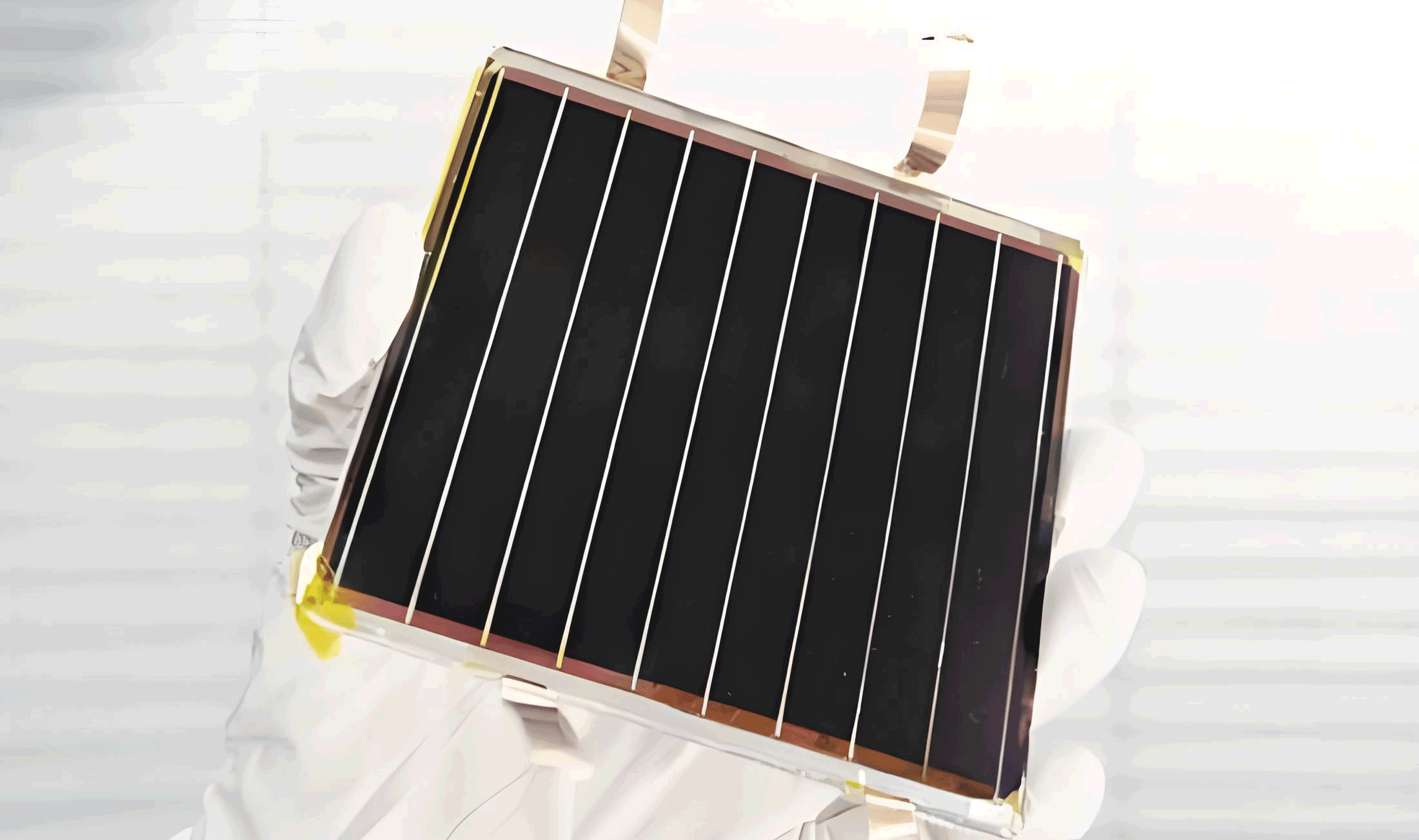
Despite these advancements, the stability of perovskite solar cells remains a critical challenge. Environmental factors such as temperature, humidity, and light exposure can degrade performance. For example, high temperatures accelerate ion migration and decomposition, described by the Arrhenius equation $$k = A e^{-E_a / RT}$$, where k is the degradation rate constant, A is the pre-exponential factor, Ea is the activation energy, R is the gas constant, and T is temperature. Humidity leads to hydrolysis, causing perovskite decomposition into PbI2 and other byproducts. Prolonged UV exposure induces photo-oxidation and phase segregation. Additionally, intrinsic material issues include organic cation instability and lead toxicity. Table 4 summarizes these stability challenges, highlighting the need for robust solutions in perovskite solar cell development.
| Factor | Impact on Stability | Mechanism |
|---|---|---|
| Temperature | Thermal decomposition, phase transitions | Lattice expansion, ion migration |
| Humidity | Hydrolysis, film degradation | Water infiltration, crystal dissolution |
| Light Exposure | Photo-induced degradation, efficiency loss | Radical formation, halide segregation |
| Material Instability | Organic cation decomposition, lead leakage | Chemical reactions, environmental hazards |
To address these issues, I have investigated several strategies to enhance the stability of perovskite solar cells. Material modification through elemental substitution and doping is highly effective. For instance, replacing volatile A-site cations like methylammonium with formamidinium or cesium improves thermal stability. Doping with elements such as rubidium or lanthanides at the A-site or tin at the B-site reduces defect density and enhances moisture resistance. The doping concentration can be optimized using equations like $$N_d = \frac{1}{\sigma \mu e}$$, where Nd is the dopant density, σ is conductivity, μ is mobility, and e is electron charge. Encapsulation with materials like aluminum oxide or silica forms a protective barrier, quantified by the water vapor transmission rate (WVTR).
Structural design optimizations focus on interface engineering and multilayer architectures. Incorporating two-dimensional perovskite layers as passivation blocks reduces ion migration and improves charge extraction. The interface energy can be modeled with $$E_{int} = \gamma_{SL} – \gamma_{SV}$$, where γSL and γSV are solid-liquid and solid-vapor surface energies. Tandem or gradient bandgap structures, achieved by stacking perovskite layers with varying compositions, maximize light absorption and carrier collection. Table 5 outlines key enhancement strategies for perovskite solar cells, correlating methods with their benefits.
| Strategy | Method | Benefits |
|---|---|---|
| Material Modification | Elemental substitution, doping, encapsulation | Improved thermal and moisture stability, reduced toxicity |
| Structural Optimization | Interface engineering, 2D/3D heterostructures | Enhanced charge transport, reduced recombination |
| Environmental Adaptation | Protective coatings, modular designs | Better UV and humidity resistance, easier maintenance |
Furthermore, environmental adaptation techniques involve applying transparent coatings of fluorides or alumina to shield against UV rays and moisture. Modular designs allow for easy replacement of degraded components, extending the lifespan of perovskite solar cells. The effectiveness of these approaches can be evaluated using lifetime models, such as $$L_{80} = L_0 \exp\left(-\frac{E_a}{k_B T}\right)$$, where L80 is the time to 80% initial efficiency, L0 is a constant, and kB is Boltzmann’s constant.
In conclusion, the journey of perovskite solar cells from lab-scale curiosities to practical applications is fueled by their exceptional efficiency and versatility. However, overcoming stability hurdles is essential for commercialization. Through continuous innovation in materials, structures, and protective measures, I am confident that perovskite solar cells will play a pivotal role in the global energy transition. Future research should focus on scalable fabrication, long-term field testing, and eco-friendly alternatives to lead, ensuring that perovskite solar cells meet the demands of sustainable energy systems.