
As the global energy structure rapidly transitions toward low-carbon solutions, the demand for efficient and reliable energy storage systems has never been greater. In this context, energy storage lithium batteries, particularly lithium iron phosphate (LFP) types, have emerged as a cornerstone technology due to their high safety, long cycle life, and cost-effectiveness. These batteries are pivotal in applications ranging from grid-scale energy storage to commercial power backup, where performance under diverse operational conditions is critical. However, real-world scenarios often involve fluctuating temperatures and charge-discharge rates, which can significantly impact the efficiency, safety, and longevity of energy storage lithium batteries. Understanding these dynamics is essential for optimizing system design and ensuring sustainable growth in the energy storage sector.
In this study, we investigate the performance of a 314Ah LFP energy storage lithium battery under varying temperatures and C-rates, employing standardized testing methods to simulate realistic operating environments. The primary objective is to analyze how temperature and current rates influence key parameters such as energy efficiency, voltage profiles, thermal behavior, and incremental capacity. By integrating experimental data with theoretical models, we aim to provide actionable insights for enhancing the reliability and economic viability of energy storage systems. The findings underscore the importance of tailored thermal management and operational strategies, particularly as energy storage lithium batteries are deployed in extreme climates and high-power applications.
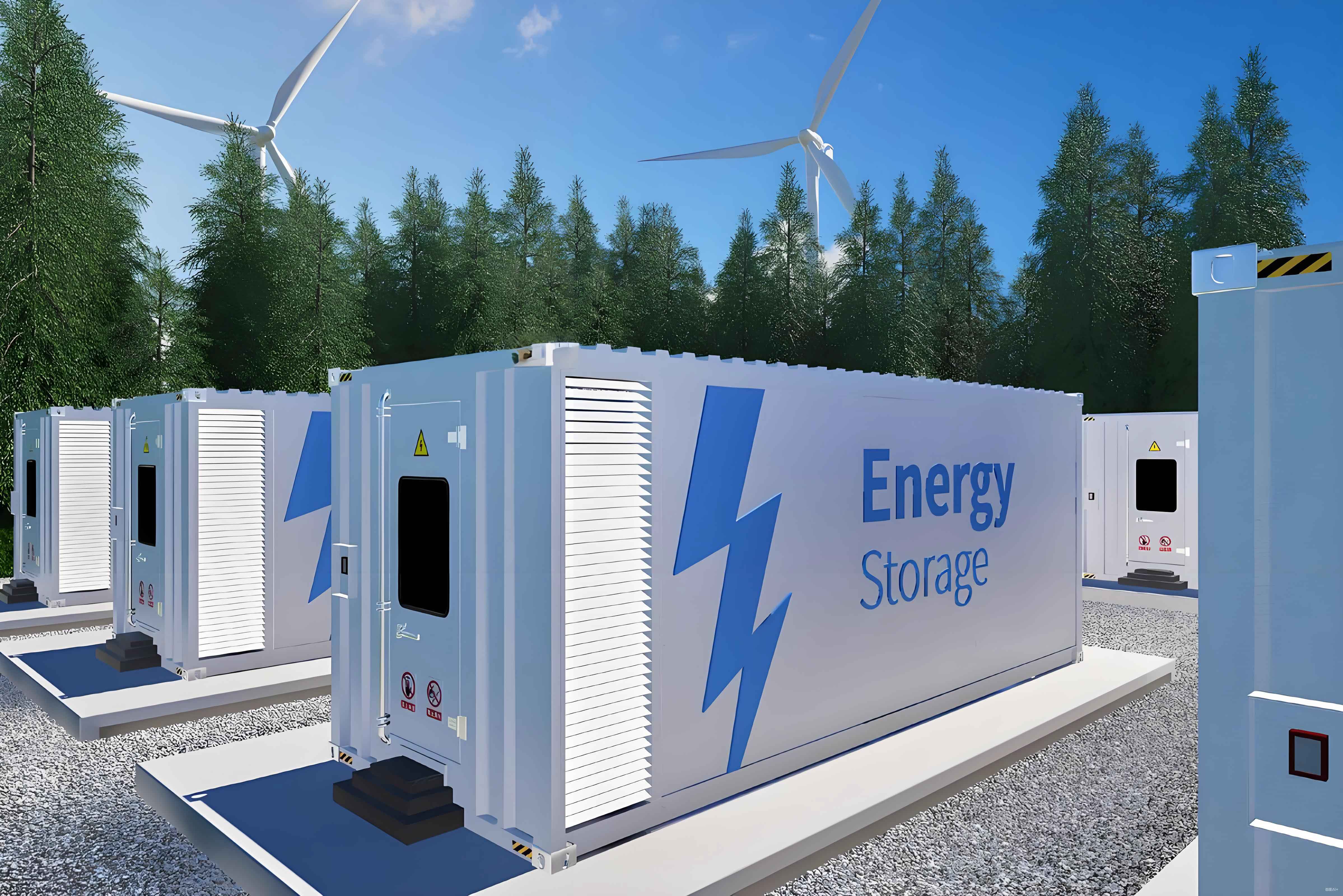
The experimental setup involved a 314Ah LFP energy storage lithium battery with a nominal voltage of 3.2V, using LiFePO₄ as the cathode material and graphite as the anode. The charge and discharge cutoff voltages were set at 3.65V and 2.5V, respectively, to align with standard operational limits for energy storage lithium batteries. Tests were conducted in a controlled environmental chamber, with high-precision temperature sensors (accuracy ±0.5°C) attached to the battery surface to monitor thermal changes. A battery testing system was employed to perform constant power charge-discharge cycles, following the GB/T 36276-2023 standard for energy storage lithium batteries. The experiments were divided into three main categories: temperature tests at 25°C, 45°C, and 5°C with a 1P constant power rate; rate tests at 1P, 2P, and 4P under 25°C; and combined rate-temperature tests to examine interactions. Data on voltage, current, energy, time, and temperature were recorded for analysis, ensuring reproducibility across multiple battery samples from the same batch.
The energy efficiency (η) of an energy storage lithium battery is a critical metric defined as the ratio of discharge energy to charge energy, expressed as: $$η = \frac{E_{\text{discharge}}}{E_{\text{charge}}} \times 100\%$$ where E_discharge and E_charge represent the total energy output and input during a cycle, respectively. This efficiency reflects the overall performance losses due to internal resistance, polarization, and side reactions. Under varying temperatures, the energy storage lithium battery exhibited distinct behaviors. For instance, at 25°C, the initial energy efficiency was approximately 95%, which increased to 97.5% at 45°C due to reduced polarization and enhanced ionic conductivity. Conversely, at 5°C, efficiency dropped to 82.4%, highlighting the limitations of low-temperature operation for energy storage lithium batteries. The table below summarizes the experimental data for different temperatures, illustrating the impact on energy metrics and thermal characteristics.
| Parameter | Unit | 5°C | 25°C | 45°C |
|---|---|---|---|---|
| Charge Energy | Wh | 1005.1 | 1089.4 | 1101.7 |
| Discharge Energy | Wh | 828.3 | 1031.5 | 1074.2 |
| Energy Efficiency | % | 82.4 | 94.7 | 97.5 |
| Max Charge Temperature | °C | 8.1 | 29.8 | 49.4 |
| Max Discharge Temperature | °C | 11.3 | 30.8 | 50.8 |
| Charge Temperature Rise | °C | 3.9 | 1.5 | 2.6 |
| Discharge Temperature Rise | °C | 4.9 | 2.8 | 2.5 |
Temperature variations significantly affect the voltage plateau and thermal behavior of energy storage lithium batteries. At higher temperatures, such as 45°C, the voltage plateau during charge and discharge remains stable between 3.35–3.45V and 3.3–3.2V, respectively, allowing for prolonged energy delivery. In contrast, at 5°C, the charge plateau shifts to 3.4–3.5V with a shorter duration, reducing the effective capacity. The thermal analysis reveals that energy storage lithium batteries experience greater temperature rises in cold environments, with discharge temperature rises reaching 4.9°C at 5°C compared to 2.5°C at 45°C. This is attributed to increased internal resistance and polarization effects, which are described by the Arrhenius equation: $$k = A \cdot e^{-\frac{E_a}{RT}}$$ where k is the reaction rate constant, E_a is the activation energy, R is the gas constant, and T is the absolute temperature. Lower temperatures elevate E_a, slowing down ion diffusion and charge transfer, thereby increasing energy losses and heat generation in energy storage lithium batteries.
The heat generation in energy storage lithium batteries during operation arises from reversible reaction heat and irreversible polarization heat. The overall heat production can be modeled using the energy balance equation: $$Q_{\text{total}} = I^2 R_i + I T \frac{\partial E}{\partial T}$$ where I is the current, R_i is the internal resistance, and ∂E/∂T represents the entropy change. At low temperatures, the increased viscosity of the electrolyte amplifies ohmic losses, leading to higher temperature rises during discharge. For example, at 5°C, the discharge process involves lithium de-intercalation from the graphite anode, which is kinetically hindered, resulting in more heat dissipation. This asymmetry between charge and discharge is less pronounced at elevated temperatures, where ionic mobility improves. The incremental capacity analysis (ICA) further elucidates these effects by differentiating the voltage-capacity curve: $$\frac{dQ}{dV} = \frac{\Delta Q}{\Delta V}$$ where dQ/dV peaks indicate phase transitions in the electrode materials. At 5°C, the ICA curves show broadened and shifted peaks, signifying increased polarization, whereas at 45°C, sharper peaks at lower voltages indicate enhanced reaction kinetics for energy storage lithium batteries.
Rate performance is another crucial aspect for energy storage lithium batteries, especially in applications requiring high power output. Under constant power conditions of 1P, 2P, and 4P at 25°C, the energy storage lithium battery demonstrated stable voltage plateaus, but with notable changes in efficiency and thermal response. The energy efficiency decreases marginally with increasing C-rates, from 94.7% at 1P to approximately 90% at 4P, due to heightened polarization and ohmic losses. The voltage profiles shift upward during charge and downward during discharge at higher rates, as summarized in the table below. This behavior is driven by the interplay of ohmic, electrochemical, and concentration polarization, which collectively increase the overpotentials in energy storage lithium batteries.
| Parameter | Unit | 1P | 2P | 4P |
|---|---|---|---|---|
| Charge Energy | Wh | 1089.4 | 1109.4 | 1112.0 |
| Discharge Energy | Wh | 1031.5 | 993.2 | 980.5 |
| Energy Efficiency | % | 94.7 | 89.5 | 88.2 |
| Max Charge Temperature | °C | 29.8 | 35.2 | 42.1 |
| Max Discharge Temperature | °C | 30.8 | 36.5 | 40.8 |
| Charge Temperature Rise | °C | 1.5 | 3.2 | 9.1 |
| Discharge Temperature Rise | °C | 2.8 | 4.5 | 7.8 |
At low C-rates (e.g., 1P), the energy storage lithium battery exhibits a discharge temperature rise slightly higher than during charge, attributed to the higher energy barrier for lithium de-intercalation from graphite. The temperature rise remains below 3°C, indicating manageable thermal stress. However, as the rate increases to 4P, the charge temperature rise surpasses that of discharge, reaching up to 9.1°C, due to dominant ohmic heating and accelerated side reactions. The polarization effects at high rates are captured by the Butler-Volmer equation: $$i = i_0 \left[ \exp\left(\frac{\alpha_a F \eta}{RT}\right) – \exp\left(-\frac{\alpha_c F \eta}{RT}\right) \right]$$ where i is the current density, i_0 is the exchange current density, α_a and α_c are the anodic and cathodic transfer coefficients, F is Faraday’s constant, η is the overpotential, and T is temperature. At high currents, i exceeds i_0, leading to significant overpotentials that elevate heat generation in energy storage lithium batteries. The ICA curves for different rates show peak broadening and overlapping, reflecting reduced resolution of phase transitions due to intensified polarization.
The combined effects of rate and temperature were examined through additional tests at 2P under slightly varied ambient conditions (25°C vs. 26°C). The energy storage lithium battery showed improved energy efficiency from 89.5% at 25°C to over 90% at 26°C, meeting the standard requirement of ≥90% for 2P charge-discharge cycles. This improvement is linked to reduced internal resistance and enhanced ion diffusion at higher temperatures, which elevate the discharge voltage plateau and extend the effective discharge duration. The data from these tests are presented in the table below, highlighting the sensitivity of energy storage lithium batteries to minor temperature fluctuations during high-rate operations.
| Parameter | Unit | #1-1 (25°C) | #2-1 (25°C) | #1-2 (26°C) | #2-2 (26°C) |
|---|---|---|---|---|---|
| Ambient Temperature | °C | 25.00 | 25.00 | 26.00 | 26.00 |
| 2P Charge Energy | Wh | 1109.42 | 1105.39 | 1116.60 | 1116.27 |
| 2P Discharge Energy | Wh | 993.21 | 986.61 | 1014.60 | 1016.10 |
| Energy Efficiency | % | 89.52 | 89.25 | 90.87 | 91.03 |
| Avg Charge Temperature | °C | 28.16 | 25.93 | 29.25 | 29.18 |
| Avg Discharge Temperature | °C | 28.19 | 26.04 | 29.85 | 30.13 |
In these tests, the energy storage lithium battery’s discharge energy increased by 2–3% with a mere 1°C rise in ambient temperature, underscoring the thermodynamic advantages of warmer conditions. The extended discharge plateau at 26°C, compared to 25°C, aligns with the Arrhenius behavior, where higher temperatures lower activation barriers and improve charge transfer kinetics. This sensitivity emphasizes the need for precise thermal control in energy storage lithium battery systems, especially in rate-critical applications like frequency regulation.
In conclusion, this study demonstrates that temperature and C-rate are pivotal factors influencing the performance of energy storage lithium batteries. Elevated temperatures enhance energy efficiency and stability by reducing polarization and internal resistance, whereas low temperatures impose significant limitations due to increased viscosity and slowed ion transport. At low C-rates, energy storage lithium batteries exhibit minimal thermal rise and high efficiency, making them suitable for energy-oriented storage. However, high C-rates intensify polarization and heat generation, particularly during charging, necessitating robust thermal management strategies. For practical applications, energy storage lithium batteries in cold climates should incorporate heating mechanisms to maintain optimal operating temperatures, while high-power systems must prioritize cooling during charge cycles to mitigate safety risks. Future designs should leverage these insights to optimize battery management systems, ensuring that energy storage lithium batteries deliver reliable performance across diverse operational scenarios. Ultimately, advancing the understanding of these dynamics will support the broader adoption of energy storage lithium batteries in the transition to a sustainable energy future.