
In the context of global efforts toward carbon neutrality and sustainable energy, the development of advanced battery technologies has become a critical focus. Among these, the sodium-ion battery has emerged as a promising alternative to lithium-ion batteries due to its abundant raw materials, lower cost, and enhanced safety profiles. From a patent analysis perspective, we delve into the industrial trends of sodium-ion batteries, examining key technological advancements, research directions, and market readiness. This comprehensive review aims to provide insights for stakeholders in strategic planning and innovation.
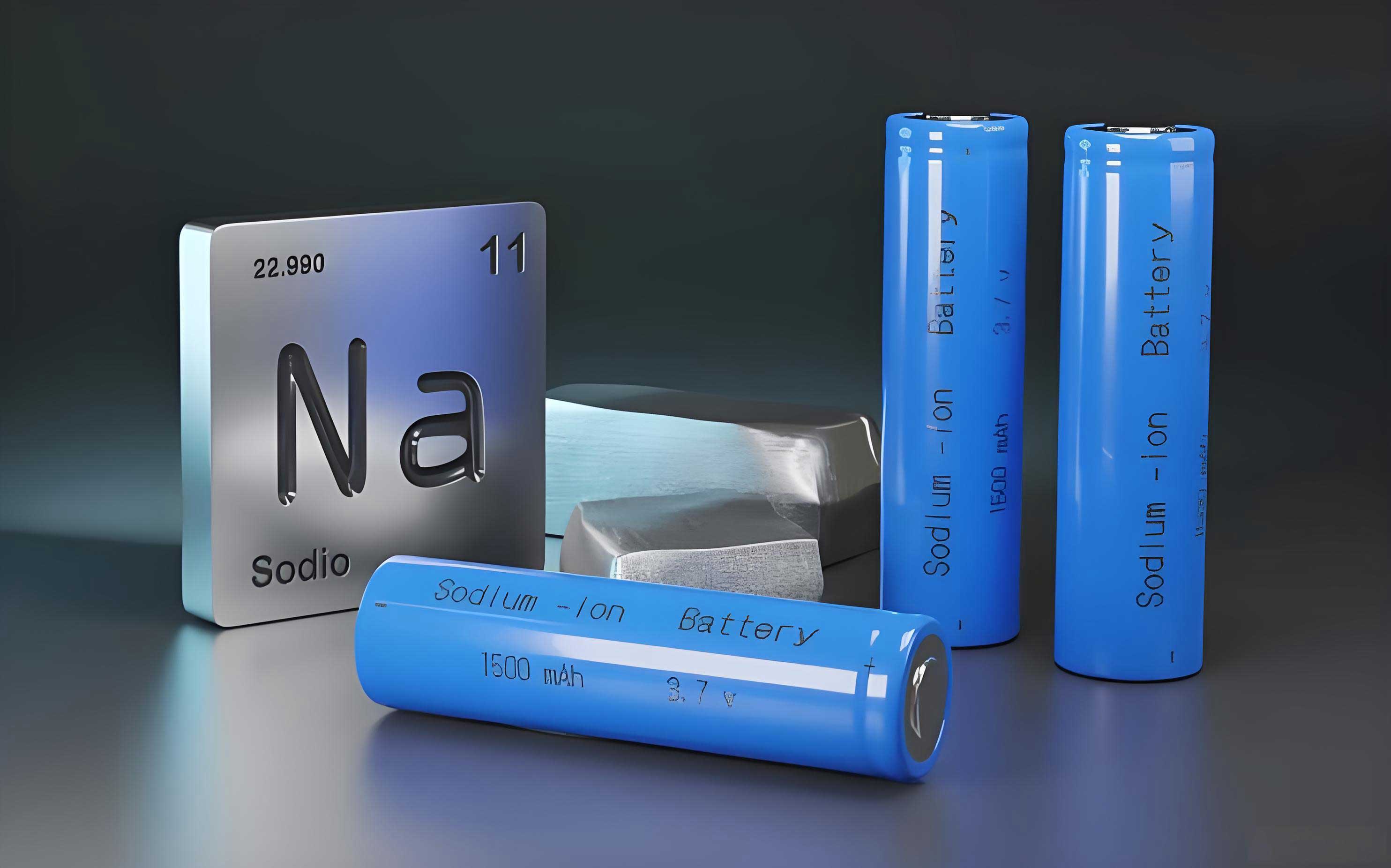
The sodium-ion battery operates on principles similar to lithium-ion batteries, involving the shuttling of sodium ions between cathode and anode during charge and discharge cycles. However, the larger ionic radius of sodium (approximately 1.02 Å) compared to lithium (0.76 Å) poses unique challenges in material design, particularly for electrode stability and ion diffusion. The theoretical energy density of a sodium-ion battery can be expressed as: $$E = \frac{C \times V}{m}$$ where \(E\) is the energy density (Wh/kg), \(C\) is the capacity (Ah), \(V\) is the average voltage (V), and \(m\) is the mass (kg). Despite lower energy densities than lithium-ion counterparts, the sodium-ion battery offers advantages in resource sustainability, with sodium abundance in Earth’s crust at about 2.74%, significantly higher than lithium’s 0.0065%. This has driven intense research and patent activity, as evidenced by the growing number of filings worldwide.
Our analysis of patent data reveals a surge in innovation related to sodium-ion batteries, particularly from 2012 onward. The cumulative number of patents reflects the rapid technological evolution and increasing commercial interest in sodium-ion battery systems. Table 1 summarizes the annual patent filing trends for sodium-ion battery technologies in key regions, highlighting the exponential growth.
| Year | Number of Patents | Growth Rate (%) |
|---|---|---|
| 2010 | 50 | — |
| 2012 | 150 | 200 |
| 2014 | 400 | 167 |
| 2016 | 800 | 100 |
| 2018 | 1,200 | 50 |
| 2020 | 1,800 | 50 |
| 2022 | 2,500 | 39 |
This growth is fueled by advancements in materials science, driven by academic institutions and corporate R&D teams. The distribution of patent applicants indicates a shift from fundamental research to applied development. Initially, universities dominated the landscape, but in recent years, companies have increased their filings, signaling a move toward industrialization. Table 2 breaks down the applicant types for sodium-ion battery patents, illustrating this transition.
| Applicant Type | Percentage (%) | Key Focus Areas |
|---|---|---|
| Universities | 58 | Cathode materials, anode synthesis, fundamental electrochemistry |
| Companies | 33 | Electrolyte formulations, cell design, manufacturing processes |
| Research Institutes | 8 | Material characterization, safety testing, scalability studies |
| Individuals | 1 | Niche innovations, additive compositions |
Key technological hurdles in sodium-ion battery development revolve around three core components: cathode materials, anode materials, and electrolytes. Each component presents unique challenges that patent activity aims to address. We explore these in detail, incorporating mathematical models and comparative analyses to underscore the progress.
Cathode Materials for Sodium-Ion Battery: The cathode is critical for determining the capacity, voltage, and cycle life of a sodium-ion battery. Primary cathode categories include layered oxides, polyanionic compounds, and Prussian blue analogues. Layered oxides, such as NaxMO2 (where M is a transition metal like Mn, Fe, or Co), are widely studied due to their high theoretical capacity. The reversible capacity can be modeled as: $$C_{\text{rev}} = \frac{nF}{3.6M}$$ where \(n\) is the number of electrons transferred, \(F\) is Faraday’s constant (96485 C/mol), and \(M\) is the molar mass (g/mol). However, these materials suffer from phase transitions during sodium ion insertion/extraction, leading to capacity fade. Polyanionic compounds, like Na3V2(PO4)3, offer better structural stability but lower electronic conductivity. Prussian blue analogues, with open frameworks, facilitate fast ion diffusion but face issues with hydration and defects. Table 3 compares the performance metrics of these cathode types based on patent disclosures.
| Material Type | Average Capacity (mAh/g) | Voltage vs. Na/Na+ (V) | Cycle Life (cycles) | Key Challenges |
|---|---|---|---|---|
| Layered Oxides | 120-180 | 2.5-3.5 | 500-1000 | Phase instability, moisture sensitivity |
| Polyanionic Compounds | 100-140 | 3.0-3.8 | >2000 | Low conductivity, synthesis complexity |
| Prussian Blue Analogues | 140-160 | 2.5-3.2 | 800-1500 | Structural defects, water content control |
Patent filings indicate that layered oxide optimization is a major focus, with innovations in doping strategies (e.g., with Mg or Al) to enhance stability. The general formula for doped layered oxides is NaxM1-yDyO2, where D is a dopant. This approach improves the sodium-ion battery performance by reducing irreversible capacity loss.
Anode Materials for Sodium-Ion Battery: The anode must accommodate large sodium ions without significant volume expansion. Carbon-based materials, particularly hard carbon, are prevalent due to their disordered structure and large interlayer spacing. The storage mechanism in hard carbon involves adsorption in pores and intercalation between graphene-like layers, described by: $$Q = q_{\text{ads}} + q_{\text{intercal}}$$ where \(Q\) is the total capacity, \(q_{\text{ads}}\) is the adsorption capacity, and \(q_{\text{intercal}}\) is the intercalation capacity. Hard carbon anodes can achieve capacities of 250-350 mAh/g, but they suffer from low initial Coulombic efficiency. Soft carbon, while more graphitic, offers lower capacity due to smaller d-spacing. Alternative anodes like alloy-based materials (e.g., Sn or Sb) provide high capacities but exhibit large volume changes (>300%), leading to pulverization. Table 4 summarizes anode material characteristics from patent literature.
| Material Class | Specific Capacity (mAh/g) | Volume Change (%) | Advantages | Disadvantages |
|---|---|---|---|---|
| Hard Carbon | 250-350 | 10-20 | Low cost, good cycling | Low initial efficiency, precursor variability |
| Soft Carbon | 150-200 | 5-15 | Better conductivity | Lower capacity, limited sodium storage |
| Alloy Materials | 400-600 | 200-400 | High capacity | Poor cycle life, electrode degradation |
| Conversion Materials | 300-500 | 100-300 | High theoretical capacity | Voltage hysteresis, side reactions |
Patent analysis shows that hard carbon development is led by academic groups, with a focus on biomass-derived precursors (e.g., coconut shells or lignin) to reduce costs. However, corporate involvement in anode patents remains limited, indicating an area for future investment. The sodium-ion battery community is exploring composite anodes to mitigate volume effects, such as carbon-coated alloys, where the capacity can be approximated as: $$C_{\text{composite}} = f_{\text{carbon}} C_{\text{carbon}} + f_{\text{alloy}} C_{\text{alloy}}$$ with \(f\) representing the mass fraction.
Electrolyte Systems for Sodium-Ion Battery: Electrolytes mediate ion transport and influence solid-electrolyte interphase (SEI) formation, crucial for cycle stability. Sodium salts like NaPF6 and NaClO4 are common, dissolved in organic solvents (e.g., ethylene carbonate/diethyl carbonate mixtures). The ionic conductivity \(\sigma\) of an electrolyte follows the Arrhenius equation: $$\sigma = A \exp\left(-\frac{E_a}{RT}\right)$$ where \(A\) is a pre-exponential factor, \(E_a\) is activation energy, \(R\) is the gas constant, and \(T\) is temperature. NaPF6 is preferred for its thermal stability, but it hydrolyzes to form HF, degrading SEI. Additives like fluoroethylene carbonate (FEC) improve SEI robustness by promoting inorganic compounds (e.g., NaF). Table 5 compares electrolyte formulations from patent data.
| Salt | Solvent System | Additives | Conductivity (mS/cm) | SEI Quality |
|---|---|---|---|---|
| NaPF6 | EC:DEC (1:1) | FEC (2-5 wt%) | 8-12 | Moderate, HF risk |
| NaClO4 | PC:EMC (1:1) | VC (1-3 wt%) | 10-14 | Good, but explosive hazard |
| NaTFSI | EC:PC (1:1) | DFEC (3-7 wt%) | 6-9 | Excellent, high cost |
Recent patents emphasize novel salts (e.g., sodium bis(fluorosulfonyl)imide, NaFSI) and solid-state electrolytes to enhance safety. The sodium-ion battery electrolyte design often balances cost and performance, with NaPF6-based systems dominating industrial applications. The SEI formation energy can be modeled as: $$\Delta G_{\text{SEI}} = -nFE_{\text{SEI}}$$ where \(E_{\text{SEI}}\) is the formation potential.
The industrial trajectory of sodium-ion battery technology, as gleaned from patent trends, points toward rapid commercialization. Initially, research was concentrated in universities, focusing on material discovery and basic mechanisms. Over time, companies have increased their patent portfolios, targeting cell integration, manufacturing processes, and scalability. This shift is evident in the rising number of patents on pack design and recycling methods for sodium-ion battery systems. The global patent landscape indicates collaboration between academia and industry, with joint filings accelerating technology transfer.
Key challenges remain, such as improving energy density to compete with lithium-ion batteries. The theoretical limit for sodium-ion battery energy density is around 200 Wh/kg, but practical cells achieve 100-150 Wh/kg. Innovations in electrode engineering, like nanostructuring, can enhance kinetics. The power density \(P\) relates to current \(I\) and resistance \(R\): $$P = I^2 R$$ where reducing internal resistance through better electrolytes and interfaces is a patent hotspot. Additionally, cost analysis shows that sodium-ion battery production could be 20-30% cheaper than lithium-ion, due to cheaper raw materials and compatibility with existing manufacturing lines.
In conclusion, the sodium-ion battery represents a transformative energy storage solution, with patent activity reflecting its growing importance. Our analysis underscores that material innovations—particularly in cathodes, anodes, and electrolytes—are driving progress. The sodium-ion battery is transitioning from lab-scale research to pilot production, with companies leveraging patents to secure market positions. Future directions include hybrid systems, fast-charging protocols, and circular economy approaches. For stakeholders, focusing on core material patents and cross-licensing strategies will be vital. As the sodium-ion battery ecosystem matures, it promises to complement lithium-ion technology in applications like grid storage and low-cost electric vehicles, contributing to a sustainable energy future.