
In the realm of modern energy storage, the lithium ion battery stands as a cornerstone technology, prized for its high energy density, low self-discharge, excellent cycle performance, and environmental benefits. Its widespread adoption in electric vehicles, portable electronics, and grid storage systems is undeniable. However, this proliferation brings forth a significant challenge: the impending wave of spent lithium ion batteries. If not managed properly, these end-of-life units pose serious environmental threats due to their hazardous components. Conversely, they represent a valuable urban mine, rich in critical metals like lithium, nickel, and cobalt. The recycling of cathode materials from spent lithium ion batteries is therefore not merely a waste management imperative but a strategic necessity for resource security and sustainable development. This article, from my research perspective, delves into the development trends of recycling technologies for cathode materials from spent lithium ion batteries through the lens of patent analysis. By examining global patent data, I aim to map the technological landscape, identify key players and innovations, and assess the competitive dynamics shaping this rapidly evolving field.
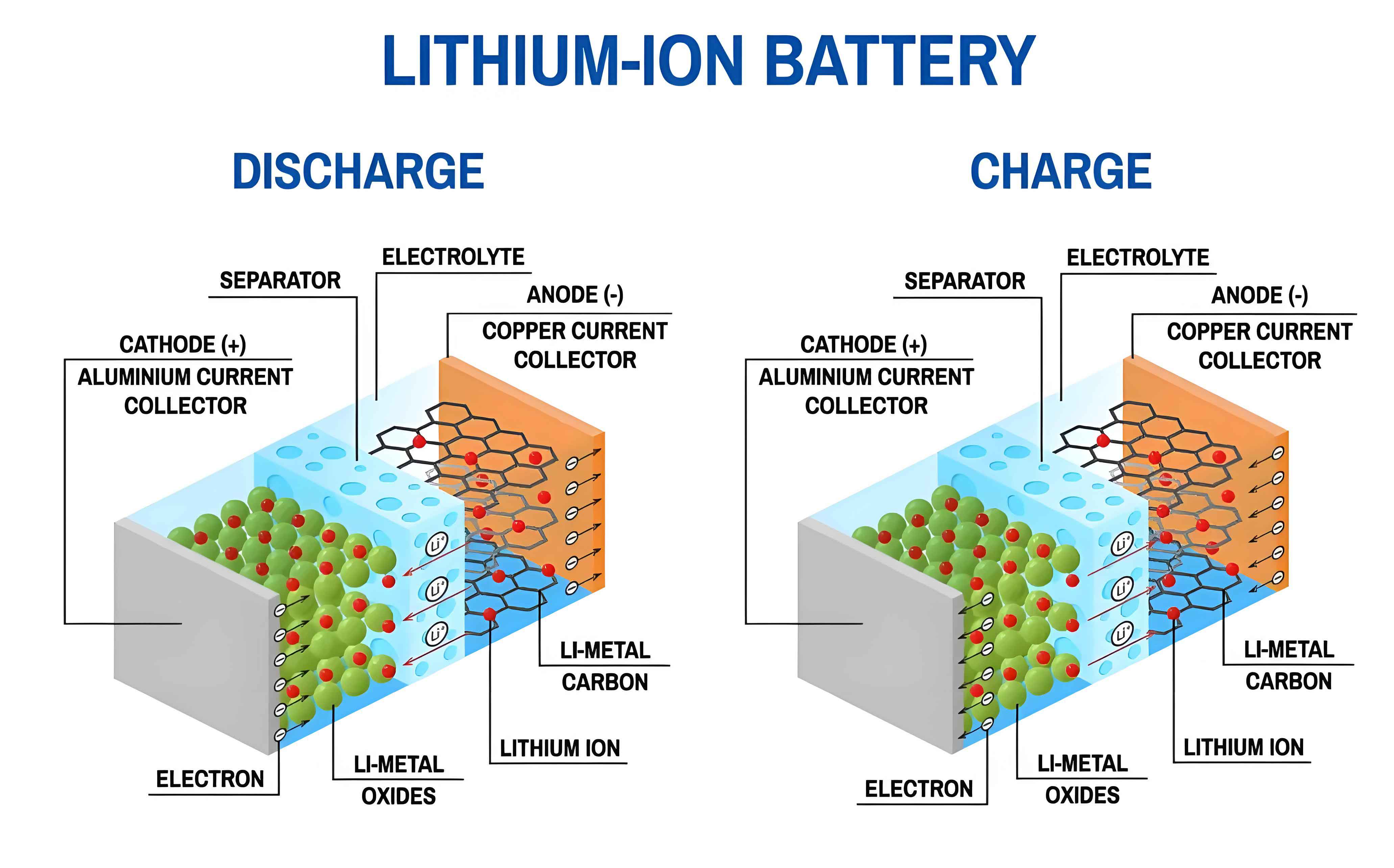
The core value of a spent lithium ion battery lies predominantly in its cathode, which hosts high-value metals. Common cathode materials include lithium cobalt oxide (LiCoO2), lithium manganese oxide (LiMn2O4), lithium iron phosphate (LiFePO4), and various ternary lithium compounds like lithium nickel cobalt manganese oxide (LiNixCoyMnzO2). Efficiently recovering these materials involves a multi-step process, which can be systematically decomposed into two primary stages: pretreatment and metallurgical recovery. A detailed breakdown is presented in the table below.
| Primary Technology | Secondary Technology | Tertiary / Quaternary Technology |
|---|---|---|
| Pretreatment | Discharge | Chemical Discharge, Physical Discharge |
| Disassembly & Crushing | Manual Disassembly, Mechanical Crushing | |
| Separation | High-Temperature Treatment, Solvent Dissolution, Electrochemical Methods | |
| Metallurgical Recovery | Pyrometallurgical Process | High-Temperature Smelting, Thermal Reduction (Carbothermal, Chlorination, Aluminothermic), Salt Roasting (Sulfation, Chlorination, Nitration) |
| Hydrometallurgical Process | Leaching (Inorganic Acid, Organic Acid, Ammonia, Bioleaching), Purification & Separation (Solvent Extraction, Salt Crystallization, Precipitation, Electrodeposition, Ion Exchange) | |
| Direct Regeneration | Solid-State Lithiation, Liquid-Phase Method, Molten Salt Repair | |
| Combined Pyro-Hydrometallurgical Process | Integration of Pyrometallurgical and Hydrometallurgical Steps |
Pretreatment aims to safely de-energize the battery and isolate the cathode active material from other components like the anode, electrolyte, separator, and casing. Metallurgical recovery then focuses on extracting valuable metals from the concentrated cathode material. The four main pathways—pyrometallurgy, hydrometallurgy, direct regeneration, and hybrid processes—each have distinct chemical foundations. For instance, the hydrometallurgical leaching of lithium cobalt oxide from a spent lithium ion battery with sulfuric acid can be represented by the reaction:
$$ 2\text{LiCoO}_2(s) + 3\text{H}_2\text{SO}_4(aq) + \text{H}_2\text{O}_2(aq) \rightarrow \text{Li}_2\text{SO}_4(aq) + 2\text{CoSO}_4(aq) + 4\text{H}_2\text{O}(l) + \text{O}_2(g) $$
The recovery efficiency often depends on optimizing parameters like acid concentration, temperature, and solid-to-liquid ratio, which can be modeled. The general metal extraction yield \( Y \) in a leaching process can be related to time \( t \) and rate constant \( k \) through empirical models such as the shrinking core model. For a reaction-controlled process, it may be expressed as:
$$ 1 – (1 – Y)^{1/3} = kt $$
Direct regeneration, a more recent focus, seeks to restore the crystal structure of the cathode material directly. This often involves a solid-state reaction to replenish lithium, represented for a lithium-deficient ternary material as:
$$ \text{Li}_{1-x}\text{Ni}_{y}\text{Co}_{z}\text{Mn}_{w}\text{O}_2 + x\text{Li}^+ \rightarrow \text{LiNi}_{y}\text{Co}_{z}\text{Mn}_{w}\text{O}_2 $$
The evolution of these technologies is best traced through intellectual property outputs. For this analysis, patent data was sourced from a major global database. The search strategy was constructed based on the technology decomposition table, targeting patents related to the recovery of cathode materials from spent lithium ion batteries. The dataset, comprising several thousand patent families, forms the basis for the following quantitative and qualitative assessments.
The analysis of patent application trends reveals the life cycle stage of this technology field. The table below summarizes the annual patent activity, which serves as a proxy for innovation intensity.
| Earliest Priority Year | Number of Patent Families | Number of Patent Applicants |
|---|---|---|
| 1997 | 1 | 1 |
| 1999 | 2 | 3 |
| 2002-2006 | 15 | 16 |
| 2007-2011 | 104 | 99 |
| 2012-2016 | 273 | 212 |
| 2017-2021 | 1236 | 799 |
| 2022-2024 | 1361 | 897 |
The data shows a distinct inflection point around 2017. Prior to this, innovation was in a nascent, exploratory phase. The subsequent period is characterized by exponential growth in both patent filings and the number of entities entering the field. This surge correlates with the rapid market expansion for electric vehicles and consumer electronics, leading to heightened awareness of the impending waste stream and the economic value locked within spent lithium ion batteries. The field is unequivocally in a phase of rapid technological development and commercialization.
Geographical analysis of priority filings indicates the global distribution of innovation sources. The dominance of one region is striking, as illustrated in the following summary.
| Country/Region | Number of Priority Filings | Percentage Share (%) |
|---|---|---|
| China | 2567 | 86.5 |
| South Korea | 134 | 4.5 |
| Japan | 105 | 3.5 |
| United States | 75 | 2.5 |
| India | 16 | 0.5 |
| Others | 71 | 2.4 |
This distribution underscores China’s paramount role as the epicenter of research and development in recycling technologies for the lithium ion battery. The sheer volume of Chinese patents suggests massive investment and a strategic drive to secure technological leadership and control over the circular supply chain for critical battery materials.
To understand the competitive landscape, I analyzed the leading patent assignees. Merely counting patents gives an incomplete picture; therefore, I evaluated both the quantity and the perceived quality/influence of their portfolios using metrics like total patent citations and the H-index. The H-index, where an assignee has index \( h \) if they have \( h \) patents each cited at least \( h \) times, is a robust measure of sustained impactful innovation. The following table lists top assignees by patent volume alongside citation metrics.
| Patent Assignee | Number of Patent Families | Total Citations Received | Average Citations per Patent |
|---|---|---|---|
| Central South University (China) | 148 | 1016 | 6.9 |
| Hunan Brunp Recycling Technology Co., Ltd. (China) | 77 | 261 | 3.4 |
| Guangdong Brunp Recycling Technology Co., Ltd. (China) | 74 | 220 | 3.0 |
| Kunming University of Science and Technology (China) | 68 | 318 | 4.7 |
| Institute of Process Engineering, Chinese Academy of Sciences (China) | 64 | 700 | 10.9 |
| Anhui Nandu Huabo New Material Technology Co., Ltd. (China) | 38 | 17 | 0.4 |
| Huazhong University of Science and Technology (China) | 34 | 116 | 3.4 |
| Hefei Gotion High-tech Power Energy Co., Ltd. (China) | 29 | 346 | 11.9 |
| Beijing Institute of Technology (China) | 25 | 190 | 7.6 |
| JX Metals Corporation (Japan) | 19 | 496 | 26.1 |
The list is dominated by Chinese entities, with a significant presence of universities and research institutes. This indicates that a substantial portion of the innovation in recycling spent lithium ion battery materials in China is still rooted in fundamental or applied research. In contrast, key players from Japan and South Korea are primarily industrial corporations, suggesting a more market-driven, application-focused approach. The citation metrics reveal nuances in portfolio quality. For instance, while Central South University leads in volume, JX Metals Corporation of Japan boasts an exceptionally high average citation count, signaling that its patents, though fewer, are highly influential foundational works in the field.
Further refining the assessment of competitive strength, I calculated the H-index for the leading assignees. The results are tabulated below.
| Patent Assignee | Country | H-index |
|---|---|---|
| Central South University | China | 19 |
| Institute of Process Engineering, CAS | China | 14 |
| JX Metals Corporation | Japan | 11 |
| Hefei Gotion High-tech Power Energy Co., Ltd. | China | 10 |
| Kunming University of Science and Technology | China | 10 |
| Beijing General Research Institute of Mining & Metallurgy | China | 10 |
| Guangdong Jinag New Energy Technology Co., Ltd. | China | 9 |
| Lanzhou University of Technology | China | 9 |
| Guangdong Brunp Recycling Technology Co., Ltd. | China | 9 |
| Hunan Brunp Recycling Technology Co., Ltd. | China | 9 |
The H-index ranking confirms the strong competitive position of major Chinese universities and research institutes, alongside the significant impact of Japan’s JX Metals. This suggests that while China has a numerical advantage, high-quality, impactful innovation is also present in other regions. The competitive landscape for recycling the valuable components of a spent lithium ion battery is thus dynamic and multi-polar.
To identify the focal points of recent innovation, I employed text clustering analysis on patent abstracts. The results highlight that over the past five years, research hotspots have comprehensively covered various technical branches. Key areas include pretreatment processes like discharge and separation; the targeted recovery of specific metals (lithium, nickel, cobalt, manganese) via hydrometallurgical or pyrometallurgical extraction; and the development of specialized recycling apparatus. This indicates a maturation of the field, with parallel advances across the entire value chain of recycling a spent lithium ion battery.
Within the vast patent landscape, certain inventions stand out as core technologies due to their high citation frequency, indicating they are foundational or blockbuster patents. The following list presents some of the most cited patents in the domain of lithium ion battery cathode recycling.
| Patent Publication Number | Earliest Priority Year | Assignee (Generalized) | Technical Focus |
|---|---|---|---|
| JP2007122885A | 2005 | Japanese Mining/Materials Company | Acid leaching of cathode material with oxidant for metal recovery |
| JP2014162982A | 2013 | Japanese Metals Corporation | Efficient recovery process for valuable metals from lithium ion battery |
| CN101847763A | 2010 | Chinese Automotive Company | Integrated recycling method for power lithium ion battery |
| CN106129511A | 2016 | Chinese Chemical Technology Company | Hydrometallurgical process for ternary material recovery |
| CN102208706A | 2011 | Chinese Battery Manufacturer | Method for regenerating cathode material from spent lithium ion battery |
| US20160372802A1 | 2015 | US Battery Technology Firm | Electrode recovery and direct regeneration methods |
Analysis of these core patents reveals that the most influential inventions primarily relate to hydrometallurgical processes, direct regeneration techniques, and combined pyro-hydrometallurgical methods. The technical effects emphasized are high recovery rates, low energy consumption, environmental friendliness, process simplicity, and suitability for industrial scale-up—all critical for the sustainable and economical recycling of spent lithium ion batteries. The chemical principles behind some core hydrometallurgical patents often involve optimizing leaching kinetics. The rate of metal dissolution \( r \) can be expressed as a function of acid concentration \( C_A \), temperature \( T \), and particle surface area \( A \), often following an Arrhenius-type relationship:
$$ r = k_0 \cdot A \cdot C_A^n \cdot \exp\left(-\frac{E_a}{RT}\right) $$
where \( k_0 \) is the pre-exponential factor, \( n \) is the reaction order, \( E_a \) is the activation energy, and \( R \) is the gas constant. Patents often claim novel ways to maximize \( r \) while minimizing reagent use and energy input \( E_a \).
Synthesizing the patent intelligence, several conclusions emerge. The technology for recycling cathode materials from spent lithium ion batteries is in a period of explosive growth, transitioning from lab-scale research to industrial implementation. China has established a commanding lead in terms of patent volume and active innovation entities, largely driven by its academic and state research apparatus. However, other nations like Japan and South Korea possess deeply impactful patents and strong industrial players. The innovation hotspots are well-distributed across pretreatment, metal extraction, and equipment design, indicating a holistic approach to solving the recycling challenge for the complex lithium ion battery. Core patents are predominantly focused on making hydrometallurgical and direct regeneration processes more efficient and less costly.
Based on this analysis, I propose a strategic framework to further enhance the competitiveness and sustainability of the lithium ion battery cathode recycling industry, particularly from a system-level perspective. First, strengthening top-level design and policy frameworks is crucial. Governments should establish clear industry standards, extended producer responsibility (EPR) schemes, and traceability platforms using unique identifiers for every lithium ion battery. This creates a predictable market and ensures a steady feedstock for recyclers. Second, optimizing the innovation ecosystem is key. Fostering collaboration between universities, research institutes, battery manufacturers, and recycling companies through consortiums or innovation alliances can accelerate technology transfer. Funding for pilot-scale demonstrations and lifecycle assessment studies is vital to bridge the valley of death between lab innovation and commercial deployment for recycling spent lithium ion batteries. Third, continuous and strategic patenting remains essential. Entities should focus on protecting improvements in process efficiency, novel reagent systems (e.g., organic acids, deep eutectic solvents), and digital technologies for process control. Special attention should be paid to filing patents in key markets and around emerging techniques like direct cathode regeneration, which promises lower environmental impact. The ultimate goal is to establish a circular economy where every spent lithium ion battery is seen not as waste, but as a primary source of critical materials, driving down the environmental footprint and cost of future energy storage systems.
The journey towards efficient and sustainable recycling of lithium ion battery components is complex and data-driven. Patent analysis, as demonstrated, provides an invaluable map of technological progress, competitive forces, and innovation directions. As the stock of spent lithium ion batteries continues to grow exponentially, the evolution of recycling technologies—documented in each new patent filing—will be a critical determinant of our ability to build a truly green energy future.