
As an essential component in modern energy storage systems, energy storage lithium batteries face significant safety challenges due to thermal runaway, which can lead to fires or explosions. This issue is particularly critical in applications such as electric vehicles, portable electronics, and grid-scale energy storage. To address this, extensive research and patent filings have focused on mitigating thermal runaway risks. This article analyzes global patent trends, technological distributions, and key innovations in thermal runaway prevention for energy storage lithium batteries, with an emphasis on materials, structural modifications, and thermal management systems. The analysis is based on patent data up to January 2025, covering over 2,600 relevant patents. Key findings highlight the dominance of Chinese applicants, the rapid growth in patent filings since 2017, and the evolving focus on multi-faceted approaches to enhance safety. Throughout this discussion, the term “energy storage lithium battery” will be frequently referenced to underscore its centrality in the analysis.
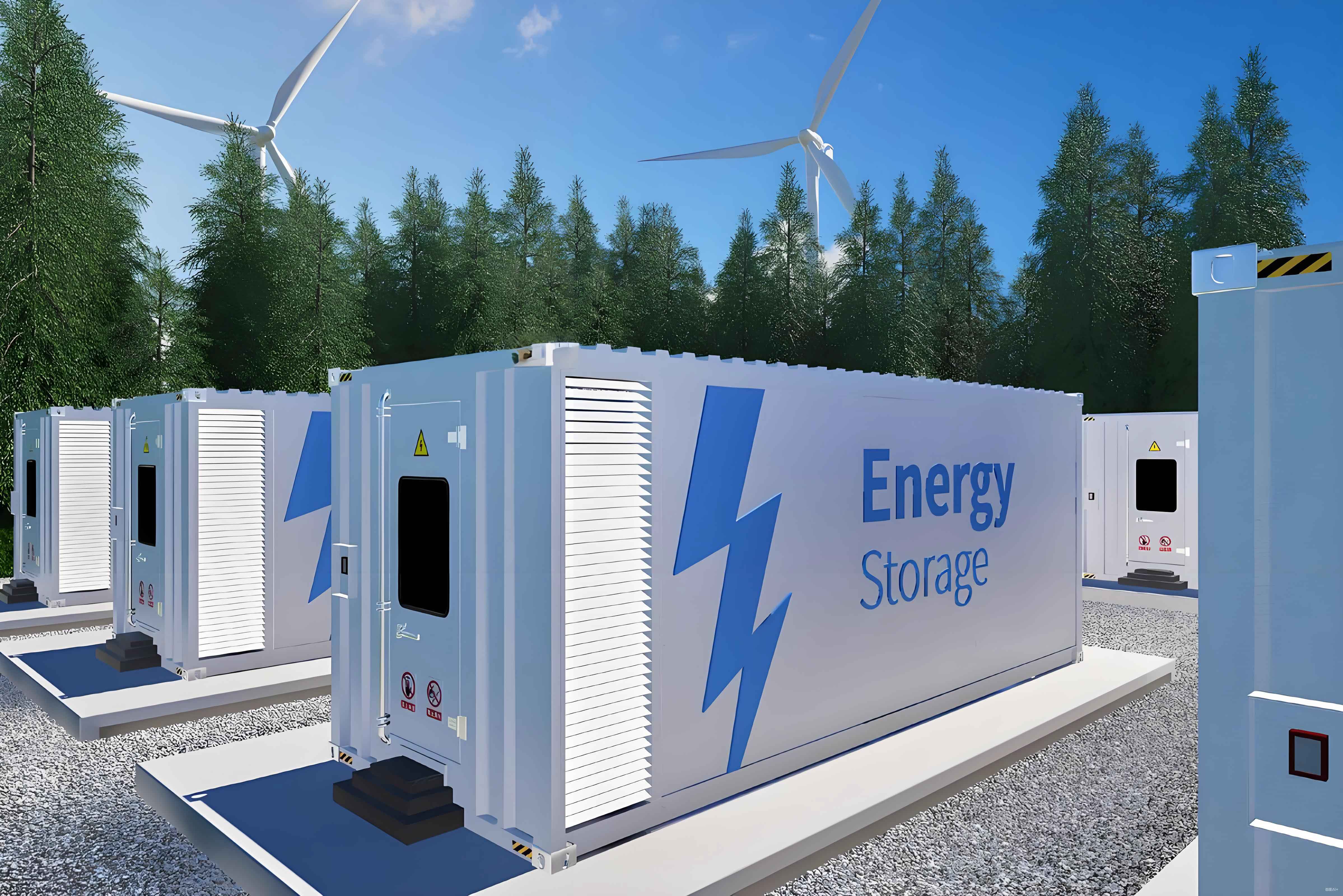
The global patent landscape for thermal runaway prevention in energy storage lithium batteries reveals a steady increase in innovation, driven by the rising demand for safer energy storage solutions. From 1992 to 2004, the field was in its infancy, with only sporadic patent filings. However, from 2005 to 2016, a period of steady growth emerged, coinciding with the expansion of electric vehicle markets. Since 2017, the sector has experienced rapid growth, with annual patent filings nearing 450 globally. China leads this trend, accounting for approximately 83% of total applications, followed by the United States (7%), Japan (5%), and South Korea (3%). This dominance reflects China’s strong policy support for新能源汽车 and energy storage infrastructure. The following table summarizes the annual patent application trends for global and Chinese filings:
| Year Range | Global Applications | Chinese Applications | Remarks |
|---|---|---|---|
| 1992-2004 | Low (<50) | Minimal | Emergence phase |
| 2005-2016 | Steady growth | Increasing share | Growth phase |
| 2017-2024 | Rapid growth (peak ~450) | Dominant (>80%) | Expansion phase |
Technological approaches to prevent thermal runaway in energy storage lithium batteries are categorized into six main areas: material modifications, structural improvements, thermal management systems (BMS), testing methods, fire protection, and methodological innovations. Material and structural modifications constitute the largest shares, at 32% and 30% respectively, while thermal management accounts for 26%. Testing, fire protection, and methods make up the remaining 12%. This distribution underscores the importance of intrinsic battery safety enhancements over external measures. The evolution of these technologies can be modeled using a growth function, where the cumulative number of patents \( N(t) \) over time \( t \) follows an exponential trend: $$ N(t) = N_0 e^{kt} $$ where \( N_0 \) is the initial number of patents and \( k \) is the growth rate, estimated at approximately 0.15 per year for energy storage lithium battery-related patents since 2017.
Material modifications focus on enhancing the thermal stability of battery components, such as electrodes, separators, and electrolytes. For energy storage lithium batteries, common strategies include incorporating flame retardants, heat-absorbing materials, thermal insulation, and thermally conductive additives. For instance, patents often describe the use of phase-change materials like paraffin in separators or electrodes to absorb excess heat during thermal events. The effectiveness of such materials can be quantified by the heat absorption capacity \( Q \), given by: $$ Q = m \cdot c_p \cdot \Delta T + m \cdot L $$ where \( m \) is the mass of the material, \( c_p \) is the specific heat capacity, \( \Delta T \) is the temperature change, and \( L \) is the latent heat of phase change. Additionally, improving the thermal stability of cathode materials, such as by blending lithium nickel manganese cobalt oxide with lithium iron phosphate, reduces the risk of exothermic reactions. The table below details the distribution of material-related patents:
| Material Component | Number of Patents | Key Technologies |
|---|---|---|
| Electrodes | 158 | Flame retardants, thermal coatings |
| Positive Electrode | 135 | Stable cathode materials |
| Negative Electrode | 79 | Lithium plating prevention |
| Separator | 231 | Microcapsules, ceramic layers |
| Electrolyte | 123 | Non-flammable solvents |
Structural improvements involve designing battery modules and packs to mitigate thermal propagation. Key innovations include cooling structures, pressure relief valves, ventilation systems, heat dissipation layers, and integrated fire suppression devices. For example, patents describe using micro-fire extinguishers within battery modules that release suppressants like perfluorohexanone upon detecting temperature spikes. The heat dissipation efficiency \( \eta \) of such structures can be expressed as: $$ \eta = \frac{\dot{Q}_{dissipated}}{\dot{Q}_{generated}} $$ where \( \dot{Q}_{dissipated} \) is the rate of heat dissipation and \( \dot{Q}_{generated} \) is the heat generation rate during thermal runaway. In energy storage lithium batteries, structural patents often focus on module-level designs, as they account for 56% of structural filings, compared to 33% for cell-level and 11% for pack-level improvements. This emphasis on modules aligns with the need to prevent thermal runaway propagation between cells in large-scale energy storage systems.
Thermal management systems (BMS) play a critical role in monitoring and controlling battery temperature to prevent thermal runaway. These systems rely on sensors for temperature, voltage, current, and gas detection, coupled with algorithms for early warning and cooling control. For instance, AI-based models can predict thermal behavior and adjust charging currents in real-time. The energy balance in a BMS-controlled energy storage lithium battery can be described by: $$ C \frac{dT}{dt} = I^2 R – h A (T – T_{ambient}) $$ where \( C \) is the heat capacity, \( T \) is temperature, \( I \) is current, \( R \) is internal resistance, \( h \) is the heat transfer coefficient, \( A \) is the surface area, and \( T_{ambient} \) is the ambient temperature. Patents in this category often integrate multiple sensing modalities, such as fiber-optic sensors for simultaneous temperature and pressure monitoring, enhancing the safety of energy storage lithium batteries in dynamic operating conditions.
Testing and fire protection technologies, though smaller in volume, are vital for validating safety and containing incidents. Testing patents include devices for measuring thermal runaway characteristics, such as burst pressure or gas emission, while fire protection patents cover灭火剂 and suppression systems. For example, some patents propose using clay suspensions or microcapsules filled with fire retardants that activate at high temperatures. The effectiveness of a fire suppression system can be modeled using the extinguishing efficiency \( \epsilon \): $$ \epsilon = 1 – \frac{t_{extinguish}}{t_{critical}} $$ where \( t_{extinguish} \) is the time to suppress the fire and \( t_{critical} \) is the time to critical thermal runaway. These approaches complement material and structural innovations, providing a multi-layered safety net for energy storage lithium batteries.
Patent maintenance data indicates the economic value of these technologies. Approximately 220 patents have been maintained for 3-4 years, 200 for 2-3 years, and 157 for 4-5 years, with only 89 patents maintained beyond 8 years. This suggests a active field with ongoing innovations. Licensing activities, though limited, include patents from universities and companies, focusing on areas like thermal modeling and composite separators. For energy storage lithium batteries, key applicants include Contemporary Amperex Technology Co. Limited (CATL) and BYD Company Limited, each with over 25 relevant patents. CATL’s patents emphasize electrode and separator modifications, such as using expandable microspheres in electrodes to absorb heat, while BYD focuses on flame-retardant materials and module designs. The table below compares their patent portfolios:
| Applicant | Key Technologies | Number of Patents | Focus Areas |
|---|---|---|---|
| CATL | Electrode coatings, separator composites | 27 | Material stability, internal short-circuit prevention |
| BYD | Flame-retardant electrolytes, module structures | 25 | Thermal propagation mitigation |
The future development of energy storage lithium batteries will likely involve balancing safety with performance and cost. While alternative technologies like sodium-ion and solid-state batteries offer advantages in thermal stability, lithium-ion batteries remain dominant due to their maturity and energy density. Innovations in thermal runaway prevention will continue to drive patent filings, particularly in material science and BMS integration. For energy storage lithium batteries, the cumulative innovation rate \( I(t) \) can be projected using: $$ I(t) = I_0 + \alpha \cdot e^{\beta t} $$ where \( I_0 \) is the baseline innovation, and \( \alpha \) and \( \beta \) are constants derived from historical data. Companies are advised to monitor emerging research and strengthen global patent portfolios to maintain competitiveness.
In conclusion, the patent analysis reveals that thermal runaway prevention in energy storage lithium batteries is a dynamic field with significant contributions from material and structural innovations. China’s leadership in patent filings reflects its strategic focus on新能源, while key players like CATL and BYD demonstrate the importance of integrated approaches. Future advancements will depend on continued research in新材料 and cross-disciplinary applications, ensuring that energy storage lithium batteries meet the growing demands for safety and efficiency in various applications.