
With the global push towards carbon neutrality and peak emissions, the transition to renewable energy sources has become imperative. Solar energy, characterized by its abundance, safety, and lack of greenhouse gas emissions, presents a viable alternative to conventional fossil fuels. In this context, the implementation of a solar power system on campus rooftops offers a promising solution due to the availability of large, stable building surfaces and consistent electricity demand. This article delves into the parameter design of such a solar power system, focusing on optimizing key factors like solar position, installation angles, and temperature effects to maximize energy efficiency. By leveraging local solar data and advanced computational methods, we aim to provide a comprehensive framework for designing an effective solar power system that supports sustainable campus operations.
The foundation of any solar power system lies in accurately determining the sun’s position and movement relative to the Earth. This is crucial for both fixed-tilt and tracking systems, as it directly influences energy capture. We employ astronomical algorithms to compute solar parameters, such as the Earth-Sun distance, solar declination, and time equation, which are essential for deriving the sun’s altitude and azimuth angles. These calculations enable precise tracking or optimal fixed-angle positioning for the solar power system. For instance, the Earth-Sun distance ER can be expressed as:
$$ E_R = 1.000423 + 0.032359 \sin \theta + 0.000086 \sin 2\theta – 0.008349 \cos \theta + 0.000115 \cos 2\theta $$
where θ represents the day angle, which varies throughout the year. Similarly, the solar declination ED, which indicates the sun’s angle relative to the celestial equator, is given by:
$$ E_D = 0.3723 + 23.2567 \sin \theta + 0.1149 \sin 2\theta – 0.1712 \sin 3\theta – 0.758 \cos \theta + 0.3656 \cos 2\theta + 0.0201 \cos 3\theta $$
These formulas are integral to predicting the sun’s path and ensuring that the solar power system is aligned for maximum exposure. The altitude angle he and azimuth angle A are derived from these base calculations, providing real-time positional data for system optimization.
To illustrate the local solar resource availability, which is critical for designing a solar power system, we present data on solar radiation and sunshine hours for a representative region. The table below summarizes key parameters that influence the energy output of a solar power system in such an area.
| Parameter | Value Range |
|---|---|
| Geographic Latitude | 32° N |
| Solar Declination | -23.43° |
| Annual Solar Radiation | 4190-5016 MJ/m² |
| Annual Sunshine Hours | 1400-2200 h |
| Average Annual Temperature | 16°C |
This data highlights the region’s moderate climate and sufficient solar resources, making it suitable for deploying a solar power system. The variability in radiation and sunshine hours underscores the need for precise parameter tuning to enhance the efficiency of the solar power system.
The sun’s altitude and azimuth angles are pivotal for the orientation of photovoltaic panels in a solar power system. The altitude angle he is calculated using the formula:
$$ \sin(h_e) = \sin \delta \sin \phi + \cos \delta \cos \phi \cos \tau $$
where δ is the solar declination, φ is the geographic latitude, and τ is the hour angle. The azimuth angle A, which indicates the sun’s compass direction, is given by:
$$ \cos A = \frac{\sin(h_e) \sin \phi – \sin \delta}{\cos(h_e) \cos \phi} $$
These equations allow for the determination of the sun’s position at any given time, facilitating the design of a solar power system that can either track the sun dynamically or be fixed at an optimal angle. For instance, in a fixed-tilt solar power system, these angles help in selecting the best tilt and orientation to maximize annual energy harvest.
Temperature plays a significant role in the performance of a solar power system, as it affects the electrical characteristics of photovoltaic cells. The open-circuit voltage Voc, a key parameter in energy conversion, decreases with rising temperature. This relationship is derived from the diode equation and can be expressed as:
$$ V_{oc} = \frac{kT}{q} \ln(I_{ph}) – \frac{kT}{q} \ln\left[ B T^\gamma \exp\left( -\frac{E_{g0}}{kT} \right) \right] + \frac{q v_{g0}}{kT} $$
where k is Boltzmann’s constant (1.38 × 10⁻²³ J/K), T is the absolute temperature, q is the electron charge (1.6 × 10⁻¹⁹ C), I_ph is the photocurrent, B is a temperature-independent constant, γ is an exponent typically around 3 for silicon cells, and E_g0 is the bandgap energy (1.21 eV for silicon). Differentiating this equation with respect to temperature shows that Voc decreases by approximately 2.3 mV per degree Kelvin increase. This negative temperature coefficient emphasizes the importance of maintaining low operating temperatures in a solar power system to preserve voltage output and overall efficiency. For example, adequate ventilation and heat dissipation strategies should be integrated into the solar power system design to mitigate performance losses.
In addition to voltage, the short-circuit current I_sc and fill factor FF are also temperature-dependent, though to a lesser extent. The overall conversion efficiency η of a solar power system can be modeled as:
$$ \eta = \frac{V_{oc} I_{sc} FF}{P_{in}} $$
where P_in is the incident solar power. As temperature rises, the fill factor tends to decrease due to increased recombination losses, further reducing efficiency. Therefore, thermal management is a critical aspect of optimizing a solar power system, particularly in regions with high ambient temperatures.
The installation angles—tilt angle β and azimuth angle γ—are fundamental to the design of a fixed-tilt solar power system. Through simulations and empirical data, we can determine the optimal values that maximize solar radiation capture over the year. For the target region, the optimal tilt angle β ranges from 31° to 35°, with a peak at 34°, as this angle minimizes losses and aligns with the sun’s average path. The table below shows the variation in annual solar radiation received per unit area for different tilt angles, assuming a south-facing orientation (γ = 0°).
| Tilt Angle β (°) | Annual Radiation (MJ/m²) |
|---|---|
| 25 | 4800 |
| 30 | 4950 |
| 34 | 5010 |
| 35 | 5000 |
| 40 | 4850 |
This data confirms that a tilt angle of 34° yields the highest radiation capture, making it ideal for the solar power system. Similarly, the azimuth angle γ should be optimized; for the northern hemisphere, a slight deviation from due south (γ = 0°) can enhance performance. Our analysis indicates that an azimuth angle between 2° and 3° maximizes energy intake, as shown in the following table for a fixed tilt angle of 34°.
| Azimuth Angle γ (°) | Annual Radiation (MJ/m²) |
|---|---|
| -5 | 4980 |
| 0 | 5000 |
| 2 | 5015 |
| 3 | 5015 |
| 5 | 4990 |
These findings underscore the importance of fine-tuning both angles in a solar power system to achieve peak efficiency. By adhering to these parameters, the solar power system can significantly reduce energy losses and improve ROI.
Beyond the panel orientation, other factors such as shading, dust accumulation, and system maintenance also impact the performance of a solar power system. For instance, regular cleaning and monitoring can prevent efficiency drops due to obstructions. Moreover, the integration of energy storage components, like batteries, enhances the reliability of the solar power system by storing excess energy for use during non-sunny periods. The image below illustrates a typical solar battery energy storage setup, which is an integral part of a modern solar power system.
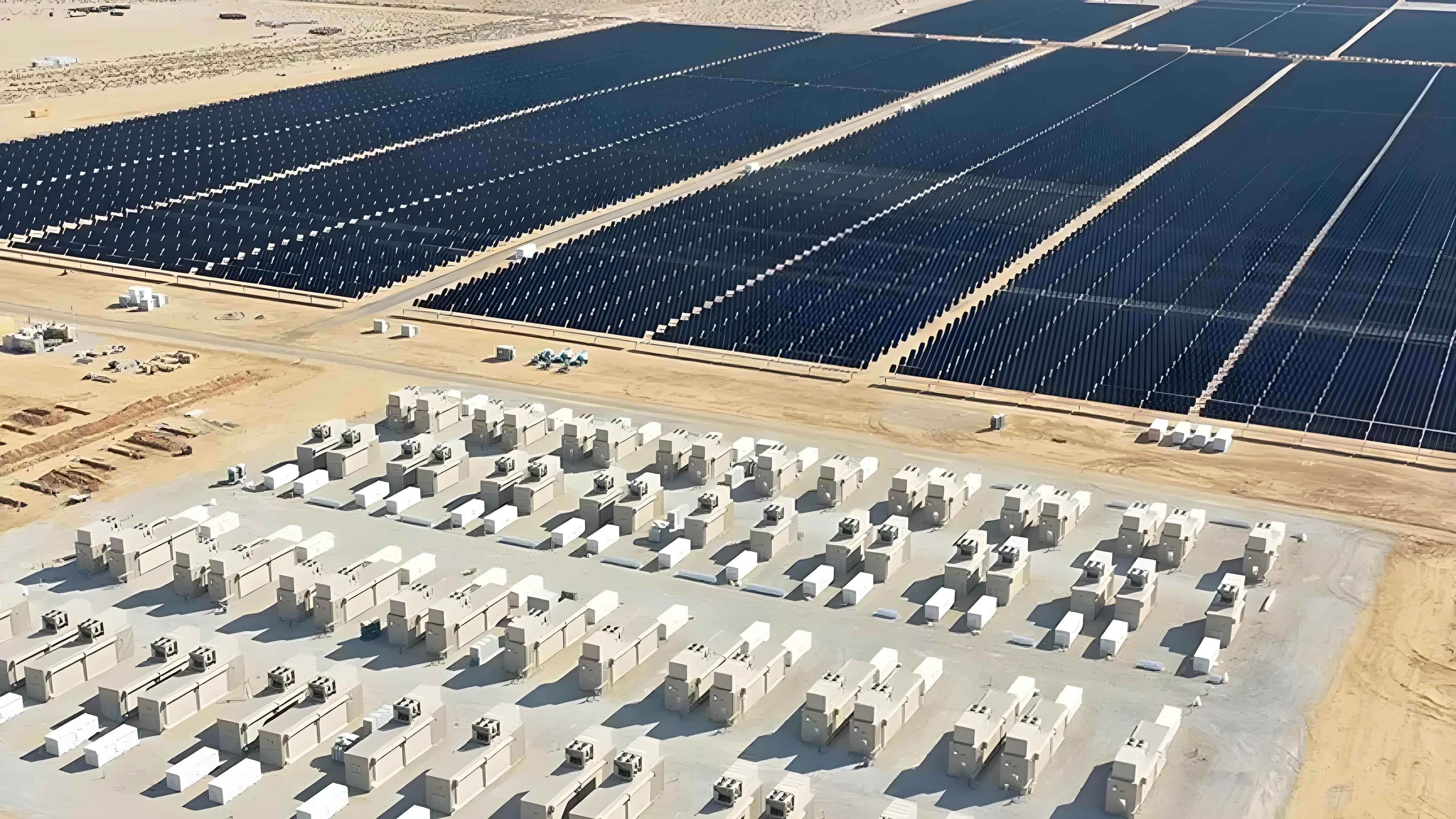
This storage solution ensures that the solar power system can provide continuous power, even during nighttime or cloudy days, thereby increasing its viability for campus applications.
In terms of economic and environmental benefits, a well-designed solar power system can lead to substantial cost savings and carbon footprint reduction. For example, by offsetting grid electricity, the solar power system can lower operational expenses and contribute to sustainability goals. The payback period for such a system depends on factors like installation costs, local incentives, and energy tariffs, but typically ranges from 5 to 10 years. Additionally, the solar power system provides ancillary benefits, such as rooftop insulation, which reduces heating and cooling demands in buildings.
To further optimize the solar power system, advanced tracking mechanisms can be employed. Unlike fixed-tilt systems, tracking systems adjust the panel orientation in real-time to follow the sun’s path, potentially increasing energy capture by 20-30%. The equations for sun tracking involve continuous updates to the altitude and azimuth angles using the previously mentioned formulas. For a dual-axis tracker, the rotation angles can be computed as:
$$ \beta_{track} = 90^\circ – h_e $$
$$ \gamma_{track} = A $$
where β_track is the tracking tilt angle and γ_track is the tracking azimuth angle. While tracking systems enhance efficiency, they also introduce higher costs and maintenance requirements, which must be weighed against the gains in a solar power system design.
In conclusion, the design of a solar power system for campus rooftops requires a holistic approach that integrates solar geometry, thermal management, and installation parameters. By calculating the sun’s position accurately and optimizing tilt and azimuth angles, the system can achieve maximum energy yield. Temperature control is essential to maintain high conversion efficiency, and the inclusion of storage solutions ensures reliability. This comprehensive parameter design not only supports the efficient utilization of solar energy but also aligns with global sustainability initiatives. Future work could explore the integration of smart technologies and predictive analytics to further enhance the performance of the solar power system in dynamic environmental conditions.