
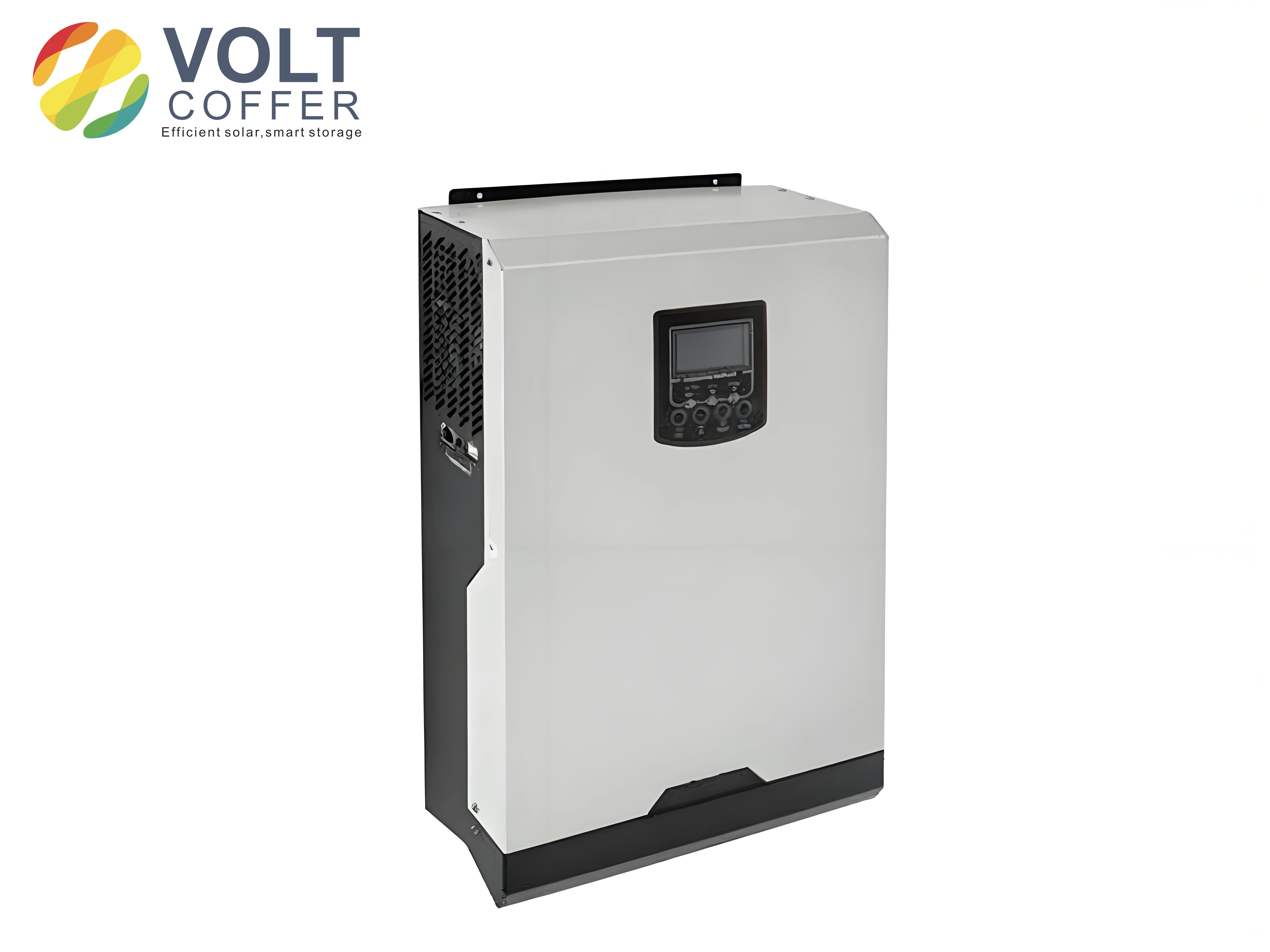
As a key player in the renewable energy sector, our focus has been on advancing solar inverter technologies to meet the growing demand for efficient and cost-effective energy solutions. Solar inverters are critical components in photovoltaic systems, converting direct current from solar panels into alternating current for grid integration. Among the various types, distributed solar inverters combine the benefits of centralized and string solar inverters, offering high efficiency and lower costs. However, the manufacturing process, particularly the Insulated Gate Bipolar Transistor (IGBT) thermal grease application, has posed significant challenges. In this article, I will detail our approach to improving the thermal grease application process for solar inverters, emphasizing adjustments in grease viscosity to enhance product reliability and production efficiency.
The IGBT modules in solar inverters require effective heat dissipation to prevent overheating and ensure longevity. Thermal grease, composed of silicone oil and fillers, is applied between the IGBT and heat sink to fill gaps and facilitate uniform heat transfer. The application process must ensure even distribution to avoid hotspots that could degrade performance. Previously, manual roller application led to inconsistencies in grease thickness, resulting in unstable solar inverter operation and abnormal data during power and full-load tests. To address this, we investigated the relationship between thermal grease viscosity and application quality, aiming to optimize the process for distributed solar inverters.
In our initial assessment, we identified that high viscosity grease (e.g., 69 Pa·s) caused difficulties in application, leading to uneven thickness and reduced yield. Conversely, lower viscosity options (e.g., 47 Pa·s) improved spreadability but risked inadequate coverage. We hypothesized that an optimal viscosity would balance these factors, maintaining thermal conductivity and resistance while improving uniformity. Thermal conductivity, defined as the heat transfer rate through a material, is given by the formula: $$ k = \frac{Q \cdot L}{A \cdot \Delta T} $$ where \( k \) is the thermal conductivity in W/m·K, \( Q \) is the heat flux, \( L \) is the thickness, \( A \) is the cross-sectional area, and \( \Delta T \) is the temperature difference. For solar inverters, a thermal conductivity above 1.1 W/m·K is standard, but we aimed for higher values to enhance performance.
We conducted experiments using a steel mesh applicator machine, which offered better uniformity compared to manual methods. Three viscosity levels were tested under controlled conditions at 25°C, with thermal conductivity and thickness measured to evaluate yield. The results are summarized in the table below:
| Scheme | Grease Viscosity (Pa·s) | Thermal Conductivity (W/m·K) | Grease Thickness (μm) | Yield (%) |
|---|---|---|---|---|
| 1 | 69 | 3.3 | 90 | 97.82 |
| 2 | 60 | 3.6 | 98 | 99.24 |
| 3 | 47 | 3.4 | 86 | 97.36 |
Scheme 2, with a viscosity of 60 Pa·s, demonstrated the highest yield and optimal thermal properties, making it the preferred choice for solar inverter production. This adjustment reduced application time and labor intensity, contributing to energy savings and lower costs. The thermal resistance, which impacts heat dissipation efficiency, can be expressed as: $$ R = \frac{L}{k \cdot A} $$ where \( R \) is the thermal resistance. By maintaining consistent values, we ensured that the solar inverters operated within safe temperature ranges.
Following the viscosity adjustment, we performed comprehensive tests on the solar inverters to validate performance. The first step involved routine thickness inspection using an electronic paste thickness tester. The improvement was visually evident, with more uniform grease distribution compared to the pre-adjustment state. For instance, the grease thickness consistently fell within the 80–120 μm range, enhancing the thermal interface between IGBT and heat sink. This is crucial for solar inverters, as uneven application can lead to localized overheating and reduced efficiency.
Next, we conducted safety and power tests in accordance with international standards such as GB/T30427-2013 for grid-connected photovoltaic inverters. The safety tests included insulation resistance and dielectric strength assessments. For insulation resistance, we used a UT-501A tester, applying 1000 V DC and measuring resistance over 30 seconds. The requirement was a minimum of 2 MΩ, which all units met. Dielectric strength testing involved a TOS5301 instrument set to 2820 V DC with a leakage current limit of 10 mA; all solar inverters passed without failure. Power testing involved connecting the solar inverters to a test bench and varying DC input voltages from 100 V to 750 V. Key parameters, including PV-to-ground voltage, inverter voltage, inverter current, and grid voltage, were recorded as shown below:
| Parameter | 100 V | 200 V | 300 V | 400 V | 500 V | 600 V | 750 V |
|---|---|---|---|---|---|---|---|
| PV-to-Ground Voltage (V) | 98.6 | 194.7 | 298.0 | 399.5 | 498.1 | 597.6 | 742.4 |
| Inverter Voltage (V) | 40.5 | 83.1 | 128.4 | 166.8 | 211.7 | 254.7 | 316.9 |
| Inverter Current (A) | 8.8 | 16.5 | 25.2 | 32.8 | 41.8 | 50.2 | 62.1 |
| Grid Voltage (V) | 41.3 | 84.0 | 126.0 | 169.2 | 211.1 | 254.3 | 317.1 |
These results confirmed that the solar inverters maintained stable operation across varying inputs, with no significant deviations. The power analysis further involved IGBT drive waveform checks using an oscilloscope DSO-X3014A and high-voltage probes. For instance, the gate-emitter voltages were verified to be +15 V (high) and -10 V (low), ensuring proper switching behavior in the solar inverters. Additionally, temperature monitoring during extended operation at 750 V input and 40–45°C ambient conditions showed that IGBT module temperatures remained below 95°C, heat sink temperatures under 80°C, and inductor temperatures under 160°C. Data from multiple test runs are summarized in the following table:
| Component Temperature (°C) | Run 1 | Run 2 | Run 3 | Run 4 | Run 5 |
|---|---|---|---|---|---|
| IGBT Module A | 58.1 | 60.2 | 61.4 | 58.5 | 54.0 |
| IGBT Module B | 58.3 | 61.7 | 62.8 | 60.7 | 59.0 |
| IGBT Module C | 58.5 | 62.1 | 63.3 | 60.9 | 58.2 |
| Power Cable A | 49.5 | 51.8 | 54.5 | 48.8 | 44.9 |
| Power Cable B | 52.3 | 54.6 | 57.1 | 51.3 | 47.7 |
| Power Cable C | 52.0 | 54.3 | 56.2 | 49.4 | 45.5 |
| Inductor A | 52.5 | 58.9 | 65.8 | 68.1 | 70.4 |
| Inductor B | 57.5 | 66.4 | 76.2 | 71.2 | 83.7 |
| Inductor C | 57.3 | 66.1 | 76.9 | 71.9 | 84.0 |
Full-load testing simulated peak operating conditions for solar inverters, with performance evaluated at 50%, 100%, and sustained 100% power levels. Using a power analyzer OKOGAWA WT1800 and oscilloscopes, we measured parameters such as inverter active power, current, and temperatures. The data adhered to NB/T32004-2018 standards, as shown below:
| Performance Metric | 50% Power | 100% Power | 100% Power (15 min) |
|---|---|---|---|
| Inverter Active Power (kW) | 83.0 | 166.1 | 166.0 |
| Inverter Current (A) | 457.7 | 930.4 | 929.6 |
| IGBT Module Temperature (°C) | 41.6 | 55.1 | 59.5 |
| Heat Sink Temperature (°C) | 29.7 | 35.6 | 45.4 |
The improvements in thermal grease application directly contributed to these stable results, with no anomalies detected during testing. The viscosity adjustment to 60 Pa·s not only enhanced yield by 1.5–2 percentage points but also increased production efficiency by approximately 5%. This optimization reduced material waste and customer complaints, aligning with our goal of developing high-performance solar inverters. Furthermore, the consistency in grease application minimized thermal resistance variations, which can be modeled using the formula: $$ \Delta T = Q \cdot R $$ where \( \Delta T \) is the temperature rise across the interface. For solar inverters, lower and more predictable thermal resistance ensures better heat dissipation and longer component life.
In the context of global energy transitions, solar inverters play a pivotal role in achieving carbon neutrality targets. With projections indicating that solar power could account for up to 40% of electricity generation by 2050, advancements in manufacturing processes are essential. Our work on IGBT thermal grease application is a step toward making solar inverters more reliable and affordable. The use of automated applicators and optimized viscosities has set a benchmark for future developments. As we continue to innovate, we anticipate further refinements in solar inverter designs, such as integrating advanced materials and real-time monitoring systems.
In conclusion, the adjustment of thermal grease viscosity to 60 Pa·s significantly improved the IGBT application process for distributed solar inverters. This change resulted in uniform thickness, higher yields, and enhanced thermal performance, as validated through rigorous testing. The solar inverters now meet international standards for safety, power efficiency, and durability, supporting the broader adoption of photovoltaic systems. Moving forward, we plan to explore other factors, such as filler composition in greases and dynamic application techniques, to push the boundaries of solar inverter technology. By focusing on such细节, we contribute to a sustainable energy future where solar inverters are at the forefront of clean power generation.