
The proliferation of renewable energy sources has created an unprecedented demand for efficient and reliable large-scale energy storage solutions. Among various technologies, electrochemical energy storage, particularly using lithium-ion batteries, has become the most widely deployed method in modern power grids. For stationary storage applications, such as Battery Energy Storage Systems (BESS) for grid support, the lithium iron phosphate (LiFePO4) battery chemistry is often preferred over high-nickel counterparts like NMC or NCA. This preference stems from its superior intrinsic safety profile, longer cycle life, and lower cost, making it ostensibly more suitable for the rigorous demands of power storage systems. However, the term “safer” is relative in the context of lithium-ion batteries. Thermal runaway—an uncontrolled, self-sustaining exothermic reaction within a cell—remains a critical risk. In an energy storage setting, where thousands of cells are densely packed in modules and containers, a single cell’s thermal runaway can propagate to neighboring cells, leading to large-scale fires, toxic gas emissions, and catastrophic system failure. Therefore, investigating and optimizing fire suppression methods specifically for LiFePO4 battery modules in storage scenarios is of paramount importance for the safe and sustainable growth of this vital industry.
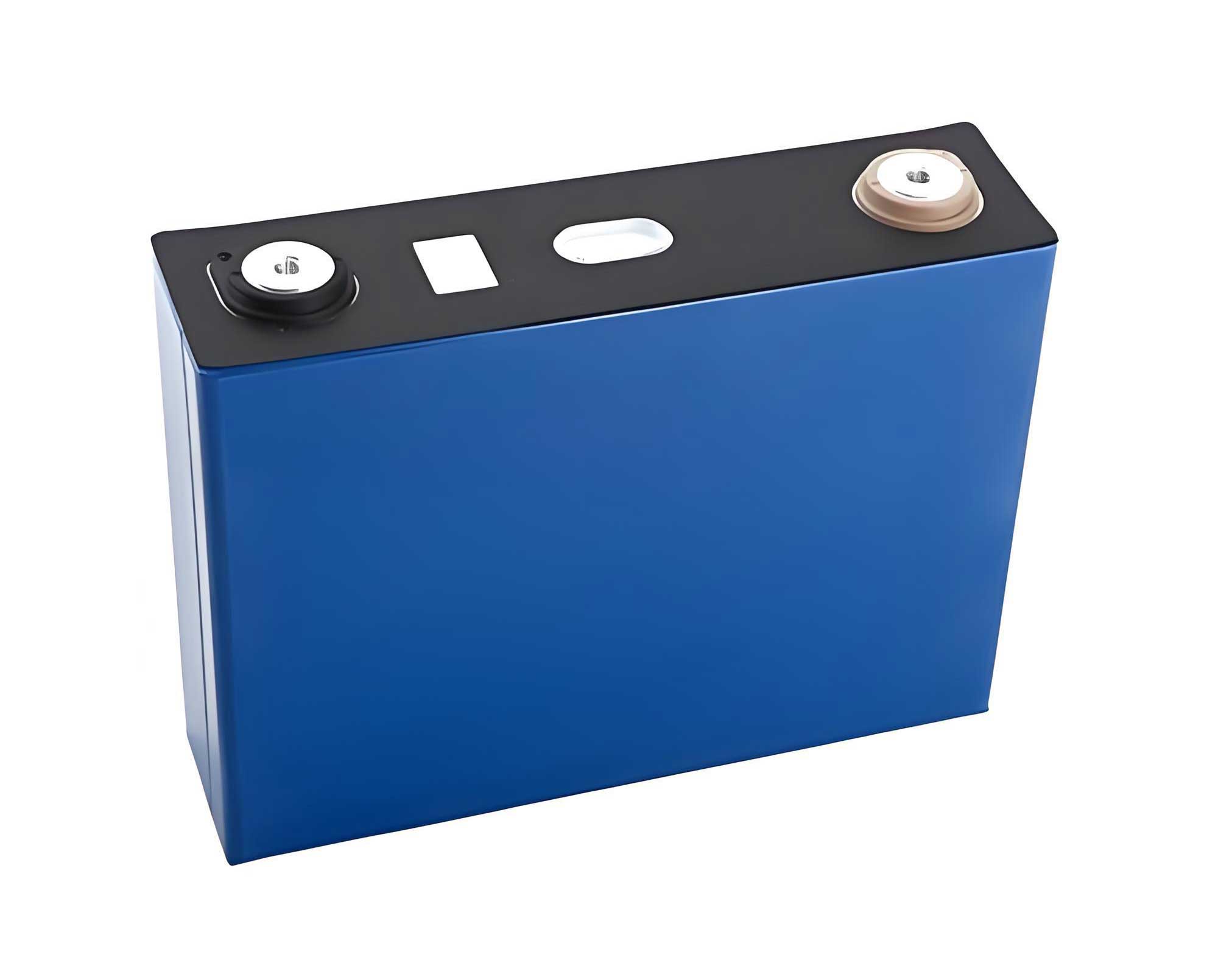
Conducting full-scale fire tests on actual energy storage containers is prohibitively expensive, logistically complex, and poses significant safety hazards. Consequently, computational modeling and simulation have become indispensable tools for fire safety engineering. Fire Dynamics Simulator (FDS), a Computational Fluid Dynamics (CFD) code developed by the National Institute of Standards and Technology (NIST), is specifically designed to model low-speed, thermally-driven fluid flows, making it ideal for simulating fire spread, heat transfer, and smoke movement. In this study, I employ FDS to build a detailed, 1:1 scale model of a representative LiFePO4 battery module enclosure commonly found in storage power stations. The primary objective is to numerically investigate the effectiveness of water mist suppression systems and determine the optimal combination of key parameters—including mist flow rate, droplet diameter, and nozzle placement—for extinguishing thermal runaway-induced fires in LiFePO4 battery packs.
1. Numerical Methodology and Model Setup
1.1 Governing Equations in FDS
The core of FDS solves a form of the Navier-Stokes equations appropriate for buoyancy-driven flows. The model is based on a large eddy simulation (LES) approach, where large-scale turbulent motions are resolved directly, and the effects of smaller scales are modeled. The key conservation equations solved are:
Conservation of Mass (Continuity):
$$
\frac{\partial \rho}{\partial t} + \nabla \cdot (\rho \mathbf{u}) = 0
$$
Here, $\rho$ represents the gas density, $t$ is time, and $\mathbf{u}$ is the velocity vector.
Conservation of Momentum (Navier-Stokes):
$$
\rho \left( \frac{\partial \mathbf{u}}{\partial t} + \frac{1}{2} \nabla |\mathbf{u}|^2 – \mathbf{u} \times \boldsymbol{\omega} \right) + \nabla p – \rho \mathbf{g} = \mathbf{f} + \nabla \cdot \boldsymbol{\tau}
$$
In this equation, $p$ denotes pressure, $\mathbf{g}$ is gravitational acceleration, $\mathbf{f}$ represents external force vectors, $\boldsymbol{\tau}$ is the viscous stress tensor, and $\boldsymbol{\omega}$ is vorticity.
Conservation of Species:
$$
\frac{\partial}{\partial t} (\rho Y_i) + \nabla \cdot (\rho Y_i \mathbf{u}) = \nabla \cdot (\rho D_i \nabla Y_i) + \dot{m}_i”’
$$
where $Y_i$ is the mass fraction of species $i$, $D_i$ is its diffusion coefficient, and $\dot{m}_i”’$ is its mass production rate per unit volume (e.g., from combustion).
Conservation of Energy:
$$
\frac{\partial}{\partial t} (\rho h) + \nabla \cdot (\rho h \mathbf{u}) = \frac{\partial p}{\partial t} + \mathbf{u} \cdot \nabla p – \nabla \cdot \mathbf{q}_r + \nabla \cdot (k \nabla T) + \sum_i \nabla \cdot (h_i \rho D_i \nabla Y_i)
$$
$h$ signifies specific enthalpy, $\mathbf{q}_r$ is the radiative heat flux, $T$ is temperature, and $k$ is thermal conductivity.
Equation of State:
$$
p_0 = \rho T R \sum_i \left( \frac{Y_i}{M_i} \right)
$$
$R$ is the universal gas constant and $M_i$ is the molecular weight of species $i$. FDS uses a mixture fraction combustion model based on these equations to simulate the burning process, tracking temperature, gas concentrations, and other parameters spatially and temporally.
1.2 Physical Model and Computational Domain
I constructed a model based on the standard dimensions of a commercial energy storage cabinet module. The enclosure measures 0.685 m in length, 0.550 m in width, and 0.330 m in height. Inside, 24 prismatic LiFePO4 battery cells are arranged, each with dimensions of 0.170 m (L) x 0.070 m (W) x 0.200 m (H). The computational grid is critical for accuracy; I used a cell size of approximately 1.96 mm x 1.96 mm x 1.94 mm, ensuring the cells are nearly cubic to minimize numerical diffusion and enhance result fidelity. A total of 24 virtual thermocouples (THCP1 to THCP24) are placed at the geometric center of each LiFePO4 battery to record temperature evolution. Four planar temperature slices along the Z-axis (vertical direction) are defined at different heights—near the bottom, middle, and top of the cells, and above the battery box—to visualize the internal temperature distribution.
Modeling the intricate internal multi-layer structure of a LiFePO4 battery (anode, cathode, separator, electrolyte) in full detail is computationally prohibitive for a module-scale fire simulation. Therefore, a homogenized approach is adopted. The cell is treated as a single solid volume with effective thermodynamic properties weighted by the mass fraction of its primary components. The key material properties used for the LiFePO4 battery model are summarized in the table below.
| Parameter | Electrolyte | Anode (Graphite) | Cathode (LiFePO4) | Separator |
|---|---|---|---|---|
| Density, $\rho$ (kg/m³) | 1290 | 2660 | 4202 | 492 |
| Specific Heat, $c$ (J/(kg·K)) | 133.9 | 1437.0 | 672.0 | 1978.0 |
| Thermal Conductivity, $\lambda$ (W/(m·K)) | 0.45 | 1.04 | 6.20 | 0.33 |
| Absorptivity, $\alpha$ | 0.9 | 0.8 | 0.8 | 0.8 |
The burning behavior is modeled using a mixed combustion approach. Since the flammable electrolyte is the primary contributor to fire intensity during LiFePO4 battery thermal runaway, its combustion characteristics are dominant. Based on experimental data from cone calorimeter tests, key parameters for the equivalent fuel are derived. The peak Heat Release Rate (HRR) for the electrolyte is approximately 550 kW/m², with a Total Heat Released (THR) of about 131 MJ/m² and a heat of combustion near 16.8 kJ/g. The combustion reaction is simplified to an equivalent stoichiometric reaction for a hydrocarbon fuel. An initial ignition source with a heat flux of 25 kW/m² is applied to the surface of a designated “trigger” cell for 5 seconds to initiate thermal runaway in the LiFePO4 battery, simulating an internal short circuit or other failure mode.
2. Simulation Results and Parametric Analysis
The core of this study involves a series of systematic simulations to evaluate the influence of different water mist parameters. In all suppression cases, the water mist activation time is set at 10 seconds after the onset of significant heating. The temperature recorded at thermocouple THCP12, located on a cell adjacent to the trigger cell, is used as the primary indicator of suppression effectiveness, representing a critical point for potential thermal propagation.
2.1 Influence of Water Mist Flow Rate
The flow rate ($q$) is a fundamental parameter in suppression system design. According to relevant technical specifications for protection of similar electrical equipment, the minimum design density should not be less than 0.25 L/min for the volume of this model. To determine an optimal value, simulations were conducted with varying flow rates (0.3, 0.5, 1.0, 2.0, and 5.0 L/min) across four different droplet diameters ($d$ = 500, 400, 300, and 200 µm). The nozzle was positioned at the top center of the enclosure. The resulting temperature-time curves for the critical thermocouple are analyzed.
A clear trend emerges: the suppression efficacy strongly depends on the combined effect of flow rate and droplet size. For larger droplets (500 and 400 µm), increasing the flow rate from 0.3 to 0.5 L/min shows negligible improvement in temperature reduction. Significant cooling only becomes apparent at 1.0 L/min and above. For smaller droplets (300 and 200 µm), lower flow rates (0.3, 0.5 L/min) are more effective than their larger-droplet counterparts but are still insufficient to control the fire. The most pronounced and consistent improvement occurs when increasing the flow rate to 2.0 L/min across all droplet sizes. However, a further increase to 5.0 L/min yields diminishing returns; for the 300 and 200 µm cases, the final equilibrium temperature is nearly identical to that achieved with 2.0 L/min. This indicates that beyond a certain flow rate threshold, simply adding more water does not proportionally enhance cooling, likely due to saturation effects in droplet evaporation and oxygen displacement. Therefore, balancing performance and system resource demands (water storage, pump size), a flow rate of $q = 2.0\ \text{L} \cdot \text{min}^{-1}$ is identified as a robust and effective baseline for this LiFePO4 battery module.
2.2 Influence of Water Mist Droplet Diameter
Droplet diameter ($d$) is equally critical as it governs the total surface area available for heat absorption via evaporation for a given mass of water. Using the optimized flow rate of $q = 2.0\ \text{L} \cdot \text{min}^{-1}$, simulations were run with droplet diameters of 800, 500, 400, 300, 200, and 100 µm. The temperature-time curves demonstrate a powerful inverse relationship: smaller droplets consistently produce lower maximum temperatures and faster cooling rates. This is a direct consequence of their higher surface-area-to-volume ratio, which facilitates rapid vaporization, extracting latent heat from the fire plume and hot battery surfaces more efficiently. The performance gain is most significant when reducing the diameter from 400 µm to 200 µm. Reducing it further to 100 µm offers only a marginal additional improvement in final temperature. Practically, generating extremely fine mist (e.g., $d < 100$ µm) requires higher system pressure and more sophisticated nozzles, increasing cost and complexity. The data suggests that a droplet diameter of $d = 200\ \mu\text{m}$ represents an excellent compromise, offering superior fire suppression for the LiFePO4 battery pack while remaining within the practical design scope of commercial water mist systems.
| Droplet Diameter, $d$ (µm) | Optimal Flow Rate, $q$ (L/min) | Approx. Peak Temp. Reduction vs. No Mist | Cooling Rate | Practical Design Consideration |
|---|---|---|---|---|
| 500 | 2.0 | Moderate | Slow | Low pressure required |
| 400 | 2.0 | Good | Moderate | Standard pressure |
| 300 | 2.0 | Very Good | Fast | Moderate pressure |
| 200 | 2.0 | Excellent | Very Fast | Higher pressure, good balance |
| 100 | 2.0 | Marginal gain over 200µm | Very Fast | High pressure, complex nozzles |
2.3 Optimal Nozzle Placement Strategy
In a real-world failure, any LiFePO4 battery within the module could be the origin of thermal runaway. The placement of suppression nozzles must ensure effective coverage regardless of the ignition location. Three configurations were tested with the optimized parameters ($q=2.0$ L/min, $d=200$ µm): a single central nozzle on the top (A1), two nozzles on the top diagonally opposite corners (A2), and two nozzles on the left and right sides of the top (A3). These were evaluated for two distinct ignition scenarios: a central cell (most severe for propagation) and a corner cell.
The results reveal a nuanced dependency on fire location. For a central fire, the single central nozzle (A1) performed best, achieving the fastest temperature drop. This is because the mist plume descends directly onto the primary fire source. The dual-nozzle configurations (A2, A3), while distributing mist more evenly, delivered less agent density directly to the central hot spot initially, resulting in slightly slower suppression. For a corner fire, the diagonal two-nozzle arrangement (A2) proved most effective. The dual sources provided better overall coverage and directed mist flow towards the corner, overcoming the limitation of a single central nozzle whose plume might not adequately reach the far corner initially.
Given that a fire originating in a central LiFePO4 battery poses a greater propagation threat due to more adjacent cells, designing for the worst-case scenario is prudent. Furthermore, a single-nozzle system is simpler and less costly. Therefore, for this specific module geometry, positioning a single nozzle at the top center is recommended as the optimal layout, providing excellent performance for the most hazardous fire location and adequate performance for others.
2.4 Validation of the Optimized Parameter Set
To conclusively demonstrate the superiority of the identified optimal combination, a direct comparative simulation was performed. The optimized set ($q=2.0$ L/min, $d=200$ µm, central nozzle) was compared against two other plausible combinations: a low-flow, medium-droplet set ($q=1.0$ L/min, $d=400$ µm) and a high-flow, very-fine-droplet set ($q=5.0$ L/min, $d=100$ µm).
The temperature-time history and spatial temperature slices at t=150s clearly show the advantage. The optimized set outperforms the low-flow set by a significant margin, reducing the equilibrium temperature by nearly 300°C. Crucially, while the high-flow, very-fine set performs comparably to the optimized set in final temperature, the improvement is marginal. This confirms that increasing the flow rate by 2.5 times and reducing the droplet size further does not yield a proportional benefit, making the $q=2.0$ L/min, $d=200$ µm combination the most cost-effective and technically efficient solution for suppressing fires in this LiFePO4 battery energy storage module. The relationship between cooling efficiency and system input can be conceptualized by a simplified performance metric $E$:
$$
E \propto \frac{q \cdot A_{surface}}{V_{droplet}} \approx \frac{q}{d}
$$
where $A_{surface}$ is the total droplet surface area and $V_{droplet}$ is the total droplet volume. This illustrates why increasing $q$ and decreasing $d$ improves performance, but also suggests diminishing returns when $d$ becomes very small, as other limiting factors (like droplet penetration and residence time) become dominant.
3. Conclusion
This numerical investigation using Fire Dynamics Simulator has systematically evaluated the effectiveness of water mist systems in controlling thermal runaway fires within a LiFePO4 battery module designed for energy storage applications. The simulations provide clear guidance for the design of such suppression systems. The key findings are:
- Water Mist Flow Rate is Critical: A minimum threshold exists for effective suppression. For the modeled LiFePO4 battery pack, a flow rate of 2.0 L/min was identified as optimal, providing substantial cooling without the diminishing returns associated with higher flow rates.
- Droplet Diameter Governs Efficiency: Smaller droplets, due to their larger aggregate surface area, lead to significantly better heat absorption and faster fire knockdown. A droplet diameter of 200 µm offers an excellent balance between high performance and practical system design constraints.
- Nozzle Placement Should Prioritize Worst-Case Scenarios: For the given module geometry, a single nozzle positioned at the top center of the enclosure provides the most effective and reliable coverage, particularly for fires originating in central cells which carry the highest risk of cascade failure within the LiFePO4 battery array.
The optimal parameter combination of $q = 2.0\ \text{L} \cdot \text{min}^{-1}$, $d = 200\ \mu\text{m}$, and a single top-central nozzle represents a scientifically validated baseline for designing water mist fire protection systems for similar LiFePO4 battery energy storage modules. These findings underscore the importance of parametric optimization in fire safety engineering for the rapidly growing energy storage sector. Future work could involve extending the model to full container scale, investigating the effects of different mist additives (like surfactants), and validating the simulation results against controlled medium-scale experiments with actual LiFePO4 battery packs.