
As the global energy landscape rapidly shifts toward renewable sources, energy storage lithium battery systems have emerged as a critical component for enhancing grid flexibility and stability due to their high energy density, rapid response capabilities, and modular deployment advantages. However, in practical engineering applications, the energy efficiency of energy storage lithium battery cabinets often falls below theoretical expectations, posing a significant bottleneck to their economic viability and large-scale adoption. Studies indicate that efficiency losses over the lifecycle of energy storage systems can range from 10% to 20%, with factors such as battery charge-discharge voltage ranges, thermal management strategies, and ambient temperatures playing pivotal roles. Therefore, investigating the key factors influencing energy efficiency is of paramount importance for optimizing the performance of energy storage lithium battery systems.
In this study, I focus on analyzing the energy efficiency of energy storage lithium battery cabinets under complex operational conditions, with an emphasis on parameter optimization. Specifically, I examine the effects of varying ambient temperatures, different battery charge-discharge voltage ranges, and diverse thermal management strategies on the coupling between energy efficiency and lifespan. The goal is to develop a dynamic parameter calibration-based optimization strategy that enhances the reliability and efficiency of energy storage lithium battery systems, thereby supporting the integration of large-scale renewable energy into the grid.
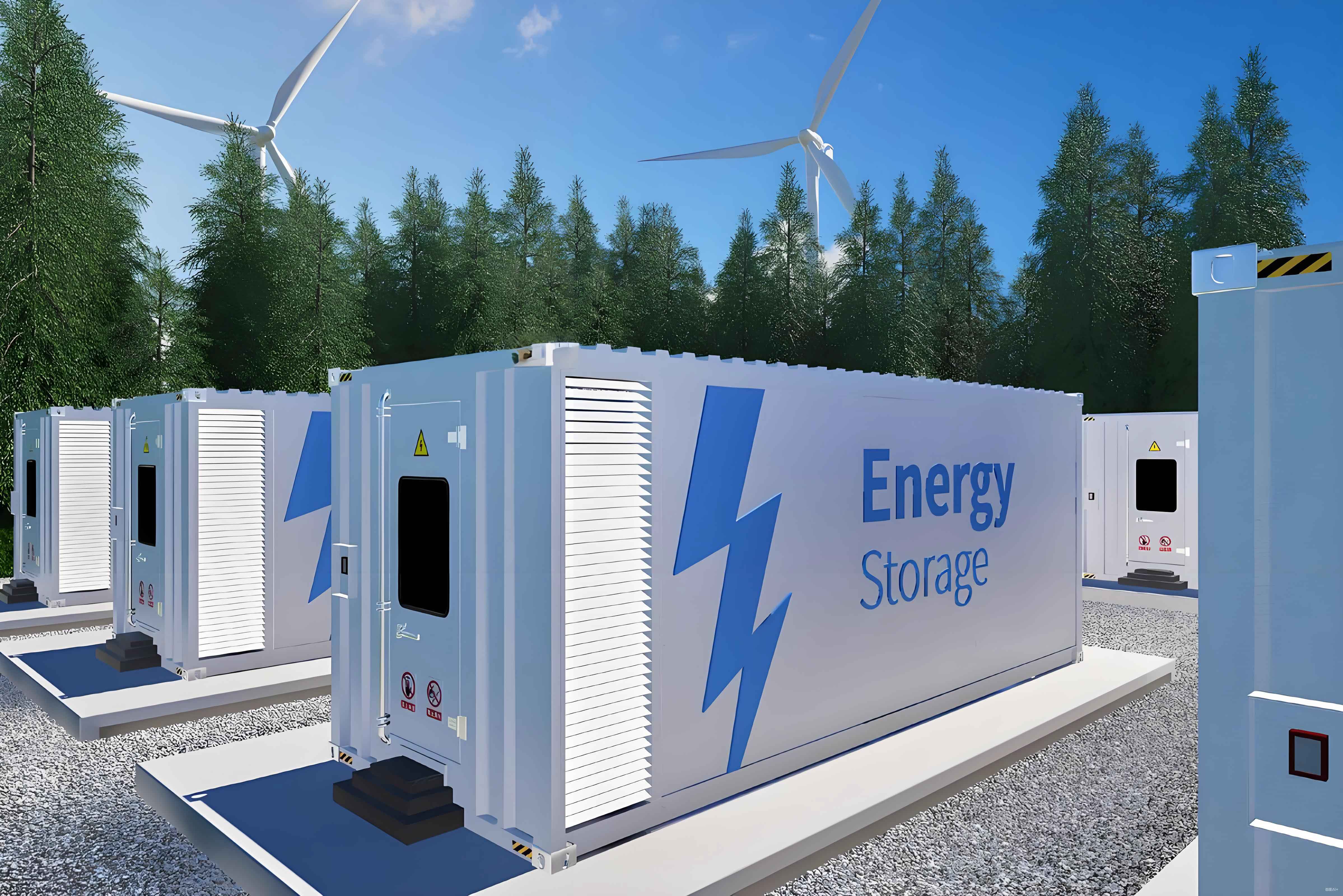
The experiments were conducted using a 372.736 kWh outdoor liquid-cooled energy storage lithium battery cabinet operating at a 1500V system. The cabinet employed a 1P52S configuration, consisting of eight battery modules and one high-voltage box, with a cluster configuration of 1P416S. The energy storage lithium battery cells used were lithium iron phosphate (LiFePO4) with a capacity of 280 Ah, a nominal voltage of 3.2V, and an operational voltage range of 2.6V to 3.6V. Key equipment included an energy storage converter, a 30 m³ walk-in temperature chamber, a dry-type transformer, a soft-start cabinet, a liquid cooling unit, and a temperature acquisition system, as detailed in Table 1.
| No. | Equipment | Brand | Model | Key Parameters |
|---|---|---|---|---|
| 1 | Energy Storage Converter | Custom | TE186K-HV | Rated Power: 187 kW |
| 2 | Walk-in Temperature Chamber | Custom | RLH-30MW-L55H85-ICE | Temperature Range: -55°C to 85°C |
| 3 | Dry-Type Transformer | Custom | XCS500-0.4-0.69 | Input Voltage: 400V, Output Voltage: 690V |
| 4 | Soft-Start Cabinet | Custom | GGD | Rated Power: 500 kVA |
| 5 | Liquid Cooling Unit | Custom | EMW600HCNC1B | Cooling Capacity: 8 kW |
| 6 | Temperature Acquisition System | Keysight | — | Control Accuracy: < ±0.1°C |
The experimental methodology involved three main procedures: initial charge-discharge energy testing, DC internal resistance testing, and thermal management strategy evaluation. For the initial charge-discharge energy test, the energy storage lithium battery cabinet was placed in the temperature chamber and connected to the energy storage converter, transformer, and soft-start cabinet. The chamber temperature was set to specific values (e.g., T1°C), and the cabinet was stabilized at (T1 ± 2)°C for 5 hours. The battery was then charged at a constant power of Prc (186.368 kW) until any cell reached the charge termination voltage U1, followed by a 10-minute rest. Subsequently, it was discharged at a constant power of Prd (186.368 kW) until any cell reached the discharge termination voltage U2, with another 10-minute rest. This cycle was repeated to calculate the initial charge energy, discharge energy, and energy efficiency, excluding auxiliary power consumption. The energy efficiency was computed as:
$$ \text{Energy Efficiency} = \frac{\text{Initial Discharge Energy}}{\text{Initial Charge Energy}} \times 100\% $$
For DC internal resistance testing, the battery was charged and discharged to 50% state of charge (SOC), and the internal resistance was calculated using voltage measurements during constant current pulses. The thermal management strategies were evaluated under different operating modes, including cooling, heating, self-circulation, and shutdown, with specific logic based on battery temperature thresholds (Tmax, Tvag, Tmin) and outlet water temperatures (T1, T2, T3).
The impact of ambient temperature on the energy efficiency of the energy storage lithium battery cabinet was investigated over a range of 5°C to 60°C, with the liquid cooling system disabled. The results, illustrated in Figure 2, show that energy efficiency increases with temperature from 5°C to 50°C, but declines beyond 50°C due to accelerated side reactions in the electrolyte. The relationship between ambient temperature (X) and energy efficiency (Y) can be modeled by the polynomial equation:
$$ Y = 0.86129 + 0.00779 \times X – 2.91487 \times 10^{-4} \times X^2 + 8.03825 \times 10^{-6} \times X^3 – 1.63113 \times 10^{-7} \times X^4 + 2.12115 \times 10^{-9} \times X^5 – 1.25571 \times 10^{-11} \times X^6 $$
with a coefficient of determination R² = 0.99606. This indicates that optimal energy efficiency for energy storage lithium battery systems is achieved at temperatures up to 50°C, beyond which degradation occurs. Additionally, the DC internal resistance of the battery cabinet decreases with temperature up to 50°C but increases at higher temperatures, as shown in Figure 3, due to material expansion and electrolyte loss.
The effect of charge-discharge voltage range on energy efficiency was evaluated by testing multiple energy storage lithium battery cabinets with voltage windows of 2.6V–3.6V, 2.7V–3.6V, 2.8V–3.6V, and 2.85V–3.6V. As summarized in Table 2, narrowing the voltage window improves energy efficiency but reduces discharge energy. For instance, the 2.8V–3.6V range yields an energy efficiency of 95.24% and a discharge energy of 373.64 kWh, meeting design requirements (efficiency ≥95%, discharge energy ≥372.736 kWh). In contrast, wider ranges like 2.6V–3.6V result in lower efficiency (93.36%) due to increased polarization losses at lower voltages.
| Voltage Range | Energy Efficiency (%) | Discharge Energy (kWh) |
|---|---|---|
| 2.6V–3.6V | 93.36 | 376.40 |
| 2.7V–3.6V | 94.31 | 375.76 |
| 2.8V–3.6V | 95.24 | 373.64 |
| 2.85V–3.6V | 95.85 | 372.80 |
Thermal management strategies were assessed by varying the outlet water temperature in heating mode (T1) from 24°C to 32°C, as outlined in Table 3. Higher initial battery temperatures improve energy efficiency and discharge energy by reducing internal resistance, but excessive temperatures above 40°C can degrade cycle life. The optimal strategy sets T1 at 30°C, ensuring the maximum battery temperature during operation remains below 40°C, thus balancing efficiency and longevity. For example, at T1 = 30°C, energy efficiency reaches 95.29%, with controlled temperature rise.
| Strategy | Heating Mode T1 (°C) | Energy Efficiency (%) | Maximum Battery Temperature (°C) |
|---|---|---|---|
| 1 | 32 | 95.35 | 42 |
| 2 | 30 | 95.29 | 39 |
| 3 | 28 | 95.10 | 37 |
| 4 | 26 | 94.85 | 35 |
| 5 | 24 | 94.60 | 33 |
In conclusion, this study demonstrates that the energy efficiency of energy storage lithium battery cabinets is significantly influenced by ambient temperature, charge-discharge voltage range, and thermal management strategies. The optimal conditions include an ambient temperature ≤50°C, a voltage window of 2.8V–3.6V, and a heating mode outlet temperature T1 of 30°C. Under these multi-parameter协同 strategies, the energy storage lithium battery system achieves an energy efficiency of 95.29%, along with improved discharge energy and cycle life. These findings establish a thermo-electric cooperative optimization framework for energy storage power stations, providing valuable data support for the large-scale integration of renewable energy. Future work should focus on real-time adaptive control systems to further enhance the performance and durability of energy storage lithium battery technologies.