
In recent years, the rapid advancement of energy storage technologies has positioned li ion batteries as a cornerstone for various applications, from portable electronics to electric vehicles and grid storage. The widespread adoption of li ion batteries is attributed to their high energy density, long cycle life, and relatively low self-discharge rates. However, as these batteries undergo repeated charge-discharge cycles, complex electrochemical reactions lead to gradual degradation of electrode materials, resulting in capacity fade and eventual failure. Typically, a li ion battery is considered to have reached its end-of-life when its capacity drops below 80% of its initial rated capacity. Predicting the Remaining Useful Life (RUL) of li ion batteries is crucial to prevent unexpected failures, optimize maintenance schedules, and ensure safety in critical systems. Accurate RUL prediction can mitigate risks associated with overuse beyond degradation thresholds, especially given phenomena like capacity recovery or false regeneration that may occur during cycling. This study focuses on developing a robust data-driven approach for RUL prediction of li ion batteries, leveraging advanced signal processing and machine learning techniques to enhance accuracy and reliability.
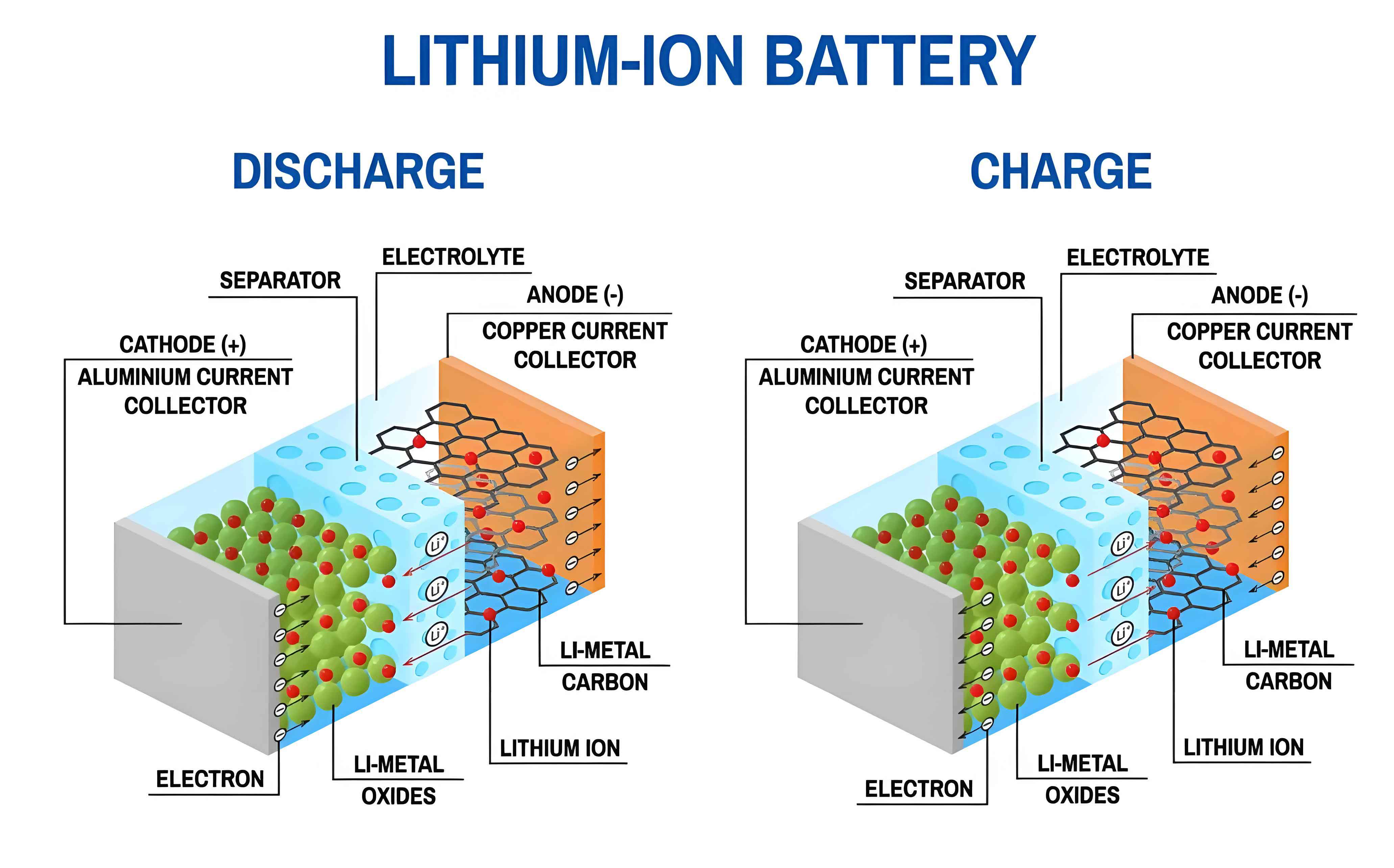
The prediction of RUL for li ion batteries has evolved significantly, with methods broadly categorized into model-based and data-driven approaches. Model-based methods rely on physical or electrochemical models that describe the internal processes of li ion batteries, but these often suffer from complexity, sensitivity to noise, and limited generalization across different operating conditions. In contrast, data-driven methods extract patterns from historical data, such as capacity, voltage, and current measurements, without requiring deep mechanistic insights. These methods offer superior adaptability and robustness, making them increasingly popular for li ion battery prognostics. Early data-driven approaches, such as those using Backpropagation Neural Networks (BPNN), often yielded suboptimal results due to issues like overfitting and poor handling of long-term dependencies. Consequently, hybrid models that combine multiple algorithms have emerged to improve predictive performance. For instance, integrating optimization algorithms with decomposition techniques and recurrent neural networks has shown promise in capturing the nonlinear and non-stationary characteristics of li ion battery degradation data.
In this work, we propose a novel hybrid framework that combines Whale Optimization Algorithm (WOA), Variational Mode Decomposition (VMD), Sparrow Search Algorithm (SSA), and Long Short-Term Memory (LSTM) networks for RUL prediction of li ion batteries. The core idea is to address key challenges in existing methods, such as the subjective selection of hyperparameters in VMD and LSTM, which can lead to inefficiencies and reduced accuracy. By employing WOA to optimize the modal number K and penalty factor α in VMD, we automate the parameter tuning process, enhancing the decomposition quality of capacity degradation signals. Subsequently, SSA is used to optimize the hyperparameters of LSTM, including the number of hidden units, maximum training epochs, and initial learning rate, thereby improving the network’s predictive capability. The decomposed modal components and residual from VMD are then fed into the optimized LSTM models for individual prediction, and the results are reconstructed to obtain the final RUL estimate. This integrated approach aims to achieve higher precision and stability compared to standalone or partially optimized models, providing a reliable tool for li ion battery health management.
To validate our method, we utilize publicly available li ion battery degradation datasets from NASA PCoE Laboratory, which include multiple batteries subjected to accelerated aging tests under controlled conditions. The datasets capture capacity fade over numerous cycles, reflecting real-world degradation patterns. We compare our WOA-VMD-SSA-LSTM model against baseline approaches, such as standalone LSTM and WOA-VMD-LSTM, using evaluation metrics like Mean Absolute Error (MAE), Root Mean Square Error (RMSE), and Mean Absolute Percentage Error (MAPE). Our results demonstrate that the proposed model significantly reduces prediction errors and effectively captures capacity regeneration phenomena, underscoring its superiority in li ion battery RUL forecasting. Furthermore, this work contributes a systematic methodology for hyperparameter optimization in signal decomposition and neural networks, which can be extended to other prognostic applications beyond li ion batteries.
The remainder of this article is organized as follows: We first provide a theoretical background on the key algorithms—WOA, VMD, SSA, and LSTM—including mathematical formulations and operational principles. Next, we detail the integrated WOA-VMD-SSA-LSTM framework, outlining the steps for parameter optimization, signal decomposition, and prediction. We then describe the experimental setup, including dataset characteristics and implementation details. Subsequently, we present the results and performance analysis, with tables and figures summarizing the outcomes. Finally, we conclude with insights into the implications of our findings and suggestions for future research directions in li ion battery prognostics.
Theoretical Background
The proposed hybrid model builds upon several advanced algorithms, each playing a critical role in enhancing RUL prediction for li ion batteries. Below, we elaborate on the Whale Optimization Algorithm (WOA), Variational Mode Decomposition (VMD), Sparrow Search Algorithm (SSA), and Long Short-Term Memory (LSTM) networks, providing mathematical foundations and relevance to li ion battery data analysis.
Whale Optimization Algorithm (WOA)
WOA is a metaheuristic optimization algorithm inspired by the hunting behavior of humpback whales. It is particularly effective for solving complex optimization problems due to its balance between exploration and exploitation. The algorithm mimics three key behaviors: encircling prey, bubble-net attacking (a spiral-shaped movement), and searching for prey randomly. For a population of N whales with positions X, the algorithm updates positions iteratively to converge toward an optimal solution, making it suitable for tuning hyperparameters in li ion battery prognostics models.
The mathematical model of WOA involves the following equations. First, the distance D between a whale and the current best position X* is computed as:
$$ D = |C \cdot X^*(t) – X(t)| $$
where t denotes the iteration number, and C is a coefficient vector calculated as:
$$ C = 2 \cdot r_2 $$
Here, r2 is a random number in [0,1]. The position update for encircling prey is given by:
$$ X(t+1) = X^*(t) – A \cdot D $$
where A is another coefficient vector defined as:
$$ A = 2a \cdot r_1 – a $$
with a decreasing linearly from 2 to 0 over iterations, and r1 being a random number in [0,1]. For the spiral updating mechanism, simulating bubble-net attacking, the position is updated as:
$$ X(t+1) = X^*(t) + D_p \cdot e^{b l} \cdot \cos(2\pi l) $$
where Dp = |X*(t) – X(t)|, b is a constant defining the spiral shape, and l is a random number in [-1,1]. The algorithm switches between these behaviors based on a probability p, ensuring diverse search strategies. WOA’s ability to avoid local optima makes it ideal for optimizing VMD parameters in li ion battery signal decomposition, as we discuss later.
Variational Mode Decomposition (VMD)
VMD is a non-recursive signal decomposition method that adaptively decomposes a complex time-series signal into a finite number of band-limited intrinsic mode functions (IMFs), called modes. Unlike traditional methods like Empirical Mode Decomposition (EMD), VMD avoids mode mixing and endpoint effects, making it robust for analyzing non-stationary signals such as li ion battery capacity degradation data. The core of VMD involves formulating and solving a constrained variational problem to extract modes with specific sparsity properties.
Given a signal f(t), VMD aims to decompose it into K modes uk(t) with center frequencies ωk. The variational problem is expressed as:
$$ \min_{\{u_k\},\{\omega_k\}} \left\{ \sum_{k=1}^{K} \left\| \partial_t \left[ \left( \delta(t) + \frac{j}{\pi t} \right) * u_k(t) \right] e^{-j\omega_k t} \right\|_2^2 \right\} $$
subject to:
$$ \sum_{k=1}^{K} u_k(t) = f(t) $$
where ∂t denotes the partial derivative, δ(t) is the Dirac delta function, * represents convolution, and j is the imaginary unit. To solve this, a quadratic penalty term α and Lagrangian multiplier λ are introduced, leading to the augmented Lagrangian function:
$$ L(\{u_k\},\{\omega_k\},\lambda) = \alpha \sum_{k=1}^{K} \left\| \partial_t \left[ \left( \delta(t) + \frac{j}{\pi t} \right) * u_k(t) \right] e^{-j\omega_k t} \right\|_2^2 + \left\| f(t) – \sum_{k=1}^{K} u_k(t) \right\|_2^2 + \left\langle \lambda(t), f(t) – \sum_{k=1}^{K} u_k(t) \right\rangle $$
The solution is obtained via the Alternating Direction Method of Multipliers (ADMM), updating each mode and center frequency iteratively in the frequency domain. The updates are:
$$ \hat{u}_k^{n+1}(\omega) = \frac{\hat{f}(\omega) – \sum_{i \neq k} \hat{u}_i(\omega) + \frac{\hat{\lambda}(\omega)}{2}}{1 + 2\alpha (\omega – \omega_k)^2} $$
$$ \omega_k^{n+1} = \frac{\int_0^\infty \omega |\hat{u}_k(\omega)|^2 d\omega}{\int_0^\infty |\hat{u}_k(\omega)|^2 d\omega} $$
and the Lagrangian multiplier is updated as:
$$ \hat{\lambda}^{n+1}(\omega) = \hat{\lambda}^n(\omega) + \tau \left( \hat{f}(\omega) – \sum_{k=1}^{K} \hat{u}_k^{n+1}(\omega) \right) $$
where τ is a tolerance parameter. The iteration continues until a convergence criterion is met. For li ion battery capacity data, VMD helps separate underlying degradation trends from noise and regeneration spikes, facilitating more accurate prediction. However, selecting appropriate values for K and α is critical; improper choices can lead to over-decomposition or loss of information. Traditionally, these parameters are set empirically, but we leverage WOA to optimize them automatically, as detailed in the methodology section.
Sparrow Search Algorithm (SSA)
SSA is a swarm intelligence optimization algorithm inspired by the foraging and anti-predation behaviors of sparrows. It is known for its fast convergence and strong global search capabilities, making it suitable for optimizing hyperparameters in machine learning models, such as LSTM networks for li ion battery RUL prediction. The algorithm classifies sparrows into discoverers, followers, and vigilantes, each with distinct update rules to balance exploration and exploitation.
For a population of n sparrows with positions in a d-dimensional space, the position matrix X is:
$$ X = \begin{bmatrix} X_{1,1} & \cdots & X_{1,d} \\ \vdots & \ddots & \vdots \\ X_{n,1} & \cdots & X_{n,d} \end{bmatrix} $$
The fitness values F(X) are computed based on the objective function. Discoverers, which have better fitness, update their positions as:
$$ X_{i,j}^{t+1} = \begin{cases} X_{i,j}^t \cdot \exp\left(-\frac{i}{\alpha \cdot \text{iter}_{\text{max}}}\right), & \text{if } R_2 < ST \\ X_{i,j}^t + Q \cdot L, & \text{if } R_2 \geq ST \end{cases} $$
where iter_max is the maximum iterations, α is a random number in (0,1], R2 ∈ [0,1] is an alarm value, ST ∈ [0.5,1] is a safety threshold, Q is a random number from a normal distribution, and L is a matrix of ones. Followers update their positions based on the discoverers’ best positions, while vigilantes adjust positions to avoid threats. The position update for followers is:
$$ X_{i,j}^{t+1} = \begin{cases} Q \cdot \exp\left(\frac{X_{\text{worst}} – X_{i,j}^t}{i^2}\right), & \text{if } i > n/2 \\ X_p^{t+1} + |X_{i,j}^t – X_p^{t+1}| \cdot A^+ \cdot L, & \text{if } i \leq n/2 \end{cases} $$
where Xp is the best discoverer position, Xworst is the worst position, and A+ = AT(AAT)-1 with A being a 1×d matrix of random values 1 or -1. Vigilantes update as:
$$ X_{i,j}^{t+1} = \begin{cases} X_{\text{best}}^t + \beta \cdot |X_{i,j}^t – X_{\text{best}}^t|, & \text{if } f_i > f_g \\ X_{i,j}^t + K \cdot \left( \frac{|X_{i,j}^t – X_{\text{worst}}^t|}{(f_i – f_w) + \epsilon} \right), & \text{if } f_i = f_g \end{cases} $$
where Xbest is the global best position, β is a step size parameter, K ∈ [-1,1], fi is the current fitness, fg and fw are global best and worst fitness, and ε is a small constant. SSA’s efficiency in navigating high-dimensional spaces makes it ideal for tuning LSTM hyperparameters, enhancing prediction accuracy for li ion battery data.
Long Short-Term Memory (LSTM) Networks
LSTM is a type of recurrent neural network (RNN) designed to capture long-term dependencies in sequential data, addressing the vanishing gradient problem common in traditional RNNs. This capability is essential for li ion battery RUL prediction, where capacity degradation exhibits temporal patterns over many cycles. LSTM introduces memory cells and gate mechanisms (input, forget, and output gates) to regulate information flow.
The mathematical formulation of LSTM involves the following equations for a time step t. First, the forget gate f(t) determines what information to discard from the cell state:
$$ f(t) = \sigma(W_f \cdot [h(t-1), x(t)] + b_f) $$
where σ is the sigmoid activation function, Wf and bf are weight matrices and bias, h(t-1) is the previous hidden state, and x(t) is the current input. The input gate i(t) and candidate cell state \(\tilde{C}(t)\) decide what new information to store:
$$ i(t) = \sigma(W_i \cdot [h(t-1), x(t)] + b_i) $$
$$ \tilde{C}(t) = \tanh(W_C \cdot [h(t-1), x(t)] + b_C) $$
The cell state C(t) is updated by combining the previous state and new information:
$$ C(t) = f(t) \odot C(t-1) + i(t) \odot \tilde{C}(t) $$
where ⊙ denotes element-wise multiplication. The output gate o(t) controls the output based on the cell state:
$$ o(t) = \sigma(W_o \cdot [h(t-1), x(t)] + b_o) $$
$$ h(t) = o(t) \odot \tanh(C(t)) $$
Finally, the predicted output \(\hat{y}(t)\) is computed as:
$$ \hat{y}(t) = \sigma(V \cdot h(t) + c) $$
with V and c being weights and bias for the output layer. LSTM’s ability to model sequential dependencies makes it powerful for forecasting li ion battery capacity, but its performance heavily depends on hyperparameters like hidden units and learning rate. We employ SSA to optimize these parameters, ensuring the network is tailored to the specific characteristics of li ion battery degradation data.
Methodology: Integrated WOA-VMD-SSA-LSTM Framework
Our proposed framework for li ion battery RUL prediction integrates WOA, VMD, SSA, and LSTM into a cohesive pipeline. The process involves three main stages: (1) optimization of VMD parameters using WOA, (2) decomposition of capacity degradation data via VMD, and (3) prediction of decomposed components using SSA-optimized LSTM models, followed by reconstruction. Below, we detail each stage, emphasizing the role of each algorithm in enhancing prediction accuracy for li ion batteries.
Stage 1: WOA-Based Optimization of VMD Parameters
Selecting appropriate values for the modal number K and penalty factor α in VMD is crucial for effective signal decomposition. Traditional methods rely on empirical observation of center frequencies or trial-and-error, which can be inefficient and suboptimal for li ion battery data. To address this, we use WOA to automate the parameter optimization, with the objective of minimizing the envelope entropy of the decomposed modes. Envelope entropy serves as a measure of sparsity; lower values indicate richer feature information, which is desirable for capturing degradation patterns in li ion batteries.
The envelope entropy Ep for a signal x(i) of length N is defined as:
$$ E_p = -\sum_{i=1}^{N} p_i \log(p_i) $$
where pi is the normalized probability distribution derived from the envelope signal a(i):
$$ p_i = \frac{a(i)}{\sum_{i=1}^{N} a(i)} $$
WOA searches for the optimal pair (K, α) that minimizes Ep, treating this as a fitness function. The optimization process initializes a population of whales with random positions representing (K, α) values, bounded within predefined ranges (e.g., K ∈ [2,10], α ∈ [100,5000]). Iteratively, whales update their positions using the WOA mechanisms described earlier, converging to the optimal parameters. This approach ensures that VMD adapts to the specific characteristics of li ion battery capacity data, improving decomposition quality without manual intervention.
Stage 2: VMD Decomposition of Capacity Data
Once optimal K and α are obtained, the original capacity degradation sequence f(t) from a li ion battery is decomposed using VMD. This yields K modal components uk(t) and a residual component r(t), which represents the remaining signal after decomposition. The decomposition can be expressed as:
$$ f(t) = \sum_{k=1}^{K} u_k(t) + r(t) $$
Each modal component captures distinct frequency bands of the degradation signal, such as long-term trends, cyclic variations, or noise. The residual component, often characterized by high fluctuations, is included as an additional component for prediction to account for unexplained variations. This decomposition step simplifies the complex nonlinearity of li ion battery data, making it more amenable to LSTM modeling by separating it into simpler, more predictable sub-signals.
Stage 3: SSA-Optimized LSTM Prediction and Reconstruction
The decomposed components (modes and residual) are individually predicted using LSTM networks. However, LSTM performance depends on hyperparameters like hidden units, maximum training epochs, and initial learning rate. To optimize these, we apply SSA with MAE as the fitness function. For each component, SSA searches the hyperparameter space to minimize prediction error on a validation set, ensuring the LSTM model is finely tuned.
The prediction process involves splitting each component into training and testing sets (e.g., 50% each). The SSA-optimized LSTM is trained on the training data and used to forecast future values. Let \(\hat{u}_k(t)\) denote the predicted values for component uk(t). The final RUL prediction \(\hat{f}(t)\) is obtained by reconstructing the predicted components:
$$ \hat{f}(t) = \sum_{k=1}^{K} \hat{u}_k(t) + \hat{r}(t) $$
where \(\hat{r}(t)\) is the predicted residual. This ensemble approach leverages the strengths of LSTM for sequential prediction while mitigating errors through decomposition and optimization. The integrated framework is summarized in the flowchart below, illustrating the seamless integration of algorithms for li ion battery RUL prediction.
To quantify performance, we use evaluation metrics: MAE, RMSE, and MAPE, defined as:
$$ \text{MAE} = \frac{1}{n} \sum_{i=1}^{n} |x(i) – \hat{x}(i)| $$
$$ \text{RMSE} = \sqrt{\frac{1}{n} \sum_{i=1}^{n} (x(i) – \hat{x}(i))^2} $$
$$ \text{MAPE} = \frac{1}{n} \sum_{i=1}^{n} \left| \frac{\hat{x}(i) – x(i)}{x(i)} \right| \times 100\% $$
where x(i) is the actual capacity, \(\hat{x}(i)\) is the predicted capacity, and n is the number of cycles. Lower values indicate better prediction accuracy, which is critical for reliable li ion battery health management.
Experimental Setup and Dataset
To validate our framework, we use li ion battery aging datasets from NASA PCoE Laboratory, which are widely recognized in prognostics research. These datasets include capacity measurements from multiple li ion batteries subjected to repeated charge-discharge cycles under controlled conditions, simulating real-world usage. The batteries have a nominal capacity of 2.0 Ah, and failure is defined as capacity dropping below 1.6 Ah (80% of initial capacity). We focus on four batteries: B0005, B0006, B0007, and B0018, with cycle counts ranging from 132 to 168, covering diverse degradation patterns, including capacity regeneration events.
The capacity degradation curves for these li ion batteries exhibit nonlinear decline with occasional recovery spikes, posing challenges for prediction. Our experiments are conducted in a Python environment, utilizing libraries such as NumPy for data handling, PyTorch for LSTM implementation, and custom code for WOA, VMD, and SSA. The parameters for optimization algorithms are set as follows: for WOA, population size is 30, maximum iterations is 50; for SSA, population size is 30, maximum iterations is 20, discoverer proportion is 20%, and safety threshold ST is 0.6. These settings are chosen based on preliminary tests to balance computational efficiency and solution quality.
For each li ion battery, we apply the WOA-VMD-SSA-LSTM pipeline. First, WOA optimizes VMD parameters K and α, with results summarized in Table 1. Then, the capacity data is decomposed, and components are predicted using SSA-optimized LSTM. The hyperparameters optimized by SSA for LSTM include hidden units (range 50–150), maximum training epochs (50–500), and initial learning rate (0.001–0.1). As an example, Table 2 shows the optimized hyperparameters for battery B0005. Finally, predictions are evaluated against actual data to compute MAE, RMSE, and MAPE.
| Battery ID | Modal Number (K) | Penalty Factor (α) |
|---|---|---|
| B0005 | 3 | 75 |
| B0006 | 3 | 104 |
| B0007 | 3 | 98 |
| B0018 | 4 | 5 |
| Hyperparameter | Search Range | Optimized Value |
|---|---|---|
| Hidden Units | [50, 150] | 117 |
| Maximum Training Epochs | [50, 500] | 50 |
| Initial Learning Rate | [0.001, 0.1] | 0.018833 |
We compare our model against two baselines: standalone LSTM and WOA-VMD-LSTM (without SSA optimization). This comparison aims to demonstrate the incremental benefits of each component in the hybrid framework for li ion battery RUL prediction.
Results and Performance Analysis
The prediction results for all li ion batteries are presented graphically and numerically. Figure 1 illustrates the capacity degradation curves and predicted RUL for each battery using different models, highlighting the alignment between predictions and actual data. Our WOA-VMD-SSA-LSTM model consistently shows closer fit to the true capacity, especially in capturing regeneration phenomena, compared to baselines.
Quantitatively, Table 3 summarizes the error metrics (MAE, RMSE, MAPE) for each model across the four li ion batteries. The standalone LSTM model exhibits the highest errors, with MAPE values ranging from 1.68% to 6.36%, indicating limited ability to model complex degradation patterns. Incorporating WOA-VMD reduces errors significantly, as seen in the WOA-VMD-LSTM results, where MAPE drops to between 0.92% and 4.48%. This improvement underscores the importance of signal decomposition in handling non-stationary li ion battery data. However, our full WOA-VMD-SSA-LSTM model achieves the lowest errors overall, with MAPE values all below 1% (0.43% to 0.79%), demonstrating superior accuracy and stability.
| Prediction Model | Battery ID | RMSE | MAE | MAPE (%) |
|---|---|---|---|---|
| LSTM | B0005 | 0.101 | 0.076 | 5.24 |
| B0006 | 0.033 | 0.022 | 1.68 | |
| B0007 | 0.038 | 0.035 | 2.30 | |
| B0018 | 0.106 | 0.091 | 6.36 | |
| WOA-VMD-LSTM | B0005 | 0.076 | 0.064 | 4.48 |
| B0006 | 0.030 | 0.021 | 1.53 | |
| B0007 | 0.018 | 0.014 | 0.92 | |
| B0018 | 0.026 | 0.018 | 1.28 | |
| WOA-VMD-SSA-LSTM | B0005 | 0.020 | 0.011 | 0.79 |
| B0006 | 0.024 | 0.018 | 1.28 | |
| B0007 | 0.009 | 0.006 | 0.43 | |
| B0018 | 0.013 | 0.011 | 0.75 |
The reduction in errors can be attributed to several factors. First, WOA optimization of VMD parameters ensures optimal decomposition, separating li ion battery capacity data into meaningful components that are easier to predict. Second, SSA optimization of LSTM hyperparameters tailors the network to each component, enhancing learning efficiency. Third, the ensemble prediction via reconstruction leverages the strengths of individual models, reducing overall variance. Notably, the average MAPE across batteries for our model is approximately 0.81%, which is significantly lower than 4.00% for WOA-VMD-LSTM and 3.90% for standalone LSTM. This highlights the robustness of our approach for li ion battery RUL prediction.
Furthermore, we analyze the convergence behavior of WOA and SSA during optimization. Figure 2 shows the fitness convergence curves for WOA when optimizing VMD parameters for battery B0005. The envelope entropy decreases rapidly within the first 20 iterations and stabilizes, indicating efficient search. Similarly, SSA converges quickly when optimizing LSTM hyperparameters, typically within 15 iterations, demonstrating its effectiveness for li ion battery applications. These results validate the choice of optimization algorithms in our framework.
Another key observation is the model’s ability to handle capacity regeneration, a common phenomenon in li ion batteries where capacity temporarily increases during cycling. Traditional models often struggle to predict these spikes, leading to large errors. Our decomposition-based approach isolates regeneration patterns into specific modal components, allowing LSTM to capture them more accurately. This is evident in the prediction plots, where WOA-VMD-SSA-LSTM closely follows the regeneration peaks, whereas baselines deviate significantly. This capability is crucial for practical li ion battery management, as false regeneration can mask true degradation, posing safety risks if batteries are used beyond their lifespan.
Discussion and Implications
The success of the WOA-VMD-SSA-LSTM framework has several implications for li ion battery prognostics and health management. First, it provides a data-driven solution that does not require intricate knowledge of battery electrochemistry, making it accessible for real-world applications. By automating hyperparameter tuning through optimization algorithms, the model reduces reliance on expert judgment and improves reproducibility. This is particularly beneficial for industries deploying large fleets of li ion batteries, such as electric vehicles or renewable energy storage, where consistent and accurate RUL predictions can optimize maintenance schedules and reduce costs.
Second, the integration of signal decomposition with deep learning addresses the challenges of nonlinearity and non-stationarity in li ion battery degradation data. VMD effectively separates trend, seasonality, and noise components, while LSTM models temporal dependencies within each component. This hierarchical approach enhances model interpretability; for instance, analysts can examine individual modes to identify specific degradation mechanisms, such as electrode aging or electrolyte decomposition. Future work could explore linking these modes to physical battery parameters, bridging data-driven and model-based methods for li ion batteries.
Third, the use of metaheuristic optimization algorithms like WOA and SSA demonstrates their utility in machine learning pipelines. These algorithms are computationally efficient and scalable, capable of handling high-dimensional optimization problems common in li ion battery prognostics. However, their performance may vary with different datasets or battery types. We recommend further research into adaptive parameter settings or hybrid optimization strategies to enhance generalization across diverse li ion battery technologies, such as lithium iron phosphate (LFP) or lithium nickel manganese cobalt oxide (NMC) batteries.
Limitations of this study include reliance on laboratory-grade data from NASA, which may not fully capture real-world operating conditions like varying temperatures or load profiles. Additionally, the framework assumes capacity as the primary health indicator; integrating other features like voltage, current, or impedance could improve prediction accuracy. Future efforts should validate the model on field data from actual li ion battery systems and explore multi-sensor fusion approaches. Moreover, while our model achieves high accuracy, computational complexity may increase with larger datasets, necessitating optimization for real-time applications.
Conclusion
In this article, we presented a novel hybrid framework for li ion battery RUL prediction, combining Whale Optimization Algorithm (WOA), Variational Mode Decomposition (VMD), Sparrow Search Algorithm (SSA), and Long Short-Term Memory (LSTM) networks. The framework addresses key challenges in existing methods, such as subjective hyperparameter selection and difficulty in modeling capacity regeneration. By using WOA to optimize VMD parameters and SSA to optimize LSTM hyperparameters, we automate the tuning process, improving decomposition quality and prediction accuracy. Experimental results on NASA li ion battery datasets show that our WOA-VMD-SSA-LSTM model outperforms baseline models, achieving MAPE values below 1% and effectively capturing degradation trends and regeneration events.
The proposed approach offers a robust, data-driven tool for li ion battery health management, with potential applications in preventive maintenance and safety assurance. It also contributes a systematic methodology for hyperparameter optimization in signal processing and neural networks, extendable to other prognostic domains. As li ion batteries continue to power modern technologies, advanced prediction models like ours will play a vital role in ensuring their reliability and longevity. Future research will focus on integrating additional data sources, adapting to real-time environments, and exploring explainable AI techniques to enhance trust in li ion battery prognostics systems.