
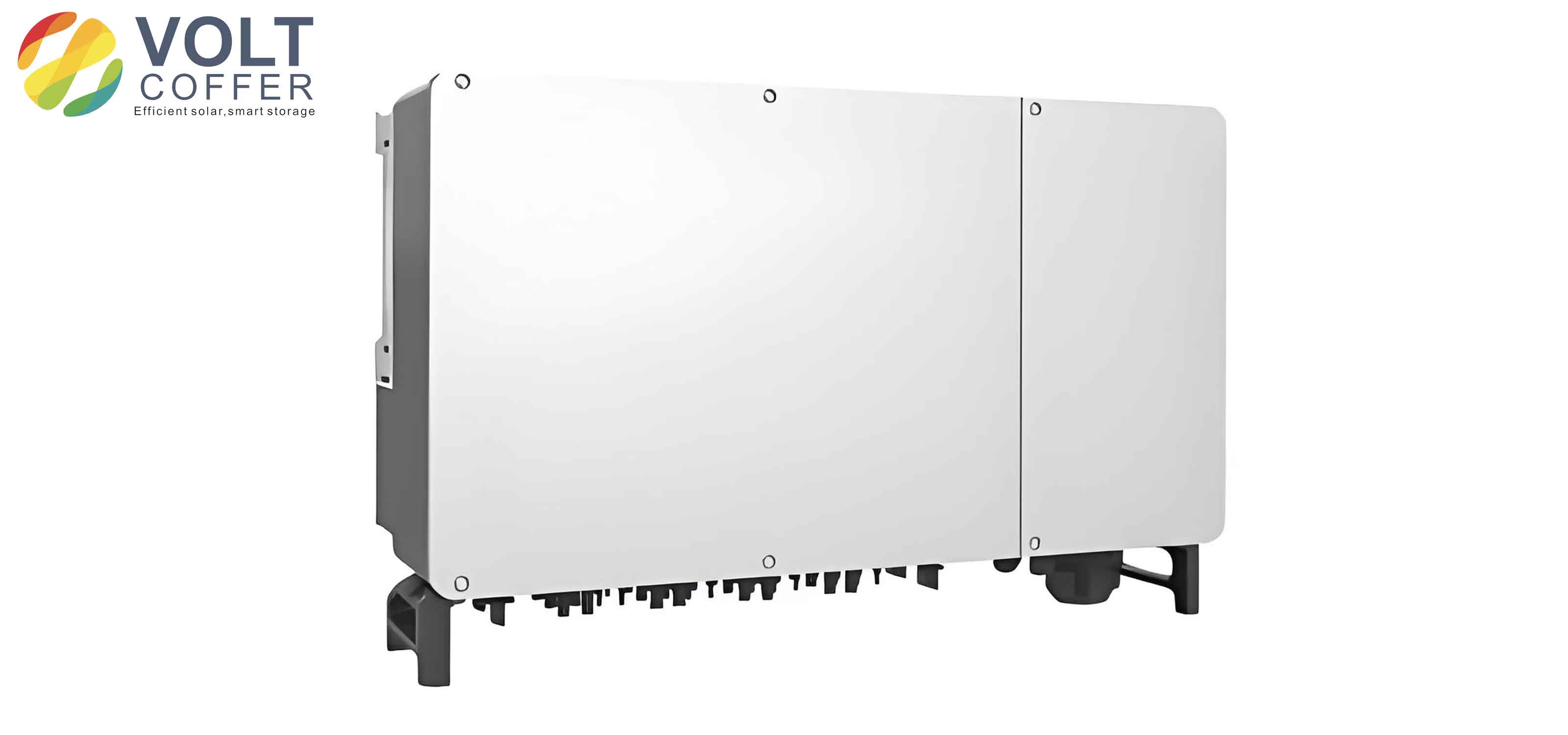
In modern power electronics, the three phase inverter is a critical component widely used in variable-speed drives, active power filters, and uninterruptible power supplies due to its ease of operation and control. However, conventional space vector pulse width modulation (SVPWM) with fixed switching frequency and rated DC bus voltage often leads to low voltage utilization and high insulated gate bipolar transistor (IGBT) losses. These losses result in elevated junction temperatures, which account for nearly 60% of inverter failures, as every 10°C rise in temperature doubles the failure rate. To address this, I propose a novel control strategy that simultaneously optimizes the switching frequency and DC bus voltage of the three phase inverter for permanent magnet synchronous motor (PMSM) drives, ensuring reduced IGBT losses while maintaining output current quality.
My approach involves developing comprehensive models for the PMSM and IGBT losses based on output cycles. By setting the output current quality as a constraint and using the switching frequency and DC bus voltage as optimization variables, I apply the dwarf mongoose optimization algorithm to minimize IGBT losses. This method not only enhances the reliability of the three phase inverter but also improves DC voltage utilization. Through simulations and experiments, I compare the proposed strategy with conventional methods, such as rated DC bus voltage with constant switching frequency (RDBVCSFT) and rated DC bus voltage with variable switching frequency (RDBVVSFT), demonstrating significant reductions in IGBT losses and junction temperatures without compromising performance.
Model Development
To effectively control the PMSM using a three phase inverter, I first establish the mathematical model of the PMSM in the dq-axis reference frame. The voltage equations are given by:
$$ v_{qs} = R_q i_{qs} + p\lambda_{qs} + \omega_{er} \lambda_{ds} $$
$$ v_{ds} = R_d i_{ds} + p\lambda_{ds} – \omega_{er} \lambda_{qs} $$
where $\omega_{er} = P_n \omega_m$ represents the rotor electrical angular velocity, $P_n$ is the number of pole pairs, and $\omega_m$ is the mechanical angular velocity. The electromagnetic torque $T_e$ and load torque $T_L$ relate through the equation:
$$ J \frac{d\omega_m}{dt} = T_e – T_L – B\omega_m $$
with $J$ as the moment of inertia and $B$ as the damping coefficient. The stator flux linkages are defined as:
$$ \lambda_{qs} = L_q i_{qs} $$
$$ \lambda_{ds} = L_d i_{ds} + \lambda_f $$
where $L_q$ and $L_d$ are the inductances, and $\lambda_f$ is the rotor flux linkage. Under steady-state conditions, the stator phase voltage magnitude $V_s$ is derived as:
$$ V_s = \omega_{er} \sqrt{(L_d i_{ds} + \lambda_f)^2 + (L_q i_{qs})^2} $$
For the three phase inverter, I focus on the IGBT loss model, which includes conduction losses $P_{\text{IGBTcon}}$ and switching losses $P_{\text{IGBTsw}}$. Using SVPWM, the duty cycle $D$ for a three phase inverter is expressed as:
$$ D = \frac{1}{2} + \frac{m}{3} \sin(\omega_{er} t + \phi) + \frac{m}{6\sqrt{3}} \sin 3(\omega_{er} t + \phi) $$
where $m = \frac{3V_s}{2V_{dc}}$ is the modulation index, and $\phi$ is the power factor angle. The average switching and conduction losses over an output cycle are calculated as:
$$ P_{\text{IGBTsw}} = \frac{1}{2\pi} \int_0^{\pi} f_{\text{sw}} E_{\text{(on+off)nom}} \frac{V_{dc}}{V_{\text{nom}}} \frac{I_{ce}(t)}{I_{\text{nom}}} dt $$
$$ P_{\text{IGBTcon}} = \frac{1}{2\pi} \int_0^{\pi} V_{ce}(t) I_{ce}(t) D(t) dt $$
Here, $f_{\text{sw}}$ is the switching frequency, $E_{\text{(on+off)nom}}$ is the nominal switching energy, $V_{\text{nom}}$ and $I_{\text{nom}}$ are nominal voltage and current, and $V_{ce}(t) = I_{ce}(t) r_{co} + V_{ce0}$ with $r_{co}$ as the equivalent resistance and $V_{ce0}$ as the initial conduction voltage. The current $I_{ce}(t) = I_s^* | \cos(\theta – \phi) |$, where $I_s^*$ is the stator current amplitude. Combining these, the total IGBT loss per output cycle for the three phase inverter is:
$$ Q^*(V_{dc}(\theta, \phi), f_{\text{sw}}(\theta, \phi)) = \sum_{i=0}^{N} \left[ f_{\text{sw}}(\theta_i, \phi) E_{\text{(on+off)nom}} \frac{V_{dc}(\theta_i, \phi)}{V_{\text{nom}}} \frac{I_s^* | \cos(\theta_i – \phi) |}{I_{\text{nom}}} + \left( I_s^* | \cos(\theta_i – \phi) | r_{co} + V_{ce0} \right) I_s^* | \cos(\theta_i – \phi) | \left( \frac{1}{2} + \frac{3V_s}{2V_{dc}(\theta_i, \phi)} \sin(\theta_i + \phi) + \frac{3V_s}{12V_{dc}(\theta_i, \phi)} \sin 3(\theta_i + \phi) \right) \right] $$
where $\theta_i = \frac{\pi i}{N}$ for $i = 0, 1, \ldots, N$, discretizing the output cycle.
Current Ripple Calculation
To ensure the quality of the output current from the three phase inverter, I calculate the current ripple effective value, which directly relates to the total harmonic distortion (THD). In SVPWM, the current ripple over one switching period is analyzed by dividing it into linear segments. The RMS value of the current ripple $I_{\text{rms}}(\theta)$ for a single switching period is derived as:
$$ I_{\text{rms}}(\theta) = \sqrt{ \frac{t_0}{T_s} \frac{x^2}{3} + \frac{t_1}{T_s} \frac{x^2 + xy + y^2}{3} + \frac{t_2}{T_s} \frac{x^2 – xy + y^2}{3} } $$
where $t_0$, $t_1$, and $t_2$ are the time intervals for different voltage vectors, and $x$ and $y$ are peak current ripple values calculated from the slopes of the current segments. The overall current ripple effective value over an output cycle $T$ is:
$$ I_{\text{rms}}^* = \sqrt{ \frac{1}{T} \int_0^T (I_{\text{rms}}(\theta))^2 d\theta } $$
This value is used as a constraint in the optimization process to maintain current quality while reducing losses in the three phase inverter.
Optimization Using Dwarf Mongoose Algorithm
I employ the dwarf mongoose optimization algorithm to minimize the IGBT losses in the three phase inverter by optimizing the switching frequency $f_{\text{sw}}$ and DC bus voltage $V_{dc}$. The algorithm mimics the foraging behavior of mongooses, with groups like the alpha group, babysitters, and scouts. The optimization problem is formulated as:
$$ \min Q^*(V_{dc}(\theta, \phi), f_{\text{sw}}(\theta, \phi)) $$
subject to:
$$ I_{\text{rms}}(V_{dc}(\theta_i, \phi), f_{\text{sw}}(\theta_i, \phi)) = Y $$
$$ V_{dc}(\theta_i, \phi) \geq \sqrt{3} V_s $$
$$ f_{\text{sw}}(\theta_i, \phi) \geq f_0 $$
where $Y$ is the current ripple effective value under rated conditions, and $f_0$ is the minimum switching frequency threshold. The dwarf mongoose algorithm initializes a population of candidate solutions and iteratively updates their positions based on fitness evaluation and group dynamics. The position update for each candidate $X_i$ is given by:
$$ X_{i+1} = X_i + h \cdot o $$
where $h$ is a random number in $[-1, 1]$, and $o$ represents the vocalization of the female leader. The sleep mound average $\gamma$ is computed as:
$$ \gamma = \frac{\sum_{i=1}^n m_i}{n} $$
with $m_i = \frac{s_{i+1} – s_i}{\max(|s_i, s_{i+1}|)}$ representing the change in fitness. The scout movement is adjusted using:
$$ X_i = \begin{cases}
X_i – Z \cdot h \cdot u \cdot (X_i – M), & \gamma_{i+1} > \gamma_i \\
X_i + Z \cdot h \cdot u \cdot (X_i – M), & \text{otherwise}
\end{cases} $$
where $u$ is a random number, $Z = (1 – g/G)^{2g/G}$ controls collective movement, $g$ is the current iteration, $G$ is the total iterations, and $M$ is the movement vector. After optimization, the average DC bus voltage $V_{\text{dc-opt}}$ is calculated to avoid frequent fluctuations:
$$ V_{\text{dc-opt}} = \frac{\sum_{i=0}^N V_{dc}\left(\frac{\pi i}{N}, \phi\right)}{N} $$
If $V_{\text{dc-opt}} > V_{dc}$, it is set to the rated value $V_{dc}$ to ensure practicality.
Simulation and Experimental Validation
To validate the proposed strategy for the three phase inverter, I conducted simulations and experiments using MATLAB/Simulink and a TMS320F28335-based platform. The parameters for the PMSM and IGBT are summarized in Table 1.
| Parameter | Value |
|---|---|
| Rated DC Bus Voltage | 220 V |
| Stator Resistance | 34 Ω |
| Armature Inductance | 0.04 H |
| Flux Linkage | 0.08 Wb |
| Fixed Switching Frequency | 10 kHz |
| IGBT Model | IKD10N60R |
| Switching Energy | 0.00093 J |
| Equivalent Resistance | 0.59 Ω |
| Initial Conduction Voltage | 0.107 V |
In simulations, I applied loads of 0.05 N·m, 0.20 N·m, and 0.30 N·m at a reference speed of 1000 rpm. The optimized switching frequency and DC bus voltage for the three phase inverter are shown in Figure 3, demonstrating improved voltage utilization. The output current waveforms for different strategies are compared in Figure 4, and the THD values are listed in Table 2.
| Strategy | 0.05 N·m THD (%) | 0.20 N·m THD (%) | 0.30 N·m THD (%) |
|---|---|---|---|
| RDBVCSFT | 12.36 | 3.59 | 2.49 |
| RDBVVSFT | 13.89 | 3.79 | 2.72 |
| Proposed | 9.23 | 2.63 | 2.01 |
The average IGBT losses per output cycle are presented in Table 3, showing that the proposed method reduces losses by 35.4%, 30.3%, and 27.3% compared to RDBVCSFT, and by 34.2%, 28.8%, and 25.9% compared to RDBVVSFT for the respective loads.
| Load (N·m) | RDBVCSFT (W) | RDBVVSFT (W) | Proposed (W) |
|---|---|---|---|
| 0.05 | 0.2398 | 0.2340 | 0.1540 |
| 0.20 | 0.8664 | 0.8460 | 0.6030 |
| 0.30 | 1.2549 | 1.2310 | 0.9123 |
The junction temperature rise is calculated using:
$$ T_j = P_{\text{IGBT}} \cdot \sum_{i=1}^4 R_i (1 – e^{-t/(R_i C_i)}) + T_{\text{hs}} $$
where $R_i$ and $C_i$ are thermal resistances and capacitances, and $T_{\text{hs}}$ is the ambient temperature. The results in Table 4 indicate that the proposed strategy reduces temperature rise by up to 35.7% compared to RDBVCSFT and 30.7% compared to RDBVVSFT.
| Load (N·m) | RDBVCSFT (°C) | RDBVVSFT (°C) | Proposed (°C) |
|---|---|---|---|
| 0.05 | 1.4 | 1.3 | 0.9 |
| 0.20 | 3.2 | 3.1 | 2.2 |
| 0.30 | 3.8 | 3.72 | 3.05 |
In experiments, the modulation ratio improvement is evident from Table 5, where the proposed method increases the ratio by up to 137%, enhancing the efficiency of the three phase inverter.
| Load (N·m) | Optimized DC Bus Voltage (V) | Initial Modulation Ratio | Optimized Modulation Ratio | Improvement (%) |
|---|---|---|---|---|
| 0.05 | 98 | 0.27 | 0.64 | 137.0 |
| 0.20 | 110 | 0.35 | 0.68 | 94.0 |
| 0.30 | 118 | 0.40 | 0.73 | 82.4 |
The reduction in IGBT losses as a percentage of motor output power is summarized in Table 6, highlighting the energy-saving potential of the proposed three phase inverter control.
| Load (N·m) | Reduced IGBT Losses (W) | Motor Output Power (W) | Percentage (%) |
|---|---|---|---|
| 0.05 | 5.72 | 59 | 9.7 |
| 0.20 | 17.56 | 125 | 14.0 |
| 0.30 | 22.50 | 153 | 14.7 |
Conclusion
In this work, I have developed an optimized control strategy for PMSM drives using a three phase inverter with variable switching frequency and DC bus voltage. By integrating PMSM and IGBT loss models and applying the dwarf mongoose optimization algorithm, I achieved significant reductions in IGBT losses and junction temperatures while maintaining output current quality. The proposed method enhances DC voltage utilization and improves the reliability of the three phase inverter. Simulation and experimental results confirm the superiority of this approach over conventional techniques, making it a promising solution for high-performance motor drives in various applications.