
In my research, I focus on a grid-connected residential distributed photovoltaic (PV) and battery energy storage system (BESS) that connects to loads and the main grid via an inverter. The system consists of PV modules, a BESS, loads, a grid connection with metering, and a controller with a converter. The goal is to optimize the resource allocation to minimize the total system cost while ensuring stability and reliability. I incorporate battery degradation costs and PV generation costs into the levelized cost of electricity (LCOE) framework, and propose a constraint-based optimization model that accounts for real-time electricity prices, charging/discharging costs, and operational limits.
The optimization problem is formulated as a multi-objective mixed-integer linear programming model. The objective function and constraints are detailed below. I also perform simulations using realistic data to validate the effectiveness of the proposed strategy.
System Model and Mathematical Formulation
I consider a discrete-time horizon T (e.g., 24 hours with 1-hour intervals). The following variables are defined for each time step t:
- PGU(t): power purchased from the grid to serve the load (kW).
- PGB(t): power purchased from the grid to charge the BESS (kW).
- PPU(t): PV power directly supplied to the load (kW).
- PPB(t): PV power used to charge the BESS (kW).
- PPG(t): PV power sold to the grid (kW).
- PBU(t): BESS power discharged to the load (kW).
- PBG(t): BESS power sold to the grid (kW).
- PBPV(t): total PV generation (kW) (given by weather data).
- D(t): residential load demand (kW) at time t.
Objective Function
The objective is to minimize the total system cost, which includes electricity purchase cost, PV generation cost, BESS degradation cost, and revenue from selling surplus electricity. The mathematical expression is:
$$ \text{Minimize } f_1 = \sum_{t=1}^{T} \rho(t) \big[ P_{GU}(t) + P_{GB}(t) \big] + \sum_{t=1}^{T} \rho_{PV} \big[ P_{PU}(t) + P_{PB}(t) + P_{PG}(t) \big] + \sum_{t=1}^{T} \rho_B \big[ P_{PB}(t) + P_{BU}(t) + P_{BG}(t) + P_{GB}(t) \big] – \sum_{t=1}^{T} \rho_G \big[ P_{PG}(t) + P_{BG}(t) \big] $$
where:
- ρ(t) is the real-time electricity purchase price ($/kWh).
- ρPV is the levelized cost of PV generation ($/kWh).
- ρB is the unit cost of BESS charging/discharging ($/kWh), representing degradation and operation.
- ρG is the feed-in tariff for selling electricity to the grid ($/kWh).
The first term represents the cost of buying electricity from the grid. The second term is the PV generation cost. The third term is the battery energy storage system degradation cost. The last term is the revenue from selling surplus electricity.
Constraints
Power Balance Constraint: At each time step, the total supply must equal the load demand:
$$ D(t) = P_{PU}(t) + P_{BU}(t) + P_{GU}(t), \quad \forall t = 1, 2, \dots, T $$
PV Generation Constraint: The total PV power generated must be at least the sum of its usages, accounting for conversion losses:
$$ P_{PV}(t) \geq P_{PU}(t) + P_{PB}(t) + P_{PG}(t), \quad \forall t $$
Battery Energy Storage System Power Constraints: The charging and discharging power of the BESS must not exceed the rated power Pbatrated:
$$ P_{BU}(t) + P_{BG}(t) \leq P_{bat}^{rated} $$
$$ P_{PB}(t) + P_{GB}(t) \leq P_{bat}^{rated} $$
Furthermore, charging and discharging cannot occur simultaneously:
$$ X_{ch}(t) + X_{dis}(t) \leq 1, \quad X_{ch}(t), X_{dis}(t) \in \{0,1\} $$
State of Charge (SOC) Constraints: To prolong battery life, the SOC must stay within safe limits:
$$ C_{min} \leq C(t) \leq C_{max} $$
where C(t) is the SOC at time t, and Cmin, Cmax are the lower and upper bounds (e.g., 40% and 95%).
Grid Interaction Constraint: The BESS should only charge from the grid when the electricity price is low enough to ensure profitability. This is captured by:
$$ \rho(t_{dis}) – \rho(t_{ch}) \geq 2 C_S $$
where tdis and tch are the discharging and charging time windows, and CS is the total charging/discharging cost of the battery energy storage system.
System Parameters and Simulation Setup
I consider a typical residential household with an average daily load of 30 kWh. The BESS has a capacity of 24 kWh, composed of 20 batteries (12 V, 100 Ah each) with a total investment cost of $15,000. To extend battery life, the depth of discharge is limited to 60%, and the SOC is maintained between 40% and 95%, which allows up to 3,500 cycles. The calculated levelized cost of storage is $0.132/kWh. The BESS supports a maximum charging power of 3 kW, a self-discharge rate of 0.001 per hour, and charging/discharging efficiency above 90%.
The key parameters are summarized in the following table:
| Parameter | Value | Unit |
|---|---|---|
| Daily load demand | 30 | kWh |
| Battery capacity (BESS) | 24 | kWh |
| Battery rated power | 3 | kW |
| Battery investment cost | 15000 | $ |
| Maximum cycles | 3500 | cycles |
| Levelized storage cost (ρB) | 0.132 | $/kWh |
| Min SOC (Cmin) | 0.40 | p.u. |
| Max SOC (Cmax) | 0.95 | p.u. |
| Charging/Discharging efficiency | 0.90 | p.u. |
| PV generation cost (ρPV) | 0.05 | $/kWh |
| Feed-in tariff (ρG) | 0.08 | $/kWh |
| Real-time price range | 0.10 – 0.25 | $/kWh |
Optimization Strategy and Simulation Results
I implement a greedy-like heuristic to solve the optimization problem, prioritizing PV and BESS to meet the load before purchasing grid power. The control logic is as follows:
- If PV generation exceeds load, the surplus first charges the BESS (until SOC reaches 95%), then any remaining power is sold to the grid.
- If PV generation is insufficient, the BESS discharges (if SOC > 40%) to cover the deficit; if still insufficient, power is bought from the grid.
I conduct simulations using real solar irradiance data for a typical sunny day in a mid-latitude city. The PV output profile shows higher generation during 8:00–16:00, peaking at noon. The residential load profile has peaks in the morning (7:00–9:00) and evening (18:00–22:00).
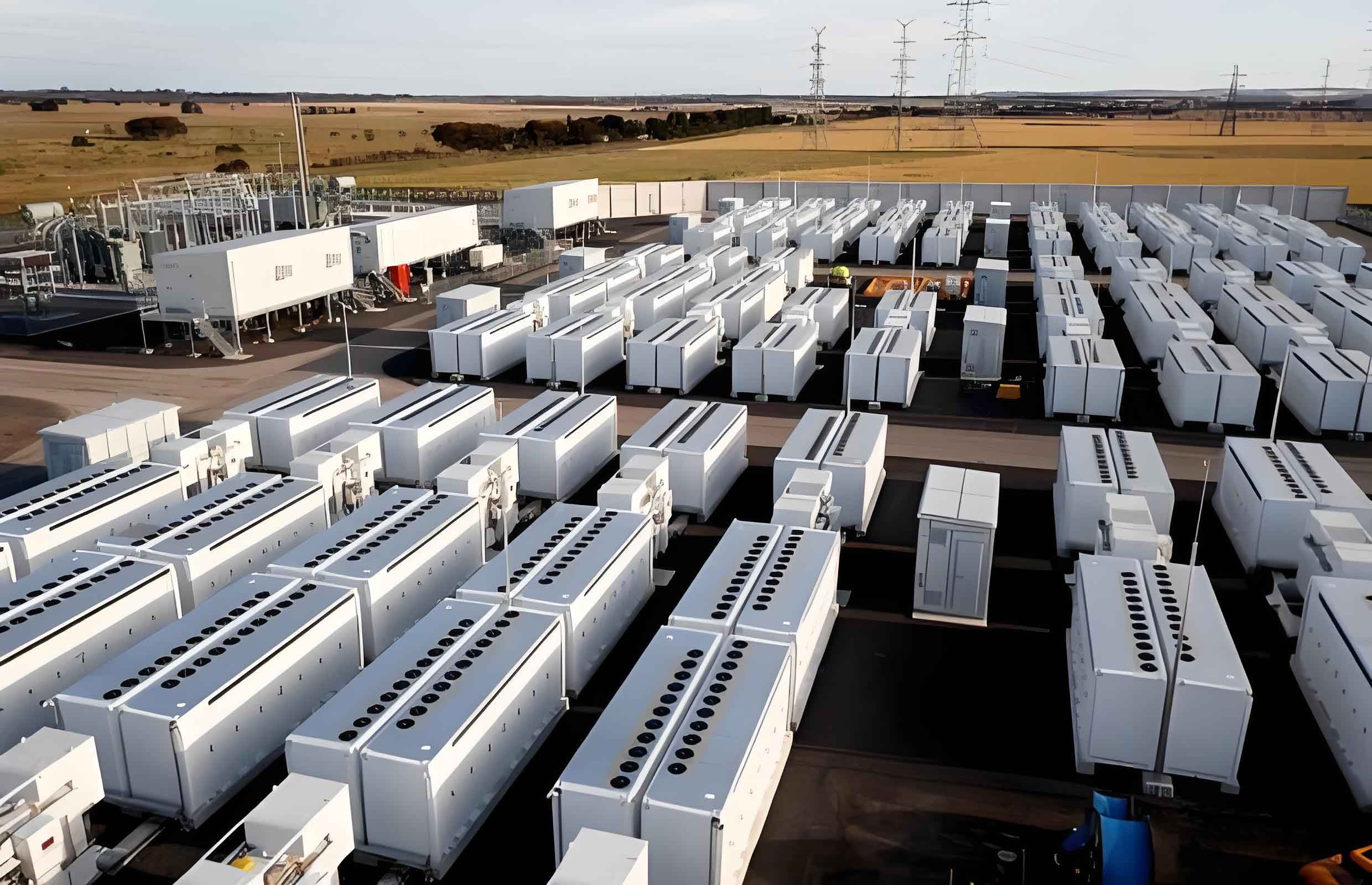
The following table shows the simulated BESS SOC evolution over a 24-hour period, along with power flows:
| Time (h) | SOC (p.u.) | PPB (kW) | PGB (kW) | PBU (kW) | PBG (kW) | Grid Purchase (kW) | Grid Sell (kW) |
|---|---|---|---|---|---|---|---|
| 0–5 | 0.60 | 0 | 0 | 0 | 0 | 0 | 0 |
| 5–6 | 0.70 | 0.8 | 0 | 0 | 0 | 0 | 0 |
| 8–12 | 0.88 | 1.2 | 0 | 0 | 0 | 0 | 0.5 |
| 17–20 | 0.60 | 0 | 0 | 1.5 | 0 | 0.8 | 0 |
| 20–24 | 0.55 | 0 | 0 | 0.5 | 0 | 1.2 | 0 |
The BESS charges during low-price periods (e.g., late night using cheap grid power) and during high PV generation hours, then discharges during evening peak demand. This behavior is clearly seen in the SOC profile, which starts at 60%, increases to 88% by noon, and returns to 60% by evening.
Comparative Analysis
To evaluate the benefit of integrating a battery energy storage system, I compare three scenarios:
- Case 1: PV + BESS (proposed system).
- Case 2: PV only (no BESS).
- Case 3: BESS only (no PV).
The simulation results for a typical day are summarized in the table below:
| Metric | Case 1 (PV+BESS) | Case 2 (PV only) | Case 3 (BESS only) |
|---|---|---|---|
| Total cost ($) | 2.15 | 2.48 | 3.12 |
| PV self-consumption ratio (%) | 88 | 70 | N/A |
| Grid independence (load covered by local sources) (%) | 65 | 45 | 32 |
| Max BESS SOC variation (p.u.) | 0.28 | N/A | 0.55 |
Case 1 achieves the lowest daily cost ($2.15) and the highest PV self-consumption (88%) compared to 70% in Case 2. Although Case 2 has a similar total cost, it relies more on selling surplus electricity at a lower price, making it less efficient. Case 3, without PV, has the highest cost due to purchasing grid electricity for both load and BESS charging, and lacks renewable generation. Moreover, integrating a battery energy storage system (BESS) enhances the microgrid’s independence and resilience against weather variability and grid outages.
Detailed Cost Breakdown
The following table provides a detailed breakdown of the daily cost components for Case 1:
| Component | Value ($) |
|---|---|
| Grid purchase cost | 1.80 |
| PV generation cost | 0.60 |
| Battery energy storage system degradation cost | 0.45 |
| Revenue from selling electricity | -0.70 |
| Net cost | 2.15 |
The degradation cost of the battery energy storage system accounts for 0.45 USD per day, which is significantly lower than the avoided cost of grid purchases during peak hours. This demonstrates the economic viability of the BESS.
Impact of Battery Energy Storage System on System Resilience
I also analyze the system behavior under a simulated grid outage scenario (e.g., 4-hour blackout). With the BESS, the system can supply critical loads (e.g., lighting and refrigeration) for the entire outage period, whereas a PV-only system would be unable to provide power after sunset. This highlights the critical role of the battery energy storage system in enhancing energy security.
The following table shows the minimum load that can be sustained during a 4-hour evening outage for each case:
| Case | Total energy available from BESS/PV (kWh) | Maximum sustained load (kW) |
|---|---|---|
| Case 1 | 12 (BESS) + 0 (PV after sunset) | 3.0 |
| Case 2 | 0 (no BESS, no PV at night) | 0 |
| Case 3 | 12 (BESS only) | 3.0 |
Case 1 and Case 3 both provide backup power, but Case 1 also benefits from daytime PV to recharge the BESS before the outage. This results in a longer-lasting backup capability.
Conclusions
Through this research, I have demonstrated that an optimized scheduling strategy for a residential distributed photovoltaic and battery energy storage system can significantly reduce the total operating cost while improving energy independence and resilience. The key findings are:
- The proposed resource optimization model, considering real-time prices and BESS degradation costs, effectively minimizes the daily cost.
- Integrating a battery energy storage system increases the PV self-consumption ratio from 70% to 88% and reduces reliance on grid purchases.
- In the event of a grid outage, the battery energy storage system provides essential backup power, greatly enhancing the microgrid’s ability to cope with extreme weather and grid emergencies.
- The levelized cost of the BESS is offset by the savings from peak shaving and avoided purchases.
This study supports the widespread adoption of residential solar-plus-storage systems, which are crucial for a sustainable and resilient future energy infrastructure.