
The proliferation of renewable energy sources like wind and solar has underscored the critical need for efficient energy storage solutions to balance grid supply and demand. Among these, electrochemical energy storage, particularly Lithium Iron Phosphate (LFP) battery-based systems, has gained significant traction. A paramount challenge in scaling this technology is effective thermal management to prevent thermal runaway and ensure longevity. While various cooling strategies exist, forced air convection remains a widely adopted method due to its simplicity, reliability, and cost-effectiveness. This article presents a comprehensive study on the optimal design of air-cooled battery modules, focusing on the critical parameter of inter-cell spacing to maximize convective heat dissipation within a battery energy storage system.
The thermal behavior of a battery cell during operation is fundamental to this analysis. The heat generation rate $Q$ (W) for an LFP cell can be modeled using Bernardi’s equation:
$$Q = I \left( (E_o – E) – T \cdot \frac{dE_o}{dT} \right)$$
where $I$ is the current (A), $E_o$ is the open-circuit voltage (V), $E$ is the terminal voltage (V), and $T$ is the absolute temperature (K). For a specific 105 Ah LFP cell with material properties including an average density of 1903.60 kg/m³ and a specific heat of 1082.00 J/(kg·K), the heat generation under a 1C discharge rate was measured to be 14.098 W. Managing this heat generation efficiently is the primary goal of the module’s thermal design within the larger battery energy storage system.
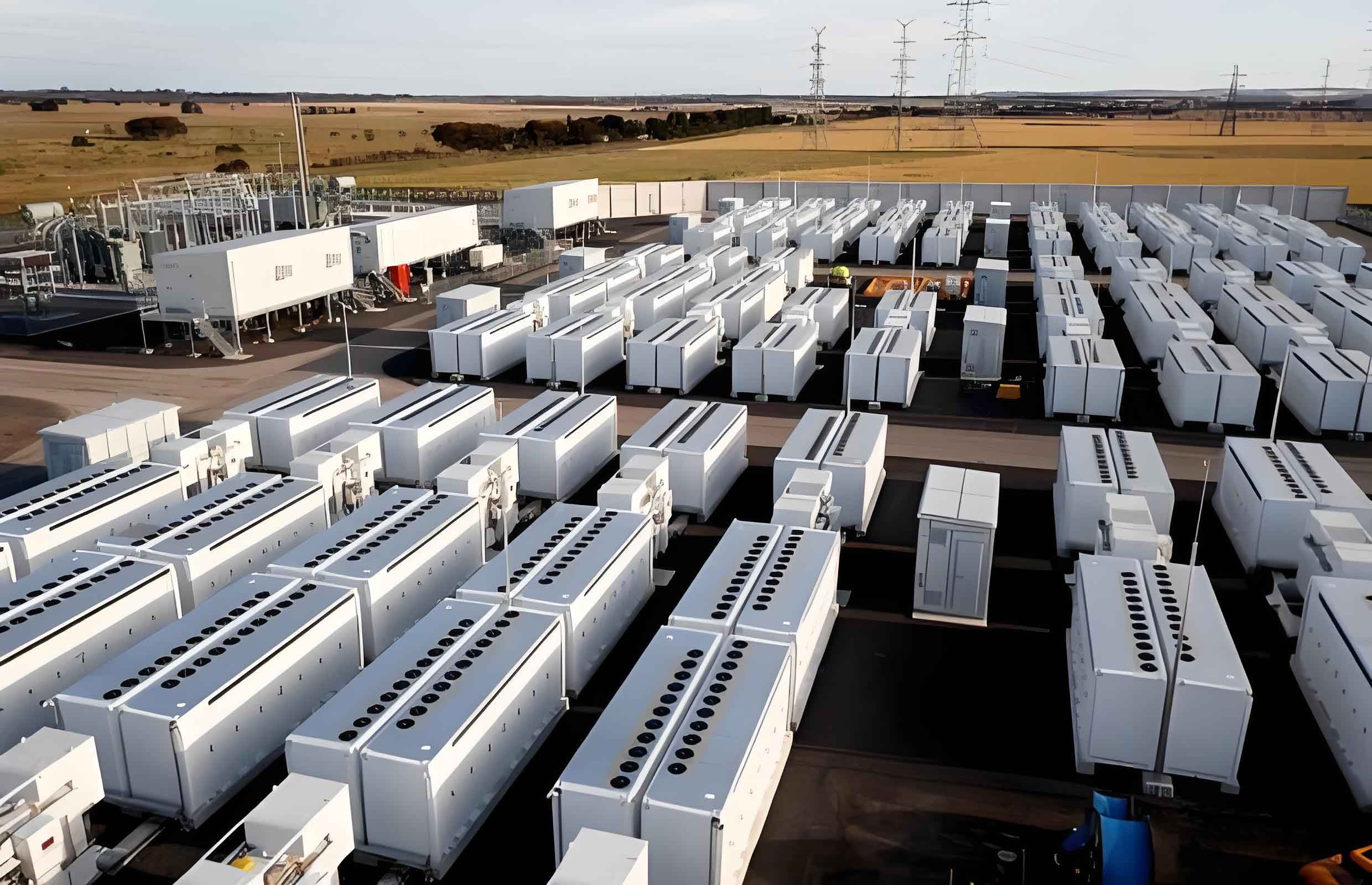
In an air-cooled battery energy storage system, cells are typically arranged in a stack with channels for cooling air flow. The core optimization problem revolves around the inter-cell spacing, denoted as $d$. A smaller $d$ increases air velocity for a given volumetric flow rate, enhancing convection. However, it also raises concerns about electrical insulation safety and increases pressure drop. Conversely, a larger $d$ eases safety and assembly but reduces convective cooling efficiency and allows for greater radiative heat exchange between cells. To analyze this, I modeled the flow channel between two adjacent cells as a rectangular duct. The hydraulic diameter $D_h$ of this channel is given by:
$$D_h = \frac{4 \times A_c}{P} = \frac{4 \times (d \cdot H)}{2 \cdot (d + H)} = \frac{2dH}{d+H}$$
where $H$ is the cell height (0.20 m). For a cooling air volumetric flow rate $q$ (m³/s) per channel, the average air velocity $v$ is $v = q / (d \cdot H)$. The flow regime is characterized by the Reynolds number:
$$Re = \frac{\rho v D_h}{\mu}$$
where $\rho$ is air density (≈1.1465 kg/m³ at 35°C) and $\mu$ is dynamic viscosity (≈1.8834×10⁻⁵ Pa·s at 35°C). Substituting for velocity, we get:
$$Re = \frac{\rho}{\mu} \cdot \frac{q}{dH} \cdot D_h = \frac{\rho q}{\mu H} \cdot \frac{2}{1 + \frac{H}{d}}$$
For a design flow rate and a practical spacing range (e.g., 1 mm to 30 mm), the flow transitions from laminar to turbulent. For such transitional/internal flows, the convective heat transfer capability is expressed by the Nusselt number $Nu$. A suitable correlation is:
$$Nu = 0.0214 (Re^{0.8} – 100) Pr^{0.4} \left[ 1 + \left( \frac{D_h}{L} \right)^{2/3} \right] \left( \frac{T_f}{T_w} \right)^{0.45}$$
where $Pr$ is the Prandtl number of air (≈0.71), $L$ is the duct length (cell depth, 0.54 m), $T_f$ is the fluid mean temperature, and $T_w$ is the wall temperature. The convective heat transfer coefficient $h$ is then $h = (Nu \cdot k_{air}) / D_h$, where $k_{air}$ is the thermal conductivity of air.
Analyzing $Nu$ as a function of $d$ reveals a non-monotonic trend. Initially, as $d$ increases from a very small value, $Nu$ increases due to the rising $Re$ (as $D_h$ increases faster than the velocity decreases). However, beyond an optimal point, the reduction in air velocity dominates, causing $Nu$ to decrease. This theoretical optimum must be balanced against safety and mechanical constraints. In practical battery energy storage system design, a minimum spacing (e.g., 7.0 mm) is set by electrical isolation requirements.
To precisely evaluate the thermal performance, I conducted a series of Computational Fluid Dynamics (CFD) simulations on a simplified two-cell model with symmetric cooling channels. The simulations were set for an ambient temperature of 35°C and a fixed upstream airflow. The table below summarizes key results for different inter-cell spacings within the considered design window:
| Inter-Cell Spacing, $d$ (mm) | Cell 1 Core Temp. Rise, $\Delta T_{B1}$ (K) | Cell 2 Core Temp. Rise, $\Delta T_{B2}$ (K) | Outlet Air Temp. Rise, $\Delta T_{Air}$ (K) | Channel Avg. Velocity, $v$ (m/s) |
|---|---|---|---|---|
| 7.00 | 10.74 | 10.74 | 5.70 | 1.37 |
| 8.00 | 11.15 | 11.15 | 5.40 | 1.26 |
| 9.00 | 11.51 | 11.51 | 5.20 | 1.16 |
| 10.00 | 11.85 | 11.85 | 5.00 | 1.07 |
| 11.00 | 11.98 | 12.38 | 4.70 | 1.02 |
| 12.00 | 12.76 | 12.76 | 4.90 | 0.94 |
The data confirms the trade-off: smaller spacing yields lower cell temperature rise ($\Delta T_B$) and higher air temperature rise ($\Delta T_{Air}$), indicating more effective heat removal by the coolant. The air velocity is also highest at the smallest spacing.
To quantitatively assess the interplay between these parameters, I propose two “Influence Factor” metrics. The first, $\eta_{\Delta T}$, evaluates how the cell temperature rise relates to the coolant’s temperature pickup, serving as an indirect measure of cooling efficiency:
$$\eta_{\Delta T} = \frac{\Delta T_B}{\Delta T_{Air}}$$
A lower value of $\eta_{\Delta T}$ is generally preferable, indicating a smaller cell temperature rise per degree of air heating. The second metric, $\eta_{\Delta v}$, relates the cell temperature rise directly to the available cooling air velocity:
$$\eta_{\Delta v} = \frac{\Delta T_B}{v}$$
A lower $\eta_{\Delta v}$ signifies that a given airflow velocity is more effective at keeping the cell cool. Calculating these factors from the simulation data provides further insight into the optimal design point for the battery energy storage system module.
| Inter-Cell Spacing, $d$ (mm) | $\eta_{\Delta T}$ ($\Delta T_B / \Delta T_{Air}$) | $\eta_{\Delta v}$ ($\Delta T_B / v$) (K·s/m) |
|---|---|---|
| 7.00 | 1.884 | 7.84 |
| 8.00 | 2.065 | 8.85 |
| 9.00 | 2.214 | 9.92 |
| 10.00 | 2.370 | 11.07 |
| 11.00 | 2.587* | 11.75* |
| 12.00 | 2.604 | 13.57 |
*Value calculated using the average $\Delta T_B$ for the slightly asymmetric case at d=11mm.
Both $\eta_{\Delta T}$ and $\eta_{\Delta v}$ increase monotonically with spacing $d$. The minimum values for both metrics occur at the smallest spacing of 7.00 mm. This analysis, combining direct thermal performance ($\Delta T_B$) with the proposed influence factors, strongly indicates that the smallest permissible spacing from an insulation safety standpoint (7.00 mm in this study) provides the most effective convective cooling for the individual cells within the module of the battery energy storage system.
Guided by this cell-level optimization, I proceeded to design a complete battery module. The module configuration was 12 series and 2 parallel (2P12S), comprising 24 of the 105 Ah LFP cells, resulting in a nominal capacity of approximately 7.8 kWh. The total heat dissipation $Q_{total}$ at a 1C discharge rate is 24 cells × 14.098 W/cell = 338.35 W. To maintain a cell temperature rise below a target $\Delta T_{cell, max}$, the required minimum cooling air volumetric flow rate $q_{total}$ can be estimated from an energy balance:
$$q_{total} = \frac{Q_{total}}{\rho_{air} C_{p, air} \Delta T_{air}}$$
where $\Delta T_{air}$ is the allowable temperature rise of the air stream. Assuming $\Delta T_{air} \approx 10$ K, $\rho_{air} \approx 1.128$ kg/m³ at 40°C, and $C_{p, air} \approx 1.013$ kJ/(kg·K), the calculation gives:
$$q_{total} \approx \frac{338.35 \text{ W}}{1.128 \frac{\text{kg}}{\text{m}^3} \times 1013 \frac{\text{J}}{\text{kg·K}} \times 10 \text{ K}} \approx 0.0296 \frac{\text{m}^3}{\text{s}} \approx 106.6 \frac{\text{m}^3}{\text{h}}$$
To ensure robust operation, two 24V DC axial fans with a maximum free-flow capacity of 237 m³/h each were selected, operating at a point to deliver the required flow against the system’s flow resistance. A rear-inlet, front-outlet airflow organization was adopted to ensure all cells are in the cooling path.
A full 3D CFD simulation of the complete module was performed to validate the thermal and flow design. The simulation modeled all 24 cells, the module enclosure, the fans as pressure boundaries, and the detailed vent openings. The governing equations for steady-state, turbulent flow and heat transfer were solved, assuming incompressible air flow with the Boussinesq approximation for buoyancy.
The flow field analysis revealed a well-distributed airflow. The velocity profiles in the channels between cells in different rows showed consistency, with only minor variations. The channels directly aligned with the fan hubs exhibited slightly higher velocities, but the overall distribution was uniform, confirming effective airflow organization critical for a balanced battery energy storage system thermal state.
The temperature field results were promising. As expected, a longitudinal temperature gradient existed, with cells near the air inlet being cooler than those near the outlet. The maximum temperature difference between any two cells in the module was approximately 7.5°C. More importantly, the temperature difference between adjacent cells in the same row was consistently below 2.5°C, indicating excellent thermal uniformity facilitated by the optimized spacing and airflow design. The core temperature rise of the cells aligned with the predictions from the unit cell-spacing optimization model.
In conclusion, this study systematically addresses a key design parameter in air-cooled battery energy storage system modules. By establishing a theoretical framework for inter-cell convective cooling and validating it through detailed unit and full-module CFD simulations, I demonstrated that minimizing the inter-cell spacing within safety limits provides the most effective heat dissipation. The proposed Influence Factors ($\eta_{\Delta T}$ and $\eta_{\Delta v}$) offer a quantitative method to evaluate the cooling efficiency under different geometric configurations. The subsequent design and simulation of a full-scale 7.8 kWh module verified that the optimized spacing, coupled with a carefully engineered airflow path, results in satisfactory cell temperature control and excellent thermal uniformity. This methodology provides a practical and effective guide for the engineering design of thermal management systems in air-cooled electrochemical battery energy storage system installations, contributing to their safety, performance, and lifespan.