
As a researcher deeply involved in the development of advanced energy storage systems, I have witnessed the transformative role of lithium-ion batteries in modern technology. Since their commercialization in 1991, lithium-ion batteries have become the cornerstone of portable electronics, electric vehicles, and renewable energy storage, owing to their high energy density, long cycle life, and excellent charge retention. The global shift toward clean energy and sustainable solutions has further amplified the importance of lithium-ion batteries, making them critical in sectors like aerospace, military, and medical devices. In this context, the electrolyte—a key component of lithium-ion batteries—plays a pivotal role in determining performance, safety, and longevity. This article delves into the optimization strategies and emerging trends in lithium-ion battery electrolyte formulations, drawing from extensive research and practical applications. I will explore the composition, function, and customization of electrolytes for different battery types, analyze optimization approaches, and highlight future directions, all while emphasizing the central theme: advancing lithium-ion battery technology through electrolyte innovation.
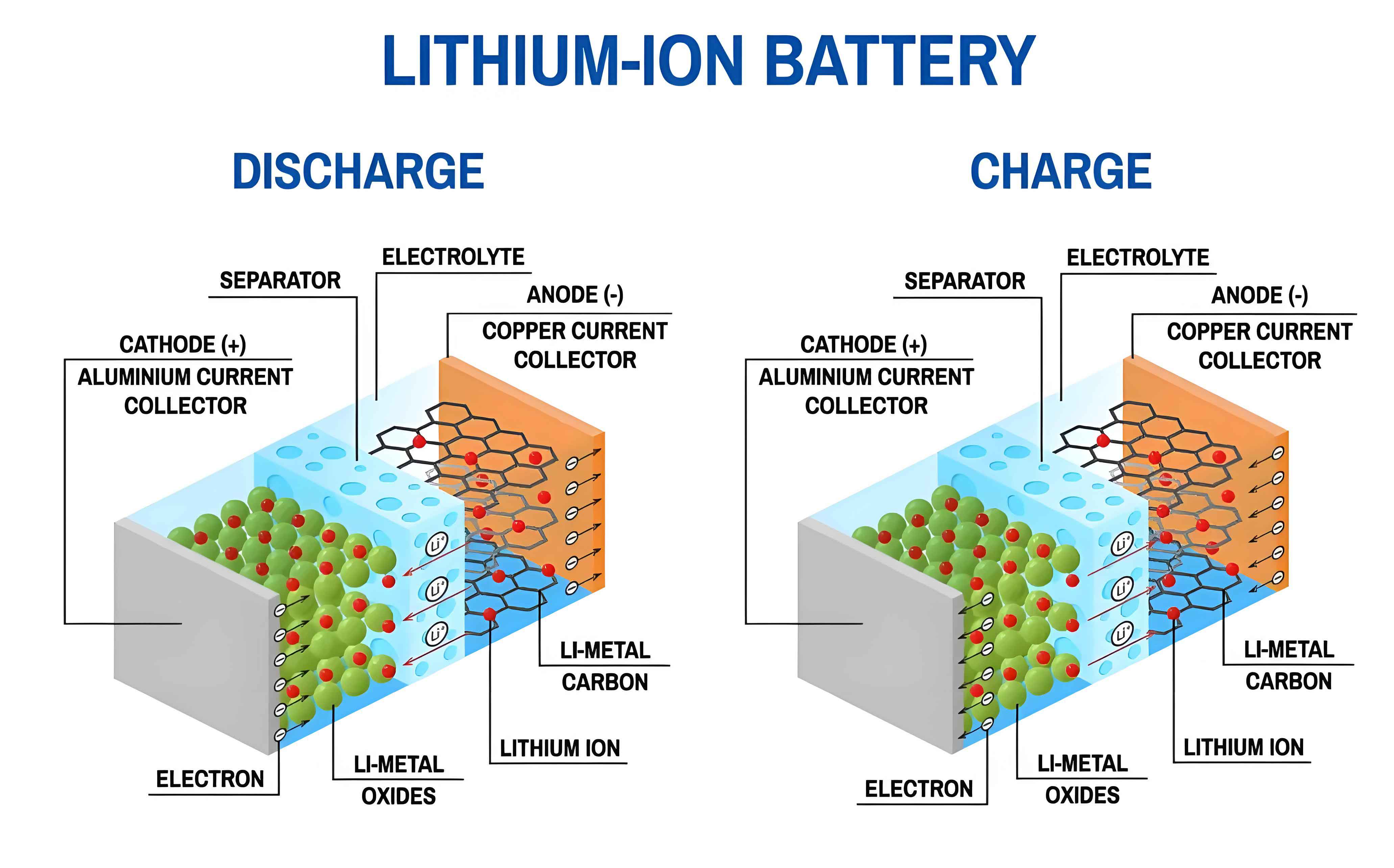
The electrolyte in a lithium-ion battery serves as the medium for ion transport between the anode and cathode during charge and discharge cycles. Its primary functions include facilitating lithium-ion migration, maintaining electrochemical stability, and contributing to the formation of the solid electrolyte interphase (SEI) layer—a protective film that prevents further electrolyte decomposition and enhances battery life. An optimized electrolyte formulation can significantly improve the efficiency, safety, and adaptability of lithium-ion batteries. For instance, by adjusting solvent blends, lithium salts, and additives, we can tailor electrolytes to meet specific demands such as high-voltage operation, rapid charging, or extreme temperature performance. The evolution of lithium-ion battery electrolytes has been driven by the need for higher energy densities, better safety profiles, and environmental sustainability, reflecting the broader goals of the energy storage industry.
To understand electrolyte optimization, it is essential to first examine its core components. A typical lithium-ion battery electrolyte consists of three main parts: solvents, lithium salts, and additives. Solvents, usually carbonate-based organic compounds, provide the liquid medium for ion dissolution and transport. Common solvents include ethylene carbonate (EC), propylene carbonate (PC), dimethyl carbonate (DMC), diethyl carbonate (DEC), and ethyl methyl carbonate (EMC). These solvents are often mixed to balance properties like viscosity, dielectric constant, and boiling point. For example, EC offers high dielectric constant but high viscosity, while linear carbonates like DMC and EMC have lower viscosity, enhancing ion mobility. The choice of solvent directly impacts the ionic conductivity, which can be expressed using the Nernst-Einstein relation: $$ \sigma = \frac{n q^2 D}{k_B T} $$ where \(\sigma\) is the ionic conductivity, \(n\) is the ion concentration, \(q\) is the charge, \(D\) is the diffusion coefficient, \(k_B\) is the Boltzmann constant, and \(T\) is the temperature. Optimizing solvent mixtures is crucial for achieving high conductivity across a wide temperature range.
Lithium salts, such as lithium hexafluorophosphate (LiPF6), lithium bis(trifluoromethanesulfonyl)imide (LiTFSI), and lithium difluoro(oxalato)borate (LiDFOB), provide the source of lithium ions. LiPF6 is widely used due to its good conductivity and compatibility with electrode materials, but it suffers from thermal instability and moisture sensitivity. Alternatives like LiFSI offer higher thermal stability and conductivity, albeit at a higher cost. The concentration of lithium salts also affects performance; for instance, highly concentrated electrolytes (HCEs) with salt-to-solvent ratios above 1:1 can enhance stability at high voltages but may increase viscosity. The dissociation constant of the salt influences ion pairing, which can be modeled using the Debye-Hückel theory: $$ \log \gamma_{\pm} = -A z^2 \sqrt{I} $$ where \(\gamma_{\pm}\) is the mean activity coefficient, \(A\) is a constant, \(z\) is the ion charge, and \(I\) is the ionic strength. This highlights the need for careful salt selection to optimize ion transport and electrochemical windows.
Additives are minor components (typically less than 5% by weight) that impart specific functionalities, such as SEI formation enhancement, overcharge protection, or flame retardation. Common additives include vinylene carbonate (VC), fluoroethylene carbonate (FEC), and lithium difluorophosphate (LiPO2F2). VC aids in forming a stable SEI layer on graphite anodes, while FEC improves thermal stability and cycle life in high-voltage systems. Additives can also mitigate side reactions, such as gas generation or transition metal dissolution, by passivating electrode surfaces. The effectiveness of an additive often depends on its redox potential and adsorption kinetics, which can be described using Butler-Volmer kinetics: $$ i = i_0 \left[ \exp\left(\frac{\alpha n F \eta}{RT}\right) – \exp\left(-\frac{(1-\alpha) n F \eta}{RT}\right) \right] $$ where \(i\) is the current density, \(i_0\) is the exchange current density, \(\alpha\) is the transfer coefficient, \(n\) is the number of electrons, \(F\) is Faraday’s constant, \(\eta\) is the overpotential, \(R\) is the gas constant, and \(T\) is the temperature. By tailoring additives, we can address specific degradation mechanisms in lithium-ion batteries.
The requirements for electrolytes vary significantly across different lithium-ion battery chemistries, necessitating customized formulations. Below, I compare two prominent types: ternary batteries (using LiNiCoMnO2 cathodes) and lithium iron phosphate (LiFePO4) batteries. This comparison is summarized in Table 1, which outlines key electrolyte characteristics for each system.
| Battery Type | Typical Voltage Range | Preferred Solvents | Lithium Salt Choices | Key Additives | Performance Focus |
|---|---|---|---|---|---|
| Ternary (NCM) Batteries | 3.6–4.3 V | EC, EMC, DMC (avoid PC due to instability) | LiPF6, LiPO2F2 for high-voltage stability | VC, FEC, LiPO2F2 | High energy density, high-voltage stability, thermal management |
| Lithium Iron Phosphate (LFP) Batteries | 3.2–3.5 V | EC, DMC, DEC, PC (for low-temperature performance) | LiPF6, LiFSI (for enhanced conductivity) | VC, DMC/DEC blends | Long cycle life, safety, low-temperature operation |
For ternary batteries, the high operating voltage (up to 4.3 V or more) demands electrolytes with exceptional electrochemical stability. Solvent blends often exclude PC because it tends to decompose at high voltages, leading to gas evolution and capacity fade. Instead, mixtures of EC with linear carbonates like EMC and DMC are preferred, as they offer a balance of high dielectric constant and low viscosity. The lithium salt LiPF6 is commonly used, but additives like VC and FEC are critical for forming a robust SEI layer that prevents electrolyte reduction on the anode. Additionally, LiPO2F2 can further stabilize the SEI and inhibit transition metal dissolution from the cathode. The high-voltage stability can be quantified by the oxidative decomposition potential, which for optimized electrolytes can exceed 5 V vs. Li/Li+. This is crucial for lithium-ion batteries targeting electric vehicles, where energy density and fast charging are paramount.
In contrast, lithium iron phosphate batteries operate at lower voltages (around 3.2–3.5 V), reducing the stress on the electrolyte. This allows for a broader solvent selection, including PC, which can improve low-temperature performance due to its low melting point. The primary focus here is on achieving high ionic conductivity and thermal stability, especially for applications like energy storage systems (ESS) that require long cycle life and cost-effectiveness. LiPF6 remains a popular salt, but LiFSI is gaining traction for its superior conductivity and thermal resistance. Additives are less critical than in ternary systems, but VC is still used to enhance SEI formation, and solvent blends like DMC/DEC can optimize viscosity for improved low-temperature performance. The ionic conductivity \(\sigma\) at low temperatures can be modeled using the Arrhenius equation: $$ \sigma = \sigma_0 \exp\left(-\frac{E_a}{RT}\right) $$ where \(\sigma_0\) is a pre-exponential factor and \(E_a\) is the activation energy for ion transport. By minimizing \(E_a\) through solvent and salt selection, we can extend the operational range of lithium-ion batteries to sub-zero conditions.
Beyond these two types, other lithium-ion battery variants, such as lithium titanate (LTO) or silicon-anode batteries, present unique electrolyte challenges. For instance, silicon anodes undergo large volume changes during cycling, which can disrupt the SEI layer. Electrolytes for such systems often require additives like FEC to form a flexible SEI that accommodates expansion. This highlights the need for application-specific electrolyte design, a theme I will explore further in optimization strategies.
Optimizing electrolyte formulations involves a systematic approach that considers the target application, performance metrics, and cost constraints. I classify optimization strategies into three categories: solvent engineering, salt and additive selection, and holistic formulation tuning. Each strategy impacts key battery parameters, such as cycle life, safety, energy density, and temperature resilience. To illustrate, Table 2 summarizes how adjustments in electrolyte components affect battery performance.
| Optimization Parameter | Typical Adjustments | Impact on Lithium-Ion Battery Performance | Key Equations or Metrics |
|---|---|---|---|
| Solvent Composition | Increase DMC/EMC ratio; blend EC with linear carbonates | Enhances ionic conductivity, reduces viscosity, improves low-temperature performance | Conductivity: \(\sigma = \sum n_i q_i \mu_i\); Viscosity: \(\eta\) (measured in mPa·s) |
| Lithium Salt Concentration | Use HCEs (e.g., 3 M LiFSI in EC/DMC); switch to alternative salts (LiTFSI, LiDFOB) | Improves high-voltage stability, reduces side reactions, but may increase cost and viscosity | Ionic strength: \(I = \frac{1}{2} \sum c_i z_i^2\); Transference number: \(t_+ = \frac{\sigma_+}{\sigma}\) |
| Additive Incorporation | Add VC (1–2%), FEC (5–10%), or LiPO2F2 (0.5–1%) | Stabilizes SEI, prevents gas generation, enhances thermal stability, extends cycle life | SEI resistance: \(R_{SEI}\) from EIS; Cycle life: \(N = f(\Delta V, C_{\text{loss}})\) |
| Overall Formulation Balance | Tailor for specific energy density, power density, or safety requirements | Achieves trade-offs between performance metrics; e.g., high energy vs. fast charging | Energy density: \(E = \frac{1}{2} C V^2\); Power density: \(P = \frac{E}{t}\) |
Solvent engineering is fundamental to electrolyte optimization. By varying the ratios of cyclic and linear carbonates, we can tune properties like viscosity and dielectric constant. For example, a blend of EC:EMC:DMC in a 3:5:2 volume ratio offers a good balance for high-power lithium-ion batteries, providing high conductivity (e.g., >10 mS/cm at 25°C) and low viscosity (<5 mPa·s). In low-temperature applications, increasing the proportion of DMC or adding PC can lower the freezing point, as described by the freezing point depression equation: $$ \Delta T_f = K_f \cdot m $$ where \(\Delta T_f\) is the freezing point depression, \(K_f\) is the cryoscopic constant, and \(m\) is the molality of the solution. However, PC may co-intercalate into graphite anodes, causing exfoliation, so its use requires caution or complementary additives. For high-temperature stability, solvents with high boiling points, such as sulfones or ionic liquids, are being explored, though they often come with trade-offs in conductivity.
Lithium salt selection directly influences electrochemical stability and safety. LiPF6 decomposes at elevated temperatures, releasing HF, which can corrode electrode materials. Alternatives like LiFSI have higher thermal decomposition temperatures (>200°C) and better moisture tolerance, making them suitable for safer lithium-ion batteries. However, LiFSI can corrode aluminum current collectors at high voltages, necessitating protective coatings or additive blends. The transference number \(t_+\), which indicates the fraction of current carried by lithium ions, is critical for minimizing concentration polarization. It can be improved using single-ion conductors or high-concentration electrolytes, as shown by the equation: $$ t_+ = \frac{D_+}{D_+ + D_-} $$ where \(D_+\) and \(D_-\) are the diffusion coefficients of cations and anions, respectively. In HCEs, the high salt concentration reduces solvent availability, limiting side reactions and expanding the electrochemical window, which is beneficial for high-voltage lithium-ion batteries.
Additives are the “secret sauce” of electrolyte formulations, enabling fine-tuning for specific challenges. VC, for instance, polymerizes on the anode surface during initial cycles, forming a stable SEI rich in polycarbonates. This reduces irreversible capacity loss and improves cycle life. FEC, on the other hand, decomposes to form LiF-rich layers, enhancing thermal stability and compatibility with silicon anodes. The effectiveness of additives can be quantified using electrochemical impedance spectroscopy (EIS), where a lower \(R_{SEI}\) indicates a more conductive SEI. Additionally, additives like lithium bis(oxalato)borate (LiBOB) can scavenge HF, protecting the SEI from acid attack. The reaction kinetics can be modeled using pseudo-first-order kinetics: $$ \frac{d[C]}{dt} = -k[C] $$ where \([C]\) is the additive concentration and \(k\) is the rate constant. By optimizing additive combinations, we can address multiple degradation pathways simultaneously, prolonging the lifespan of lithium-ion batteries.
Application-specific optimization is crucial, as different use cases impose distinct demands on lithium-ion batteries. For electric vehicles (EVs), electrolytes must support fast charging, high energy density, and wide temperature operation. A typical EV electrolyte might consist of 1.2 M LiPF6 in EC:EMC (3:7 by volume) with 2% VC and 1% LiPO2F2. This formulation balances conductivity (∼12 mS/cm at 25°C) and high-voltage stability (up to 4.5 V). For portable electronics, where slim form factors and light weight are key, electrolytes with low viscosity and high energy density are preferred, such as 1 M LiPF6 in EC:DMC (1:1) with 1% FEC. In energy storage systems (ESS), cost and longevity take precedence; here, electrolytes based on LiFePO4 chemistry might use 1 M LiPF6 in EC:DEC:PC (1:1:1) to ensure low self-discharge and long cycle life at minimal cost.
To illustrate optimization in practice, I will detail a case study: designing an electrolyte for a high-performance ternary (NCM811) lithium-ion battery intended for electric aviation. This application requires ultra-high energy density, rapid charging, and operation from -40°C to 60°C. The formulation process involves iterative testing and modeling. First, solvent selection: a blend of EC, EMC, and DMC in a 2:6:2 ratio is chosen to achieve low viscosity (∼4.2 mPa·s at 20°C) and high dielectric constant (∼40). PC is avoided due to its instability at high voltages. Second, lithium salt: 1.5 M LiFSI is used instead of LiPF6 for better thermal stability, with 0.1 M LiDFOB added to improve SEI formation on the silicon-blend anode. Third, additives: 3% FEC and 1% succinonitrile (SN) are incorporated to enhance low-temperature performance and inhibit dendrite growth. The ionic conductivity as a function of temperature is given by: $$ \sigma(T) = A \exp\left(-\frac{B}{T – T_0}\right) $$ where \(A\), \(B\), and \(T_0\) are fitting parameters from Vogel-Fulcher-Tammann equation, accounting for glass transition behavior. This formulation yields a conductivity of 8 mS/cm at -20°C and 15 mS/cm at 25°C, with a cycle life exceeding 1000 cycles at 80% capacity retention. Such case studies underscore the importance of holistic optimization in advancing lithium-ion battery technology.
The field of lithium-ion battery electrolytes is rapidly evolving, driven by emerging trends and future challenges. Current research is focused on several innovative directions: solid-state electrolytes, high-voltage electrolyte systems, environmentally friendly formulations, and customized additive design. Solid-state electrolytes, including ceramics (e.g., garnet-type Li7La3Zr2O12), polymers (e.g., PEO-based), and composites, promise enhanced safety by eliminating flammable liquid components. They also enable the use of lithium metal anodes, potentially doubling the energy density of lithium-ion batteries. However, challenges remain in achieving high ionic conductivity at room temperature and maintaining interfacial stability. The conductivity of solid electrolytes can be described by: $$ \sigma = \sigma_0 \exp\left(-\frac{E_a}{k_B T}\right) $$ where \(E_a\) is often higher than in liquid systems, necessitating nanostructuring or doping to improve performance.
High-voltage electrolyte systems are critical for next-generation cathodes like lithium-rich layered oxides or spinels, which operate above 4.5 V. These systems require solvents and salts with high oxidative stability, such as sulfolane or ionic liquids. Additives like tris(trimethylsilyl) phosphate (TMSP) can form protective cathode electrolyte interphase (CEI) layers, preventing transition metal dissolution. The oxidative decomposition potential \(E_{ox}\) can be measured via linear sweep voltammetry, and for advanced formulations, \(E_{ox}\) can exceed 5.5 V. This trend aligns with the push for higher energy densities in lithium-ion batteries, especially for electric vehicles and grid storage.
Environmental sustainability is gaining prominence, with research into biodegradable solvents (e.g., γ-butyrolactone) and water-based electrolytes. Aqueous lithium-ion batteries, while safer and cheaper, face limitations due to the narrow electrochemical window of water (∼1.23 V). Strategies like “water-in-salt” electrolytes, where high salt concentrations expand the window to over 3 V, are being explored. The environmental impact can be assessed using life cycle analysis (LCA), which quantifies factors like carbon footprint and toxicity. As regulations tighten, greener electrolytes will become essential for sustainable lithium-ion battery production.
Customized additive design involves computational modeling and high-throughput screening to identify molecules that address specific issues, such as lithium dendrite suppression or SEI stabilization. Machine learning algorithms can predict additive performance based on molecular descriptors, accelerating discovery. For example, additives with specific functional groups (e.g., -SO2F) may preferentially adsorb on anode surfaces, modifying SEI composition. This approach enables precision engineering of electrolytes for niche applications, from medical implants to space missions.
Looking ahead, several technical challenges must be overcome to realize the full potential of lithium-ion battery electrolytes. First, compatibility with high-activity materials, such as lithium metal anodes or high-nickel cathodes, remains a hurdle. These materials react aggressively with conventional electrolytes, leading to rapid degradation. Solutions include developing artificial SEI layers or using localized high-concentration electrolytes (LHCEs) that limit side reactions. Second, temperature adaptability needs improvement, particularly for extreme climates. Electrolytes must maintain performance from -50°C to 100°C, which may require novel solvent mixtures or phase-change materials. Third, extending electrolyte lifespan is crucial for economic viability. This involves mitigating decomposition pathways, such as hydrolysis of LiPF6 or oxidation of solvents, through advanced additives or encapsulation techniques. Fourth, cost-effectiveness must be balanced with performance. As raw material prices fluctuate, research into abundant alternatives (e.g., sodium-based salts) or recycling methods becomes imperative.
To quantify these challenges, I present Table 3, which outlines key metrics and targets for future lithium-ion battery electrolytes.
| Challenge Area | Current State | Future Targets (2030) | Potential Solutions |
|---|---|---|---|
| High-Voltage Stability | ~4.5 V for commercial systems | >5.0 V for advanced cathodes | Novel solvents (e.g., fluorinated carbonates), HCEs, CEI-forming additives |
| Low-Temperature Performance | Conductivity ~1 mS/cm at -20°C | >5 mS/cm at -40°C | Low-viscosity solvents (e.g., methyl acetate), anti-freeze additives |
| Cycle Life | 500–1000 cycles for EVs | >2000 cycles with <20% capacity loss | Stable SEI/CEI additives (e.g., LiDFOB), electrolyte self-healing mechanisms |
| Safety | Flammable liquid electrolytes | Non-flammable or solid-state systems | Solid electrolytes, flame-retardant additives (e.g., phosphazenes) |
| Cost | ~$10–20/kWh for electrolyte | <$5/kWh via scalable materials | Abundant salts (e.g., LiCl), solvent recycling, bio-derived compounds |
In conclusion, the optimization of lithium-ion battery electrolytes is a multifaceted endeavor that holds the key to unlocking higher performance, safety, and sustainability. Through careful tuning of solvents, salts, and additives, we can tailor electrolytes for diverse applications, from electric vehicles to grid storage. Emerging trends like solid-state electrolytes and high-voltage systems promise to push the boundaries of energy density, while environmental considerations drive innovation toward greener formulations. However, challenges in compatibility, temperature range, lifespan, and cost persist, requiring concerted research efforts. As we continue to refine electrolyte formulations, the lithium-ion battery will remain at the forefront of the energy transition, powering a cleaner and more efficient future. The journey of electrolyte optimization is ongoing, and with each advancement, we move closer to realizing the full potential of lithium-ion battery technology.