
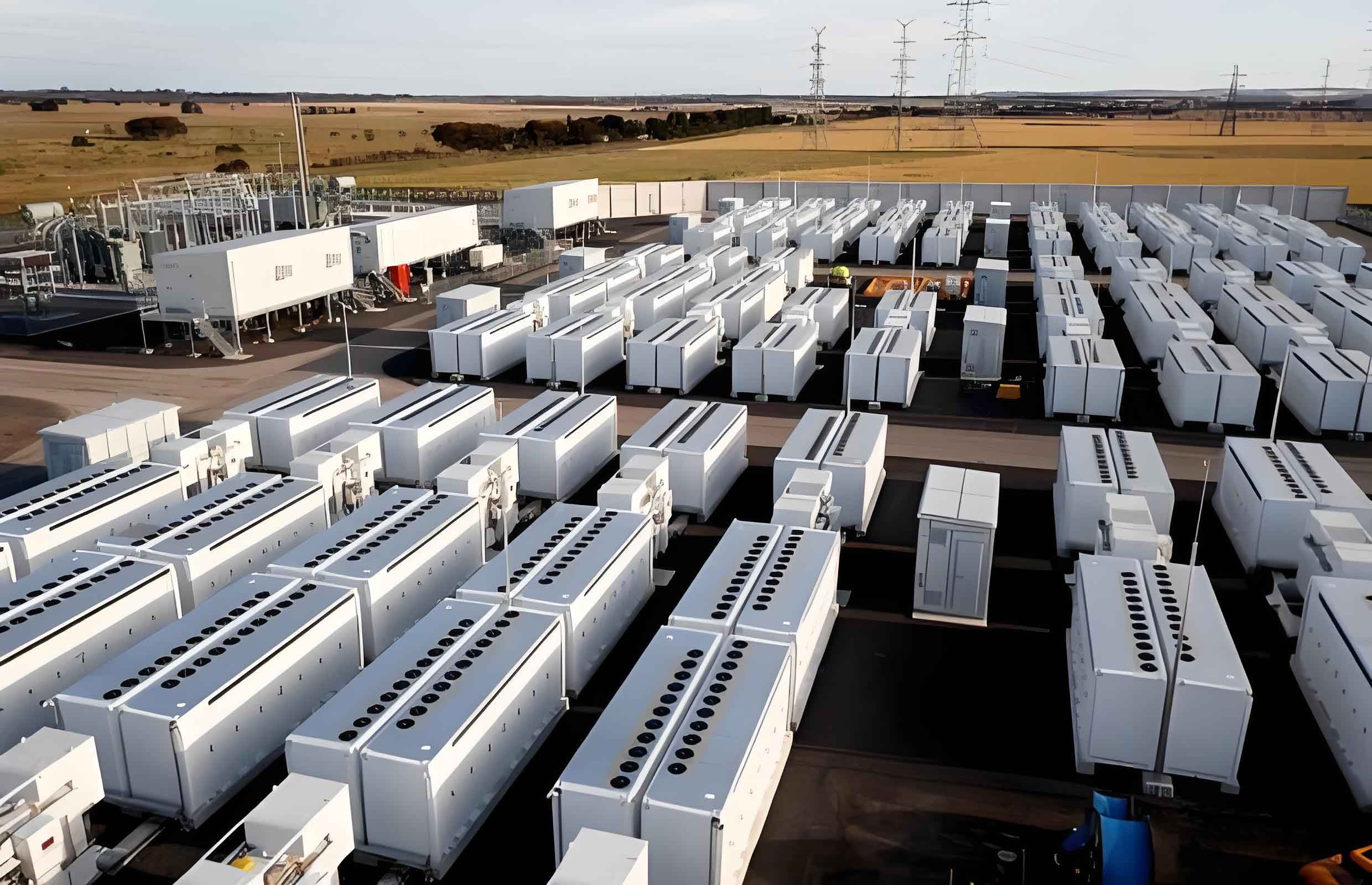
In my work on a large-scale renewable energy demonstration project located in northwest China, I have witnessed firsthand how battery energy storage systems (BESS) can fundamentally transform the integration of variable renewable sources. This project combines a 100 MW wind farm, a 50 MW photovoltaic (PV) station, and a 20 MW / 40 MWh lithium-ion battery energy storage system. It represents one of the most advanced wind-solar-storage hybrid power systems in the country, and through its design, commissioning, and operation, I have gained deep insights into the practical applications and optimization strategies of BESS. The entire system began construction in January 2020 and was connected to the grid in June 2021. The storage system adopts a modular design, consisting of ten 2 MW / 4 MWh storage units, each equipped with a 500 kW power conversion system (PCS) and an advanced battery management system (BMS). Moreover, an energy management system (EMS) based on big data analytics and artificial intelligence algorithms was developed to optimize the dispatch of BESS based on renewable generation forecasts and load demand.
1. Applications of Battery Energy Storage Systems in Renewable Energy Systems
1.1 Coupling of BESS with Photovoltaic Systems
In this demonstration project, the BESS operates in parallel with the 50 MW PV station. Solar generation is highly intermittent—measured data shows the output fluctuates between 0 and 50 MW with a maximum ramp rate of 60%. This severely affects power quality and grid stability. To address this, the 20 MW / 40 MWh lithium-ion BESS performs intelligent charge/discharge scheduling to smooth the PV output. The system dynamically adjusts its power based on real-time PV generation and short-term forecasts: it stores energy when PV output exceeds load demand and releases energy when PV is insufficient. After the BESS was commissioned, the power fluctuation of the PV plant decreased from 60% to within 20%. Furthermore, during overcast or rainy days, the BESS provides sustained power output, ensuring reliable grid supply.
The BESS also provides power prediction and frequency response functions. It can forecast PV output changes 30 minutes in advance, improving scheduling efficiency. When grid frequency deviates from its nominal value, the BESS responds within hundreds of milliseconds to inject or absorb active power, thus maintaining frequency stability. As a result of these enhancements, the grid-connection rate of the PV plant rose from 90% to over 98%, and the curtailment rate dropped from 10% to below 2%. The overall system efficiency and economic performance improved dramatically.
Quantitatively, the relationship between the BESS power output \(P_{BESS}(t)\) and the net PV power delivered to the grid \(P_{grid}(t)\) can be expressed as:
\[
P_{grid}(t) = P_{PV}(t) – P_{BESS}(t)
\]
where \(P_{PV}(t)\) is the raw photovoltaic power at time \(t\). The BESS is controlled to minimize the fluctuation \(\Delta P_{grid}\) defined as:
\[
\Delta P_{grid} = \frac{P_{grid,max} – P_{grid,min}}{P_{rated}} \times 100\%
\]
with \(P_{rated}=50\) MW. After BESS integration, \(\Delta P_{grid}\) was reduced from 60% to less than 20%.
| Indicator | Before BESS | After BESS |
|---|---|---|
| Maximum fluctuation | 60% | 20% |
| Grid-connection rate | 90% | 98% |
| Curtailment rate | 10% | 2% |
| Frequency response time | N/A | <100 ms |
1.2 Coupling of BESS with Wind Power Systems
The wind farm comprises 50 turbines, each with a rated capacity of 2 MW. Due to wind speed variability, the output fluctuates between 5 MW and 100 MW, with a maximum ramp rate of 80%. Such severe fluctuations present huge challenges for grid balancing and frequency regulation. The BESS, with 20 MW / 40 MWh capacity, is used to smooth the wind power output. Based on wind speed forecasts and real-time measurements, the BESS dynamically optimizes its charge/discharge schedule: it absorbs power when wind generation is high and releases power when wind generation drops. The effectiveness of this approach is summarized in the following table:
| Indicator | Before BESS | After BESS |
|---|---|---|
| Maximum fluctuation | 80% | 15% |
| Average fluctuation | 40% | 8% |
| Wind grid-connection rate | 85% | 97% |
| Wind curtailment rate | 15% | 3% |
The BESS also provides primary frequency regulation with millisecond response times. For wind-storage combined systems, the net power delivered to the grid is \(P_{wind}(t) – P_{BESS}(t)\). The objective of the control strategy is to minimize the variance of net power:
\[
\min \left\{ \text{Var}\left( P_{wind}(t) – P_{BESS}(t) \right) \right\}
\]
subject to state-of-charge constraints:
\[
SOC_{min} \le SOC(t) \le SOC_{max}
\]
\[
-P_{BESS,max} \le P_{BESS}(t) \le P_{BESS,max}
\]
This formulation allowed us to reduce the average fluctuation from 40% to 8%, greatly mitigating the impact of wind intermittency on the grid.
1.3 Application of BESS in Microgrid Systems
In addition to grid-scale wind and PV integration, the demonstration project also explored battery energy storage systems in a small community microgrid. The microgrid consists of 20 residential houses, a 30 kW rooftop distributed PV system, and a 100 kW / 200 kWh BESS. The microgrid can operate either grid-connected or islanded. The BESS serves multiple roles: it stores excess solar energy during low-load periods and releases it during peak demand, increasing the PV self-consumption rate from 30% to over 70%. It also regulates voltage and frequency, maintaining power quality during islanded operation. In a test where the main grid suddenly tripped, the BESS responded within 100 ms and supplied the community for 4 hours without interruption.
The performance metrics of the microgrid were significantly improved:
| Indicator | Without BESS | With BESS |
|---|---|---|
| Renewable energy utilization | 30% | 90% |
| Supply reliability | 99.9% | 99.99% |
| Operating economy improvement | Baseline | +30% |
The microgrid case demonstrates that battery energy storage systems are critical for enabling high penetration of local renewable generation while ensuring reliable off-grid operation.
2. Optimization of Battery Energy Storage Systems Design and Operation
2.1 Capacity Optimization of BESS
Determining the optimal BESS capacity is vital for cost-effective multi-energy complementary operation. In this project, we developed a multi-objective optimization model that considers wind and solar generation characteristics, load profiles, and electricity prices. The objectives include minimizing storage cost, maximizing renewable energy utilization, and minimizing grid peak-valley difference. Using a full-year simulation at hourly resolution (8760 hours), we obtained the optimal BESS rating of 20 MW / 40 MWh. Table below compares different capacity configurations:
| BESS Capacity | Renewable Utilization | Curtailment Rate | Peak-Valley Difference | Annual Cost (million CNY) |
|---|---|---|---|---|
| 10 MW / 20 MWh | 85% | 10% | 60% | 8.0 |
| 20 MW / 40 MWh | 95% | 3% | 30% | 12.0 |
| 30 MW / 60 MWh | 97% | 1% | 20% | 18.0 |
The 20 MW / 40 MWh configuration achieves a good balance between utilization (95%) and cost (12 million CNY/year). Additionally, we studied seasonal capacity optimization. By analyzing quarterly resource data, we found that the optimal BESS capacities for spring, summer, autumn, and winter were 15 MW / 30 MWh, 20 MW / 40 MWh, 25 MW / 50 MWh, and 20 MW / 40 MWh, respectively. Dynamic seasonal adjustment of BESS capacity could further increase renewable utilization by 2%, reduce curtailment by 1%, and decrease annual costs by 1 million CNY.
The capacity optimization problem can be formulated as:
\[
\min_{E_{rated}, P_{rated}} C_{inv} + C_{op} + C_{curtail}
\]
subject to:
\[
P_{rated} \ge \max_t |P_{net}(t)|
\]
\[
E_{rated} \ge \max_{t} \left( \int_{t}^{t+T} P_{net}(\tau) d\tau \right)
\]
\[
SOC(t) \in [0.1, 0.9]
\]
where \(C_{inv}\) is the investment cost, \(C_{op}\) is the operation cost, and \(C_{curtail}\) is the penalty for renewable curtailment. \(P_{net}(t)\) is the net imbalance between renewable generation and load.
2.2 Energy Management Strategies for BESS
The EMS developed for this project adopts a hierarchical optimization control strategy based on multi-time-scale forecasting and real-time scheduling. At the top level, a deep learning model forecasts wind/solar power and load for the next 168 hours with a mean absolute percentage error less than 10%. Using a heuristic algorithm (e.g., particle swarm optimization), we solve for the optimal BESS charge/discharge schedule that maximizes renewable utilization and minimizes cost, producing a rolling daily plan.
At the middle level, model predictive control (MPC) is employed. The MPC solves the following optimization problem at each time step \(k\):
\[
\min_{u(k),…,u(k+N-1)} \sum_{i=0}^{N-1} \left( c_{grid}(k+i) \cdot P_{grid}(k+i) + c_{deg}(k+i) \right)
\]
subject to BESS dynamics:
\[
SOC(k+1) = SOC(k) – \eta \cdot P_{BESS}(k) \Delta t / E_{rated}
\]
\[
SOC_{min} \le SOC(k) \le SOC_{max}
\]
\[
-P_{BESS,max} \le P_{BESS}(k) \le P_{BESS,max}
\]
where \(c_{grid}\) is the real-time electricity price, \(c_{deg}\) is the degradation cost, and \(\eta\) is the round-trip efficiency. Using MPC, the annual operating cost was reduced by 15% and economic benefit increased by 20%.
At the bottom layer, a multi-objective controller considers battery state-of-health, grid frequency, and reactive power demand. The response time to grid commands is less than 50 ms, and frequency regulation accuracy is better than 0.05 Hz. This real-time optimization significantly improves the grid’s ability to accommodate variable renewable energy.
2.3 Battery Second-Life and Recycling
The full life-cycle management of battery energy storage systems is a key innovation in this project. Using big data analytics and machine learning, we developed a high-accuracy battery health estimation model that can predict retirement time one month in advance with 95% accuracy. When the battery capacity degrades to 80% of its initial value, it enters a second-life phase. Through collaboration with a local electric vehicle company, retired BESS modules were repurposed for electric logistics vehicles, extending their useful life by 3–5 years at 50% lower cost than new batteries.
When capacity further drops to 70%, the batteries are used as backup power for industrial parks for another 2–3 years. Finally, when capacity falls below 60%, the batteries are recycled. In the recycling process, over 98% of metals (lithium, cobalt, nickel) are recovered, and the overall battery recycling rate exceeds 95%. The life-cycle environmental assessment showed that the BESS achieves a service life of 15 years, a second-life period of 5–8 years, and a carbon emission reduction of 2.5 tons per battery module over its entire life.
| Indicator | Value |
|---|---|
| BESS service life | 15 years |
| Second-life duration | 5–8 years |
| Battery recycling rate | ≥95% |
| Metal material circular utilization | ≥98% |
| Carbon reduction per battery module | 2.5 t CO₂ |
This life-cycle approach not only reduces costs but also minimizes environmental impact, providing a sustainable model for the renewable energy industry.
3. Conclusion
Through the practical experience of this large-scale wind-solar-storage demonstration project, I have demonstrated that battery energy storage systems are indispensable for enabling high penetration of renewable energy. The coupling of BESS with wind and PV systems smooths output fluctuations, improves power quality, enhances grid stability, and dramatically reduces curtailment rates. In microgrid applications, BESS enables high self-consumption and reliable islanded operation. The optimization of BESS capacity, the implementation of hierarchical energy management strategies (including deep learning forecasting and model predictive control), and the full life-cycle management with second-life and recycling all contribute to maximizing economic and environmental benefits. The mathematical formulations and data-driven methods presented here provide a robust framework for designing and operating battery energy storage systems in future renewable energy projects. As renewable shares continue to grow worldwide, battery energy storage systems will remain the key technology for achieving a clean, reliable, and affordable energy future.