
In the context of rapidly increasing global energy demand, wind power has emerged as a widely recognized renewable energy source. However, the inherent intermittency, randomness, and uncertainty of wind power generation pose significant challenges to the stability and reliability of power systems when integrated directly into the grid. To mitigate these issues, I have focused on the development of an optimized control strategy for a hybrid energy storage system that not only smooths wind power fluctuations but also considers the state of charge to enhance the economic viability and operational lifespan of the storage components. This paper presents a comprehensive approach that integrates a moving average control method, spectrum analysis, and a cost model incorporating battery cycle life, aiming to achieve both technical performance and economic superiority.
The core of my proposed method lies in the hybrid energy storage system comprising supercapacitors and battery energy storage systems. The supercapacitors, characterized by high power density and fast response, are dedicated to suppressing high-frequency fluctuations, while the battery energy storage systems, with high energy density and lower power density, handle low-frequency components. This frequency-based decomposition ensures that each storage device operates within its optimal range, thereby improving overall system efficiency and longevity. A key innovation in my work is the development of a charge and discharge power optimization control strategy that depends on the state of charge intervals of the energy storage devices. By partitioning the SOC into five distinct zones—overcharge, high limit, normal, low limit, and over-discharge—I dynamically adjust the power allocation to prevent overcharging or deep discharging, which are detrimental to the cycle life of battery energy storage systems.
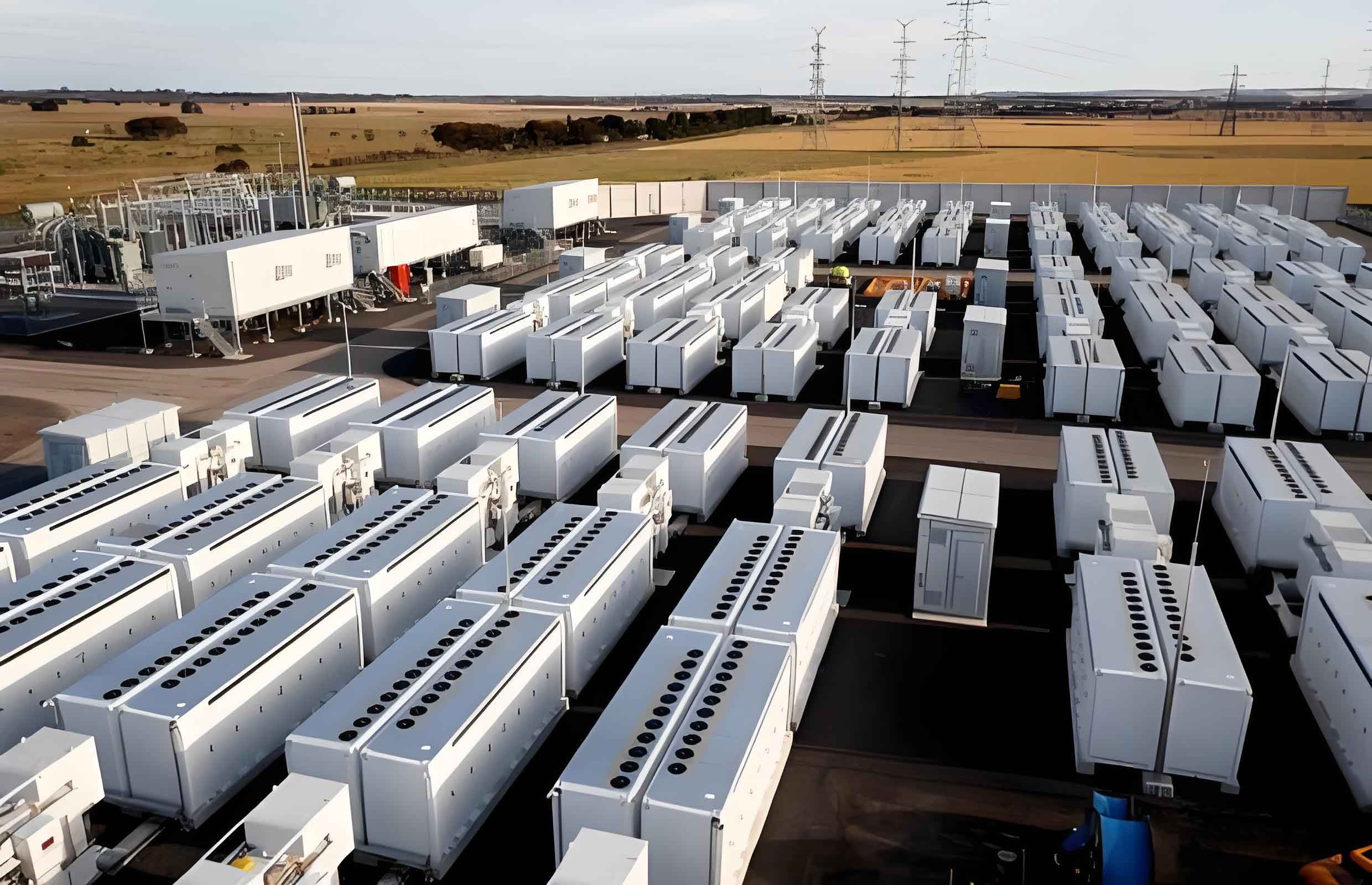
To formulate the capacity optimization problem, I first employ a moving average filter to compute the grid-connected power that satisfies the maximum power fluctuation limits specified by national standards. The window length is carefully selected to minimize the required smoothing effort while meeting both 1-minute and 10-minute fluctuation constraints. Then, spectrum analysis via discrete Fourier transform separates the fluctuating power into high-frequency and low-frequency components, which are assigned to the supercapacitor and battery energy storage systems, respectively. The power and energy ratings of each storage device are determined based on the maximum absolute power and accumulated energy over the study period, with efficiency factors and SOC boundaries taken into account.
The annualized cost model I constructed includes capital costs for both supercapacitors and battery energy storage systems, operation and maintenance costs, and a life loss cost for battery energy storage systems that depends on the depth of discharge and cycle number. The battery cycle life is modeled using an exponential function relating cycle number to discharge depth, and the annual life loss is computed from the total equivalent cycles over the study period. The optimization objective is to minimize the total annualized cost subject to the fluctuation smoothing constraints and SOC limits.
I conducted simulations using historical wind power data from an 80 MW wind farm with a 1-minute sampling interval over 1440 data points. The parameters for supercapacitors and battery energy storage systems are listed below, based on typical cost and performance data from the literature.
| Component | Parameter | Value |
|---|---|---|
| Supercapacitor | Power cost coefficient (CNY/kW) | 1500 |
| Energy cost coefficient (CNY/kWh) | 27000 | |
| O&M cost coefficient (CNY/kWh) | 0.05 | |
| Charge/discharge efficiency (%) | 95 | |
| Maximum SOC (%) | 90 | |
| High SOC limit (%) | 80 | |
| Battery (energy storage system) | Power cost coefficient (CNY/kW) | 2700 |
| Energy cost coefficient (CNY/kWh) | 640 | |
| O&M cost coefficient (CNY/kWh) | 0.05 | |
| Charge/discharge efficiency (%) | 80 | |
| Maximum SOC (%) | 80 | |
| High SOC limit (%) | 70 | |
| Low SOC limit (%) | 30 | |
| Lowest SOC (%) | 20 |
The moving average window length was determined by evaluating the maximum power fluctuation rates at both 1-minute and 10-minute scales. The results show that a window length of 16 satisfies both constraints, with a 1-minute fluctuation rate of 9.635% (below 10%) and a 10-minute rate of 32.56% (below 33.3%). The original wind power and the smoothed grid-connected power are illustrated conceptually through the control strategy. The fluctuating power is then decomposed at a frequency breakpoint of 1.67 mHz, assigning high-frequency components to the supercapacitor and low-frequency components to the battery energy storage systems. The power allocation curves demonstrate that each storage device handles its designated frequency band effectively.
I applied the proposed SOC-based control strategy to modulate the charge and discharge power of both storage devices. The state of charge trajectories with and without optimization are compared. Without optimization, the supercapacitor SOC exceeded its allowable range of 0.1–0.9, and the battery SOC fell below its lower limit of 0.2, leading to over-discharge conditions. After applying the proposed strategy, the SOC of both storage devices remained strictly within their safe operating zones, thereby avoiding overcharge and over-discharge that would otherwise shorten the cycle life of the battery energy storage systems. The optimized SOC curves show smooth transitions and effective regulation near the boundaries.
To evaluate the economic performance, I compared my proposed approach (hybrid with SOC control) against three alternative configurations: (1) a supercapacitor-only system, (2) a battery-only system, and (3) a hybrid system without SOC optimization. The resulting capacity sizing and annualized costs are summarized in the following table.
| Indicator | Proposed Method | Scheme 1 (Supercapacitor only) | Scheme 2 (Battery only) | Scheme 3 (Hybrid without SOC control) |
|---|---|---|---|---|
| Supercapacitor rated power (MW) | 4.709 | 12.381 | – | 4.709 |
| Supercapacitor rated capacity (MWh) | 1.337 | 35.642 | – | 1.486 |
| Battery rated power (MW) | 8.452 | – | 12.381 | 8.452 |
| Battery rated capacity (MWh) | 38.307 | – | 42.192 | 40.129 |
| Battery cycle life (years) | 4.39 | – | 2.25 | 3.89 |
| Annualized total cost (100 million CNY) | 1.109 | 2.371 | 1.621 | 1.227 |
The results demonstrate that my proposed method achieves the lowest annualized cost among all schemes. Compared to the supercapacitor-only configuration, the cost is reduced by 53.23% because supercapacitors have a much higher energy cost coefficient, making them prohibitively expensive for bulk energy storage. Compared to the battery-only system, the cost reduction is 31.59%, attributed to the fact that the battery alone must handle both high- and low-frequency fluctuations, leading to frequent cycling and a shorter lifespan (2.25 years versus 4.39 years with hybrid SOC control). Even when comparing to the hybrid system without SOC optimization, my method yields a 9.62% cost saving, primarily due to the prolonged battery life achieved by preventing overcharge and deep discharge through the SOC-aware power adjustment.
The sensitivity of the battery energy storage systems cycle life to the SOC control strategy is a critical factor. By maintaining the SOC within the 0.2–0.8 range and applying the sigmoid-based power correction in the high and low limit zones, the number of equivalent cycles over the study period is significantly reduced. The battery cycle life function used in my model is based on the relationship between discharge depth and allowable cycles:
$$
Q_i = \delta_1 + \delta_2 e^{\delta_3 D_i} + \delta_4 e^{\delta_5 D_i}
$$
where \(D_i\) is the depth of discharge for the \(i\)th cycle, and \(\delta_1\) to \(\delta_5\) are empirical parameters. The annual life loss is computed as:
$$
F_y = \frac{T_c}{T_y} \sum_{i=1}^{Q_d} Q_i^{-1}
$$
where \(T_c\) is the total time of the study period, \(T_y\) is one year, and \(Q_d\) is the number of cycles in the period. The depreciation cost of the battery energy storage systems is then:
$$
C_{\text{dep}} = \frac{T_y}{T_c} \sum_{i=1}^{N_d} Q_i^{-1} C_{\text{bin}}
$$
where \(C_{\text{bin}}\) is the initial capital cost of the battery system.
The power and energy sizing for each storage device follow the classical approach. The rated power is the maximum absolute power observed over the entire study period:
$$
P_x = \max_{n} |P_{x,n}| \quad (n = 1,2,\dots,N)
$$
The accumulated energy is calculated recursively:
$$
E_{x,n} =
\begin{cases}
E_{x,n-1} + P_{x,n} \eta_{x,1} \Delta t & \text{if } P_{x,n} \ge 0 \\
E_{x,n-1} + P_{x,n} \Delta t / \eta_{x,2} & \text{if } P_{x,n} < 0
\end{cases}
$$
where \(\eta_{x,1}\) and \(\eta_{x,2}\) are charging and discharging efficiencies, respectively. The required capacity is then:
$$
E_x = \frac{2 \max(|E_{x,n}|)}{SOC_{\text{max}} – SOC_{\text{min}}}
$$
The total annualized cost comprises capital costs, O&M costs, and battery life loss costs:
$$
C = C_{\text{cin}} + C_{\text{bin}} + C_{\text{om}} + C_{\text{los}}
$$
with the supercapacitor capital cost:
$$
C_{\text{cin}} = \alpha_{\text{cin}} P_{\text{cap}} + \beta_{\text{cin}} E_{\text{cap}}
$$
and the battery capital cost:
$$
C_{\text{bin}} = \alpha_{\text{bin}} P_{\text{bat}} + \beta_{\text{bin}} E_{\text{bat}}
$$
O&M costs are proportional to capacity:
$$
C_{\text{om}} = \phi_{\text{cap}} E_{\text{cap}} + \phi_{\text{bat}} E_{\text{bat}}
$$
Based on the simulation results, I draw the following conclusions:
1) The hybrid energy storage system consisting of supercapacitors and battery energy storage systems, when combined with a moving average filter and spectrum-based power decomposition, effectively reduces the 1-minute and 10-minute wind power fluctuation rates to meet grid integration standards, thus improving wind power accommodation.
2) The proposed SOC-dependent charge/discharge power optimization strategy maintains the state of charge of both storage devices within safe operating intervals, preventing overcharge and deep discharge. This significantly extends the cycle life of the battery energy storage systems from 2.25 years (in the battery-only case) to 4.39 years in the proposed hybrid configuration, and also improves the lifespan compared to the hybrid without SOC control (3.89 years).
3) The economic evaluation confirms that my method achieves the lowest annualized cost among four compared schemes. The cost reduction stems from both the proper frequency allocation (reducing the required supercapacitor capacity) and the SOC-aware control (extending battery life). The hybrid system with SOC control yields a 9.62% cost saving over the hybrid without control, and over 50% savings compared to the single-type storage configurations.
The proposed approach is not limited to the specific parameters used in this study. The SOC interval thresholds and the sigmoid function parameters can be adjusted based on the characteristics of the actual battery energy storage systems and supercapacitors, as well as the operational requirements. This flexibility makes the method applicable to various wind farm scales and grid codes. Furthermore, the framework can be extended to include other renewable sources such as solar and hydro, forming a multi-energy hybrid system. In such cases, the power fluctuation decomposition and SOC control strategy can be integrated with energy curtailment metrics and load deficit probability to achieve comprehensive energy management.
Future work should explore the use of more advanced signal processing techniques like variational mode decomposition or wavelet packet decomposition for improved frequency separation. Adaptive SOC control using fuzzy logic or reinforcement learning could further enhance the system performance under varying wind conditions. The incorporation of degradation models for supercapacitors and the aging effects of temperature and cycling on battery energy storage systems would also refine the cost analysis. Overall, this study provides a solid foundation for the optimal sizing and operation of hybrid energy storage systems in renewable-rich power grids, emphasizing the importance of the state of charge in prolonging the life of battery energy storage systems and reducing overall system cost.