
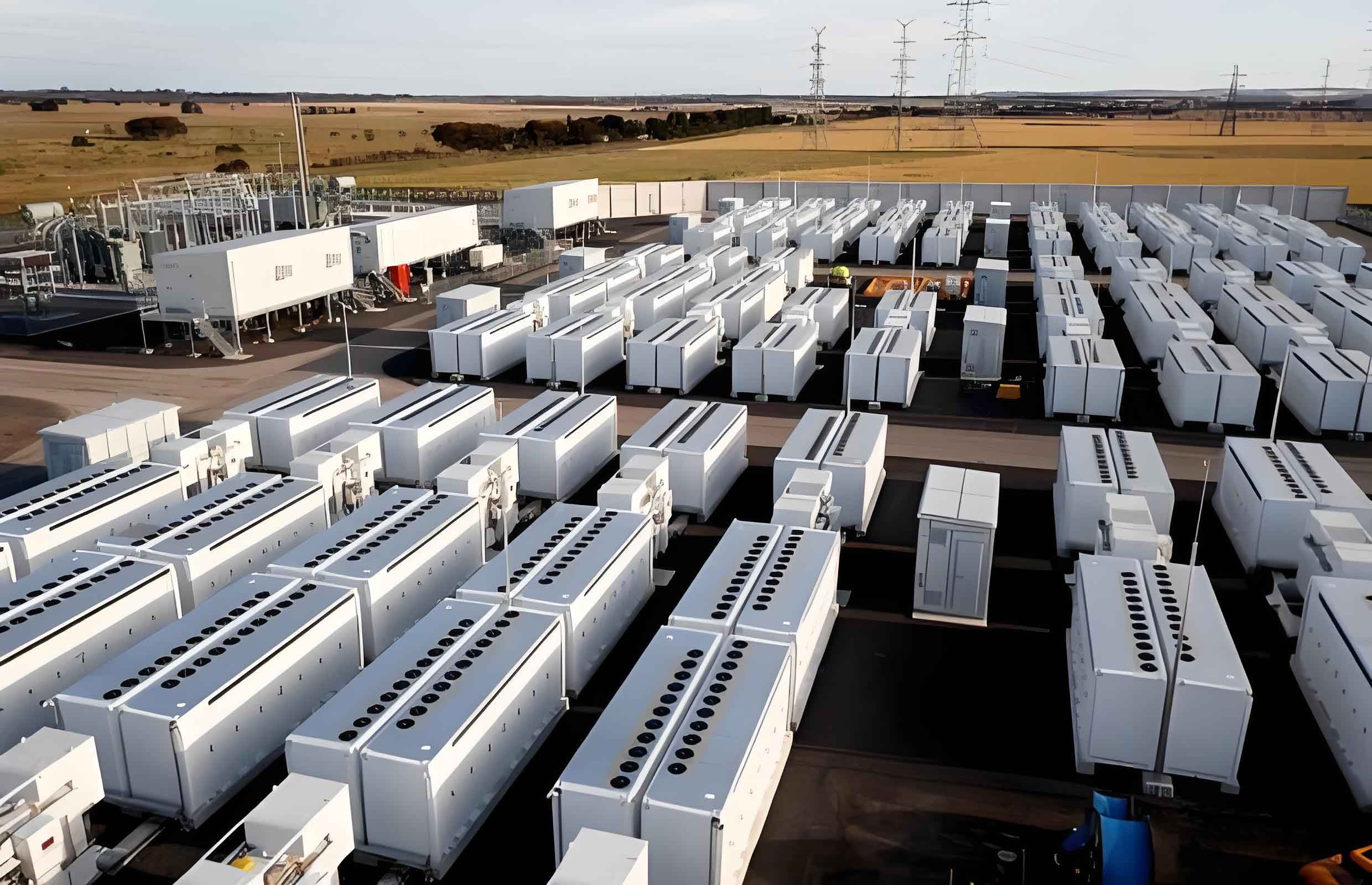
As the integration of renewable energy sources accelerates and the morphology of power systems undergoes fundamental transformation, the coordinated operation of battery energy storage systems (BESS) with renewable energy generation has become a critical area of research. This paper explores the operational effectiveness and evaluation methodologies for BESS integrated into high-penetration renewable energy systems. Based on a comprehensive review of domestic and international research progress, we analyze the grid-connected BESS on the renewable energy side from two principal dimensions: operation mode and operation evaluation. Our work establishes a theoretical model for a multi-dimensional BESS operation indicator system, summarizing the applicability and validity of existing comprehensive evaluation methods.
Introduction
With China’s “carbon peak and carbon neutrality” goals, the development of renewable energy has become a core component of national energy strategy. The inherent uncertainty of renewable energy introduces significant challenges to power system operational reliability, including frequent power fluctuations and mismatches with local load demands. Battery energy storage systems (BESS), particularly lithium-ion batteries, are pivotal flexibility resources due to their high energy conversion efficiency, low self-discharge rate, long cycle life, and flexible start-stop capabilities. However, variations in individual cell materials and manufacturing processes lead to different chemical reactions under various operating conditions. Therefore, it is essential to evaluate the operational performance of BESS with different material chemistries when coupled with renewable energy sources.
Currently, thermal power plants primarily provide active support to the grid, but the high uncertainty of renewable energy poses significant challenges to grid stability. BESS, as a crucial flexible resource in new-type power systems, must participate in grid active support. Furthermore, the optimization of BESS operational performance in source-grid scenarios has become a prominent research topic.
Analysis of BESS Operation Modes on the Renewable Energy Side
As the penetration of renewable energy increases, the imbalance between power supply and demand becomes more pronounced. The application scenarios for BESS on the renewable energy side can be categorized into the renewable energy side, the grid side, and the user side, aiming to optimize revenue, smooth renewable energy fluctuations, enhance active support capabilities, and improve local consumption. The typical scenarios and their respective functions are detailed in the following table.
| Side | Typical Scenarios | Main Functions | Indirect Effects |
|---|---|---|---|
| Renewable Energy Side | Promote local energy consumption; Smooth power fluctuations | Energy time-shift; Load tracking; Compensate for prediction errors | Enhance renewable energy penetration |
| Grid Side | Inertia support; Primary frequency regulation; Voltage support | Improve grid-connected active support capability | Ensure grid safety, reliability, and stability; Alleviate line congestion |
| User Side | Peak shaving and valley filling; Multi-energy complementarity | Reliable power supply; Backup capacity | Reduce environmental pollution |
Direct and Indirect Value of BESS
The coordinated optimization of BESS with renewable energy generation creates both direct and indirect value for the grid, renewable energy stations, and society. The direct value is primarily derived from market revenue, such as peak-valley arbitrage and participation in the electricity spot market. Indirect value includes alleviating line congestion, improving supply reliability, deferring transmission and distribution upgrades, and generating social benefits through carbon emission reduction.
| Operation Mode | Direct Value | Indirect Value (Grid Reliability) | Indirect Value (Social Benefits) |
|---|---|---|---|
| Off-grid | Peak shaving, load tracking | Yes | Yes |
| Grid-connected (Autonomous) | Peak shaving, energy arbitrage, compensating prediction errors | Yes | Yes |
| Grid-connected (Active Support) | Inertia support, frequency regulation, voltage control, reserve capacity | Yes | Yes |
BESS Operation Indicator System
To comprehensively assess the operational effectiveness of BESS on the renewable energy side, a multi-dimensional indicator system is required. These indicators can be categorized into five dimensions: technicality, safety, reliability, economy, and environmental benefits.
Technical Indicators
Technical indicators, such as charge/discharge capability and energy efficiency, are crucial for evaluating the core performance of battery energy storage systems. The maximum dischargeable energy of a BESS reflects its state of balance and state of health.
$$E_A = \sum_{k=1}^{N_{num}} E_{A,k}$$
Where \(E_A\) is the maximum dischargeable energy of the BESS, and \(E_{A,k}\) is the maximum dischargeable energy of battery container \(k\). The overall efficiency of a BESS is given by:
$$\eta_{BESS} = \frac{E_{on}}{E_{off}} \times 100\%$$
Where \(E_{on}\) and \(E_{off}\) are the on-grid and off-grid energy of the BESS, respectively.
Safety Indicators
Safety indicators are critical for preventing accidents and thermal runaway. The state of balance (SOB) of a BESS, including voltage, temperature, internal resistance, and SOC consistency, directly impacts safety and energy efficiency. Safety margin indicators include charge/discharge safety probability and power safety margin.
Reliability Indicators
Reliability indicators evaluate the ability of battery energy storage systems to provide stable power and respond to dispatch commands. The response success rate, which is a key performance metric, can be expressed as:
$$\theta_{SUC} = \frac{N_{SUC}}{N_T} \times 100\%$$
Where \(N_{SUC}\) is the number of successful executions of dispatch commands, and \(N_T\) is the total number of commands issued. The reliability concerning the state of health (SOH) of battery modules is given by:
$$\theta_B = P(h_s \geq \alpha)$$
Where \(\theta_B\) is the reliability, \(h_s\) is the actual SOH, and \(\alpha\) is the SOH threshold for battery retirement.
Economic Indicators
Economic indicators are vital for assessing the financial viability of battery energy storage systems. The Levelized Cost of Energy (LCOE) and Net Present Value (NPV) are commonly used metrics.
$$LCOE = \frac{C_{total}}{E_D}$$
Where \(C_{total}\) is the total cost, and \(E_D\) is the total discharged energy over the lifecycle.
$$S_{NPV} = \sum_{n=1}^{T_{lcc}} (S_n – C_n)(1 + \gamma)^{-n}$$
Where \(S_n\) and \(C_n\) are the revenue and cost in year \(n\), respectively, and \(\gamma\) is the discount rate.
Environmental Benefits Indicators
These indicators reflect the positive environmental impact of battery energy storage systems. The reduction in CO2 emissions can be calculated as:
$$\psi_{CO_2} = e_{CO_2} \cdot E_{Dres}$$
Where \(e_{CO_2}\) is the carbon emission coefficient, and \(E_{Dres}\) is the total renewable energy discharged.
Strategies for Improving BESS Operation Indicators
Our research identifies several key strategies for improving the performance and economic targets of battery energy storage systems. For technical indicators, optimizing charge/discharge strategies (e.g., pulse charging) and improving energy efficiency under partial load conditions are effective. For safety and reliability, advanced fault diagnosis techniques (rule-based, model-based, data-driven) combined with state-of-balance estimation are crucial for preventing thermal runaway. Economic optimization often involves minimizing costs while maximizing benefits from energy arbitrage and ancillary services. The optimization model for BESS cost is given by:
$$min\;C = min(C_{rate} + C_0 – S_{res} – S_S – \mu_{CO_2} S_{CO_2})$$
Where \(C_{rate}\) is the investment cost, including capacity and power costs, \(C_0\) is the operation cost, and \(S_{CO_2}\) is the revenue from carbon trading.
| Indicator Category | Key Objectives | Improvement Methods |
|---|---|---|
| Technical | Energy efficiency, discharge capability | Pulse charging, optimized load strategies, efficient auxiliary systems |
| Safety | Active safety, fault diagnosis | Impedance measurement, data-driven thermal runaway prediction, state-of-balance control |
| Reliability | Response success rate, availability | SOH/SOC joint estimation, optimized power allocation, predictive maintenance |
| Economic & Environmental | Cost minimization, carbon reduction | Market bidding strategies, multi-service optimization, green trading |
Comprehensive Evaluation Methods for BESS Operation
Given the multi-faceted nature of BESS performance, a single indicator is insufficient for a comprehensive evaluation. A holistic model is required, integrating multiple criteria into a single score.
$$Y_{BESS} = \sum_{i=1}^{N} \mu_i \omega_i F_i$$
Where \(Y_{BESS}\) is the comprehensive evaluation score, \(\omega_i\) is the weight of indicator \(i\), \(F_i\) is the score of indicator \(i\), and \(\mu_i\) indicates whether the indicator is considered. The determination of weights is critical. Methods like the Analytic Hierarchy Process (AHP), Entropy Weight Method (EWM), and Fuzzy AHP are commonly used. A combined subjective-objective approach is often more robust:
$$\omega_i = \omega_{i, AHP} \cdot H_i + \omega_{i, EWM} \cdot (1 – H_i)$$
Where \(H_i\) is the entropy value of indicator \(i\). This method balances expert opinion with objective data variability.
| Evaluation Methods | Characteristics | Indicators Typically Considered |
|---|---|---|
| AHP & EWM | Combines subjective and objective weights; addresses consistency issues | Technical, safety, reliability, economic, social |
| Fuzzy AHP & TOPSIS | Handles uncertainty and fuzziness; orders alternatives based on proximity to ideal solution | Technical, economic, safety |
| Grey Relational Analysis | Good for analyzing relationships between multiple factors with incomplete information | Reliability, economic, social |
Existing Challenges and Future Prospects
Despite significant progress, several challenges remain. The economic viability of off-grid BESS is often constrained by high initial investment costs. The optimization of BESS capacity currently focuses on economic returns, but safety and reliability metrics need to be better integrated into a quantitative economic model. Furthermore, the lack of a systematic integration of all five indicator dimensions (technical, safety, reliability, economic, social) hinders a holistic evaluation. In practice, battery energy storage systems are often underutilized, leading to poor economic performance.
Future research should focus on several key areas. First, we need to develop more refined operational models that capture the unique chemical behaviors of different battery types. Second, a comprehensive evaluation framework that fully integrates all dimensions of the indicator system is required to provide a balanced assessment of battery energy storage systems. Third, leveraging new-generation information technologies (IoT, blockchain, AI) can significantly enhance real-time monitoring, state prediction, and operational optimization. Finally, we must develop scientific and adaptable comprehensive evaluation methods that consider regional policies and market mechanisms, particularly for applications like participating in electricity spot markets.
In conclusion, the path toward high-reliability and low-cost power systems heavily relies on the effective integration and evaluation of battery energy storage systems on the renewable energy side. Our ongoing work aims to address the identified challenges by developing a robust, multi-criteria evaluation platform that can guide the optimal deployment and operation of BESS for a sustainable energy future.